

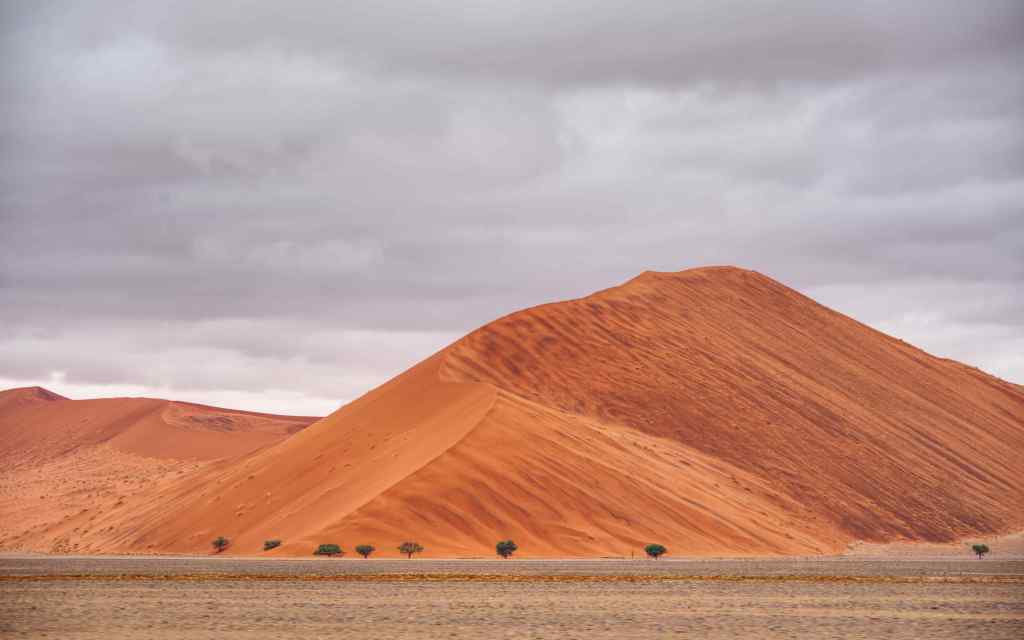
At first light, Sossusvlei emerges not with brilliance but with subtlety. The dunes begin as little more than silhouettes — muted outlines pressed against a paling sky. For a few long moments, the land holds its breath. Then, slowly, the sun pulls itself up and across the desert, and the transformation begins. Red floods the slopes. Gold clings to every sharp ridge. Light traces the edges of wind-sculpted sand, revealing a landscape both vast and intimate — every curve shaped over centuries, every crest a quiet record of wind. The landscape transforms minute by minute—not with sudden drama, but with the slow confidence of a place shaped over centuries by wind and time.
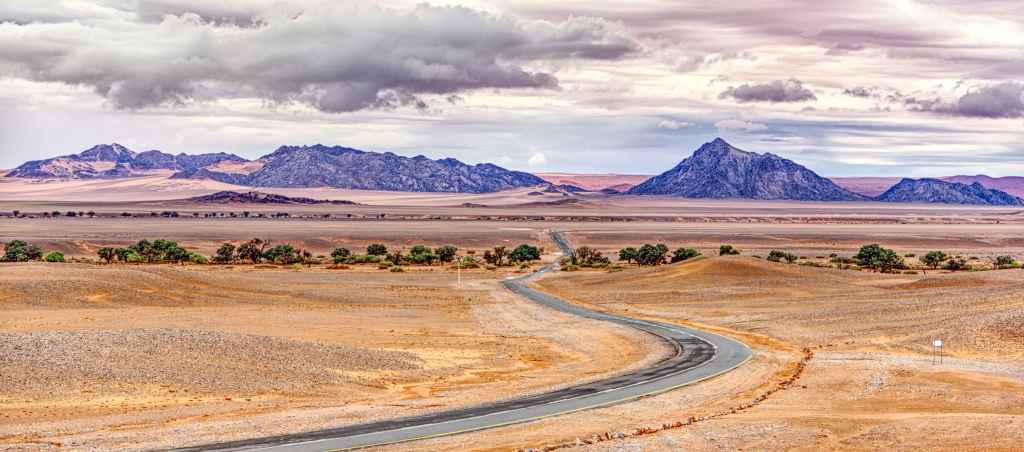

The silence is striking. Not empty, but dense—full of texture and restraint. It amplifies small movements: the crunch of fine sand underfoot, the whisper of air moving along a dune face, the distant call of a bird overhead. In this stillness, the desert becomes less of a place and more of a presence.
Animal life appears without fanfare. An oryx may pass across the landscape, casting a long shadow across the sand. you might catch a jackal’s eyes glinting just before it slips between scrub. Birds rise and fall overhead — a quick flash of wings, then gone again. These creatures are not here for show. They are built for this place: lean, adaptive, aware. Their presence reminds you that even the most extreme landscapes hum with life. Life here is efficient and deliberate.

As the sun climbs higher, you gain perspective. From elevated ridges, the desert arranges itself into flowing patterns — long ribbons of sand twisting across the earth. Each line tells a story. Where the shadows fall, the desert’s language becomes visible. Light and form speak to each other across great distances. There is nothing chaotic here. Everything holds a kind of quiet order, shaped not by human hands, but by wind and erosion and time.
The textures are everywhere: crusted clay at the base of dunes, windswept ripples that vanish with a single step, stones rounded and dulled by time. Color shifts constantly—sometimes bleached and subtle, sometimes impossibly vivid, depending on the angle of the light. At the base of the dunes, the sand hardens, fractured into cracked crusts from years without water. A few hardy shrubs claw into the earth, leaves tight against the sun. The wind leaves delicate ripples in untouched areas — patterns that vanish with the lightest touch.

And then, rarely, the desert becomes something else entirely. When rain falls—sometimes just once in a decade—it transforms the valley floor. Dry riverbeds pulse to life, and Sossusvlei briefly becomes a mirror, holding still water between its rust-red walls.

In those moments, seeds that have waited in silence bloom overnight. The floods are short-lived, but they leave behind the ghost of water in the shape of green and the memory of motion. Even in a land ruled by dryness, the idea of water is never fully gone.
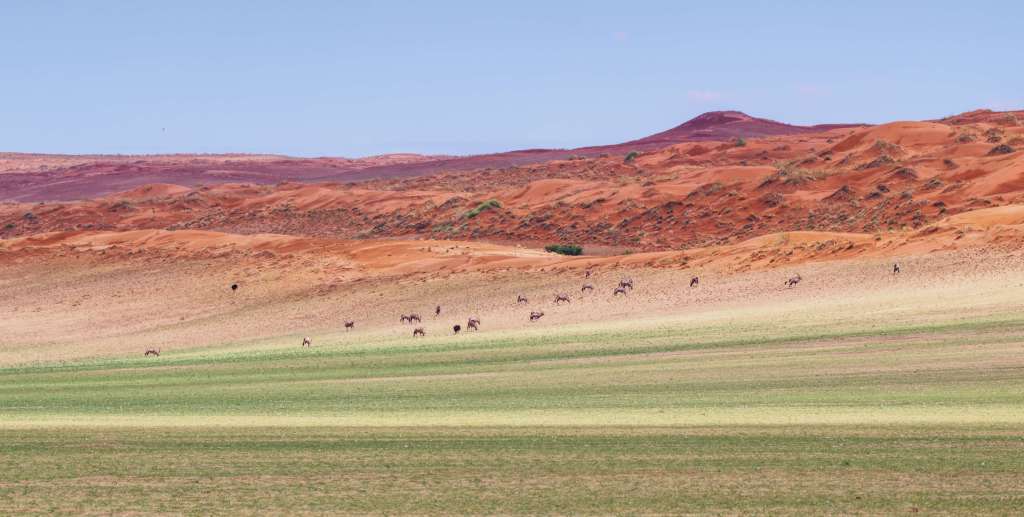
These flooded moments are gone before they can be fully grasped. But the memory lingers — a ghost of moisture in dry air. The evidence remains in faint water lines on the clay, or in tufts of green clinging to unlikely places. The desert remembers.
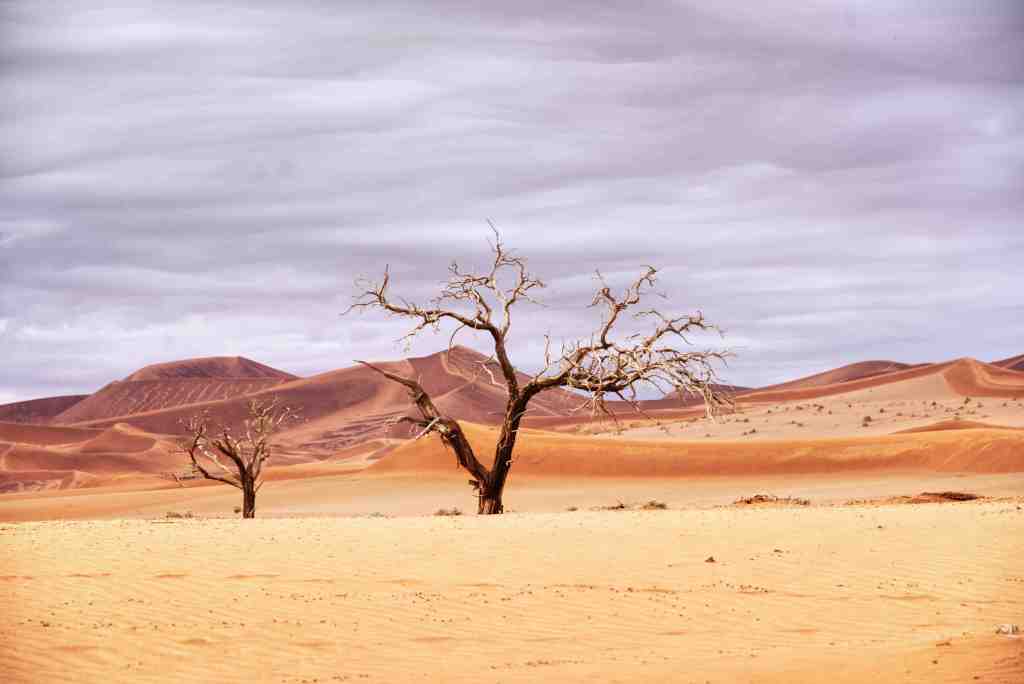
Day moves on, shade gathers at the base of the dunes, and the landscape shifts again. Heat settles. Air thickens. The sense of vastness doesn’t recede, but becomes softer, more diffused. The sun begins its slow retreat, and the landscape exhales. Shade returns to the folds of the dunes. Color deepens once again — reds return, purples begin to rise. Everything feels slower, softer, deliberate. This is the most generous hour: the golden hush before dark.
Sossusvlei does not demand attention. It does not offer spectacle for its own sake. It invites observation. Its scale is not about height or size, but rhythm—of time, movement, and restraint.
This is not a place you conquer or complete. It is a place you enter, move through, and leave — changed in subtle ways, not always visible. Some landscapes speak loudly. This one waits until you’re quiet enough to hear it.

 The Footstep Chronicles
Leave a comment