

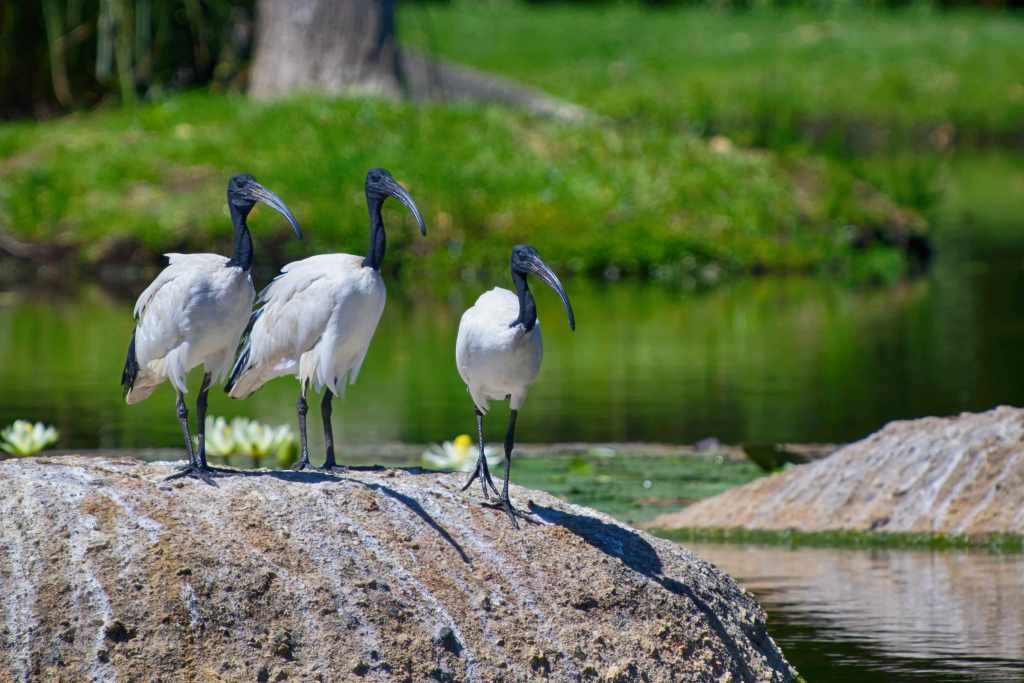
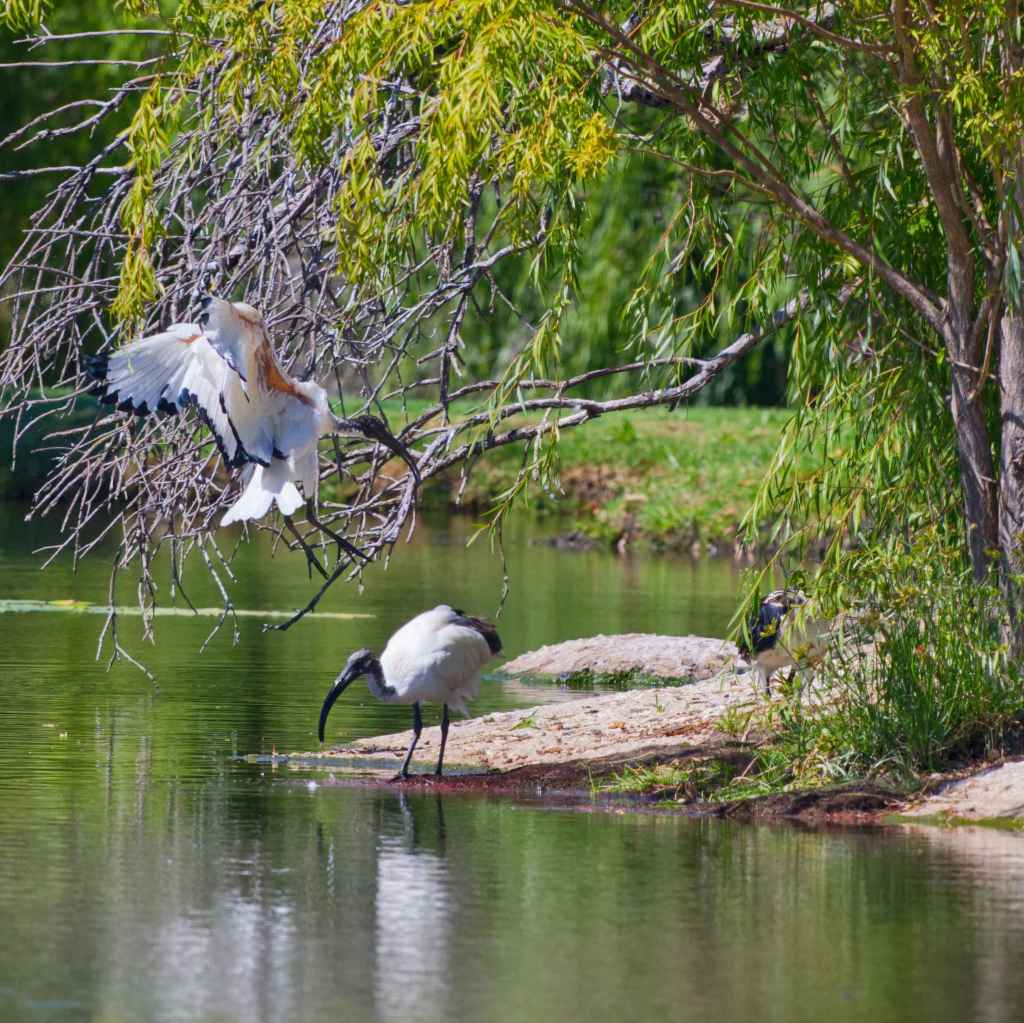
In the still heat of the day, three birds stand together on a sun-warmed rock at the pond’s center. Their white feathers catch the light, edged with the faint sheen of black wingtips, and their dark, curved bills point toward the water below. The rock is their island — a quiet vantage from which they watch the world. Ripples spread outward as a breeze stirs the surface, carrying the reflections of reeds and sky. They shift only occasionally, lifting a foot, stretching a wing, then settling again, as if time here is measured not in minutes, but in the unhurried rhythm of the water. These are the Ibis.
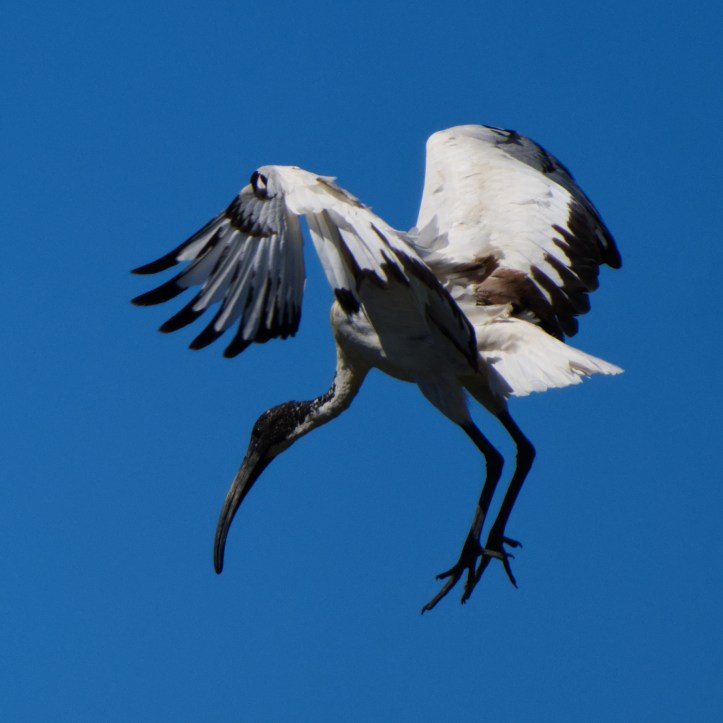
At first glance an ibis is simply an elegant shape: a long curved bill, a low, deliberate posture, stock body with long legs. In South Africa these birds are more than shapes — they are chorus leaders of the low places, familiar to farmers, gardeners, and city dwellers alike. Some are loud and obvious; others glide like polished metal through reedbeds.
Ibises have been a part of Africa’s story for far longer than our own histories here. In ancient Egypt, the Sacred Ibis was revered as a symbol of wisdom, closely associated with Thoth, the god of knowledge. Images of these birds, carved into stone or painted on temple walls, carried meanings far beyond the bird itself — order, learning, divine connection.
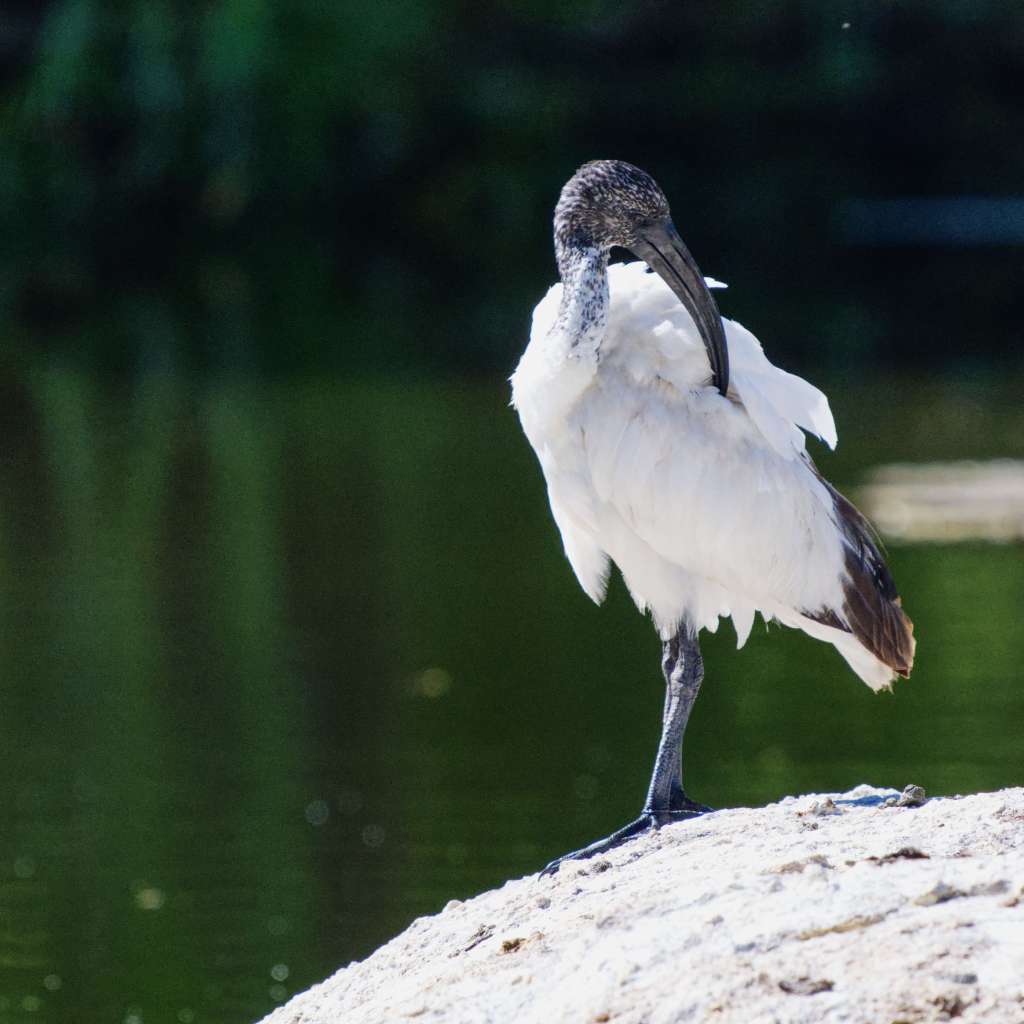
Ibises are creatures of thresholds. They seek the places where land softens into mud, where reeds bend over still pools, where tide and river mix. Their diet is drawn from what hides in these margins — aquatic insects, small crustaceans, frogs, and fish. Sensitive bills allow them to find prey hidden under silt, detecting movement without sight.
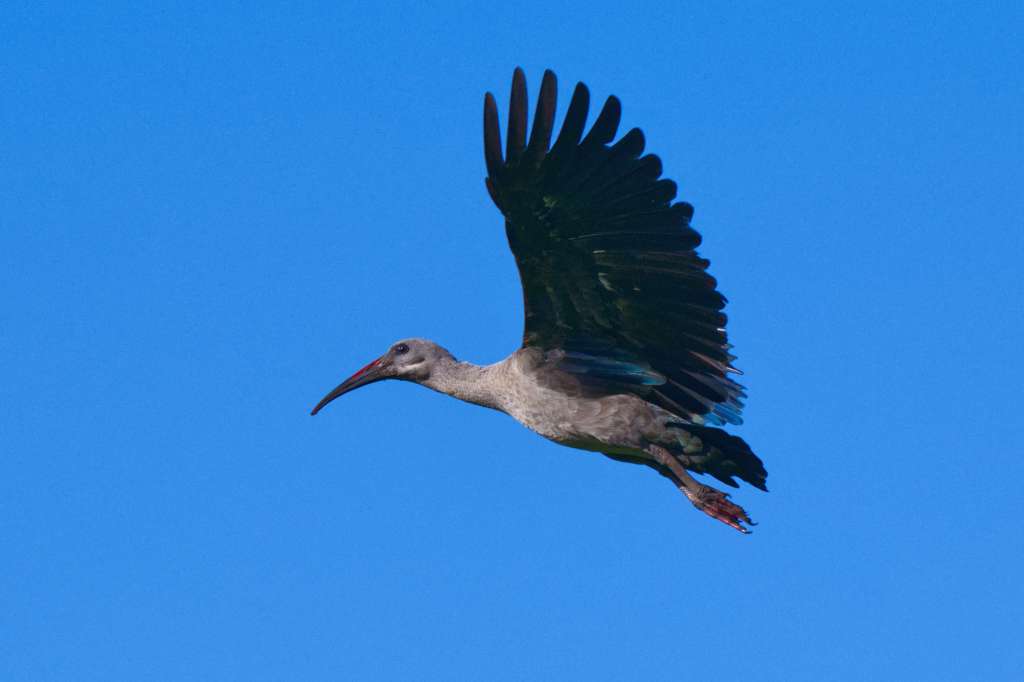
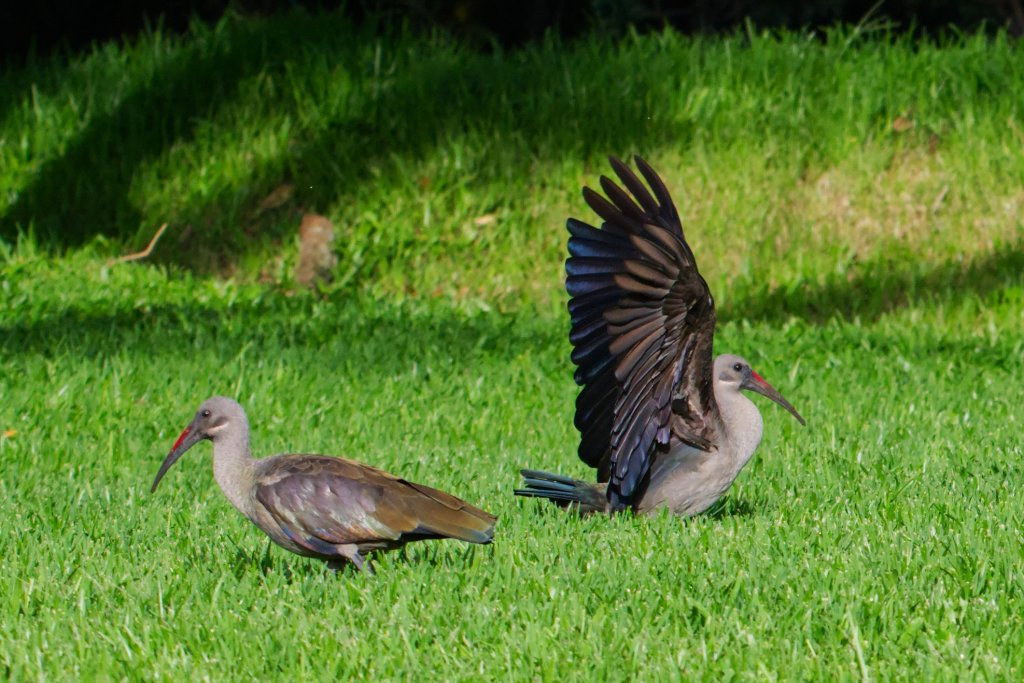
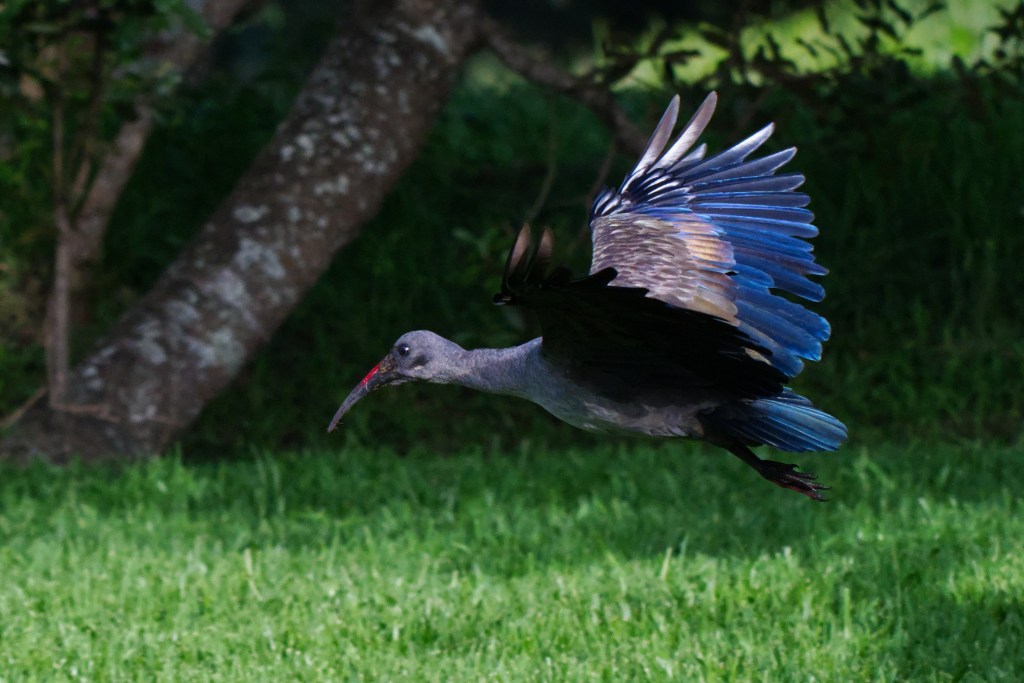
Yet the Ibis is also at home on the edges of our everyday lives, not bound only to wild ponds and reedbeds. In city parks and along the greens of golf courses, they wander the grass with the casual air of locals who’ve been here forever. There, their curved bills probe the soil for grubs and insects, each movement as deliberate as in the wetlands. These birds are usually the Hadeda Ibises, known for their loud, unmistakable call—a rolling “ha-ha-ha-de-dah” that echoes through the morning air. For many, it’s the familiar sound that marks the start of the day. The Hadeda’s plumage, from a distance, seems plain grey, but catch them in the right light and the wings reveal a subtle iridescence — hints of bronze, green, and violet.
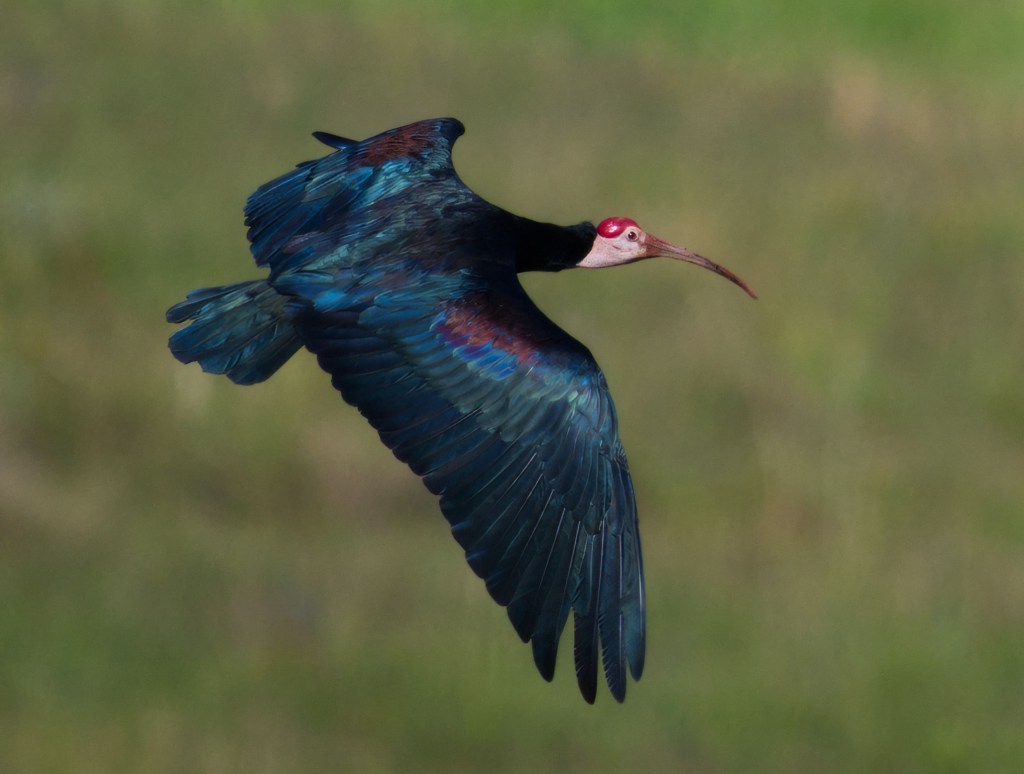
The Southern Bald Ibis is a rare glimpse into a quieter, wilder world—its bare, dark head and glossy black feathers often disappearing against the rocky cliffs and open grasslands it calls home. Sightings are few and far between, making each encounter feel like a small gift from the wild. Moving with a calm, measured grace, these elusive birds seem to belong to a time when the landscape was untouched, their soft, low calls barely breaking the silence of the hills and plains they roam.
Wetlands have long been the natural home for ibis offering food and shelter to these birds in quiet balance. They have adapted to thrive beyond these traditional habitats. Living alongside ibis in towns and cities is a quiet reminder of how nature can persist in surprising ways. Whether in a suburban garden, a golf course fairway, or a park’s pond, their calls and presence add a living thread to the human landscape. It’s a chance to notice something wild nearby, to hear a familiar voice in the morning, and to remember that the connection between people and nature is never far away—even where the concrete spreads.
 The Footstep Chronicles
Leave a comment