


Etosha lies in the north of Namibia, a wilderness shaped around its vast central pan — a salt flat so large it can be seen from space. This pan, stretching more than 120 kilometers across, dominates the park, its edges fringed by savanna, mopane woodland, and scattered waterholes that draw life from miles around. When the rains return, the pan transforms from a white, shimmering desert into a shallow lake. Pools gather in hollows, and the air carries the sharp scent of life renewed. It is in this brief, fertile season that the lions of Etosha reveal a different rhythm — patient, powerful, and ever tied to the cycles of the land.
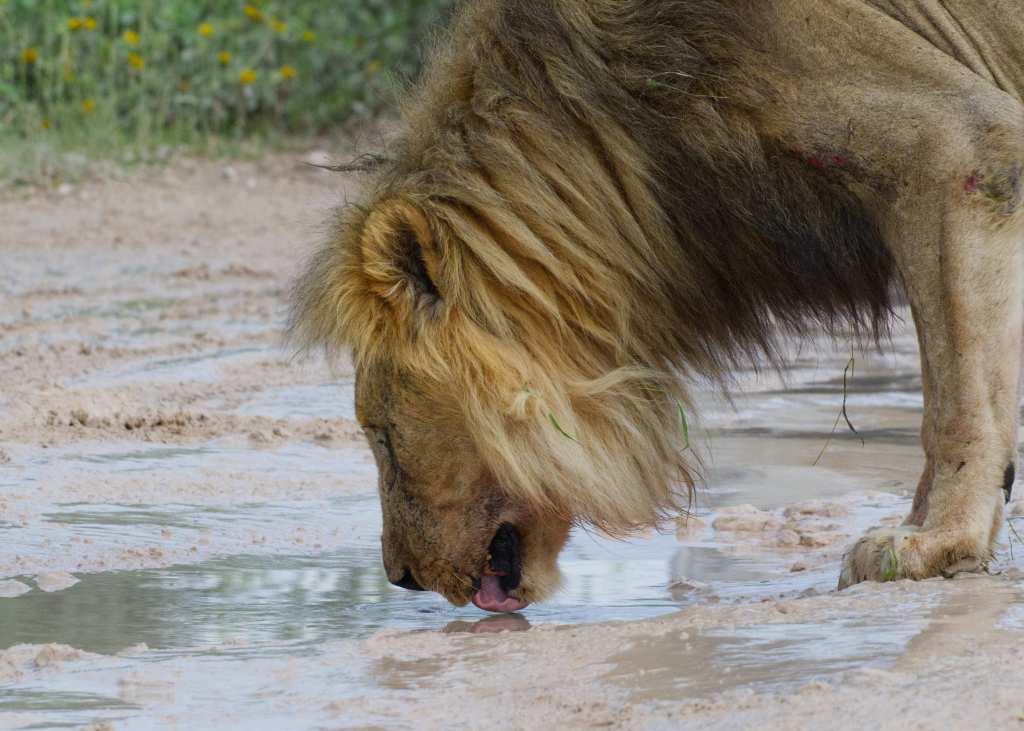
The males of Etosha are figures of weight and presence. Broad-shouldered, heavy with mane, they carry themselves with a gravity that no other creature questions. In the rainy season, their movements are slower, measured, but no less purposeful. They are not hunters in the daily sense. They move with long, deliberate strides through the soaked grasslands, pausing to scent the air, pausing again to rest in the shade of acacias. The rains give them cover and coolness, but also challenge—rivals can move more easily now, and territory lines blur when herds scatter into the abundance. Their roars roll across the damp air like thunder, claiming the land as much as warning others away.

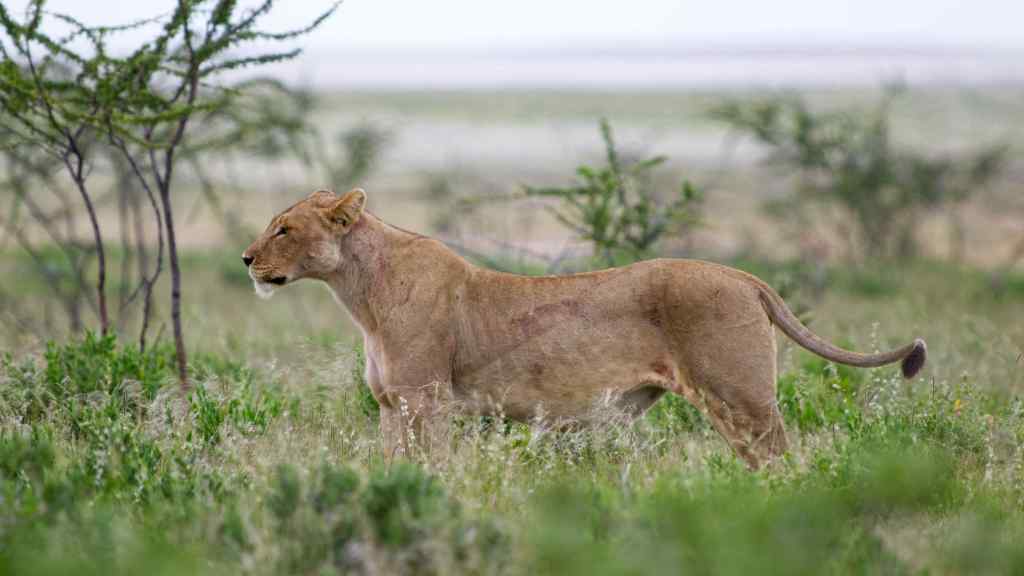
Females move differently, light-footed and attentive to the rhythm of the rainy-season plains. Their coats blend seamlessly with the tall grass, the green and brown hues of the landscape reflecting in their eyes. They circle waterholes, test the ground near termite mounds, and disappear into the dense vegetation. In the rainy season, their movement is softer, yet precise — a predator attuned to the world that flourishes in the wet months.
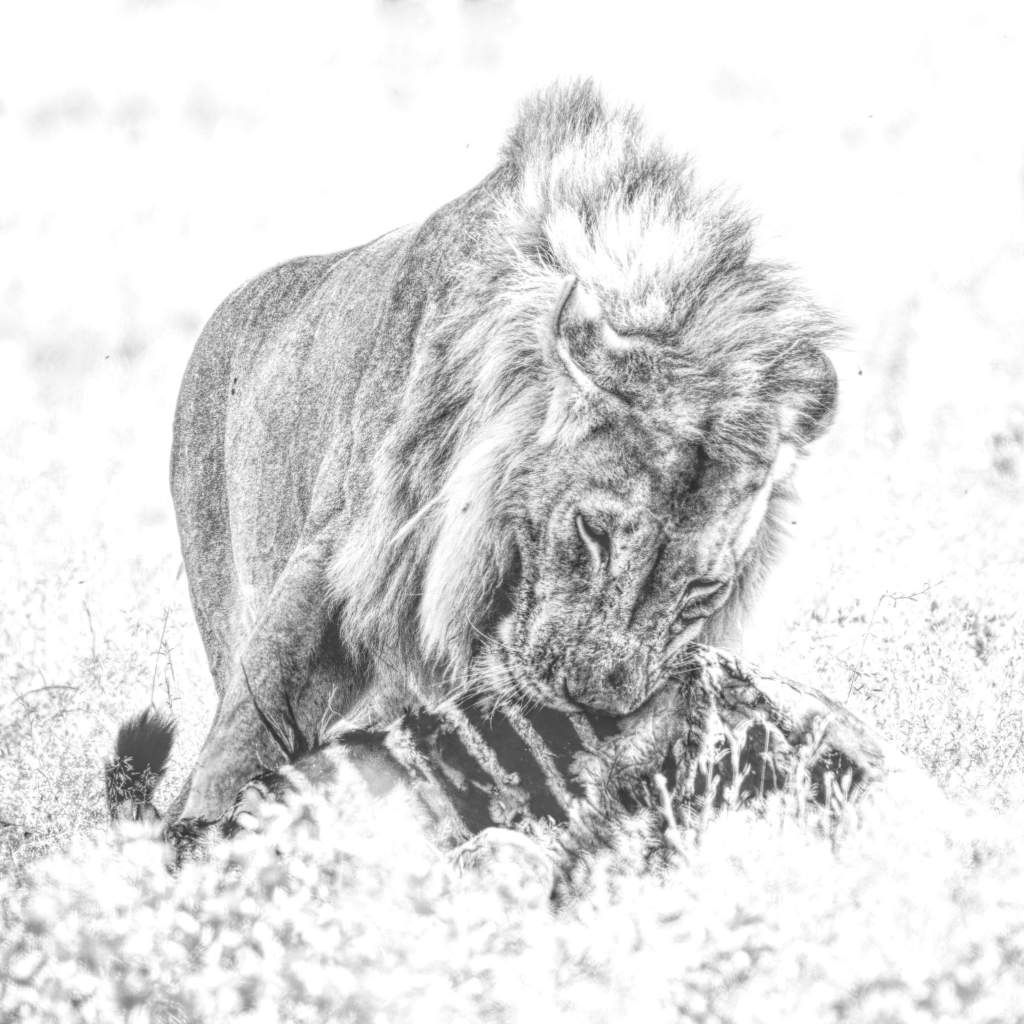
The zebra is often the lion’s greatest prize, its strength and speed a challenge worthy of the hunt. The chase is swift — a burst of power, a blur across the grass. In moments, it is over. The zebra falls, and the savanna exhales. The lion stands above its prize, chest heaving, before lowering its head to feed. While the scene may seem harsh, it is the balance of Etosha — life given so that life continues. It helps the lion endure, and it shapes the zebra herds as well, ensuring the savanna never grows too crowded. For the lion, it is more than a meal; it is strength regained, a moment of survival, written as it has been for centuries in this place.
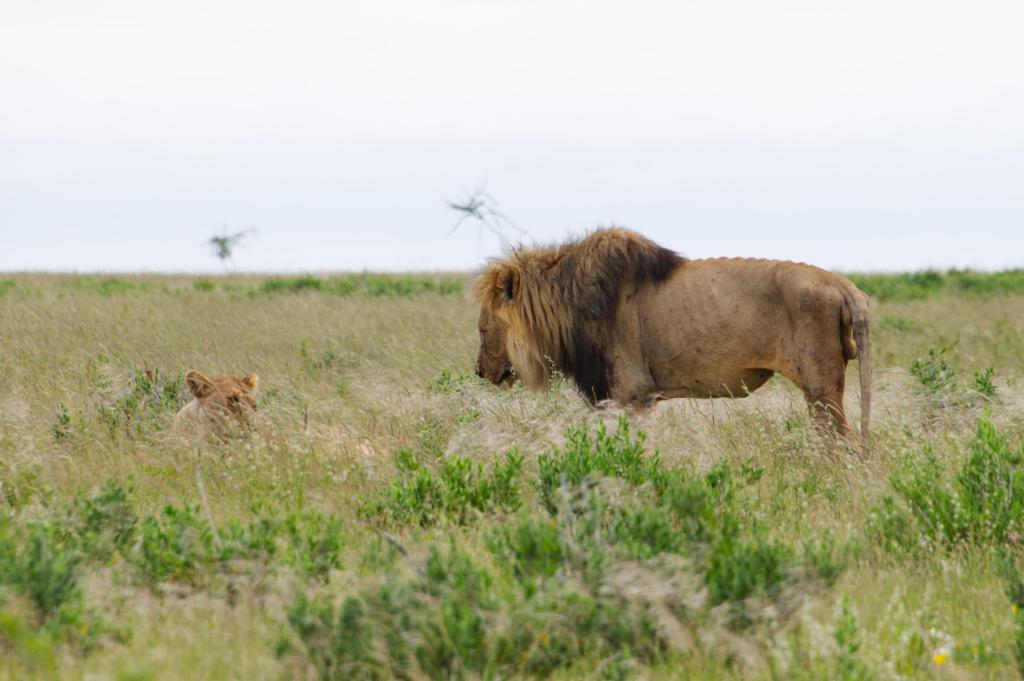
In the rains of Etosha, the male and female lion are cast in quiet contrast. The male rises above the grass, mane lifted by the damp breeze, his watchful presence marking the horizon. At his side, the female rests in the green, her body half-hidden in the tall blades, her eyes following what he does not. Together they are balance — his stature, her silence — each completing the other in the rhythm of the savanna.
When the season shifts and the green fades back to dust, their forms will remain. He will still stand as the sentinel, she will still wait with the patience of the hunt, and Etosha will still move to their unspoken command.
In Etosha, the rainy season reminds us that the land is alive, constantly shifting between abundance and scarcity. Lions embody this rhythm — powerful, patient, and attuned to every change. Watching them move, hunt, and rest in the wet plains offers a window into the cycles that have governed this land for millennia. In storm or drought, in plenty or hunger, the lions hold the voice of this land. It is a quiet lesson in balance, survival, and the enduring beauty of Namibia’s wilderness.

 The Footstep Chronicles
Leave a comment