

Each summer, as evenings stretch long and light, and the air is filled with the hum of outdoor gatherings, the marching bands take to the streets and fields of Northern Ireland. From village parades to town festivals, from competitions to commemorations, their music forms a soundtrack to the season.
These are not fleeting performances. They are rituals that communities live by: weeks of practice building towards the summer calendar, uniforms pressed and ready, drums polished until they shine. For the onlooker, the experience is one of spectacle — a rush of colour, sound, and rhythm. For the players, it is something deeper: a tradition passed down, a way of belonging, and a craft honed with care.
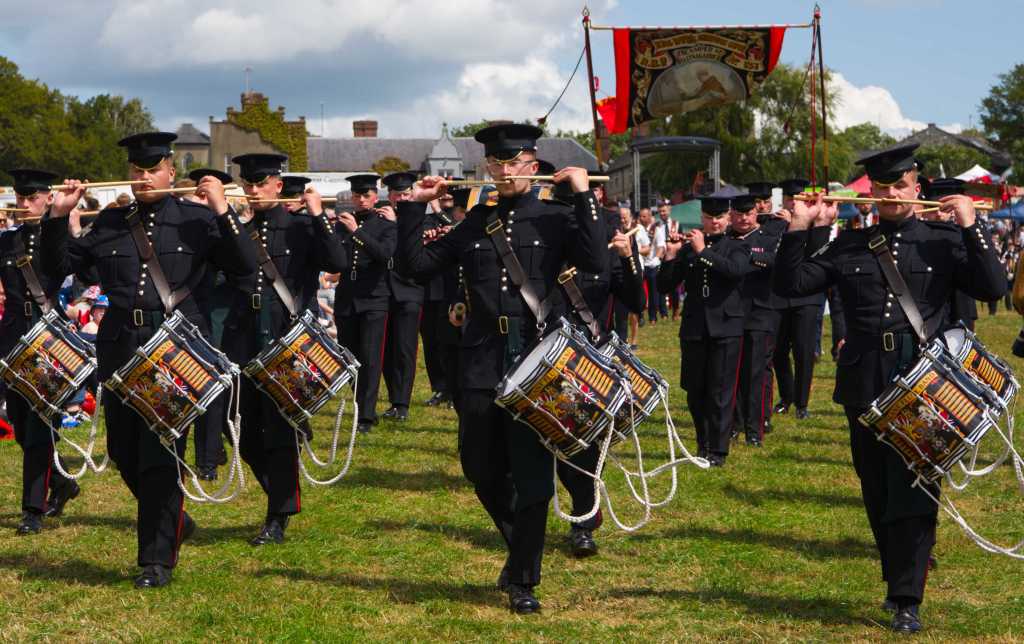
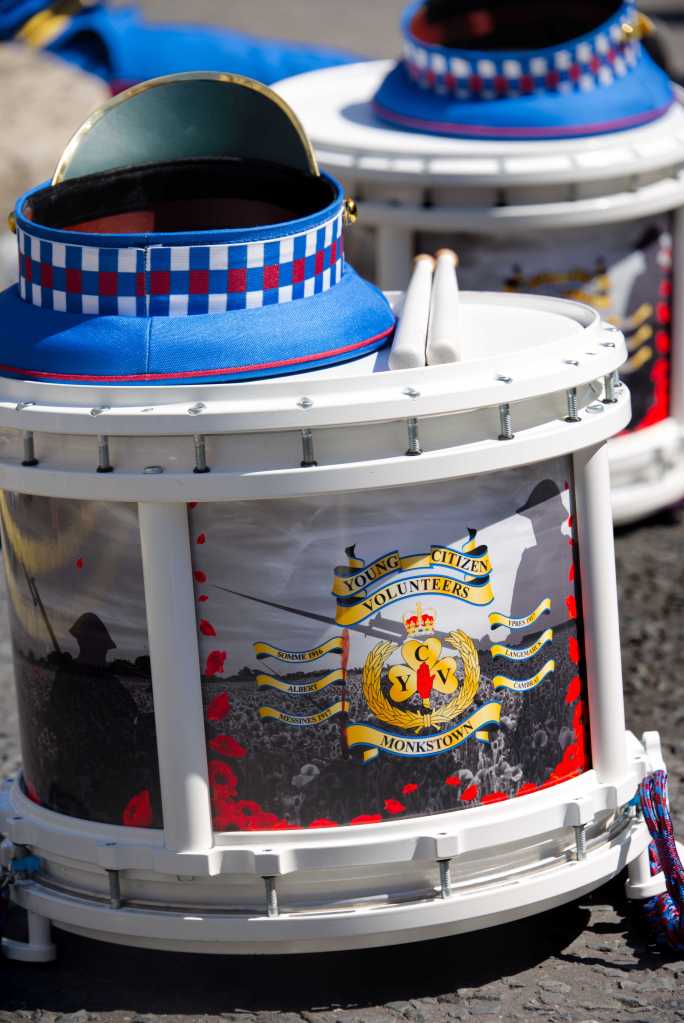
Drawn from towns, villages, and housing estates across the north, as well as from counties in the Republic of Ireland and the Scottish lowlands, they form the backbone of the day’s spectacle. Each band carries its own history, its own community, and — painted proudly on the skins and shells of their drums — its own emblems. These painted surfaces are not just decoration. They are statements of memory, belief, and artistry, rolling forward with every beat along the parade route. The painted emblems that travel with every band are as much a part of the performance as the notes themselves.
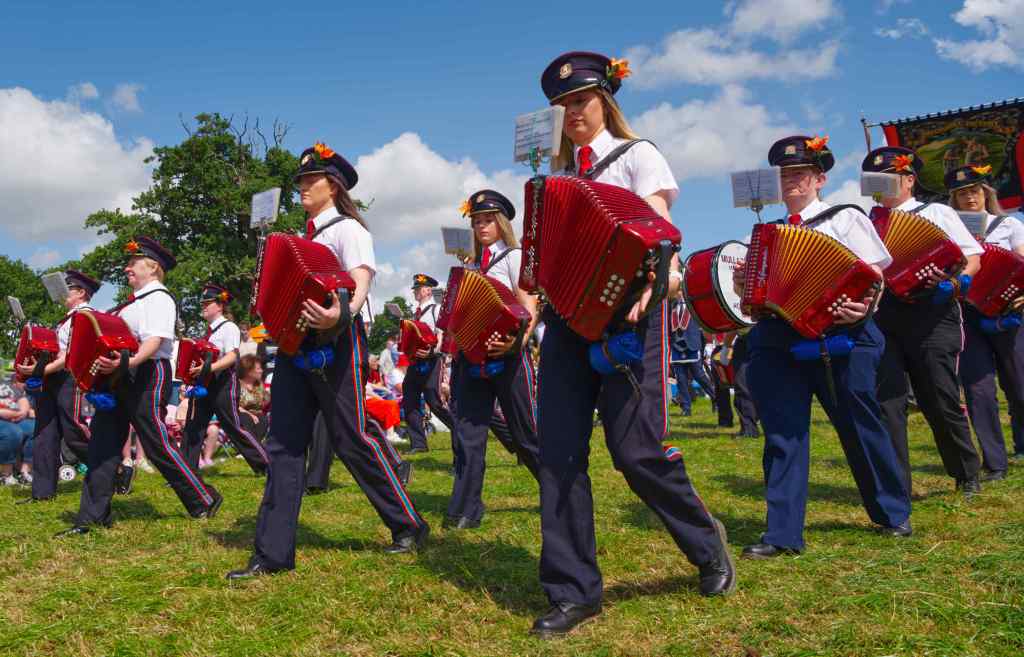
Across the season, one encounters a remarkable variety of bands.
- Flute bands, sharp and rhythmic, carrying tunes that cut crisply through the evening air.
- Accordion bands, rich and layered, swelling with warm harmonies.
- Silver bands, whose brass gleams in the sun, adding grandeur and weight to the music.
- Pipe bands, their drones and chanters evoking something timeless, their marching precise and steady.
Some bands are small, drawn from a single estate or village, made up of families and neighbours. Others are large, with dozens of players, travelling long distances to take part in festivals or competitions. What they share is a sense of discipline, camaraderie, and identity.

When summer arrives, calendars are quickly marked with local parades and gatherings. A small village may close its main street for a procession. A seaside town may welcome visiting bands to add colour to a festival. Competitions draw groups from across counties, each keen to demonstrate skill and style. For many communities, the arrival of the bands is the highlight of the season — the sound of summer itself.
To see a band pass is to hear music, but it is also to witness a kind of moving gallery. The drums — bass, tenor, and side — carry with them the emblems that identify and distinguish each group.
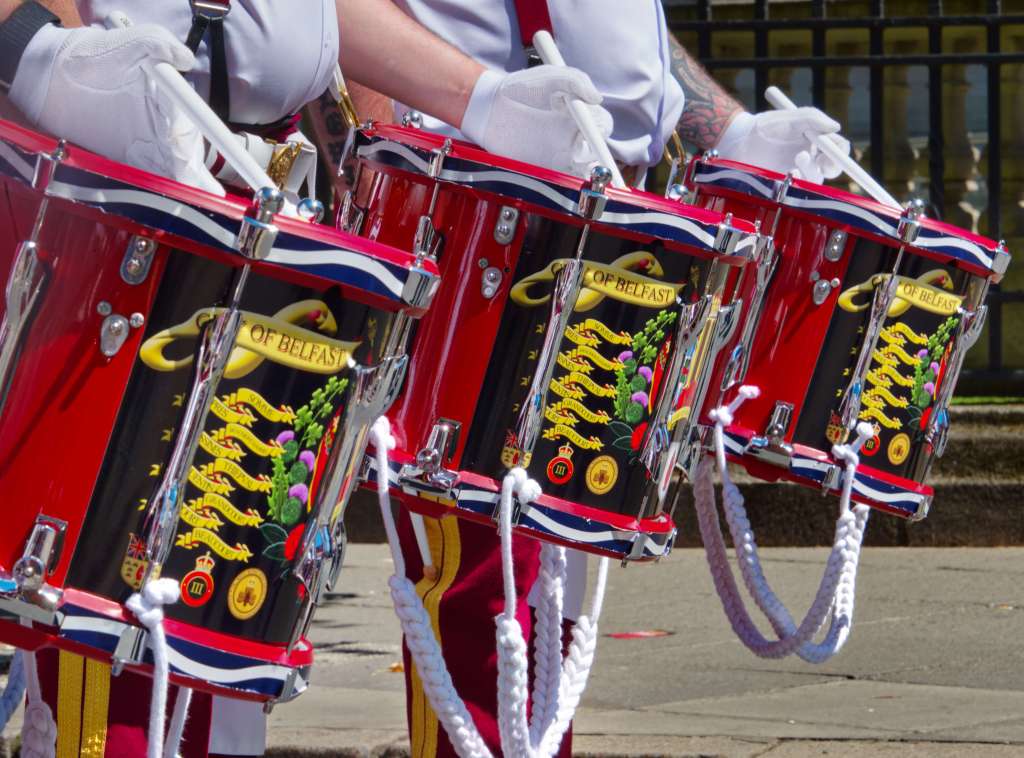
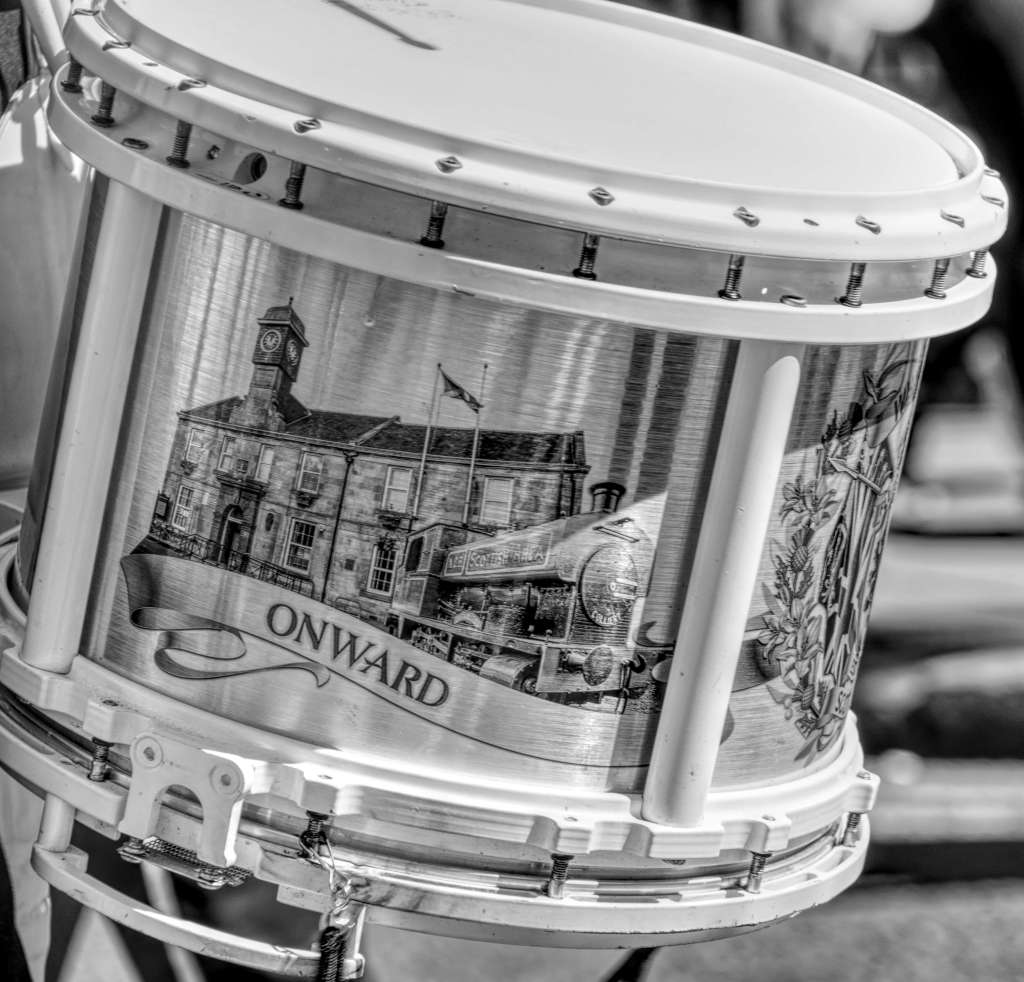
The bass drum is the most obvious: its broad skin painted with a bold central emblem, sometimes brightly coloured, sometimes finely detailed. Yet it is not the only bearer of imagery. Side drums often carry scrollwork, initials, or miniature crests on their shells. Tenor drums, too, can be decorated with motifs that complement the main design.
Together, they form a set. The bass declares the identity of the band, while the side and tenor drums echo and reinforce it. As the group marches past, it is not just sound that fills the street, but an entire visual statement — a rolling heraldry of colour, word, and symbol.


The imagery on drums is diverse, but certain patterns emerge across the tradition.
- Religious motifs: verses painted in ornate lettering, images of open Bibles, crowns, or doves.
- Historical references: depictions of local landmarks, anniversaries of a band’s founding, or scenes tied to shared memory.
- Local pride: crests of towns or villages, harbour views, rural landscapes, or symbols of industry — cranes, mills, or fields.
- Heritage motifs: tartans, Celtic knots, Scottish thistles or Irish harps, reflecting cross-channel and cross-border influences.
- Commemorative details: names of past members, anniversaries, or tributes painted onto side drums in smaller lettering.
Every emblem tells a story. Sometimes it is bold and direct: the name of the band, the place it hails from, painted large for all to see. Sometimes it is subtle, requiring closer inspection — a verse curled along the rim of a side drum, or a small crest tucked into a corner of the design.

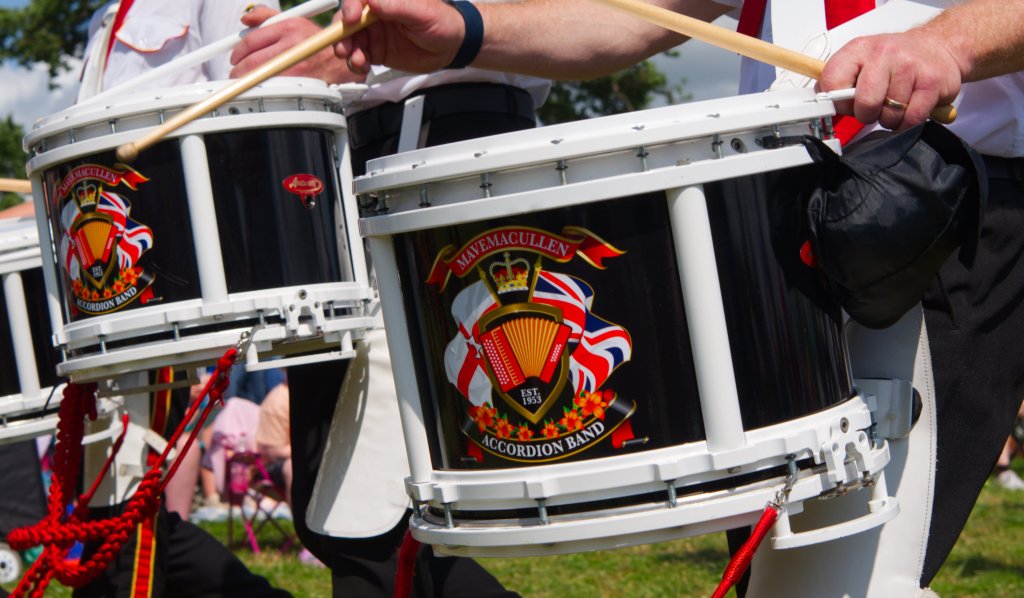
Behind every emblem lies an artist’s hand. In earlier times, local sign-painters who lettered shopfronts and banners also painted drums, giving them bold lettering, bright colours, and a distinctive folk-art style. Many of those designs, simple yet striking, are still carried today.
In recent years, specialist painters and airbrush artists have added new depth and detail. Some create mural-like scenes with shading and perspective, while others keep to the traditional bold lines. Whether old or new, each design requires care and patience, turning the drum into more than an instrument — it becomes a piece of art in motion.


Alongside the drums, banners also play a role in the summer traditions. Where the drum is intimate and mobile, the banner is large and commanding, lifted high above the crowd. Painted or embroidered, banners often share similar themes — scripture, history, local pride, or heritage motifs — and act as a visual partner to the drums.

When a band or lodge carries its banner, the message is unmistakable: this is who we are, this is where we come from. In procession, the banner and drums together create a harmony of image — one carried by hand, the other carried on sound.
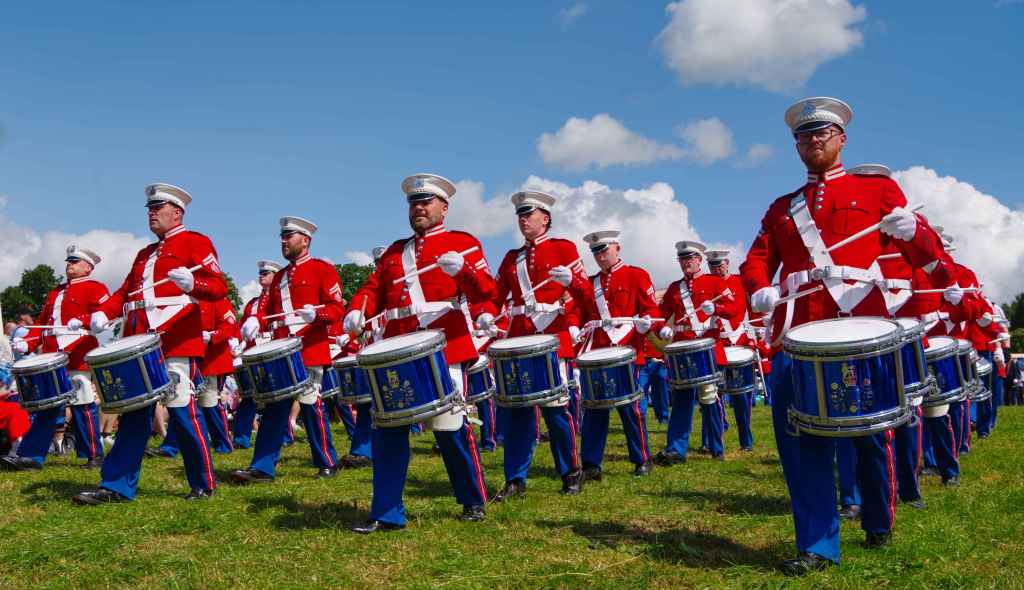
The artwork on the drums gives every band a presence beyond its sound. A bass drum painted with bold emblems becomes a landmark in motion, instantly recognisable as it leads the group forward. Side and tenor drums, decorated with scrolls, initials, or miniature crests, add detail that completes the picture.
Together, these instruments turn a band into a moving gallery. Each design tells a story — of place, of tradition, of memory — and carries it from street to street, town to town. As the beat echoes down the road, the images travel too, leaving behind impressions of colour and meaning that remain long after the music fades.
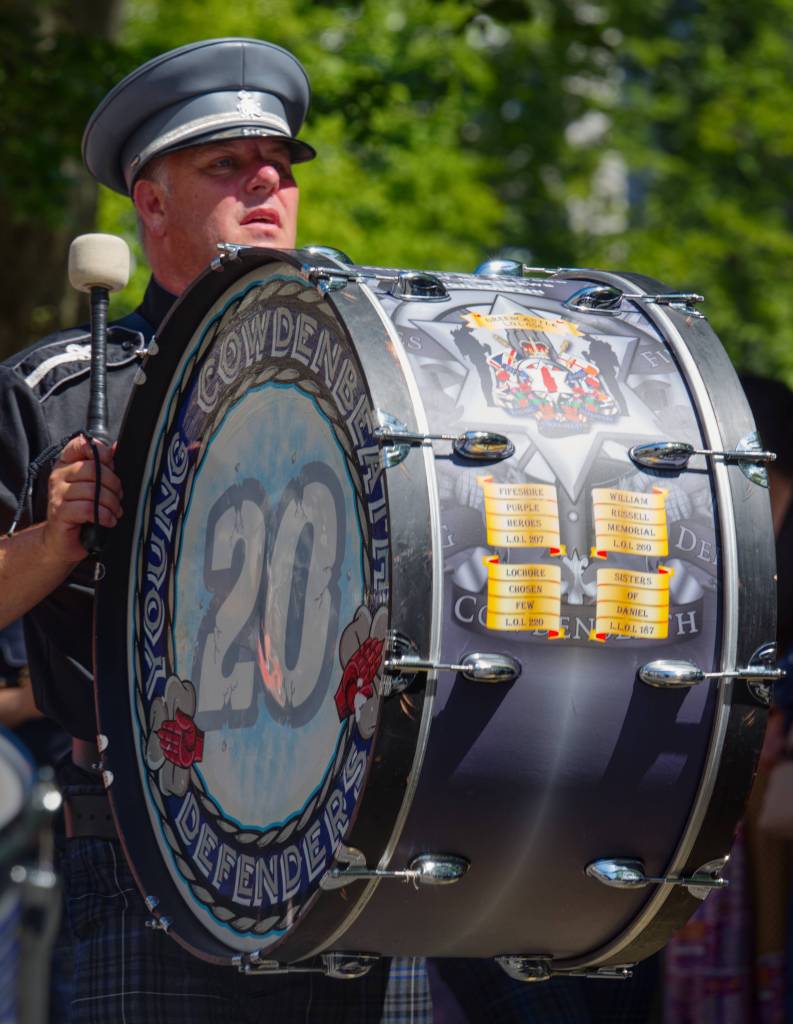
For all their spectacle, the bands are fundamentally about community. They are made up of neighbours, relatives, and friends. Weekly practices, fundraising events, and summer parades weave the band into the fabric of local life.
For children growing up in a band, the first close look at the emblem is often on the instrument they help to carry. They may start as banner-bearers or learners on the side drum, eyes drawn to the scrolls and symbols painted across the surface. In time, they come to understand the history it represents. The emblem becomes part of their identity, a badge carried not just on the street but in memory. They say, in paint and symbol: this is where we are from; this is who we are together.
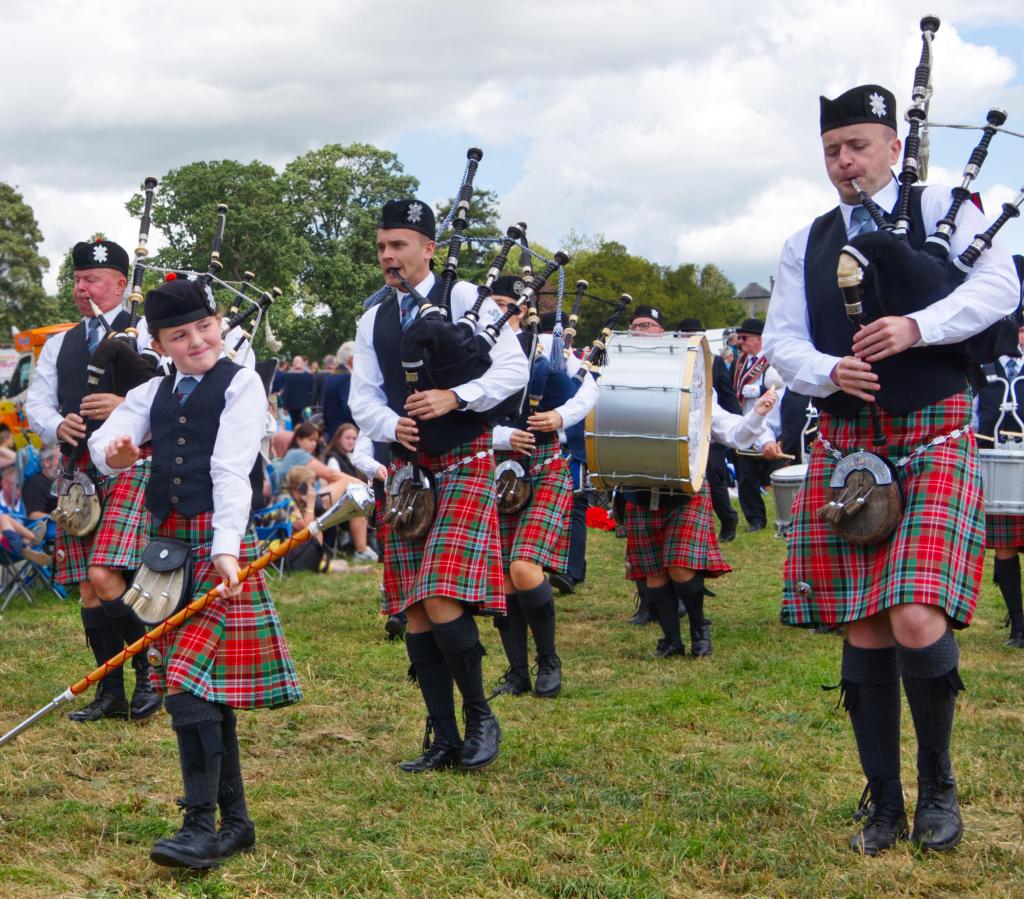
The emblems, too, are more than decoration. They are memory and aspiration, heritage and artistry. They remind players and onlookers alike that music is never only sound. It is always bound up with identity, with belonging, and with the stories communities tell about themselves.


The marching band season is one of Northern Ireland’s most distinctive cultural traditions. It is a season of sound — the sharp crack of snares, the resonant boom of bass, the melody of flutes and pipes. But it is also a season of images — the painted emblems that travel with each band, bold and colourful, symbolic and proud.
From the largest bass drum to the smallest side drum, each painted surface contributes to a language of identity. Together, they form a moving gallery, carried through towns and villages, seen by generations, remembered long after the music fades.
In the end, the bands of the summer are not just about what is heard, but about what is seen. Their music fills the air, their emblems fill the eye, and together they create something lasting: a tradition that beats forward with every step.
 The Footstep Chronicles
Leave a comment