

There are few places in the world where a walk is never just a walk, but a plunge into a living museum of sound, scent, and color. Marrakesh is one of them. The Medina—its old walled city—breathes in layers of centuries, and nowhere is that pulse more vivid than in its markets. Step inside, and you’ll find more than spices. You’ll find the hum of crafts, the gleam of brass, the sharp tang of olives, the rustle of fabrics in desert winds. The souks of Marrakesh are less a shopping district than a labyrinth of wonder, where each corner reveals a different world.
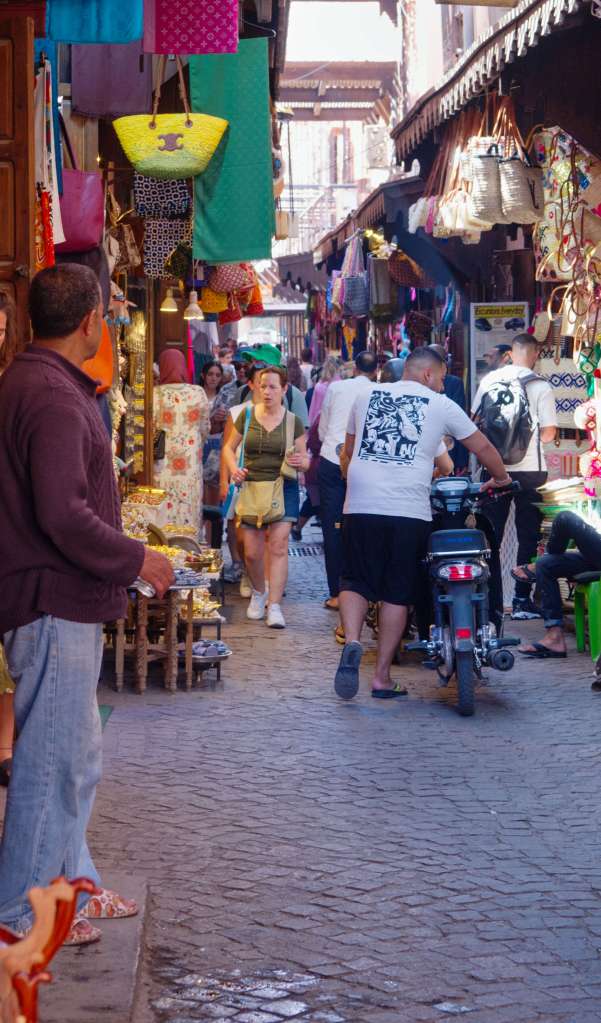
To enter the markets is to enter a performance. The alleys tighten, twist, and spill into small squares where stalls spill over into one another. Lantern light filters down through wooden latticework. You hear the clang of metalworkers beating copper into trays, the swish of a tailor’s scissors, the chorus of greetings called out in Arabic, French, and English.
Somewhere nearby, a mule pulling a cart with bundles squeezes past with calm patience. The Medina does not try to impress; it simply lives, and in living, it astonishes.
The spice stalls may be the first image visitors carry with them, but linger longer, and you discover that Marrakesh’s markets are a mosaic, each piece as compelling as the next.

The scent finds you first—sharp, briny, and alive with vinegar. Then the colors appear. Vast bowls tilt toward the street, each piled high with olives that gleam like polished stones in the sun. Greens so bright they seem almost luminous, purples that shift toward black, golden yellows marinated with herbs. The displays are abundant, theatrical, and impossible to pass without slowing down.
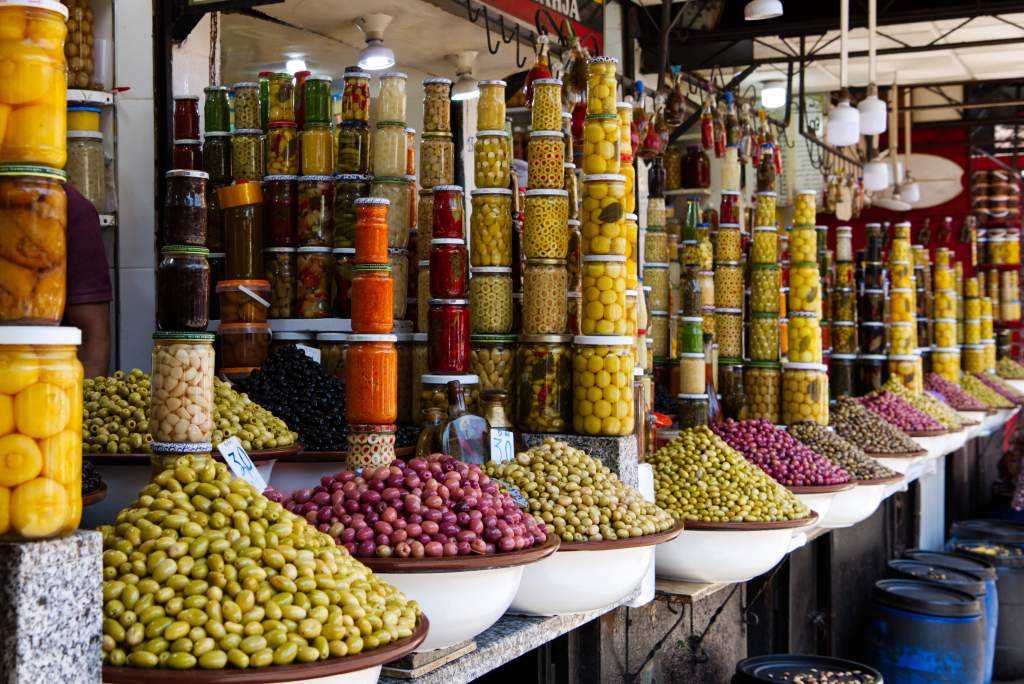
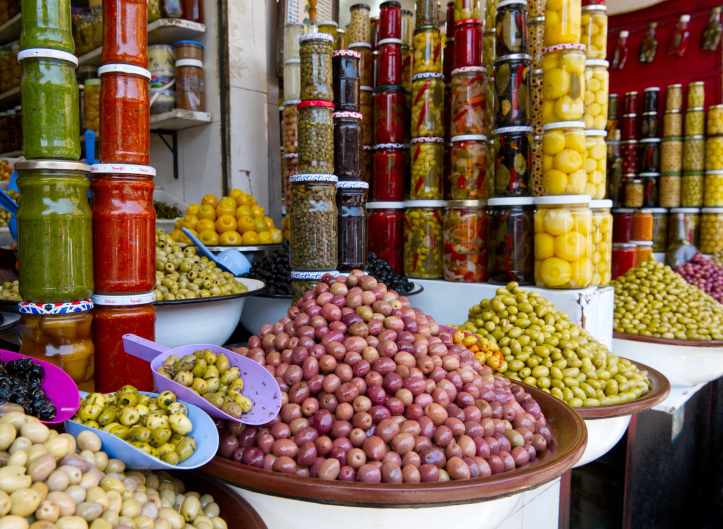
Step closer, and you notice the details. Some olives are cracked and packed with fiery chilies, others infused with sprigs of rosemary or thyme that leave a lingering fragrance. There are glossy rounds marinated in lemon and garlic, and delicate, buttery ones that melt almost instantly on the tongue.
Sellers encourage you to taste, handing over samples with a knowing smile, as if confident that one bite will do the work of persuasion. They gesture toward the bowls with wooden spoons, lifting a glistening olive as if presenting a treasure. Some laugh as they watch your reaction, proud of the sharpness of a chili-stuffed one or the surprising sweetness of another marinated with orange peel. The exchange is never hurried. A pause, a taste, a smile shared—this is how trust is built, one olive at a time.
These olive stalls are not simply for tourists—they are the daily pantry of Marrakesh. Families come with bags to buy by the kilo, choosing carefully from the many varieties. To stand here is to glimpse both the artistry and the practicality of the Medina: food arranged as a painter arranges color, yet destined for ordinary kitchens, where these olives will anchor meals that are anything but ordinary.
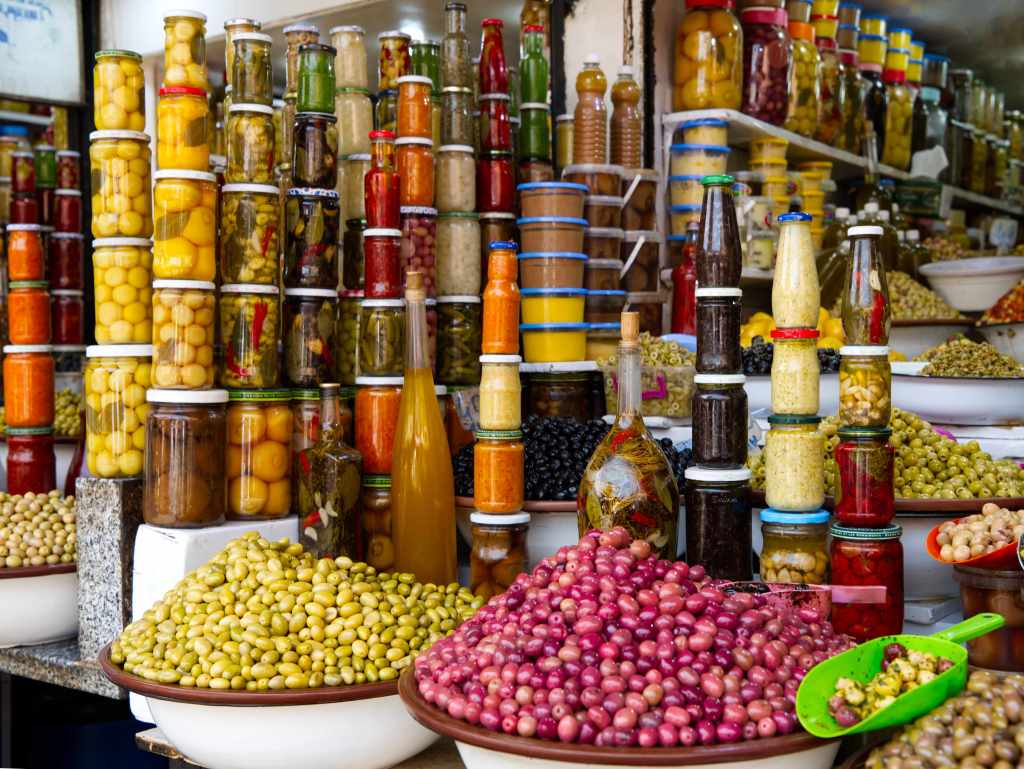

If the olives sparkle like jewels, then the jars of preserved fruits glow like stained glass. In row after row, tall glass jars are stacked in pyramids, filled with lemons glowing golden in their brine, apricots steeped in syrup, olives stuffed to overflowing, figs dense with seeds. Sunlight passes through the glass and makes each jar a lantern, lighting up the stall.
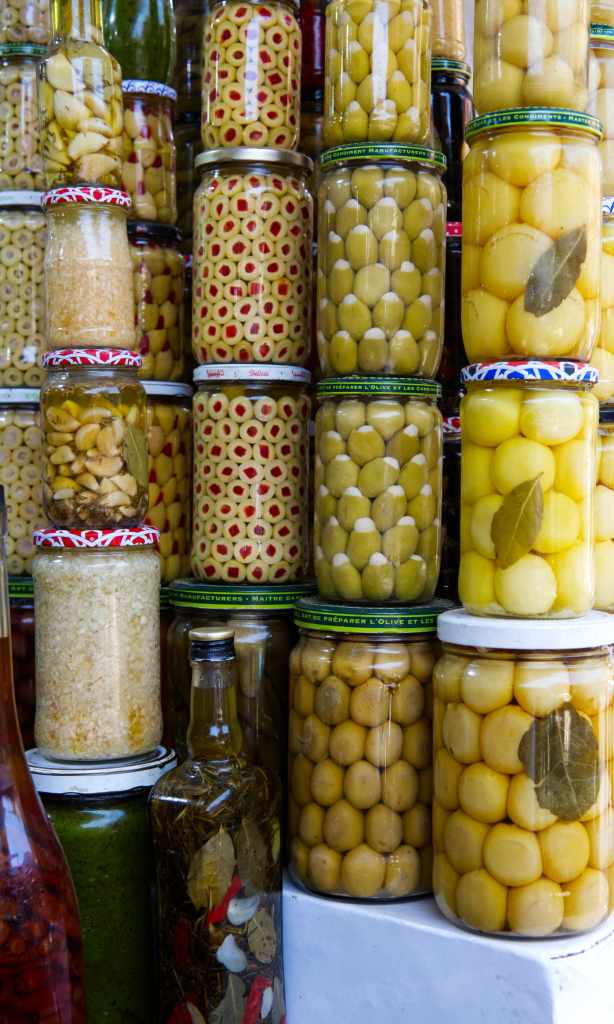
These jars are more than display; they are Morocco’s way of bottling sunlight, a centuries-old craft of carrying harvests across the seasons. To taste what’s inside is to taste patience itself—the lemon tangy yet mellowed by weeks in brine, the apricot honey-sweet but still glowing with the memory of orchards. Each spoonful feels like a promise that summer never truly ends, a reminder meant to brighten the long nights when the fields lie bare.

Step from the scent of olives and fruits into a different world—the souks of fabric and clothing. Bolts of cloth cascade from wooden beams, silk and cotton flowing in waterfalls of color. Tailors sit cross-legged behind sewing machines, their foot pedals thumping out rhythms as steady as a drum.
In some stalls the kaftans hang in rows, their embroidery delicate as lace, gold and silver threads catching the light. The garments are not just fabric; they are stories of Morocco’s crossroads, where Berber tradition meets Arab influence, where desert practicality meets an eye for elegance.
Try one on, and the vendor becomes both stylist and historian, explaining how the hood of a djellaba shields against sandstorms, or how the patterns on a woven shawl echo tribal designs from the Atlas Mountains.

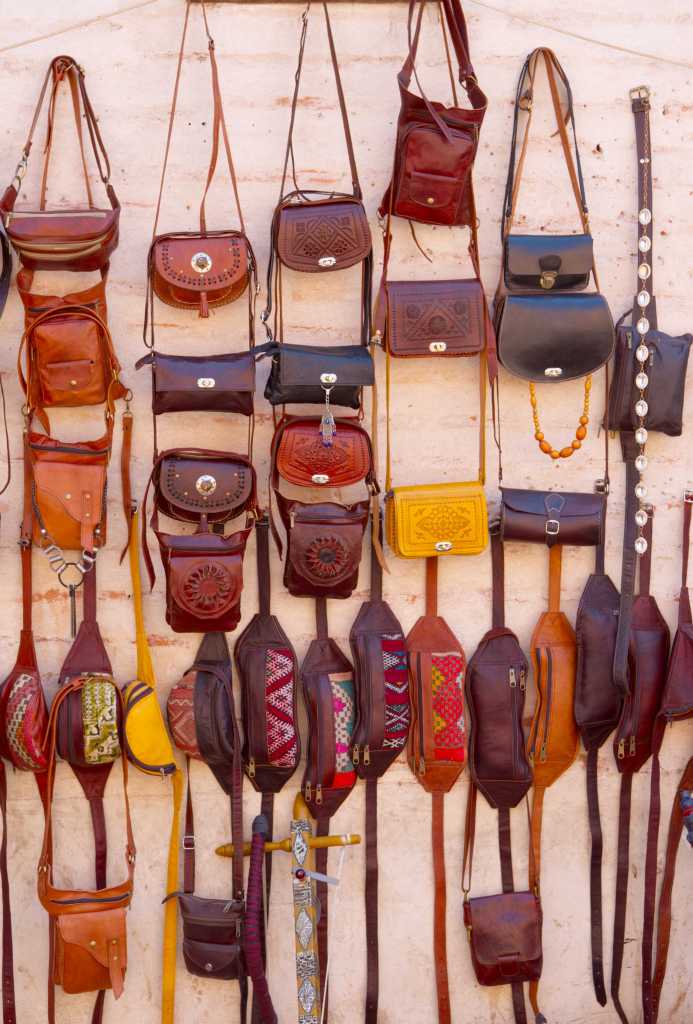
Then comes the unmistakable scent of leather—rich, earthy, and unapologetically strong. Marrakesh has been shaping leather for centuries, and its tanneries remain both a craft and a spectacle. In the markets, the result of that work hangs in abundance: soft babouche slippers in every color, handbags that gleam with polish, poufs stacked high in ochre and chestnut tones.
Each piece seems to hold the memory of sun and hide, of the labor that transformed it. Vendors urge you to touch, to feel the difference between camel leather and goat, to imagine how a bag will soften with years of use. To walk here is to be reminded that every object carries a story of hands and time.
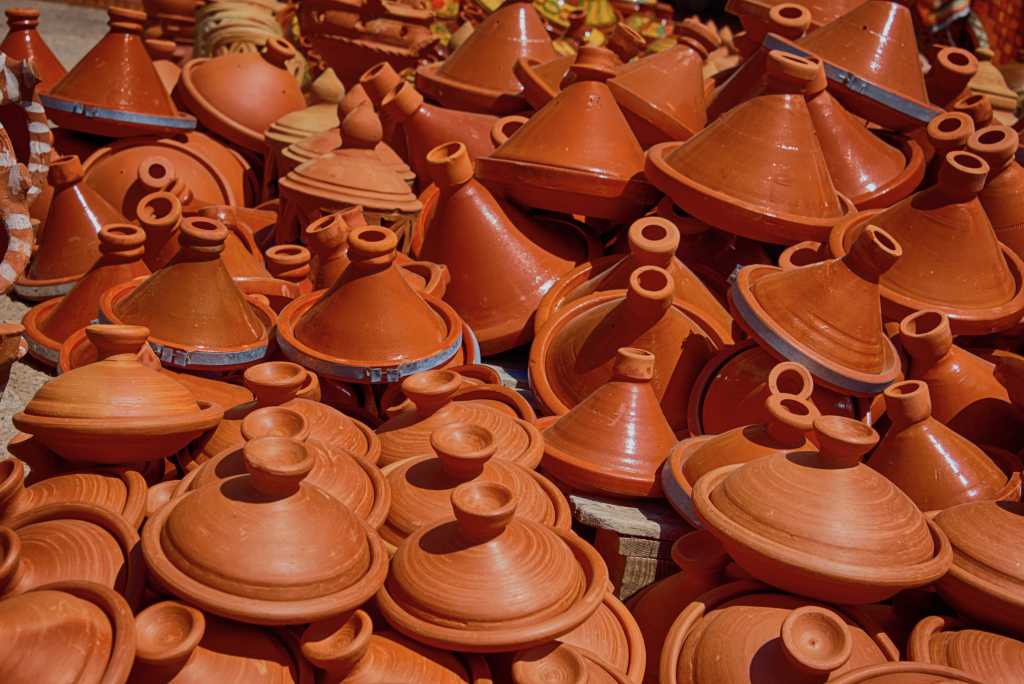
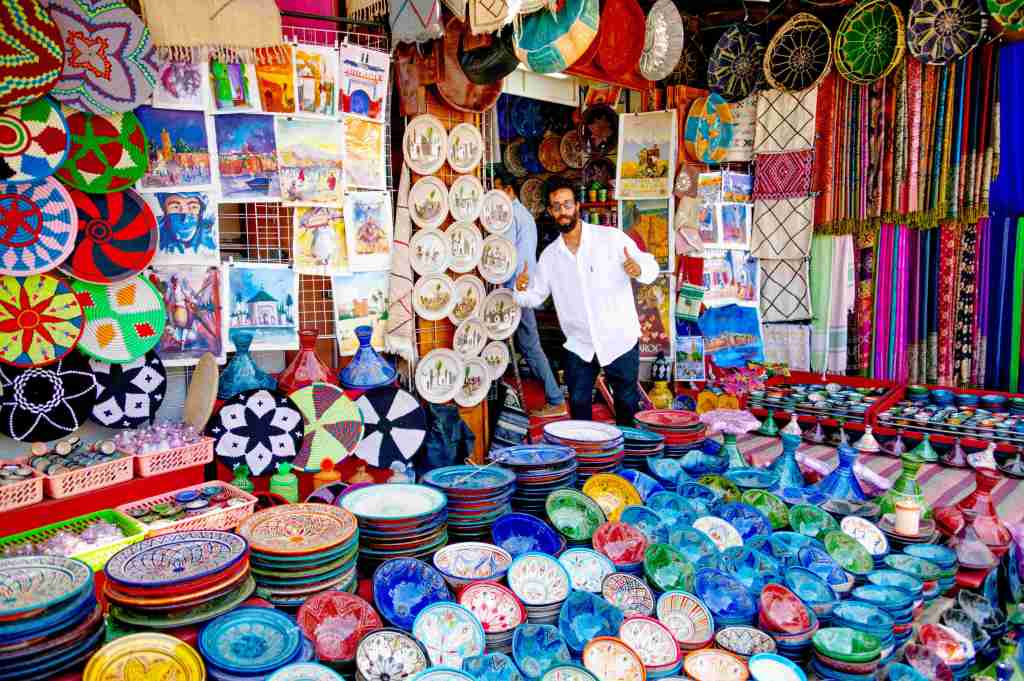
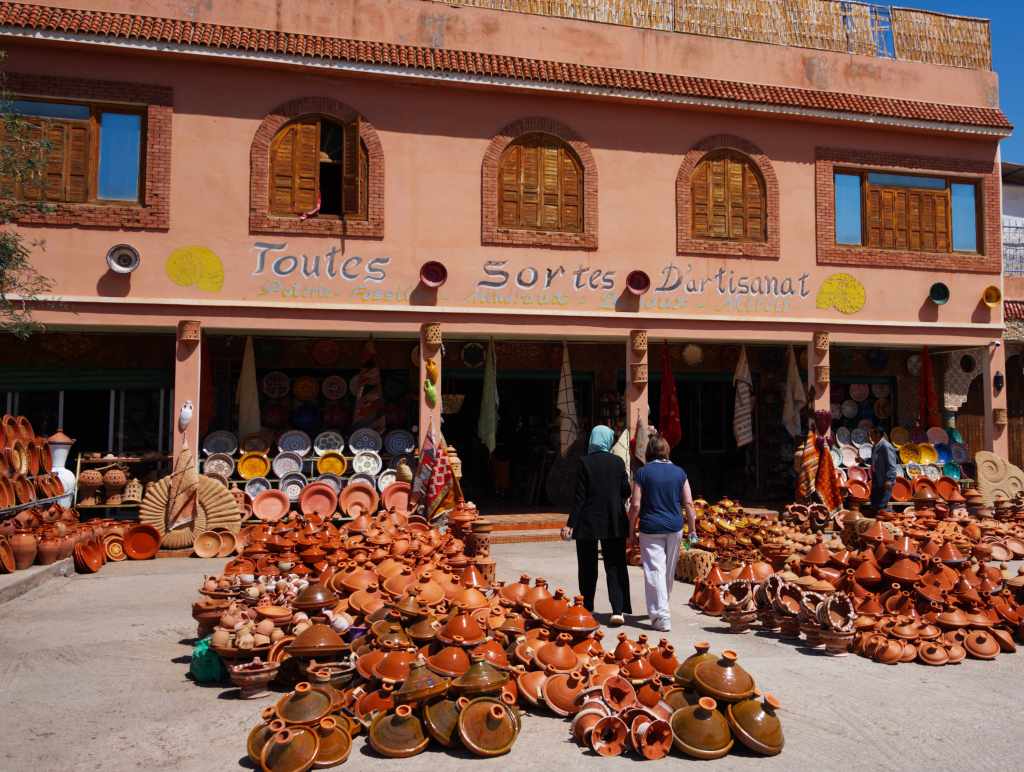
The souks are also a gallery of clay. Ceramic bowls and tagines stack in dizzying towers, their surfaces alive with pattern—geometric stars, interlaced vines, and bold stripes in cobalt, emerald, and saffron. Plates hang on walls like mosaics, turning each stall into a kaleidoscope.
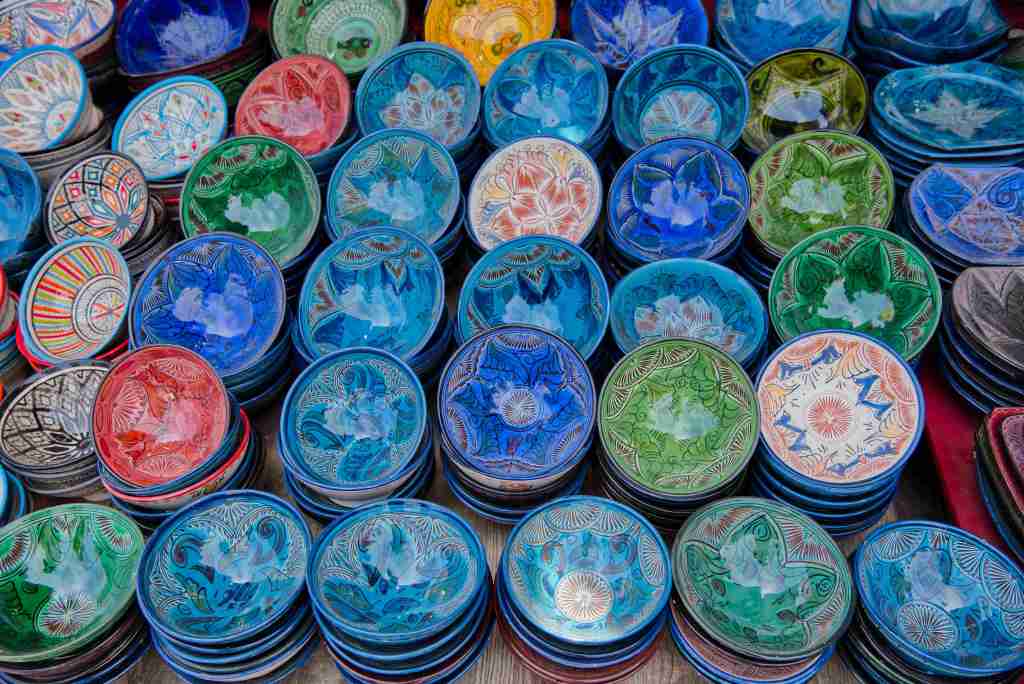
Pick up a bowl, and the weight surprises you; these are not fragile decorations but everyday tools of Moroccan kitchens. The vendor might explain how the conical lid of a tagine traps steam, cooking meat and vegetables until they fall apart with tenderness. Or he may simply smile and let the colors tell their story—earthy reds, deep greens, and cobalt blues that carry the rhythm of Morocco’s landscapes.

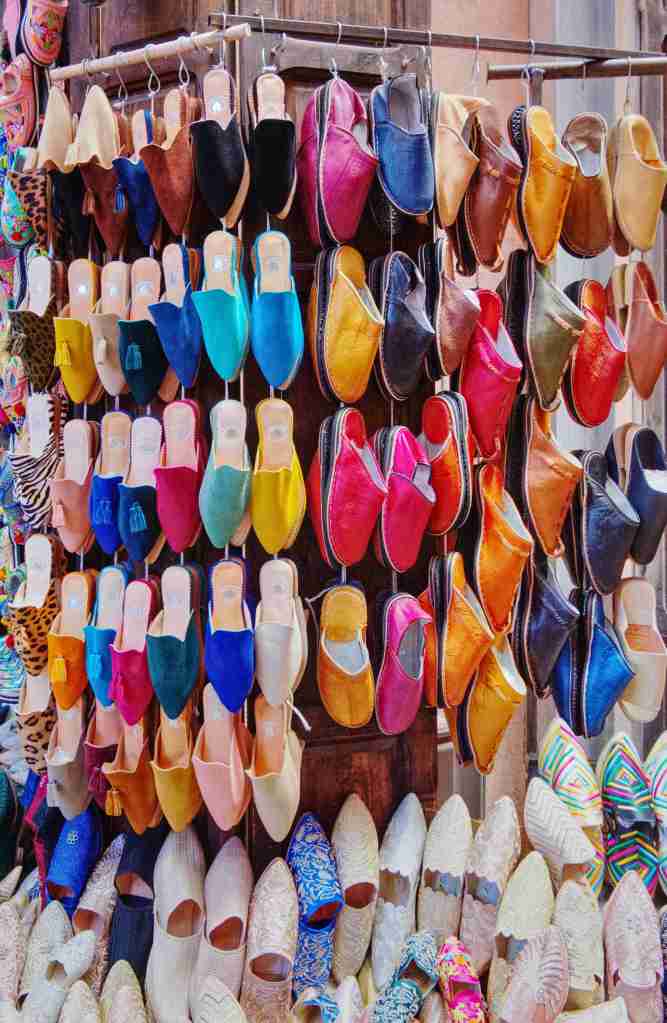
Not far from the fabrics and ceramics, another world opens up—rows of shoes, belts, and small goods that form the pulse of daily Marrakesh life. Slippers, or babouches, line the stalls in neat, colorful rows: buttery-soft yellow ones for tradition, bold reds and blues for flair, and embroidered pairs meant for weddings or celebrations. Beside them, stalls display woven baskets of all sizes, rows of hats shaded in natural straw and dyed hues, and necklaces strung with colorful beads alongside small trinkets perfect as a keepsake for any traveler. These goods speak less of spectacle and more of the rhythm of everyday need, the quiet heartbeat of a city where beauty is woven even into the ordinary.

Food fills every corner of the Medina. Past the jars of preserved fruit, you find dried dates and figs heaped in pyramids, their sweetness sticky on your fingers. Piles of almonds, walnuts, and pistachios sit beside trays of honeycomb, its golden cells dripping slowly in the sun. Sellers cut wedges of nougat, speckled with sesame seeds, and pass samples to children wide-eyed at the sugar. Chickpeas, lentils, and beans fill burlap sacks, waiting to become the base of soups and stews. The markets are not just for tourists; they are the pantry of Marrakesh itself.

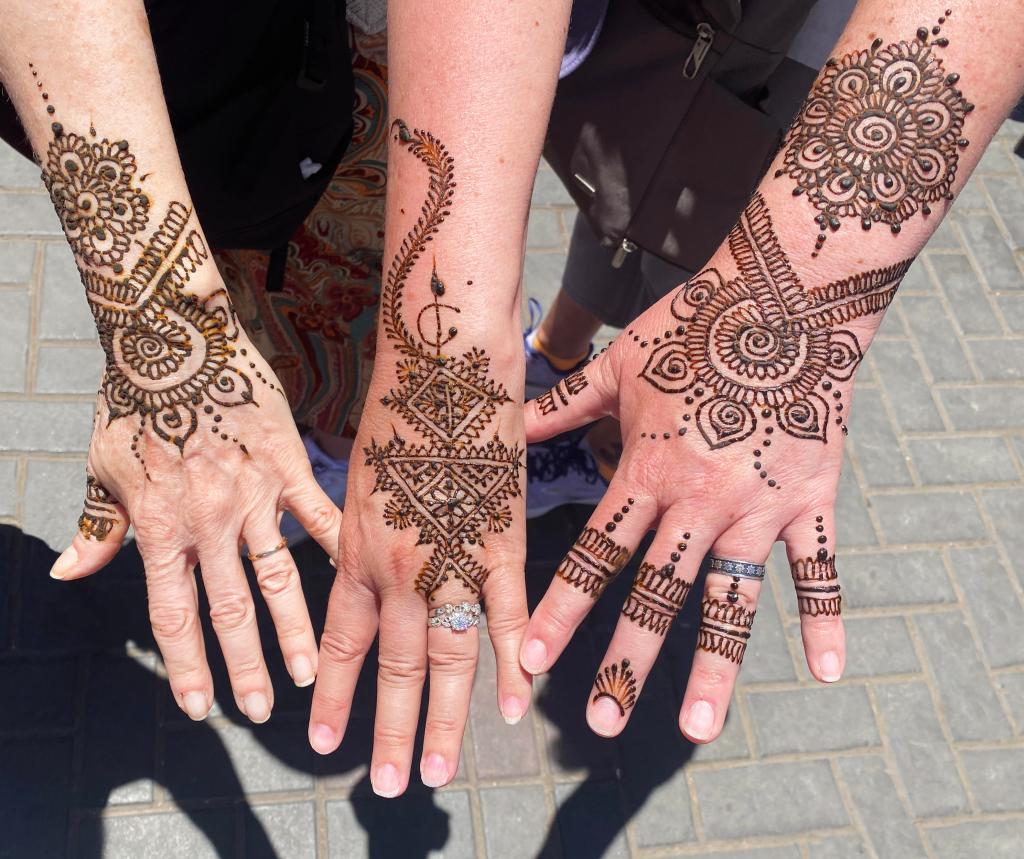
Amid the fabrics and food stalls, another form of art flourishes—henna. Women sit patiently with cones of dark paste in hand, sketching intricate designs onto the skin of willing visitors. The work is quick yet precise: spirals, flowers, geometric shapes that bloom across palms and ankles. For locals, these patterns carry deep cultural meaning, tied to weddings, celebrations, and protection. For travelers, they are both adornment and memory, a piece of Marrakesh carried on the skin for a week or two before it fades away. Watching the artist at work, you realize the market is not only a place of goods but also a gallery where the body itself becomes the canvas.
What stays with you after a walk through Marrakesh’s markets is not only what you’ve seen or bought, but the people who fill the alleys with life. Shoppers thread through narrow passages with baskets in hand, greeting vendors they’ve known for years. Children dart between stalls, drawn by sweets or bright fabrics, while merchants call out with voices that carry both welcome and familiarity. The markets are not background scenery—they are gatherings where daily life unfolds in plain sight.
For the traveler, this bustle becomes an invitation. A vendor may stop you to share a story about where his olives were grown, or press a sample of candied fig into your palm. An artisan might demonstrate how a leather slipper is stitched, or simply smile at your attempt to pronounce a word in Arabic. These moments remind you that the markets are not only places of trade but spaces of encounter, where strangers pause long enough to share food, laughter, and fragments of tradition
 The Footstep Chronicles
Leave a comment