


At first, it is only sound. A rustle above the grasslands, a quick chatter carried by the breeze, a hundred voices rising and falling in uneven chorus. Then the eye catches it: a flash of gold, the flicker of black wings, the sudden swing of a woven lantern suspended from a branch. Here, in the sunlit trees and reed beds of Southern Africa, the weaver birds make their presence known. They are small, but they are everywhere, their lives threaded into the very fabric of the land.

To walk beneath their colonies is to witness a kind of ceaseless artistry. Each bird is a builder, each blade of grass a strand in a larger story. The nests sway in the wind like ornaments of hope, stitched together through endless labour and endless risk. The weavers chatter, they quarrel, they court, they fail, they begin again. And always, they build — turning ordinary grass into homes that cradle the future against the uncertainties of the wild.
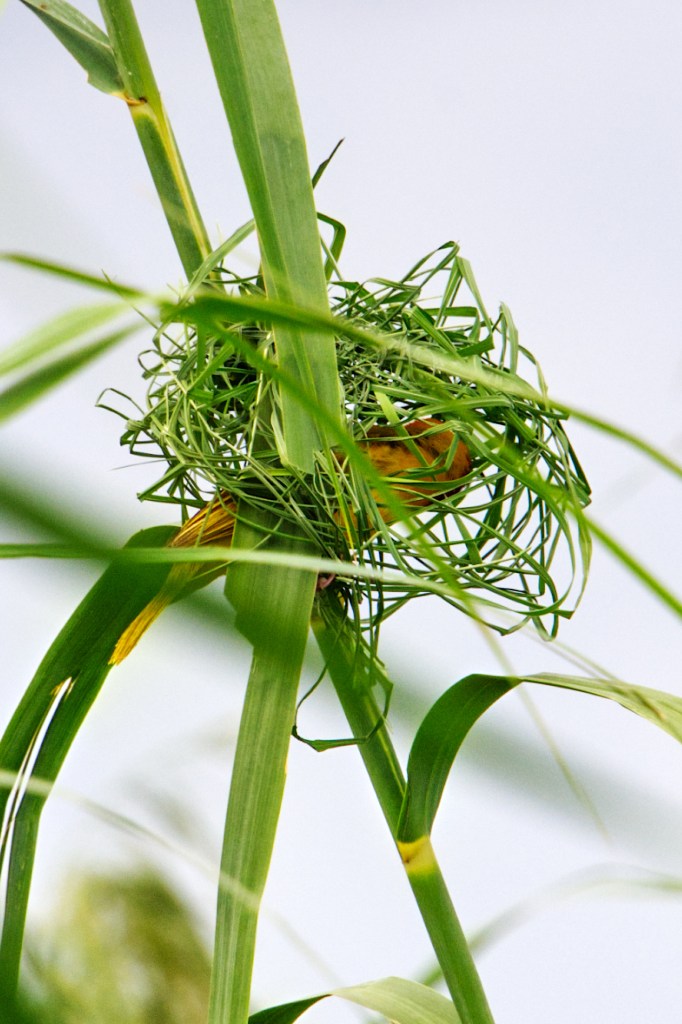
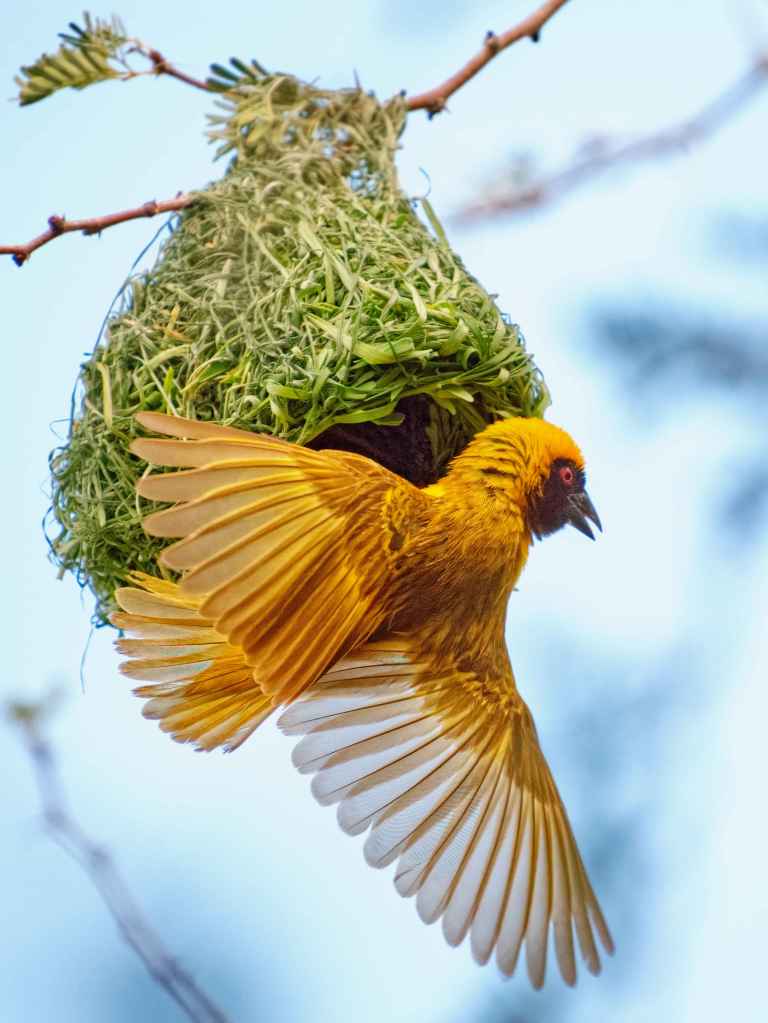
The story of the weavers begins not with flight or song, but with the gathering of materials. A male sets out with determination, stripping grass from reeds, carrying each piece back to his chosen perch. With his beak he ties the first knot, then another, until the shape begins to appear: a ring, a hollow, a dome. His movements are ceaseless, driven by an instinct as old as time.
And always there is an audience. The female watches, her silence heavier than the chatter of a hundred males. If she disapproves of his workmanship, the nest will hang empty, a hollow cradle swaying uselessly in the wind. If she approves, she will step inside, and life will take root. For him, rejection is no defeat — only another call to begin again. In this endless cycle of effort and renewal, the weavers carry on, their homes becoming both courtship and sanctuary.

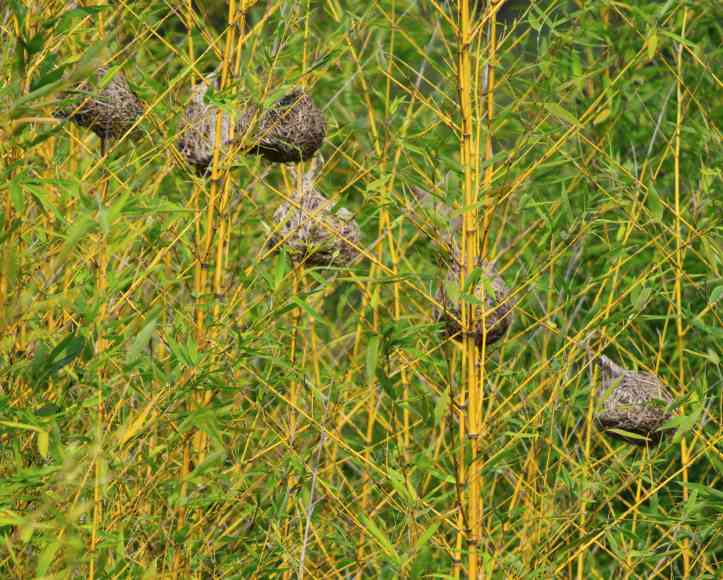
Along the slow bends of the great rivers, where the banks melt into marsh and the reeds rise shoulder-high, the world belongs to the weavers. The reeds grow in dense thickets, their green blades trembling with the slightest breath of wind, their fronds catching the light like polished glass. Tucked among these swaying stalks are the nests, hundreds of them, lanterns of woven grass clinging to the stems, heavy with life. A reminder that the river does not belong only to water and fish, but to the countless golden architects who weave their futures among its green walls.
Far from the river, in the emptiness of the Kalahari, the desert holds another kind of story. Here the Sociable Weavers have built their fortresses. Their nests are not the small lanterns of the riverbank but sprawling kingdoms that spread across entire trees, vast thatches layered with hundreds of chambers. To stand beneath one is to stand in the shadow of a city in miniature. Inside, the temperature is softened against the day’s furnace heat and guarded against the night’s chill. Life continues here even when the sand blows hot across the dunes.
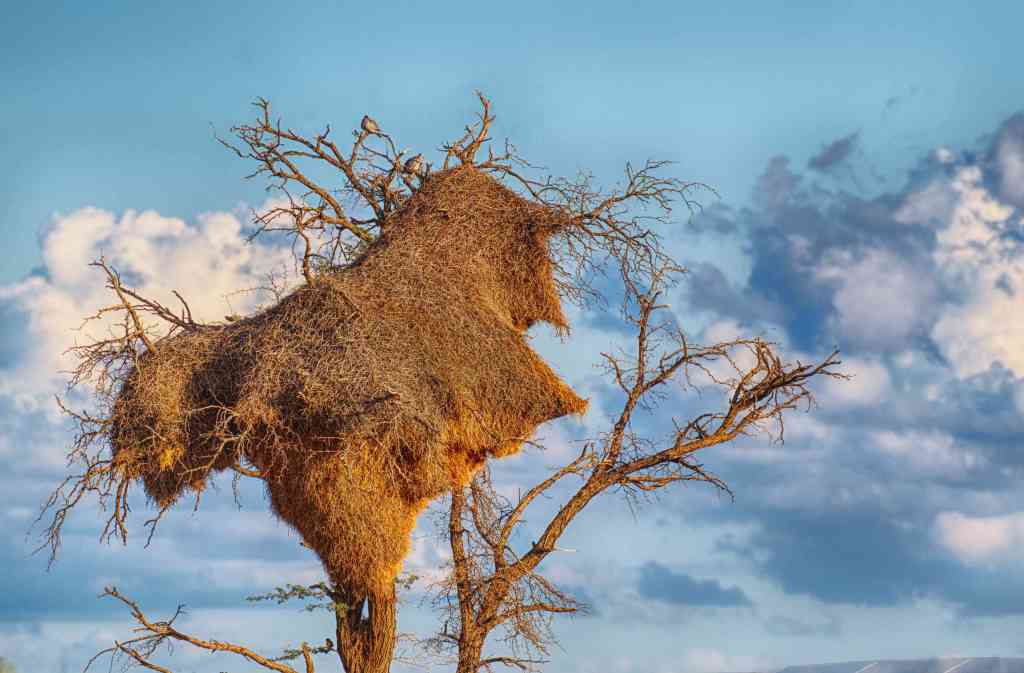
In the barren stretches of the Northern Cape and across the border into southern Namibia, the land is stripped to its bones. The sun presses hard upon the stones, and the air shimmers with heat. Trees are rare here, scattered camel thorns standing alone against the horizon, their branches twisted and dry. Yet it is in this stark place, where the desert seems empty of softness, that the weavers have made their most astonishing mark.
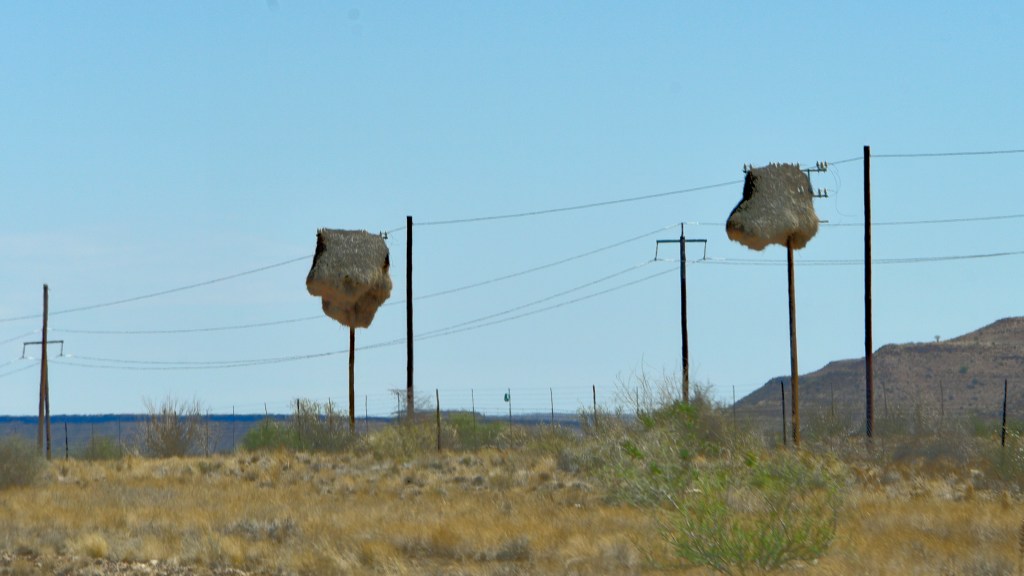
Upon the thorn trees — and even on the bare wooden skeletons of telegraph poles that march across the desert — hang the immense nests of the Sociable Weavers. They are vast, heavy structures, layered with grass and twigs until they resemble great thatched roofs lifted into the sky. From a distance they seem improbable, as though a piece of a village hut had been carried into the wilderness and left to sway in the wind. Generations are born and raised in these woven cities, the desert around them silent but for the ceaseless chatter of wings.
High above the colonies, raptors drift in circles, their shadows gliding silently over the ground. Falcons and hawks bide their time, waiting for the moment a fledgling falters in its first uncertain flight. Genets, too, slip through the branches at night, and in some places monkeys raid the nests with restless hands, tearing through woven walls for the fragile treasures inside. Even the skies can turn against the weavers. Storm winds rip nests from their moorings, hurling them into rivers or dashing them against the earth, while summer rains soak the delicate grass until it unravels strand by strand. The threats are constant, an unbroken siege against their fragile artistry.
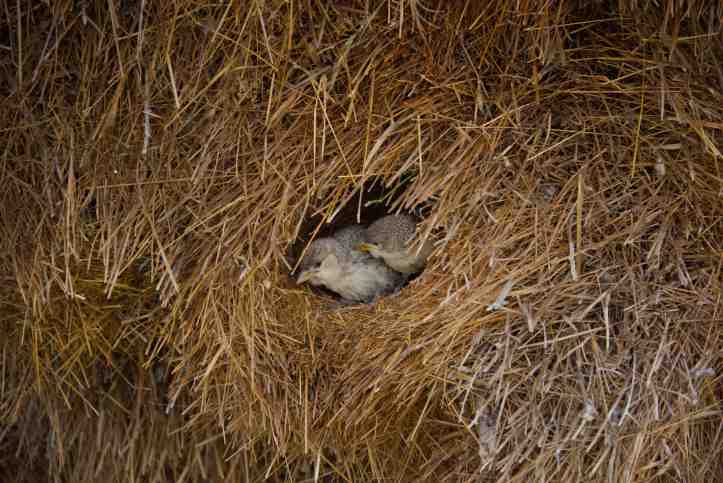

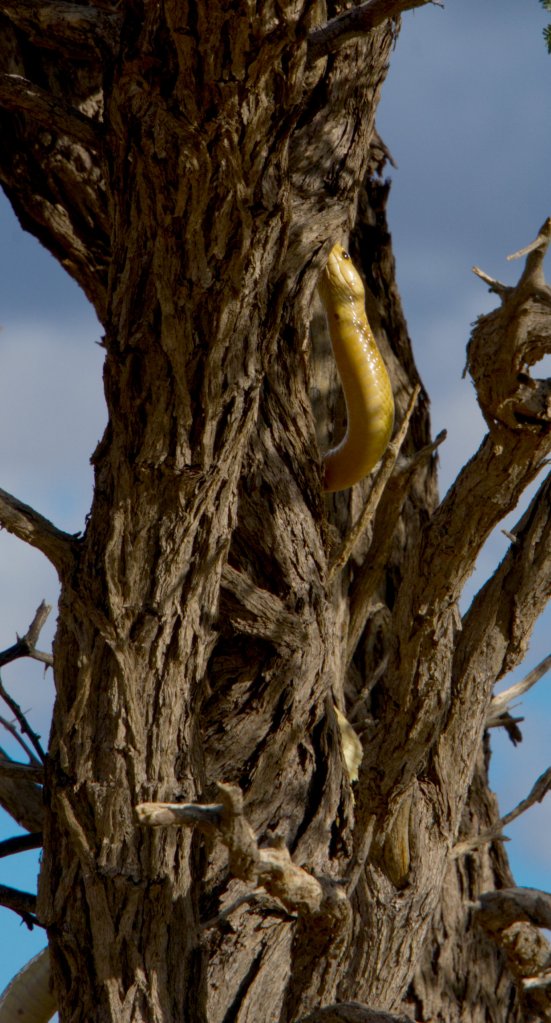
But none inspire such dread as the snakes. Cobras, boomslangs, and mambas move with a patient, fluid persistence, climbing trunks and poles, easing their way into the colonies as if the woven walls were no obstacle at all. Once inside, they become unseen hunters among the chambers, swallowing eggs and chicks until whole families vanish in silence. And still, even after such ruin, the weavers return to their work — patching, repairing, beginning again. Against the most ancient of hunters, their answer has always been the same: to build once more, and to trust the next knot of grass to hold the promise of survival.

The weavers are not simply birds; they are metaphors given flight. Their fragile nests, swinging between sunlight and storm, hold lessons older than language. They show that strength is not the absence of vulnerability but its companion — that beauty is born through persistence, through the quiet act of beginning again. Each thread of grass, each patient knot, is a declaration of endurance against all that would undo it.
To the people who live among them, the weavers are more than neighbours. They are the rhythm of morning and evening, the soft chatter that ties human life to the wild. Their artistry reflects our own longing to build, to belong, to leave something behind that can weather the wind. In their endless work, we find our own reflection — the fragile, fearless will to keep creating, no matter how many times the storm returns.
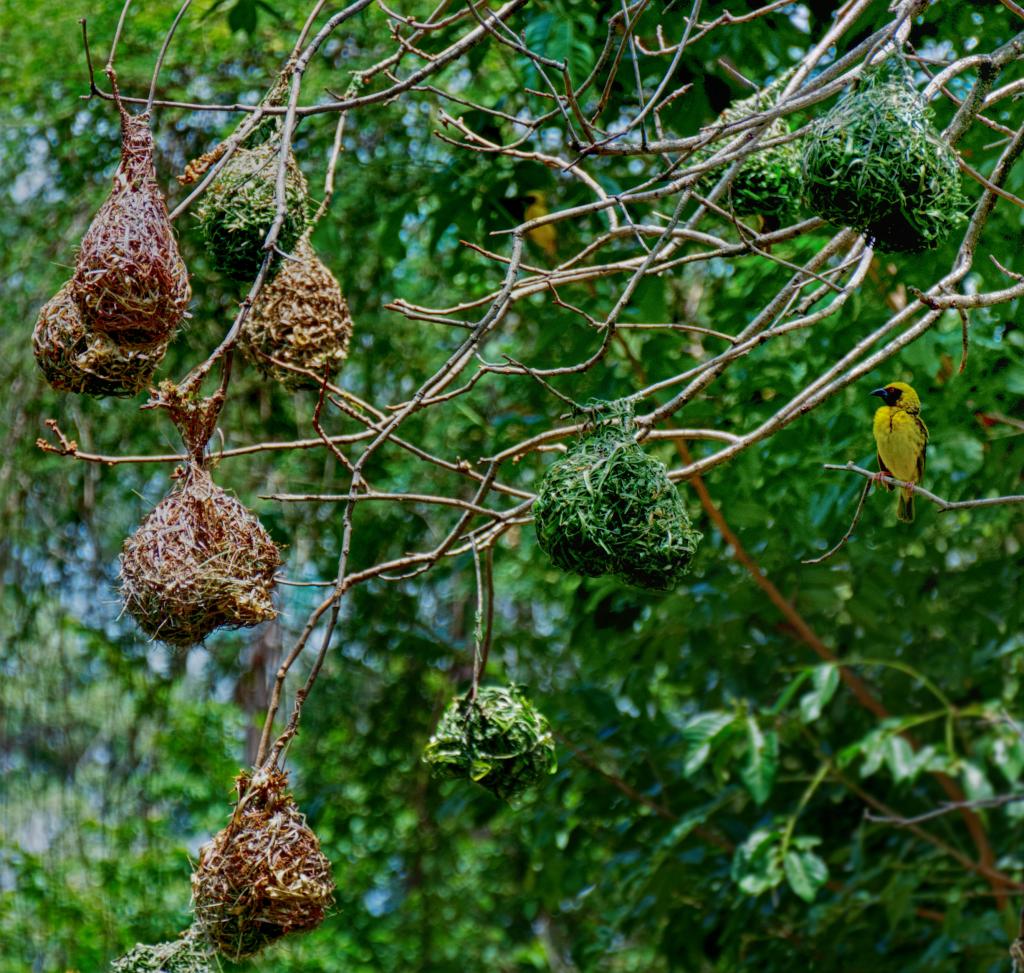
As the day folds into evening and the golden air begins to soften, the colonies grow quiet. The nests, heavy with life, sway gently in the cooling breeze, their silhouettes sharp against the horizon. For a moment, the chatter fades and the landscape holds its breath. The lanterns of the weavers, stitched from grass and perseverance, hang like promises in the twilight. Tomorrow the building will begin again. And in the ceaseless rhythm of that work, the story of the weaver birds — their dangers, their resilience, their meaning — will be written once more into the wind.

 The Footstep Chronicles
Leave a comment