


The Kalahari is known first by its color — that deep, endless red. The dunes roll for miles, glowing like embers under the sun, their flanks marked by the faint trails of beetles, wildebeest, and wind. And yet, that red is not forever. Each year, when the rains return, the Kalahari changes its face. Almost overnight, the dunes are clothed in green — grass rising so swiftly it seems to grow as you watch. The desert that once shimmered with heat becomes soft underfoot, its harsh edges blurred. The air cools, heavy with the scent of earth and wet leaves. It is still the Kalahari, but now it breathes differently. The silence turns to sound — to life.

The first impression is shock. The red that once defined everything — the dunes, the dust, the air itself — is suddenly hidden beneath a carpet of green. Grass pushes through the sand in every direction, thick in the hollows, fine along the ridges. The wind, which once carried grit and heat, now ripples the blades like waves upon a shallow sea. The dunes look softer, less like stone, more like memory.
From high ground, the view seems unreal. The vast plains stretch in every direction, a tapestry of greens and golds stitched with shadow. In the distance, where the horizon bends to the curve of the earth, clouds drift low and pale. There is movement everywhere: a herd crossing, birds rising, a shimmer where the grass bows in the breeze.
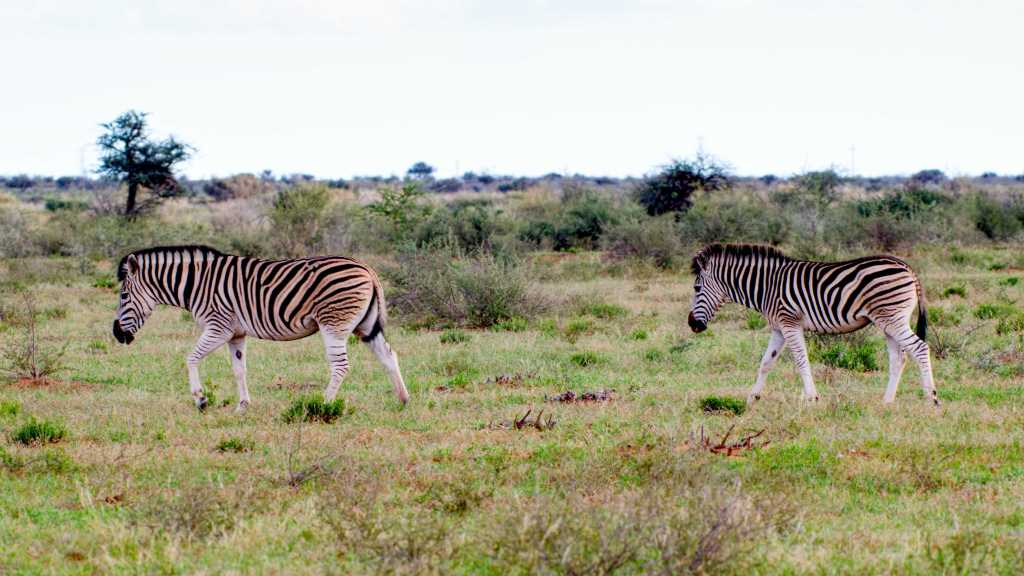
The plains stretch out beneath the morning light, green and endless, as though the desert has remembered the sea it once was. The air carries the scent of damp earth and wind — a coolness rare and fleeting in this place. Across this living carpet, two zebra make their way, their hooves pressing gentle prints into the soft ground.
They walk unhurried, their stripes flashing like shifting shadows against the green. Now and then one lowers its head to graze, the other lifting to watch the horizon, ears turning to every sound. Their movement is unspoken rhythm — two beings bound by instinct, each trusting the silence between them. As they move, their bodies seem to float through the grass, parting the blades in soft waves that close again in their wake. Behind them, the red of the dunes glows faintly through the new color of the season, a quiet reminder of what lies beneath.
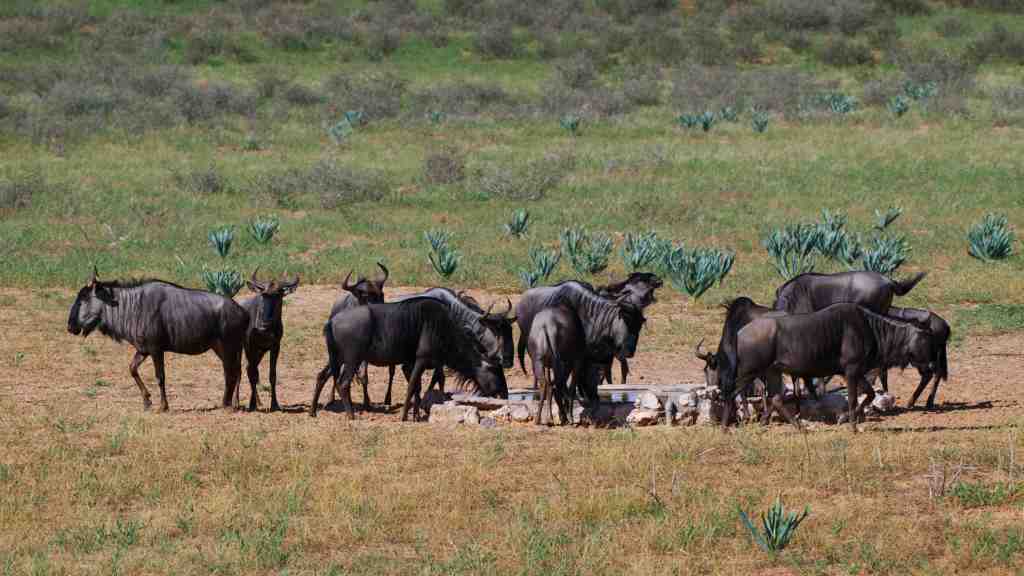
A little farther on, the plains open around one of the old watering points — a man-made pool set low against the land, filled now to its brim from the recent rains. Around it stands a herd of wildebeest, their shapes mirrored darkly in the surface. Even in this season of abundance, when random pools lie scattered across the plains, they return here — to the place they know, the place that has never failed them. Their hooves press into the damp earth, the faint sound of movement mixing with the low murmur of wind across the grass.
They lean forward to drink, their reflections rippling in the shallow trough. The sound is steady, rhythmic — a chorus of breathing, lapping, and the soft clink of horn against horn. A few raise their heads between sips, watching the plains with calm, unhurried eyes. The water catches the light, mirroring their strength and their trust in what endures. It is a simple scene, yet it feels eternal — the old herd at their chosen place, the water shimmering beneath a wild sky, and the desert once again alive with quiet certainty.
Above the herd, on the rise of a nearby dune, a lone wildebeest stands guard. Its outline is cut sharp against the sky, horns curved like crescents in the sun. It does not move, only watches — the slow turn of its head sweeping over the herd below and the plains beyond. From that height, it keeps silent vigil, a sentinel watching for dangers that may lurk in the tall grass.

High above the plains, on the crest of a dune, a lone giraffe stands like a figure drawn from the earth itself. Its long neck rises over the rolling land, the soft light sliding along its flanks as it watches the world below. Beneath its hooves, the slope falls away into a wide expanse of green, the grass rippling in waves that whisper against the sand.
The dunes roll out behind it, smooth and endless, their red softened now by the thick growth that clings to their sides. In some places, the sand still burns through the green like faint fire beneath the skin of the earth. The air is still except for the slow rustle of wind through the grass, a sound as gentle as breathing. The giraffe shifts its weight, one slow step sinking into the sand, its shadow stretching long across the slope. Around it, the dunes rise and fall in quiet rhythm, the light deepening to gold. The giraffe remains motionless for a long moment — a living part of the landscape, calm and certain, as if the desert itself had taken form to watch over its own green season.

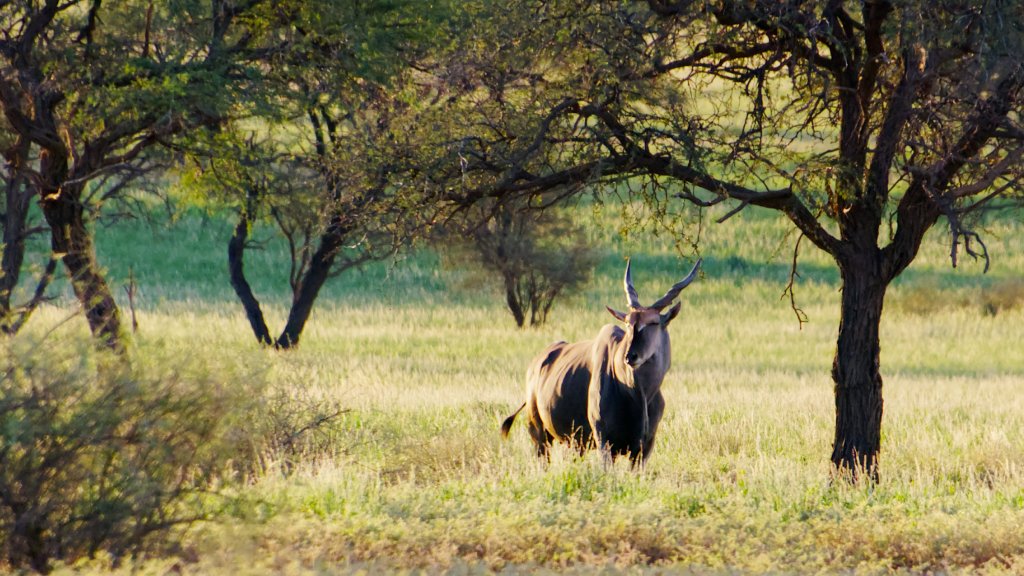
Across the plain, a lone eland moves through the grass, its great frame outlined against the green. The air around it shimmers faintly with heat, but its pace is slow, untroubled. Each step presses deep into the earth, the muscles along its shoulders rolling like quiet thunder beneath the hide. The soft tan of its coat catches the morning light, touched with a sheen of gold and dust. When it pauses, the long line of its horns gleams pale against the horizon, steady as the branches of an old tree.
It lowers its head, not to graze, but to listen — the faintest movement of its ears turning toward some sound too distant for the human ear to catch. For a moment, it stands perfectly still, the grass rising almost to its chest, the world around it hushed and waiting. Then, with a breath so slow it seems part of the wind itself, it moves on.
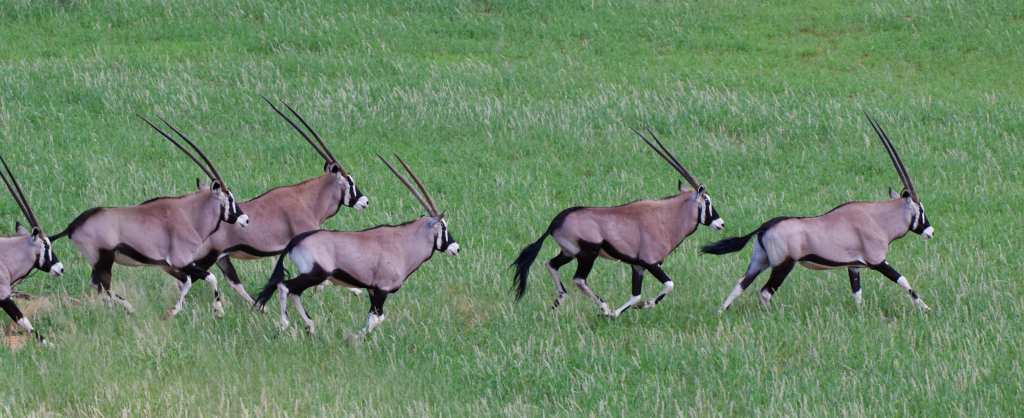
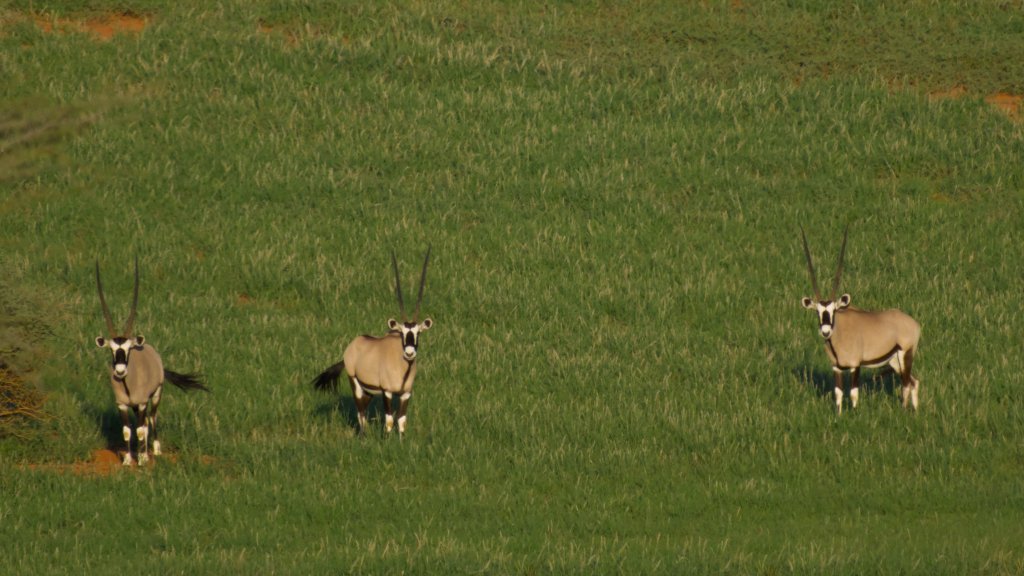
Farther along the plain, the gemsbok stand out against the green like strokes of charcoal on a painted field. Their long, straight horns seem drawn by hand, their markings sharp and unmistakable — black, white, and pale silver-gray. They move in pairs and small groups, heads held high. Even at rest, they look poised for movement, their bodies balanced with the precision of dancers. When they turn, the light slides across their flanks, and for a heartbeat they seem made of metal — creatures sculpted from the desert’s own endurance.
Not far away, three wildebeest stand together on the edge of the grasslands, their dark shapes solid against the sand. The green stretches around them, broken here and there by the red glow of sand beneath the shoots. The light catches along their horns, traces the curve of their shoulders, and deepens the shadow beneath their bellies. A faint breeze moves through their manes, lifting a few strands before letting them fall again. They do not graze, and they do not wander. They simply wait — breathing, watching, sharing the slow silence of the desert as it rests between the rains. Around them, the grass sways like water, and the stillness feels vast enough to hold the whole of the Kalahari.

Out on the wide plain, where the grass runs unbroken to the base of the dunes, a small group of ostriches moves through the morning light. Their tall bodies rise above the green, the dark plumage shifting with each step like smoke drifting across the earth. From a distance, they seem weightless, gliding through the grass without sound, their long necks swaying in rhythm as they walk. The sun touches their feathers with a dull sheen, brown and black melting into the color of the land.
They pause often — heads lifting high, the line of their sight sweeping the horizon. The breeze carries a faint scent of rain still clinging to the air, and they turn into it, the movement measured, almost ceremonial. One bird ruffles its feathers, sending a ripple through the group, and for a moment the green around them stirs with motion. Then stillness returns. There is no urgency in their pace. They are creatures of distance and space, their lives drawn along the quiet roads between the dunes.

On the far horizon, the storms begin to build — great towers of cloud rising from the heat like mountains of smoke — this is the rainy season after all. In the Kalahari, they come without warning and vanish just as quickly, racing across the plains in wild flashes of light and wind. From a distance, you can see them forming — a gray curtain sweeping low against the green, lightning flickering deep within like a pulse. The air changes first, thick and electric, carrying the scent of wet sand before the rain even falls. Then comes the rush: a roar of wind, the sudden cool, and the sharp drumming of water against the earth.

And as quickly as it began, it passes. The clouds move on, leaving the plains steaming and alive, the grass shining brighter than before. In their wake, the land glows — every color deepened, every shadow sharp. Sometimes, if the light catches just right, a rainbow unfurls across the sky, its colors bending from one horizon to the other like a bridge of glass. And if fortune smiles, you might see two — twin arcs rising together over the desert, faint but perfect, their reflections trembling in the wet sand below. They linger only a moment before fading into the brightness, but the memory stays — a quiet gift from the storm, reminding all who see it that beauty often comes in passing.

When the thunder fades and the light returns, the desert seems to breathe again. The air is rich with the scent of wet dust and grass, and along the edges of the dunes, small bursts of color begin to appear. Here and there, a single yellow flower has opened in the sand — fragile, bright, impossibly alive against the red earth. They never last long, these desert blooms, but for a few days they paint the Kalahari with quiet joy — a reminder that even in a land shaped by wind and thirst, beauty finds its way to the surface.

The green Kalahari is not a different place — it is the same land, seen through a softer lens. The red is still there, sleeping beneath the grass, waiting for the heat to return. But for now, it rests, hidden beneath the living color that the rain has called forth. This season is short, but it changes everything. It proves that even the harshest landscapes carry the seed of transformation. The desert’s endurance is not only in its ability to survive without water, but in its capacity to welcome life when it comes.
As night descends fully, the grasses darken to silver under the moon. The herds fade into shadow, the calls of birds quiet one by one. The sky stretches vast above. Tomorrow, the sun will rise again over the dunes. The green will shine for a while longer, and then, as the weeks pass, it will fade. The red sands will return, reclaiming their kingdom. But the memory of this lush season will remain — in the roots beneath the soil, in the seeds waiting their turn, in the hearts of those who have walked among the grasses and felt the desert’s gentler face.
Here, in the great heart of Southern Africa, the Kalahari endures — red and green, barren and alive — forever changing, yet always itself.

 The Footstep Chronicles
Leave a comment