

Driving to Lüderitz feels a little like approaching the edge of the world. The long ribbon of road that connects the town to the rest of Namibia—known as the B4—stretches across a landscape so desolate and reclusive that travelers often check their fuel gauges twice and glance at the horizon with equal parts anticipation and disbelief. For nearly 300 kilometers from Keetmanshoop, the journey west carries you deeper into a realm shaped entirely by geology, wind, and emptiness. The sky feels too big, the desert too vast, and the sense of separation from everything that resembles ordinary life becomes almost physical. You begin to understand why Lüderitz stands as one of the most isolated communities in southern Africa—it isn’t simply far away—it is separated by a desert that seems to resist the very idea of human habitation.
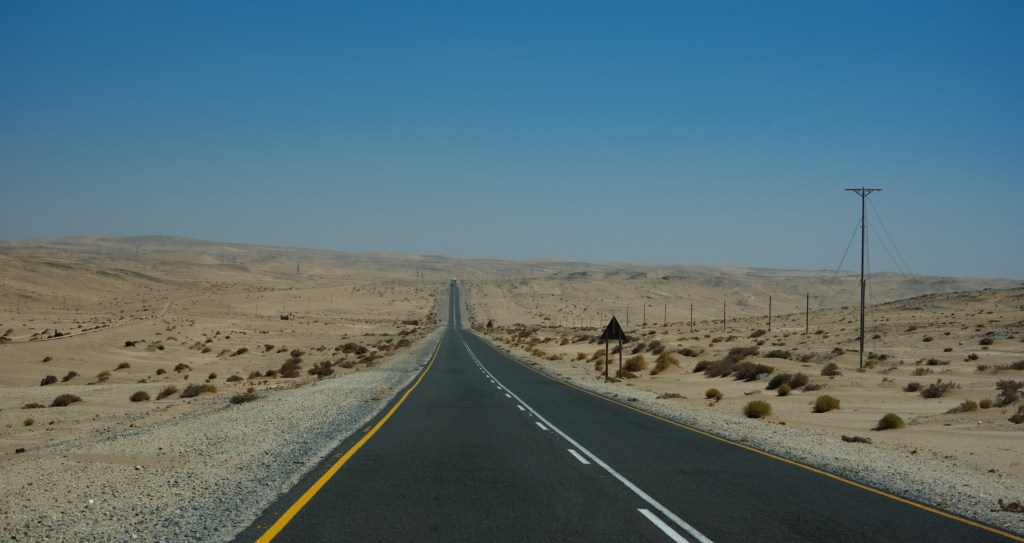
Driving through this terrain, observers often remark on a sense of suspense, as if the land is withholding its conclusion. And in a sense, it is. The desert is not merely a barrier to be crossed; it is a threshold into a different realm altogether. It is the necessary prelude to understanding Lüderitz—a town that owes its entire existence to the singular moment where desert and ocean collide.
There comes a point in the journey when the air changes. Salt replaces heat, and a colder wind intrudes on the stillness. This shift is subtle at first, then increasingly insistent. Eventually the land begins to dip and the rock formations change shape, hinting at the Atlantic that lies beyond a final ridge. When the traveler crests that rise, Lüderitz appears—unexpectedly, almost abruptly.
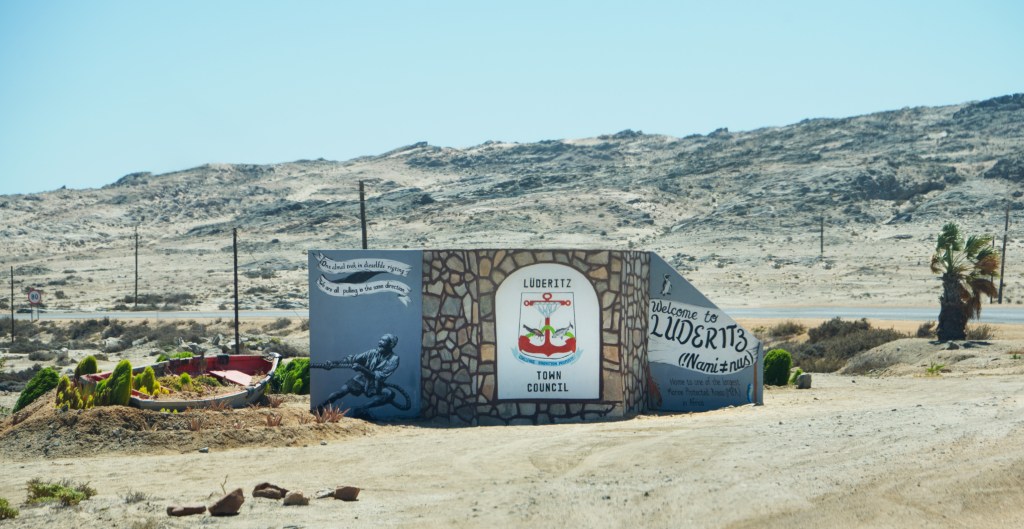
No gentle sprawl announces the town’s presence. It sits snugly within a rocky indentation carved by time and tide, its pastel facades and sharp rooflines pressed between two elemental extremes. The desert looms behind it in endless dunes and plains. The sea confronts it with winds, fog, and cold currents. And yet the town remains, improbable in its placement, tenacious in its survival.
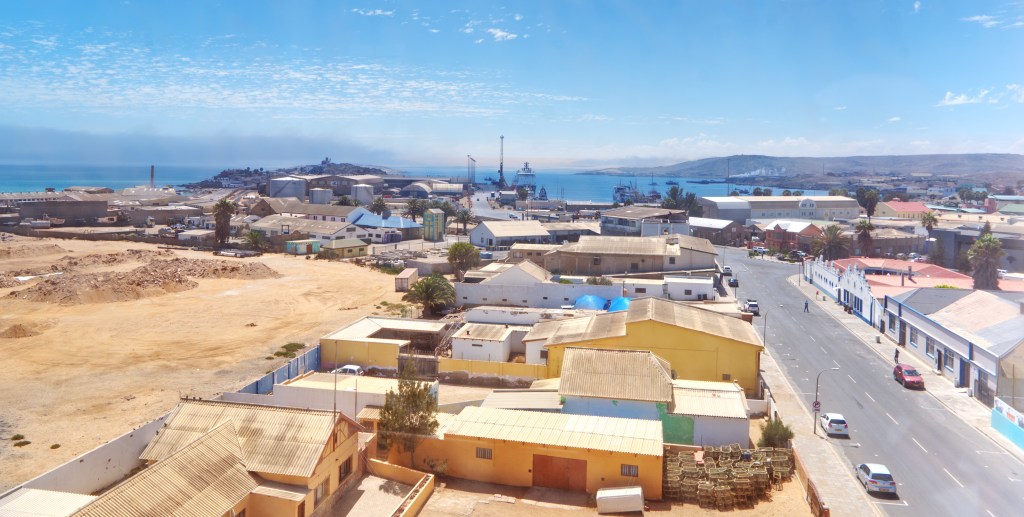
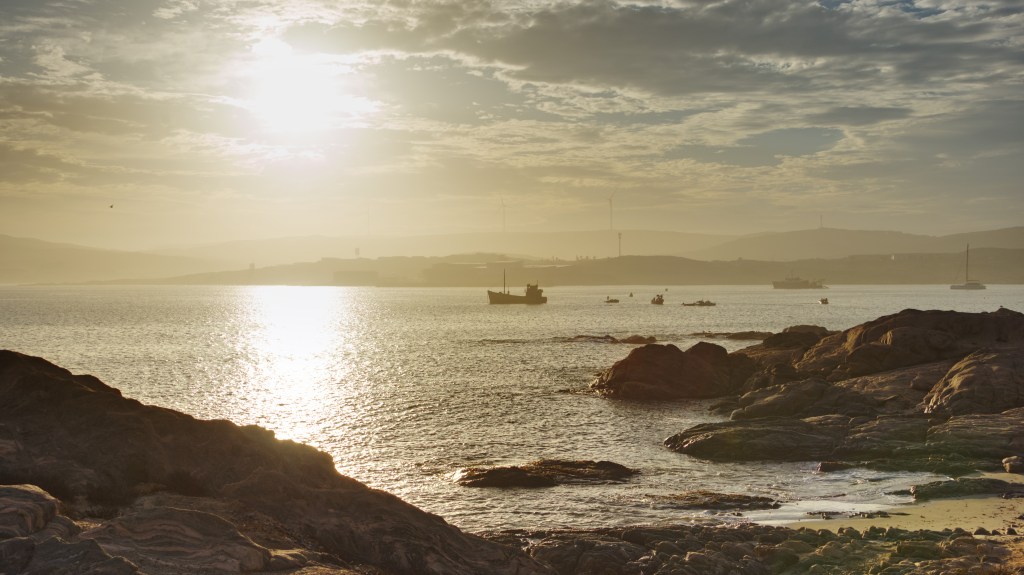
Lüderitz’s unusual location has shaped its identity from the beginning. The harsh desert behind it discourages any natural hinterland economy, while the cold Atlantic at its front refuses to offer the gentle waters found in more temperate coastal regions. And yet Lüderitz Bay provides something extraordinarily rare along Namibia’s long coastline: depth.
Despite stretching over 1,500 kilometers, Namibia’s coast offers only two natural deep-water harbors—Walvis Bay to the north, and Lüderitz here in the south. Much of the shoreline is burdened by treacherous sands, violent surf, and shallows that thwart navigation. But Lüderitz Bay is different. Protected by a chain of rocky islands and peninsulas, the bay dips steeply enough to allow vessels to anchor safely. This one geological feature has made all the difference.

Even before German colonial authorities surveyed the region, sailors and whalers recognized the bay’s utility. Early charts mark Lüderitz Bay as a sheltered indentation in a coastline otherwise dangerous and unforgiving. Long before the town existed in its current structure, the site attracted maritime visitors—some by intention, others by necessity, seeking refuge from the tumult of the open Atlantic.
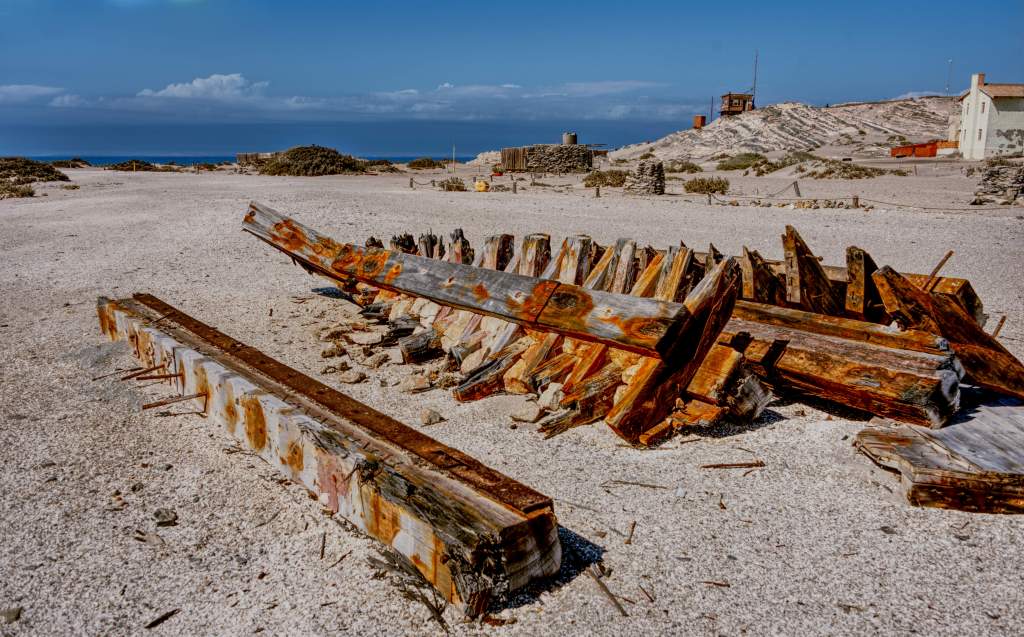
When the German Empire declared the region part of German South West Africa in the late 19th century, the depth of Lüderitz Bay gained new strategic significance. The town became an administrative and commercial foothold. The port was developed, albeit modestly, and buildings rose along the rocky shoreline. The settlement grew around the logic of its geography: whatever the desert lacked in agricultural promise, the harbor compensated for through its maritime potential. And so the town persisted, held in place by depth on one side and desert on the other.

Shark Island sits just beyond Lüderitz, a low, wind-polished rise connected to the mainland by a narrow causeway. The island appears unassuming at first glance—bare rock, bright light, open water on all sides—but its past gives it a weight not immediately visible in the landscape. The island carries one of the darkest histories in southern Africa.
In the early 20th century, during the period of German colonial rule, Shark Island served as one of the primary sites of internment during the suppression of the Herero and Nama uprisings. Prisoners brought here were held in conditions shaped by exposure, scarcity, and the island’s unforgiving environment. Tents offered little protection against the cold winds that sweep across the Atlantic, and the rocky ground provided none of the shelter that inland terrain might have offered. Mortality rose quickly, and contemporary accounts describe an atmosphere defined by deprivation and coercion. The island’s small size and isolation amplified the harshness of its conditions, leaving an imprint far deeper than its modest geography would suggest.
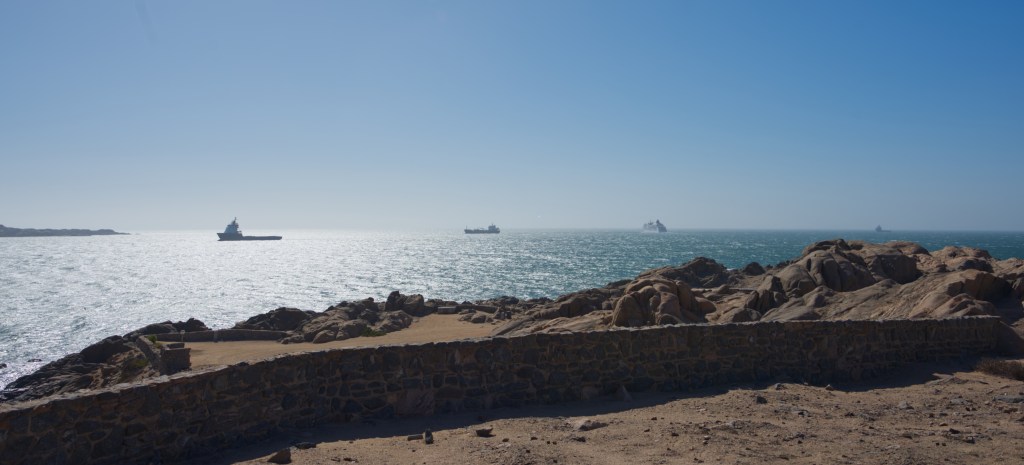
Today the rocky ground is quiet, interrupted only by the sound of waves striking the outer edges and the cry of seabirds circling above. Memorial structures mark the area where prisoners once lived, but the island itself remains austere. The wind that once stripped tents and chilled exposed skin still moves across the surface with the same steady insistence. Nothing grows here except lichen clinging to stone; the landscape remains almost exactly as it was a century ago.
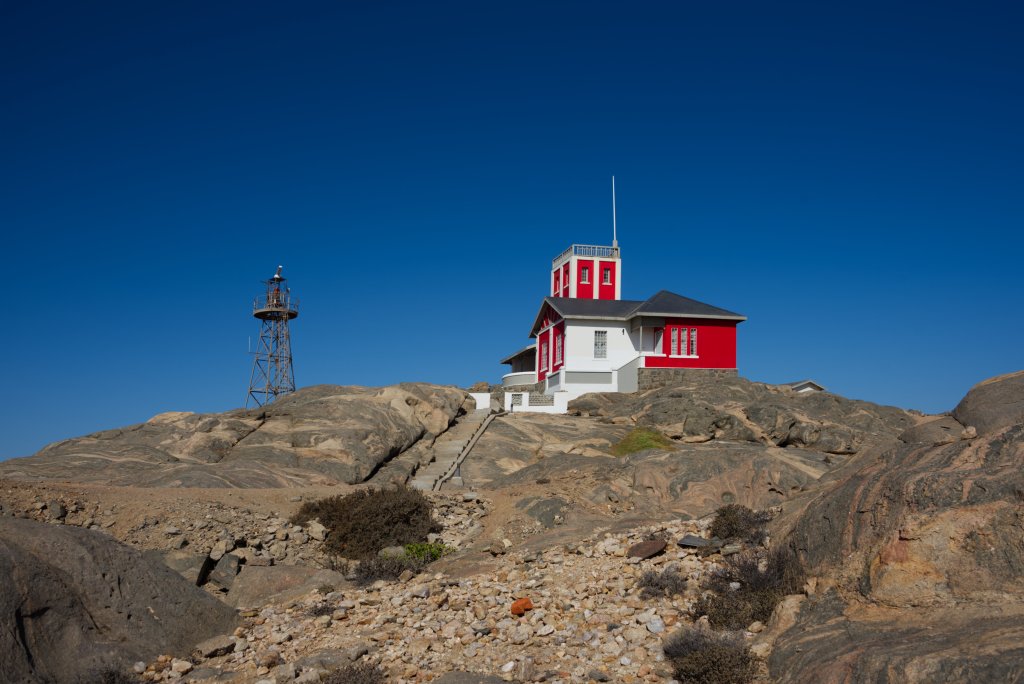
The small lighthouse on Shark Island still stands above the rocks, a quiet remnant of the early coastal infrastructure that once guided ships into Lüderitz Bay. Its lantern has long since been removed, leaving the tower as more of a marker than a beacon, but its presence adds another layer to the island’s stark landscape. Seen from the causeway or the shoreline below, it appears almost symbolic now—a structure built for direction in a place where light and weather have always dictated survival.
If Shark Island represents Lüderitz’s most painful history, the diamond fields represent its most transformative. In 1908, the discovery of diamonds near the railway line east of the town changed the region overnight. The desert, long considered barren and inhospitable, revealed a hidden wealth that had lain undisturbed for millions of years.

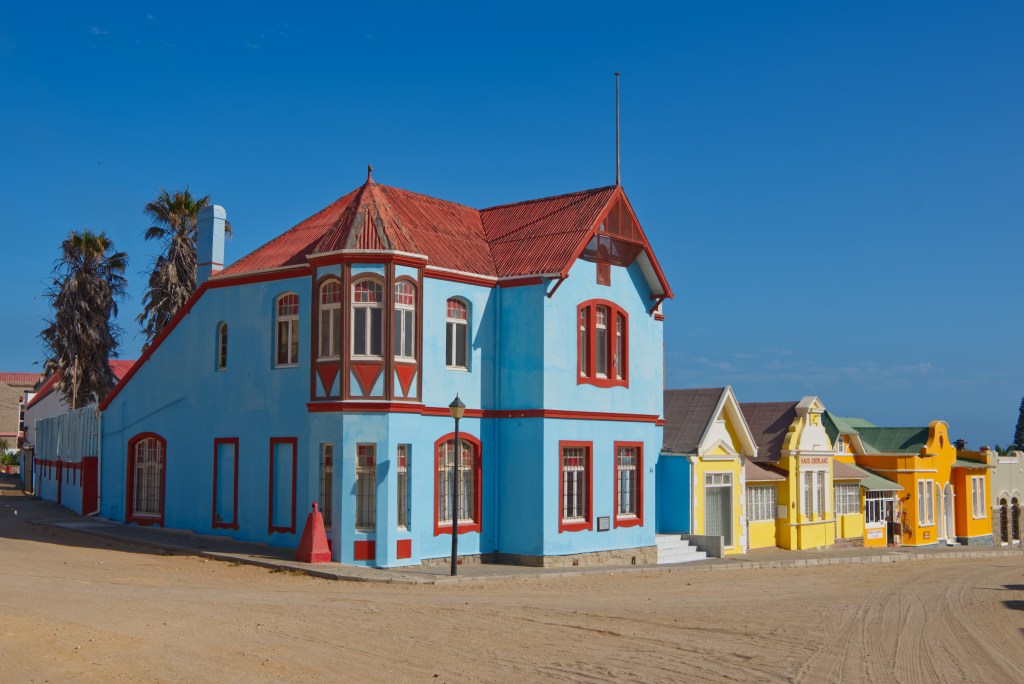
The diamonds were extraordinarily accessible—many lying on or near the surface, requiring little more than determined searching. News traveled rapidly, and a diamond rush ensued. Infrastructure expanded quickly. The town grew to accommodate workers, administrators, and support industries. German colonial buildings rose along the streets of Lüderitz, giving the town much of the architectural identity it retains today. The economy boomed, and the prosperity of the era left marks that remain visible in the built environment.
Diamonds altered Lüderitz irrevocably. They brought wealth, conflict, and rapid development, reshaping the town faster than its isolated geography ever could on its own. They also introduced new cultural and economic complexities, drawing global interests into a coastline once known only for its harsh winds and shifting sands. The region’s diamond history is a story of ambition, ingenuity, exploitation, and adaptation—one that continues to influence the town’s identity. And even now, the industry endures, with diamonds still being recovered from the ocean off the Namibian coast and from the harbor waters of Lüderitz itself.

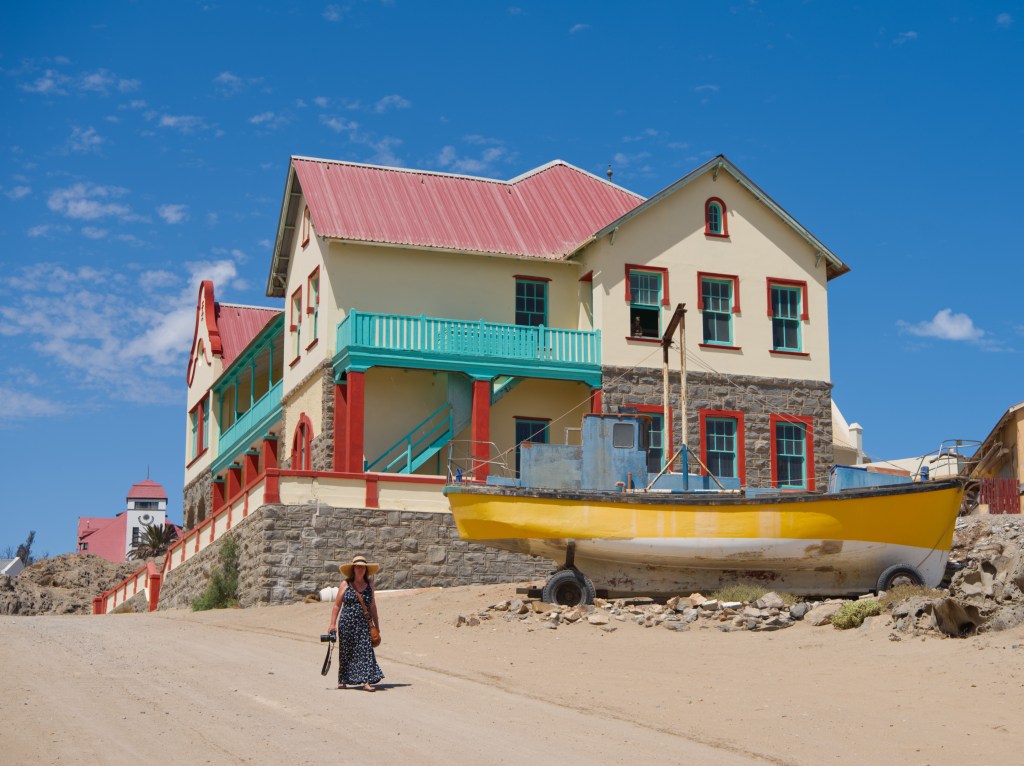
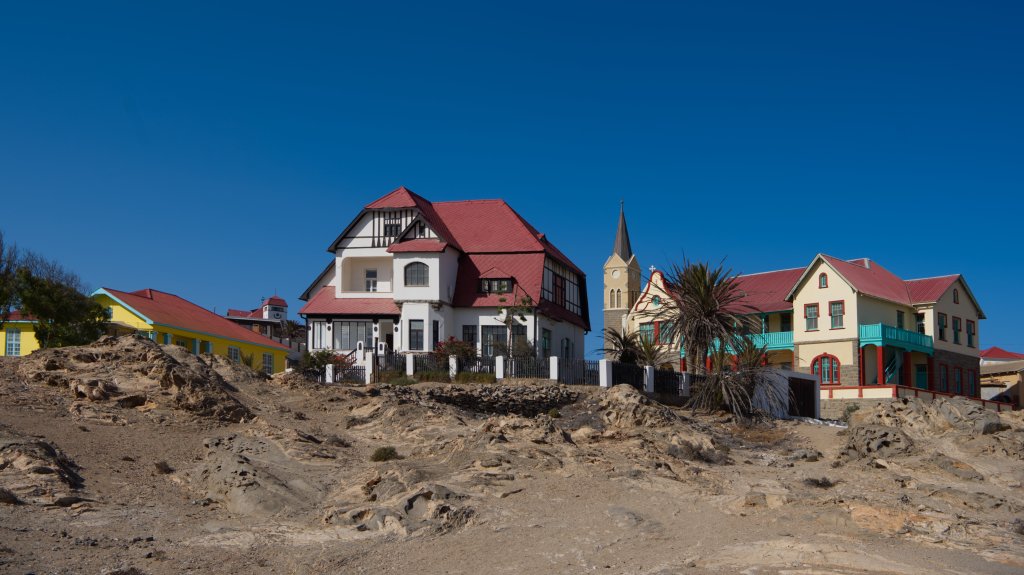
Lüderitz’s buildings tell stories that the desert wind cannot erase. The Felsenkirche, perched on a granite promontory, surveys the town with austere grace. Built in 1912, its stained-glass windows catch the coastal light in vivid hues. Nearby, colonial villas stand in soft colors—mint green, apricot, pale yellow—contrasting sharply with the stark granite boulders around them.
These structures offer a glimpse into an era when colonial officials sought to create familiar landscapes in unfamiliar territory. Their details—wooden verandas, steep gables, decorative trim—reflect architectural influences transported from Europe yet adapted, sometimes reluctantly, to the demands of the African coast.
Modern Lüderitz mixes these historical buildings with newer constructions, creating a layered architectural narrative. The result is not a seamless blend but rather an honest reflection of changing times. It illustrates the town’s ability to absorb history while continuing to evolve.
Lüderitz is entering a phase of renewal that contrasts with its reputation for remoteness. New developments along the waterfront signal a shift in how the town sees itself and how it intends to participate in Namibia’s future. Central to this process is a large maritime museum that anchors the revitalized harbor area. Designed not merely as a display space but as a cultural and educational center, the museum gathers together the region’s long relationship with the sea—from early navigation to fishing, offshore exploration, and coastal settlement. Its size and scope make it one of the most significant institutions of its kind on the continent, and its presence quietly repositions Lüderitz from a historic outpost into a place of contemporary relevance.
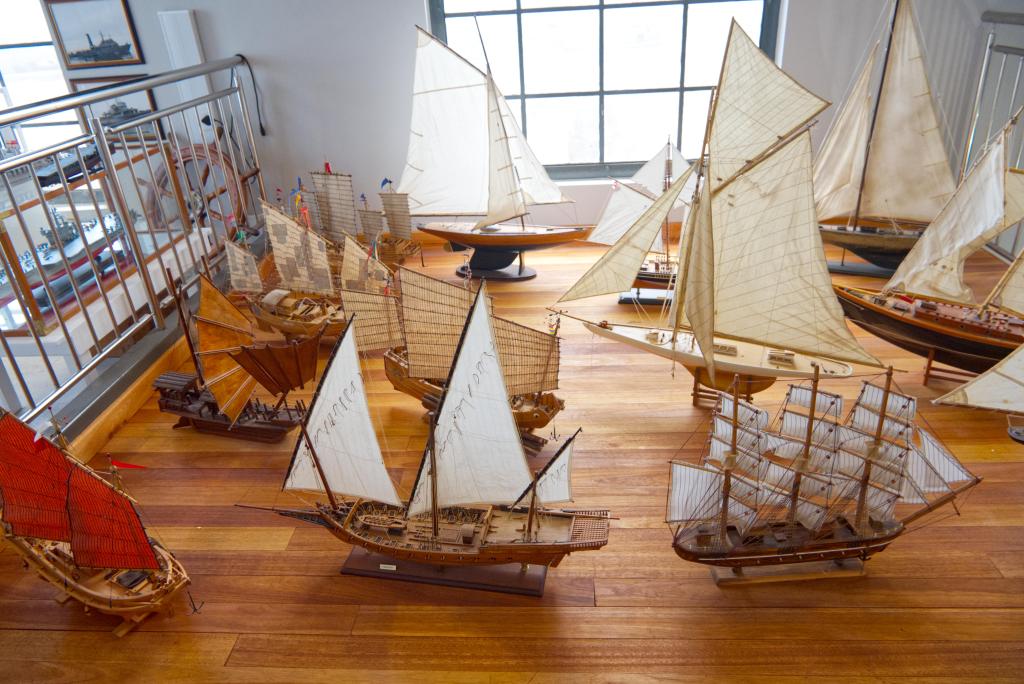

The museum stands not only as a record of what has already shaped Lüderitz, but also as a marker of where the town is heading in a country that now directs its own course. Since independence, Namibia has worked steadily to understand and responsibly develop its coastal and offshore resources, from fisheries to seabed minerals and emerging energy prospects. Lüderitz, once defined almost entirely by its isolation, now finds itself positioned at the edge of these possibilities. Conversations about renewable energy, sustainable marine industries, and offshore exploration all trace back to this stretch of coastline. In this way, the town’s modernization becomes more than a local effort; it reflects Namibia’s broader pursuit of economic freedom and self-determination, with Lüderitz increasingly seen as a frontier—quietly but firmly connected to the nation’s future.

As the waterfront develops and the museum looks steadily toward the future, the landscape just beyond town offers a quieter reminder of what has shaped Lüderitz from the beginning. A short drive away, the road begins to unspool toward the open coast, where the influence of the Atlantic becomes immediate again.
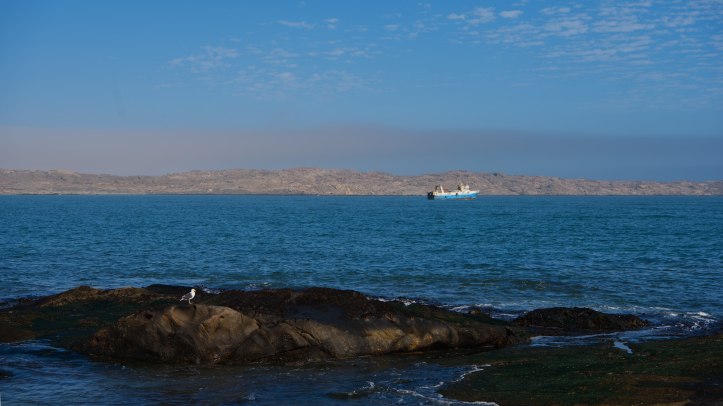
The route to Díaz Point feels like stepping gradually out of the present and into an older, rougher chapter of the shoreline. The road skirts past the lighthouse and a scattering of abandoned buildings—remnants of small industries that once tried to find a foothold on this exposed edge of the desert. Rusted machinery, empty outposts, and wind-battered walls stand as quiet markers of past effort, their presence softened only by the ceaseless movement of sea and fog.
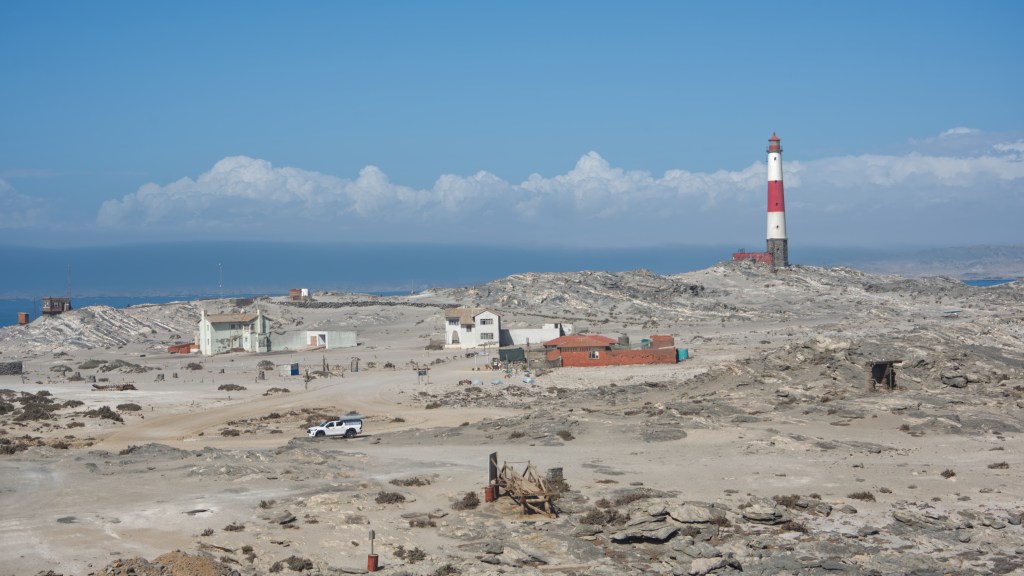

The headland serves as a reminder that long before modern development, this region’s relationship with the ocean shaped every encounter and every ambition. The stone cross that stands there—echoing the landing made by early Portuguese sailors—anchors Lüderitz in a much older story of navigation, mapping, and attempts to understand this formidable stretch of water. Wind, breakers, and the unbroken horizon still define the point today, making it clear that the ocean has always been the town’s first teacher, long before harbors, industries, or museums began interpreting its lessons.
Lüderitz today sits at a rare intersection of history, geography, and possibility. Its desert isolation, once a barrier to growth, now lends it a distinct identity that few coastal towns can claim—one where the land’s austerity meets the ocean’s abundance. The old colonial buildings, the windblown shoreline, Shark Island’s somber weight, and the vast concessions where diamonds were pulled from dunes all echo through the present. Yet they do so without overwhelming the town’s evolving character. Instead, they form the foundation on which each new development rests, from the port’s ongoing activity to the cautious optimism surrounding offshore exploration.

As the town looks ahead, it carries its legacy with a sense of groundedness rather than nostalgia. Roads continue to improve, scientific and cultural institutions gain strength, and the surrounding coastline hums with economic potential. But the rhythm of Lüderitz remains shaped by space, silence, and the sea. Visitors still approach it as a place where history has left deep tracks, and even modern projects seem to acknowledge the winds and tides that govern life here.

In the end, Lüderitz’s story is not simply one of transformation—it is one of resilience, adaptation, and continuity, a town balanced between the stark Namib Desert and the open Atlantic, moving forward while never losing sight of where it came from.

 The Footstep Chronicles
Leave a comment