

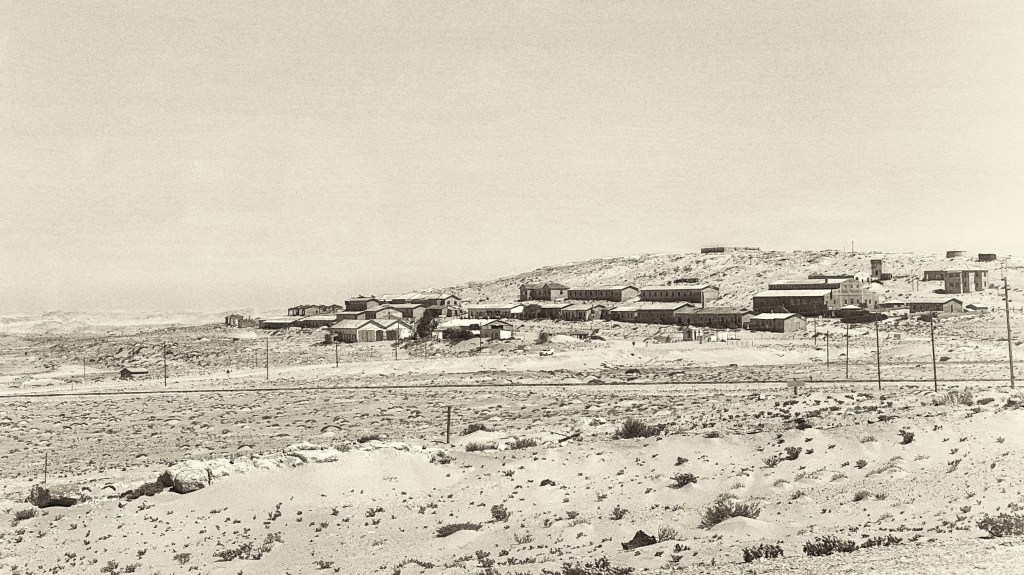
The desert has a way of holding on to human stories long after the people themselves have vanished. In the Namib, where dunes shift like slow tides and the wind carries more memory than sound, few places show this more clearly than Kolmanskop. The abandoned mining town rests just inland from Lüderitz, on a rise of sand and salt-crusted rock, its buildings half-swallowed by the desert that once surrounded them like a distant horizon.

Approaching the town today, one sees rooftops swallowed by dunes and walls tilting against the sand’s advance. But a century ago, this isolated settlement was one of the wealthiest places in Africa, a frontier city built with surprising sophistication. It had electric lighting, an ice plant, a hospital with advanced equipment, shops stocked with imported luxuries, and even brothels that flourished during the height of the boom. Kolmanskop was a paradox: a city of refinement and indulgence planted in one of the harshest deserts on earth, thriving only because the ground beneath it glittered with diamonds.

Diamond stories often begin with rumor, but in southern Namibia, the turning point was simple and abrupt. In 1908, a railway worker named Zacharias Lewala was clearing tracks between Lüderitz and Aus when he spotted a small stone that caught the desert light a little too strongly. He took it to his supervisor, who in turn recognized it for what it was: a diamond lying almost casually in the open sand. Soon, more stones appeared — scattered on the surface, trapped in ridges, resting in hollows where the sand had shifted just right. The Namib, shaped by ancient rivers and relentless coastal winds, had spent ages tumbling diamonds from deep inland and releasing them onto the desert floor.
Word spread rapidly among mining companies and colonial administrators. Within months, a prohibited mining zone was declared, stretching across a vast area of southern Namibia. Officials quickly declared a Sperrgebiet — a forbidden zone — to control the area and prevent chaos. Only authorized miners and workers could enter, and they soon learned that the diamonds were not only plentiful but startlingly easy to collect. Unlike other diamond fields, there was no need for tunneling or mining equipment. The gems lay almost bare, as if waiting to be collected.

The settlement, named after a transport rider whose wagon once broke down on the hill, began as a cluster of tents and barracks. But the abundance of diamonds encouraged ambition. The settlement grew quickly into a structured town, planned with precision and funded with the kind of confidence that only extraordinary wealth can inspire.

In the beginning, diamond collection required little more than a pair of hands and patience. Workers moved across marked sections of desert, often on their knees, gathering stones in the cool evening hours when the gems sparkled more distinctly. A typical shift meant crawling across the sand and returning with two cups filled to the brim with diamonds—an expectation so rigid that falling short invited punishment. The work was both meticulous and strangely simple, a process that seemed almost too easy to be believed.
Supervisors watched carefully. Diamonds were small, and temptation was constant. Rules were implemented to minimize theft: no loose clothing, no unsupervised movement, and inspections at the end of each shift. Workers passed through controlled gates where pockets, boots, and tools were examined. Searchlights were mounted across camp boundaries to illuminate the desert at night, discouraging unauthorized digging.
Despite strict oversight, the atmosphere in Kolmanskop was one of excitement. The desert was practically offering up its wealth, and each windstorm seemed to rearrange the sands in a way that revealed fresh treasures. For a brief moment in history, diamonds were not deep-earth secrets — they were part of the desert’s surface. Stories later exaggerated the abundance — tales of men shoveling diamonds by the handful, of stones gathered like frost at dawn — but the truth, while less dramatic, was still remarkable.

As the easy diamonds thinned, companies introduced more advanced operations. Mechanical sorting facilities were built near the town. Gravel and sand were brought in from designated sites and fed into machines that crushed, washed, and sifted the material. Water, scarce in the Namib, was rationed carefully, transported via pipelines or brought in by ship to Lüderitz and then by rail inland.
Processing plants grew louder as operations intensified. Conveyor belts rattled, engines roared, and the desert began to echo with the sounds of industrial ambition. Kolmanskop evolved into a structured mining community: engineers maintained machinery, specialists oversaw extraction methods, carpenters constructed buildings, and foremen enforced strict schedules

Kolmanskop was not intended as a temporary camp. It was engineered to be a stable, modern community — an anomaly in a desert landscape. The buildings constructed during its prime reflected confidence, money, and a certain degree of audacity. The sudden financial boom transformed Kolmanskop in ways that remain visible even in its ruined state. At its height, the town was home to extravagant comforts rare anywhere in Africa at the time, let alone in the middle of the Namib.
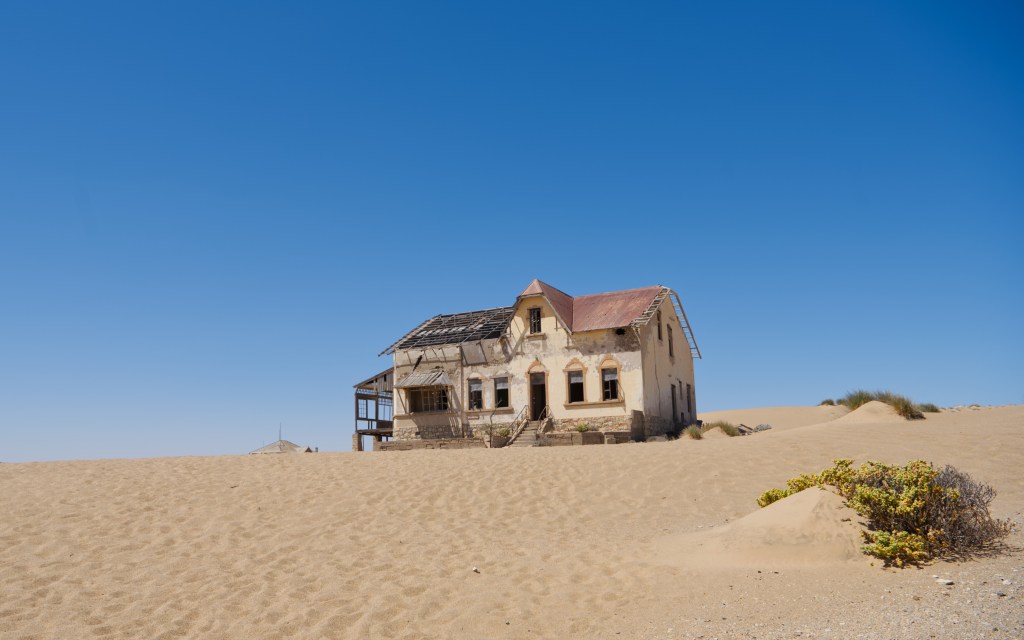

Kolmanskop had electricity long before many major cities in Europe. Generators hummed through the evenings, sending a steady current into homes, workshops, and public buildings. At night, electric lamps glowed along the streets, casting clean, unwavering light across verandas and neatly swept yards. In a landscape ruled by darkness and vast distances, the sight of a fully illuminated town felt almost improbable — a sign that Kolmanskop believed in its own permanence, and that prosperity could hold back the desert, at least for a while.

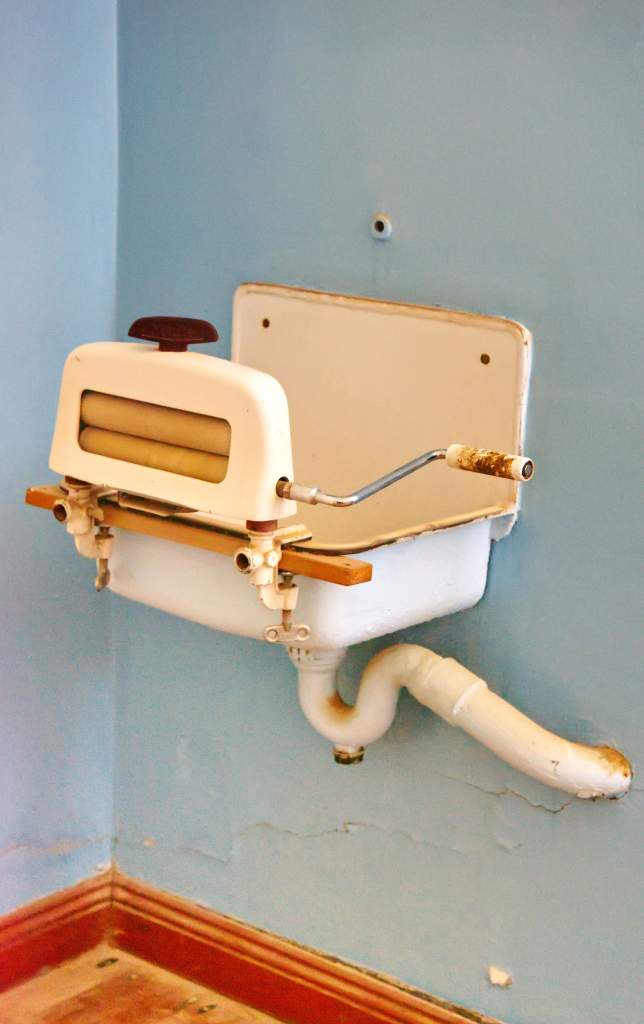
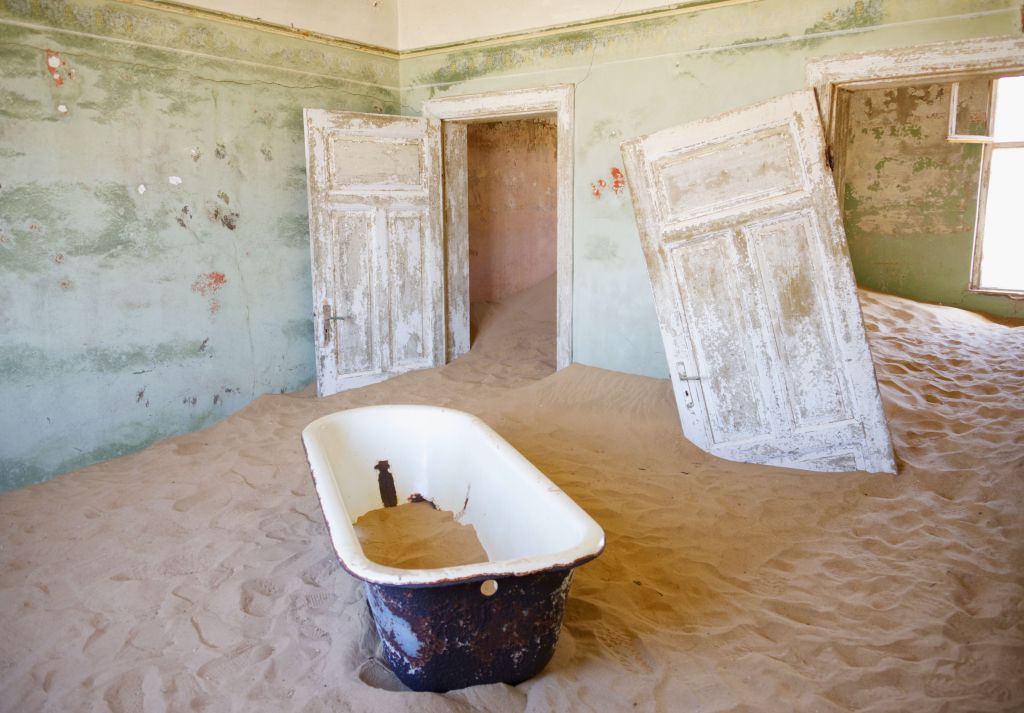
Running water brought a quiet kind of luxury to Kolmanskop, softening the edges of life in a desert that offered nothing freely. Pipes laid beneath the drifting sand carried precious water into homes, feeding polished taps in modern kitchens and bathrooms Baths — deep, traditional, and carefully maintained — became evening rituals, offering a moment of calm after long days in the heat and dust. In a settlement surrounded by dunes and silence, the steady flow of water felt like a small miracle, a practical triumph that allowed daily routines to feel both familiar and civilized.
The ice plant stood as one of Kolmanskop’s most improbable achievements, a factory of cold carved into the edge of a desert that knew only heat. Inside its humming walls, machines churned out solid blocks of ice that were delivered daily to homes across the settlement, feeding the wooden iceboxes that kept food cool and drinks refreshingly cold. Opening the iceboxes in the early afternoon released a sudden burst of crisp, cool air— a small relief from the desert heat.
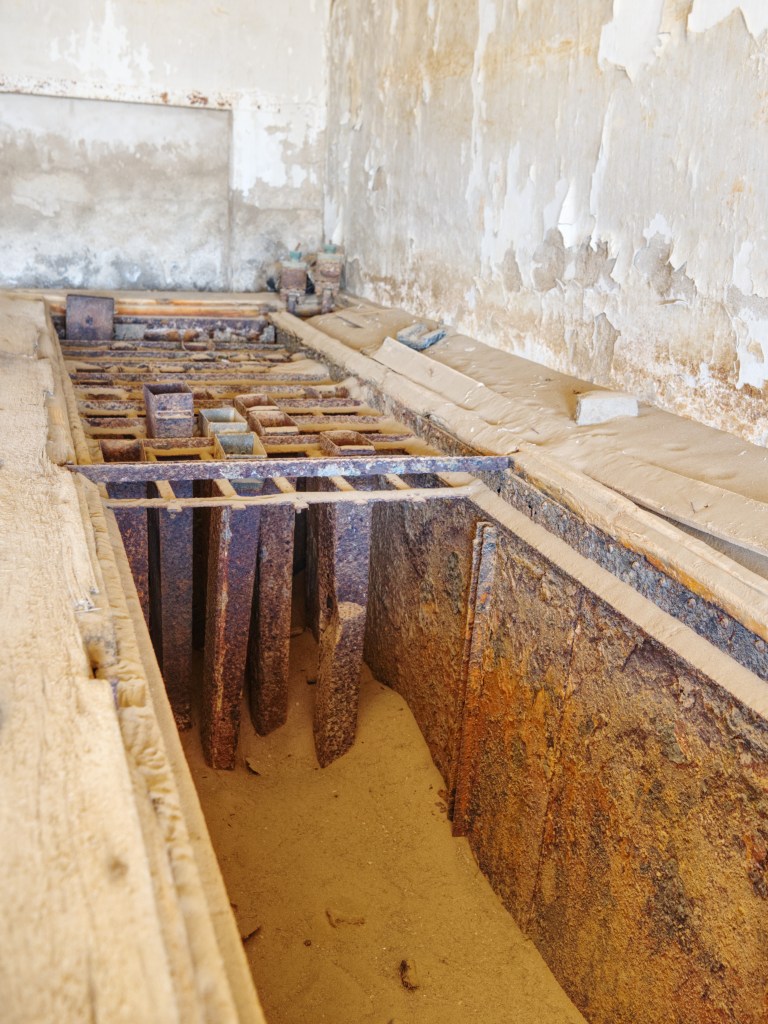
The plant even maintained a walk-in cooler for bulk storage, a chilled room where perishables could be kept safely despite the blistering temperatures outside. In a place where the sun could bleach a footprint in minutes, the production of ice felt almost defiant — a quiet declaration that Kolmanskop, for a while, could create its own comforts in a landscape that offered none.
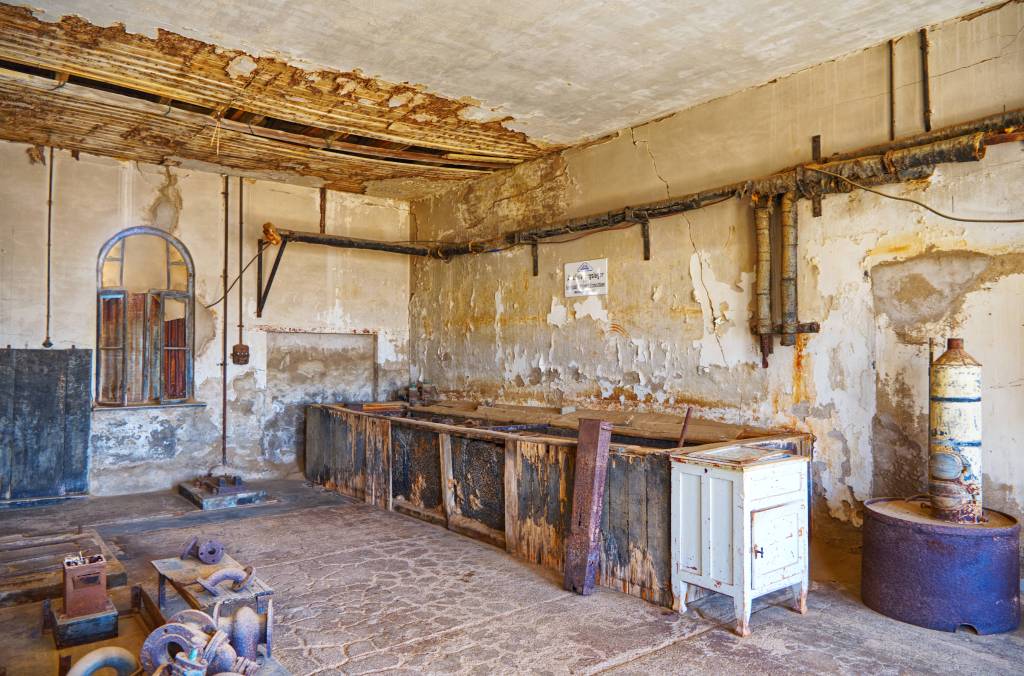
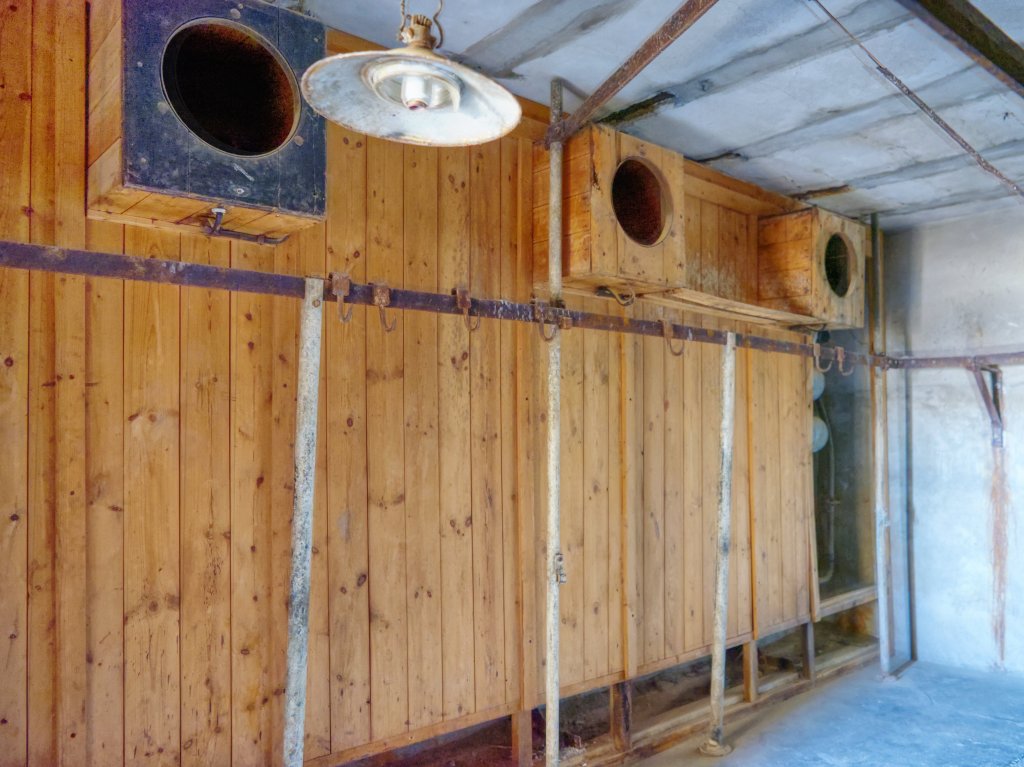

The hospital in Kolmanskop was a remarkable achievement for a town carved out of desert sand, its walls filled with light and purpose amid the isolation. With more than fifty beds spread across bright, orderly wards, it was large enough to care for the community yet carefully designed to handle the specific needs of a mining settlement.
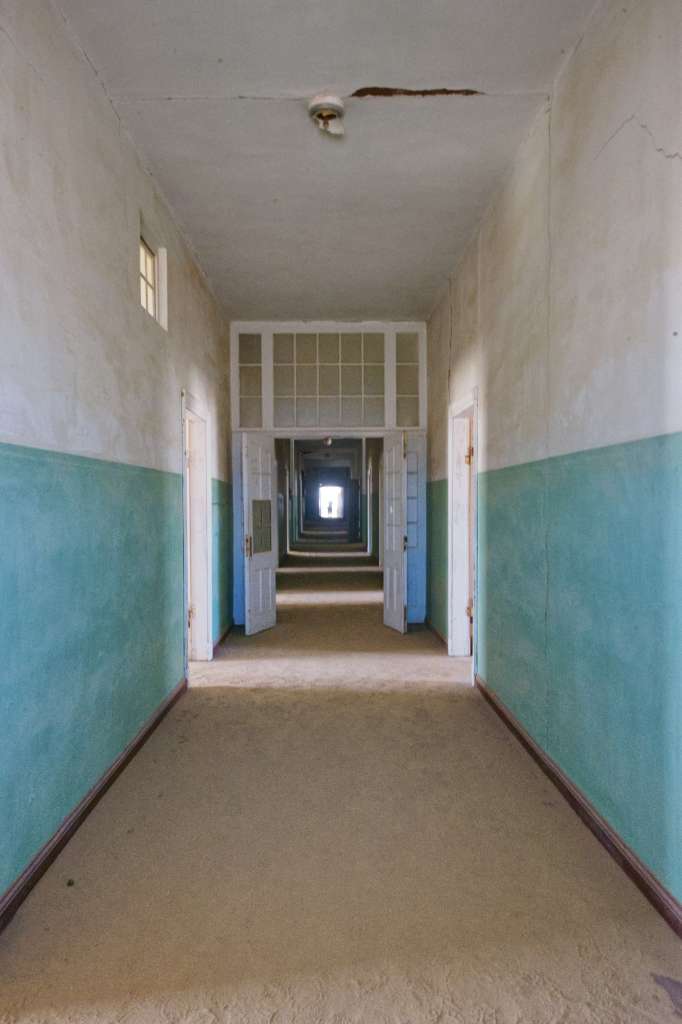
Operating rooms were equipped for procedures rare in such remote locations, and sterilization facilities ensured standards that rivaled larger urban hospitals. Staff moved with quiet efficiency through corridors built to accommodate both emergency injuries from the diamond fields and routine illnesses, maintaining a level of care remarkable for a desert town. The hospital was a symbol of Kolmanskop’s determination, ensuring that even in the middle of the desert, care could meet standards expected in far larger cities. The hospital stood as a quiet declaration: in Kolmanskop, comfort, safety, and modernity were not luxuries but necessities, carefully built into the fabric of a settlement that demanded both resilience and refinement.

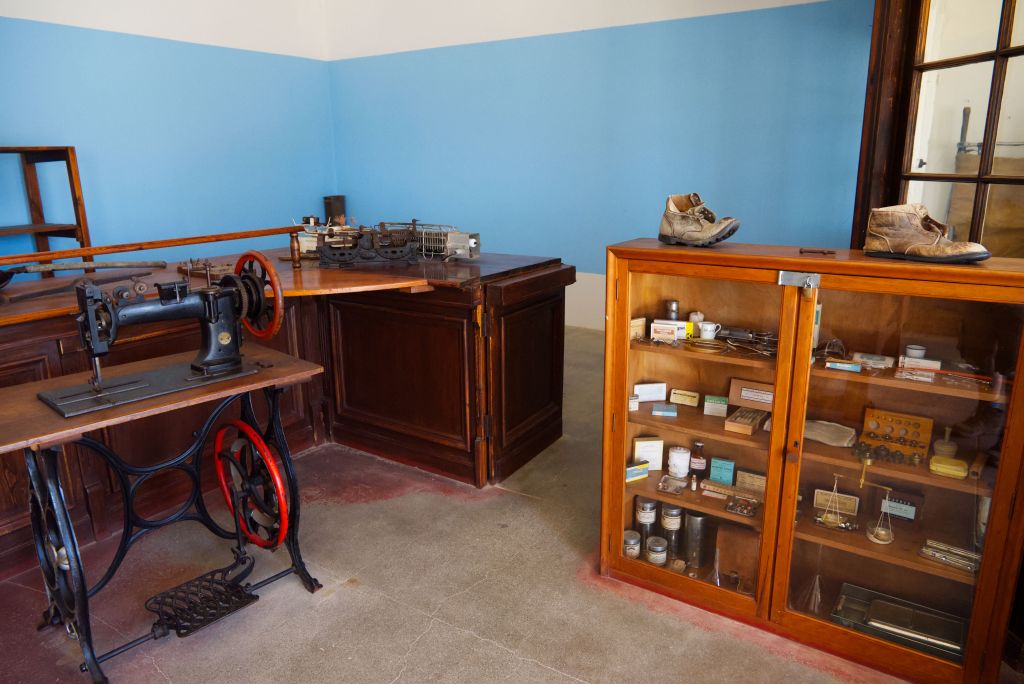
Kolmanskop featured a well-stocked general store filled with imported goods: fine wines, canned delicacies, fabric from Europe, and household items that arrived by ship and rail. Bakers produced fresh bread each morning, and families could purchase luxuries that felt wildly at odds with the surrounding dunes. The town also had a butcher, a post office, a school for children, and a clubhouse that served as the social heart of the community.

Kolmanskop’s dance hall was the beating heart of the settlement, an elegant space designed with a confidence unusual for a mining town in the desert. Its polished wooden floor, imported chandeliers, and raised stage set the tone for evenings that felt worlds removed from the harshness outside its doors. Concerts were held often, with musicians brought in from coastal towns or from much farther afield, filling the hall with the warmth of strings, brass, and sometimes even full orchestral ensembles. Traveling performers staged operettas and small theatrical productions, their voices rising through the electric glow of the room while families and miners watched from neatly arranged rows of chairs. Nearby, the casino added its own rhythm to the nights—games of chance played beneath soft lamplight, laughter echoing across the corridor as coins clicked across polished tables. Together, the dance hall and casino created a cultural oasis in the desert, a place where residents could escape the rigors of mining life and step, however briefly, into a world of music, glamour, and spectacle.


The wooden bowling alley remains one of Kolmanskop’s most striking features today. Imported materials and technical precision were required to create a proper bowling surface in a desert hilltown, yet Kolmanskop’s residents insisted on amenities that matched their wealth. The alley hosted leagues, competitions, and social events where residents could forget the vast emptiness outside the settlement’s boundaries.

Kolmanskop’s tram system was a modest line by urban standards, yet it carried an outsized significance in daily life. Laid across carefully graded paths to keep the wheels from sinking into loose sand, the tram linked homes with the heart of the settlement — the workshops, the stores, the dance hall, and the administrative offices. Its slow, steady clatter became part of the town’s rhythm, a familiar sound that marked the start of morning shifts and the easing pace of late afternoons. The tram hauled essentials: freshwater shipped in from afar, blocks of ice from the local plant, crates of goods, and equipment bound for the mines and residential quarters. Workers used it to move between the residential quarters and the mining areas, while families relied on it for errands or visits to friends across town. In the heat of the day, its shaded benches offered a small comfort, a brief reprieve from the sun before passengers stepped back into the desert glare. For children, it was a thrill — a moving vantage point from which to watch the dunes, the houses, and the vast openness beyond. Kolmanskop’s tram system was far more than a charming relic of early mining life—it was the town’s circulatory system, keeping daily operations running in the middle of the Namib Desert.

No diamond boomtown is complete without acknowledging the parts of life that flourish in the shadows of wealth. Kolmanskop had several brothels, often discreetly positioned near the edges of the settlement or behind certain commercial buildings. They served miners, overseers, travelers, and workers who lived far from their families. The brothels were tolerated as a practical reality of isolated frontier life. Their interiors were surprisingly well-appointed — velvet curtains, ornate furniture, and polished mirrors imported from abroad.
For many workers confined to strict mining schedules, the brothels offered a sense of escape, however temporary. They formed part of the town’s social ecosystem, neither openly celebrated nor rigorously suppressed. Today, little remains of them except foundations nearly swallowed by sand, but their presence is remembered as part of Kolmanskop’s more human, more complicated past.
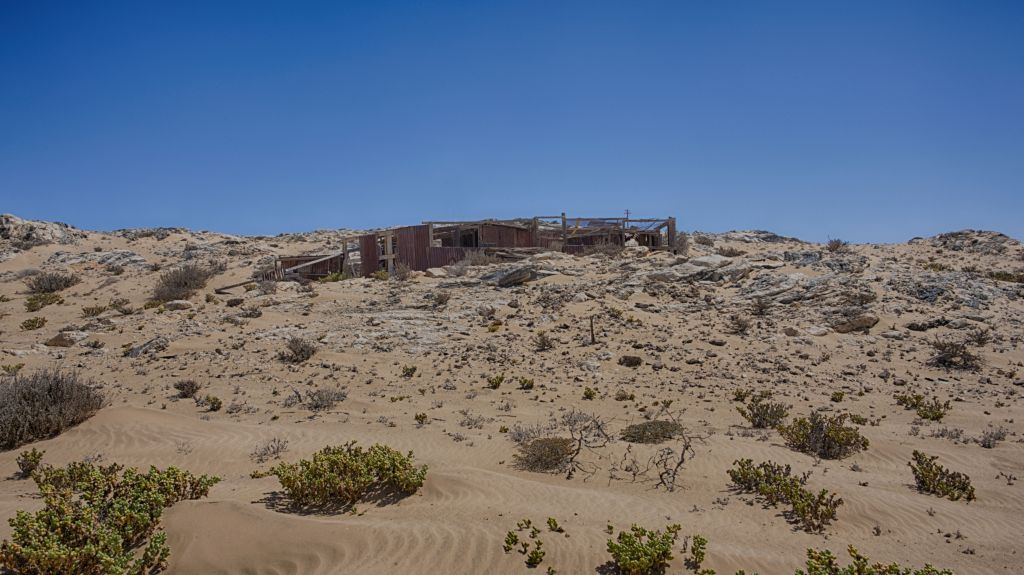
By the 1920s and 1930s, diamond deposits near Kolmanskop were diminishing. The easy surface finds were gone, and deeper excavation yielded fewer returns. At the same time, richer deposits were discovered farther south along the Orange River.
Mining companies shifted their resources southward. Equipment was moved, administrative offices relocated, and families followed. Kolmanskop’s population dwindled. Shops emptied. The tram ran less frequently. The desert began to creep closer to the doorways.
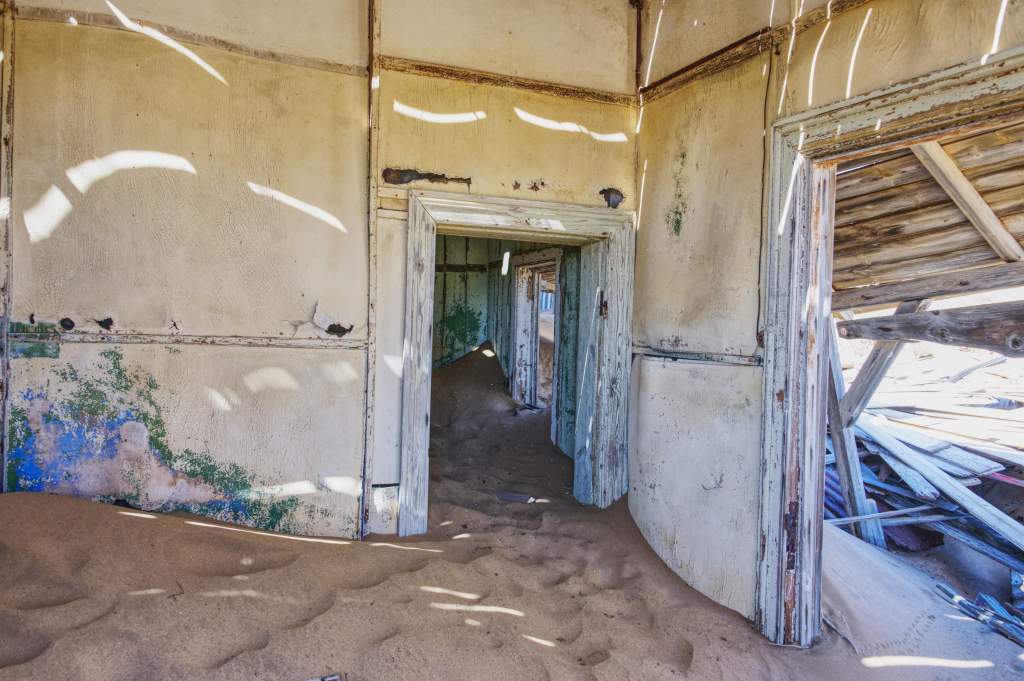
There was no single moment when the town officially ended. It simply faded. By the mid-century, only a handful of people remained to maintain infrastructure. Eventually they too left, and the town returned to the desert.

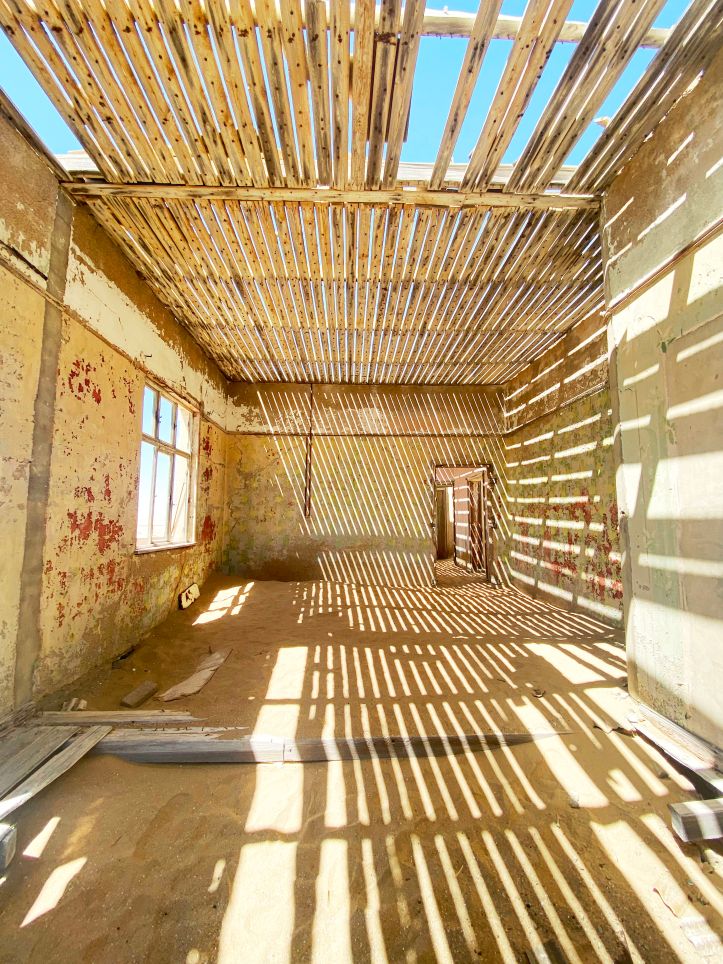
Today, Kolmanskop is a place where silence speaks with the weight of history. The dunes push through windows, filling rooms ankle-deep, then knee-deep, sometimes nearly to the ceiling. Wallpaper peels in long ribbons; floors tilt beneath shifting sand. Sunlight enters through broken roofs, illuminating corners where time seems suspended.
Kolmanskop’s story endures because it captures something essential about human ambition. It is a reminder that wealth can reshape landscapes, but only temporarily. The desert is older, more patient, and indifferent to the fortunes built upon it.

Yet Kolmanskop is not merely a cautionary tale. It is a monument to ingenuity, resilience, and the capacity of people to create community in the most unlikely places. Its homes, hospitals, and bowling alleys stand as evidence that even in harsh environments, people seek comfort, culture, and connection.
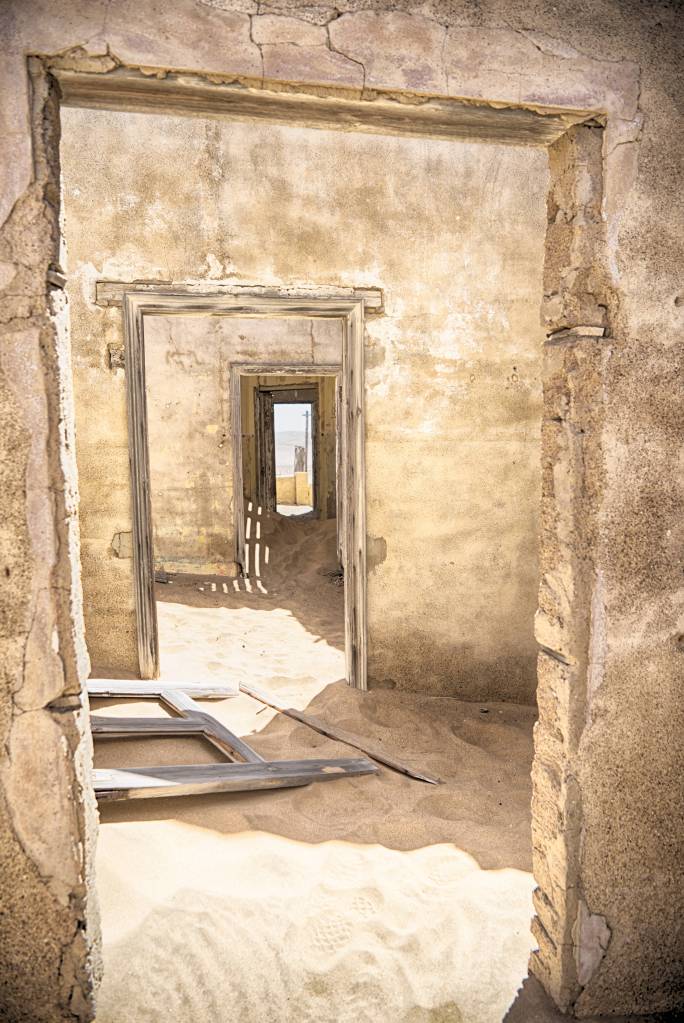
The diamonds may have sparked the town into existence, but the lives lived there — complex, ambitious, ordinary, and extraordinary — are what give Kolmanskop its lasting presence.
The desert continues to shift around the ruins, reshaping them slightly each year, but it has not erased them. Instead, it has framed them. Each grain of sand is a quiet acknowledgment of a time when this corner of the Namib shone brighter than almost anywhere else in the world.

And in the stillness, Kolmanskop remains exactly what it once promised to be:
a testament to the power of discovery, the allure of wealth, and the stories that linger long after the wind has covered every trace of footsteps.

 The Footstep Chronicles
Leave a comment