

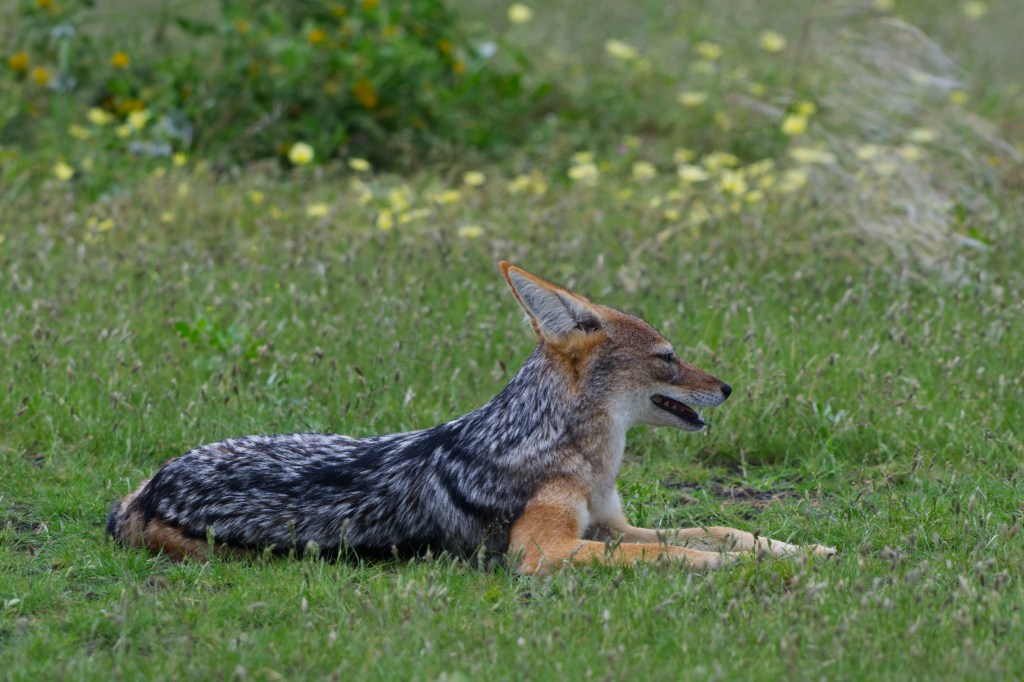
By mid-morning, the sun poured warm light over a transformed Etosha, where the rainy season had coaxed the land into sudden abundance. The once-pale plains were now carpeted in lush green grasses that swayed in the soft breeze, brushed with the sweet, earthy scent of recent rain. Clusters of bright yellow flowers speckled the fields like scattered lanterns, glowing against the deep greens of the brush. Even the distant mopane stands shimmered with fresh leaves, giving the vast basin a rare feeling of fullness and quiet, gentle vibrancy beneath the restless Namibian sky.
On the fresh grass, a young jackal lay resting—lean, bright-eyed, and still growing into himself, his legs a shade too long and his tail flicking uncertainly between hanging calm and bristling with restless energy. He had only recently left the dens where he had grown up, and although he carried within him all the instincts of his kind, he still often moved with the restless curiosity of youth.
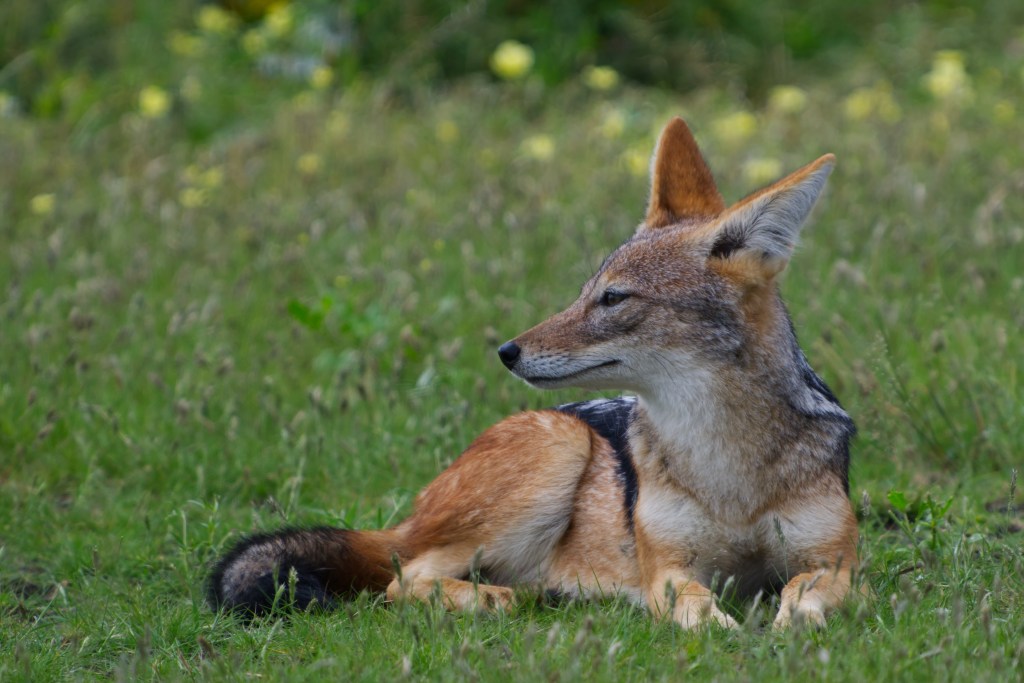
The black-backed jackal is well suited to this country—slender, sharp-eared, and quick-footed, with the dark saddle of fur along his back standing out against the rainy season’s green. Built for both caution and boldness, he moves easily through Etosha’s open plains, alert to every flicker in the grass. Even at this young age, the land seems to flow around him, its scents and sounds weaving naturally into the instincts he is only beginning to understand.

He blinked into the rising sun and breathed deeply. The scent of dust, grass, and old bones floated on the breeze. But layered beneath it was something sharper, something feathered and faintly reptilian. The young jackal lifted his head. He knew that smell. A bird—no, something larger. Something terrestrial but winged. He narrowed his eyes, and in the gradually brightening light he saw it: a tall, stately figure striding through the grass.
There, striding across the tufted grasses with an air of solemn ceremony, was a secretary bird.
The people of Namibia have many names for the species, though the one that had lingered longest in folklore was undjasi woompinga—”the bird that walks with kings.” More widely known as the secretary bird, it is a creature as old as legend and as dignified as any statesman. Tall, elegant, and purposeful, the secretary bird cut an unmistakable silhouette, with long legs like an ostrich, a hooked beak like an eagle, and a crest of quills that stands out behind its head like ceremonial plumes.

Beneath this elegance lay a predator of extraordinary skill. Secretary birds can crush a snake’s spine in a single kick. They sprint down fleeing lizards, stomp rodents into the earth, and jab at insects with astonishing speed. Their wings are broad, their bodies powerful, and although they spend much of their time on the ground, they can lift into flight with a majestic sweep when needed.
In the folklore shared by guides and elders, a president bird is a symbol of vigilance—always watching the landscape, always walking with purpose. And in Etosha Park, they are treated with a certain reverence.
The young jackal, however, knew none of this reverence. He saw only an opportunity.

The young jackal’s amber eyes fixed on the tall bird.
He had seen guinea fowl, doves, and francolins before. He had even chased a few, though his success was questionable. But never had he seen a bird this tall—taller than he was by far, with legs as long as sapling branches and an expression of absolute indifference.
But to a young predator flush with curiosity and still untempered by failure, size was less a deterrent and more of a challenge.
He crouched instinctively, tail straightening behind him.
The secretary bird paused.

Its head lifted. One golden eye locked onto the jackal. The breeze quieted, as though the savanna itself wished to watch the unfolding encounter.
The young jackal’s heart raced. He edged forward, paws soft on the dust.
The secretary bird did not flee. Instead, it shifted, angling its body, legs tensing in readiness—not to run, but to fight if necessary. Its feathers lifted slightly, giving its already imposing frame an even more commanding presence.
The young jackal froze for just a heartbeat. He felt the weight of that gaze, the silent warning carried in the bird’s stance. But energy, hunger, and boldness overcame hesitation.
He lunged.
Not a full attack—more a testing rush, a young predator’s attempt to intimidate, to see whether this giant bird would flinch and offer him opportunity.
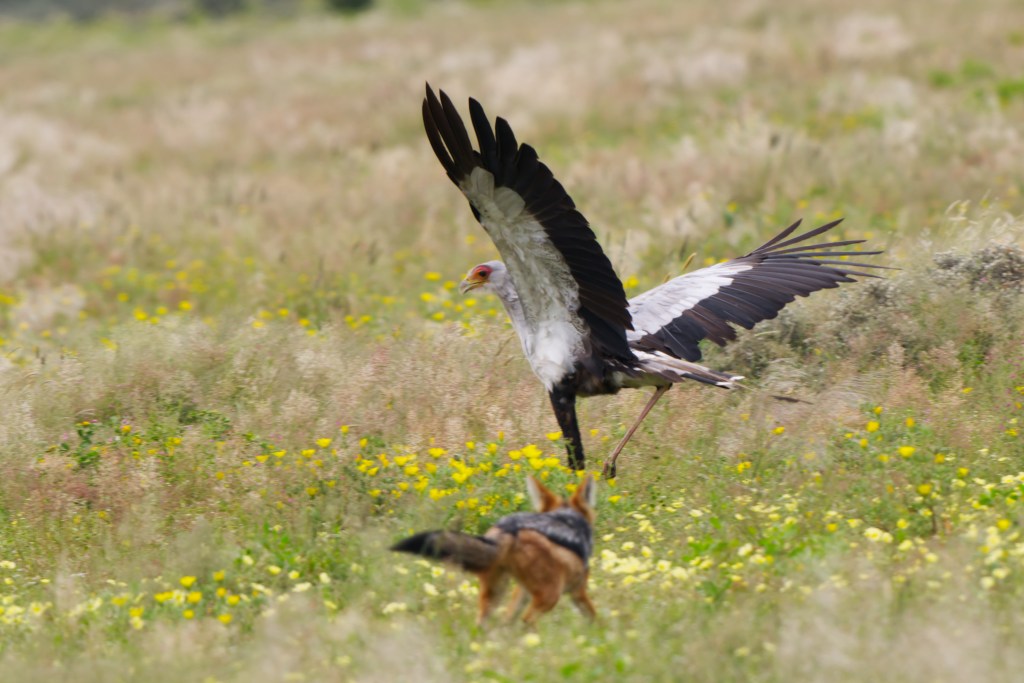

The secretary bird dodged and turned, shifting its weight with surprising speed, long legs snapping into motion as it wheeled toward the young jackal. In a single fluid turn, the great bird struck—one swift, slicing kick that cut through the space just in front of his muzzle, the force of it stirring dust into the air. The jackal jerked back, startled by the speed and precision of the blow, realizing too late that this towering bird was no easy target but a seasoned hunter armed with lightning feet.
He yelped in surprise, skidding backward.
The secretary bird stomped again, a clear declaration: Come closer, and you will regret it.
This was no panicked prey bird. This was a warrior on stilts.
Realization sank in—not through reason, but through instinct. The secretary bird was too strong. Too calm. Too ready.
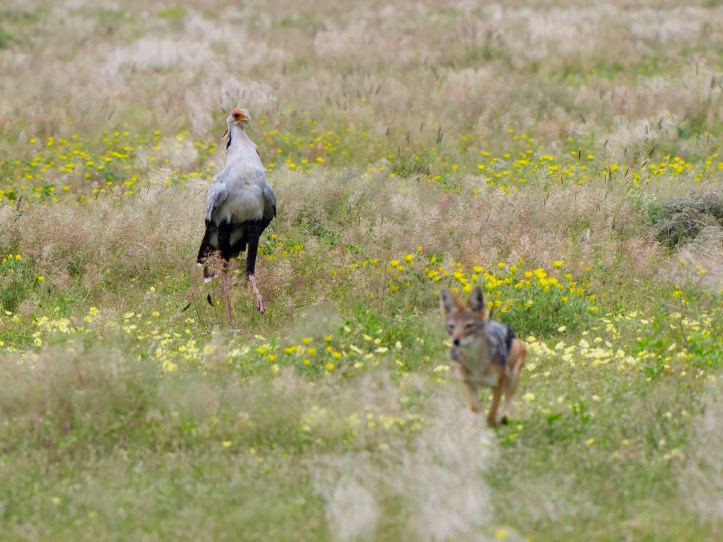
In the space of a heartbeat, the thrill of the chase collapsed into instinctive fear. What had begun as an eager attack now snapped into sheer survival. The young jackal spun on his heels and bolted, scampering back across the grass with his tail tucked tight, knowing full well that one more well-placed kick could leave him limping—or worse.
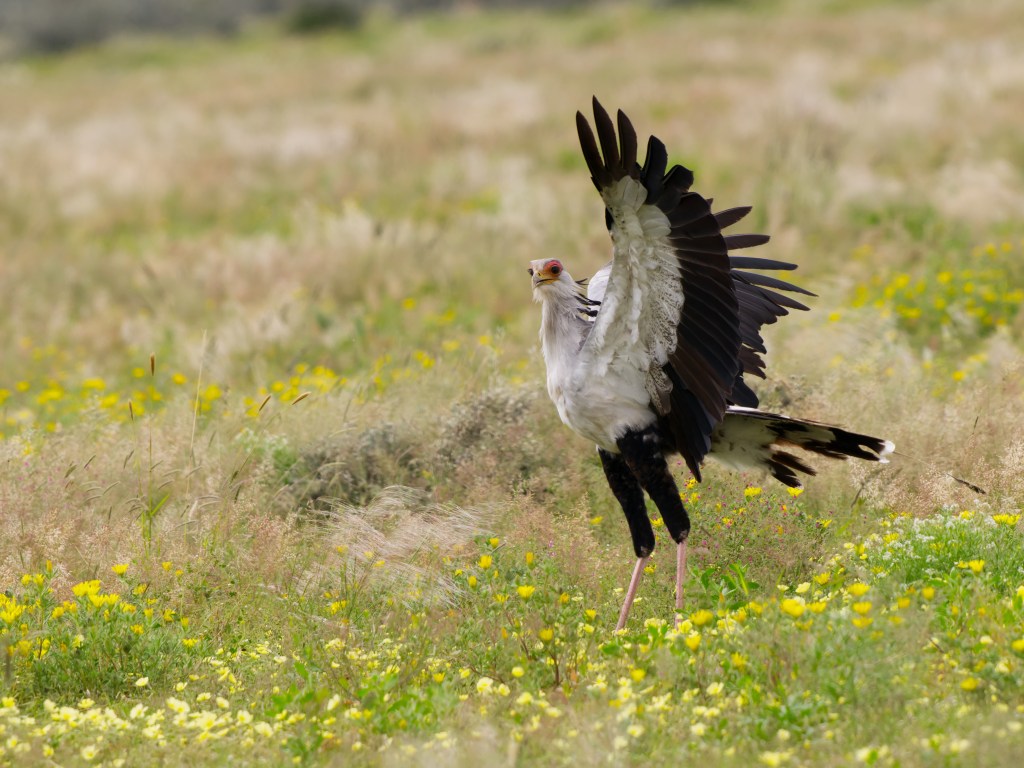
The secretary bird lifted its wings in a sharp, triumphant flare, stamping once at the ground as if claiming the field. It knew the young jackal wouldn’t dare return. Slowly, as though deciding the jackal was no longer worth the attention, the secretary bird lowered its wings and returned to its dignified march across the plain.
The young jackal could only watch, humbled and sorely disappointed.
He turned away.
He walked a short distance, tail still halfway between high and tucked, and then stopped. Another scent drifted to him—familiar, comforting, warm.
His mother.
His mother carried herself with the quiet confidence of experience, her coat a touch lighter with age and sun. Scars traced on her flank—marks of old skirmishes, narrow escapes, and the hard-won lessons of life on the Etosha plains. She moved with the steady assurance of one who has faced rivals, weathered lean seasons, and hunted long enough to know every scent and shadow of the land.
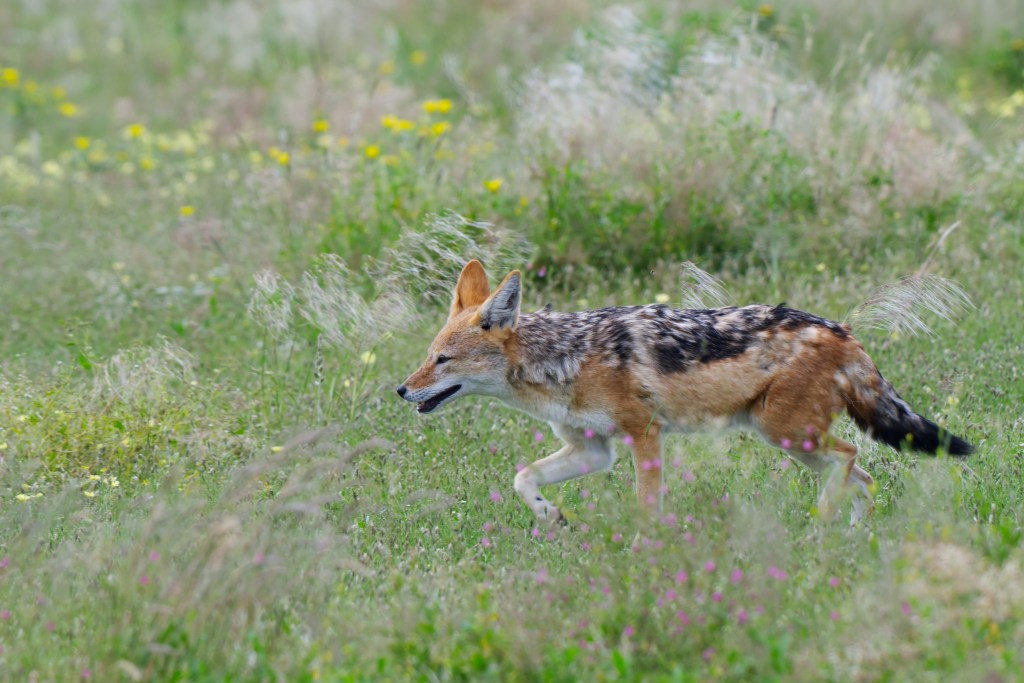
She approached with her steady, confident gait. She had been foraging nearby and had, no doubt, heard his yips of excitement and surprise.
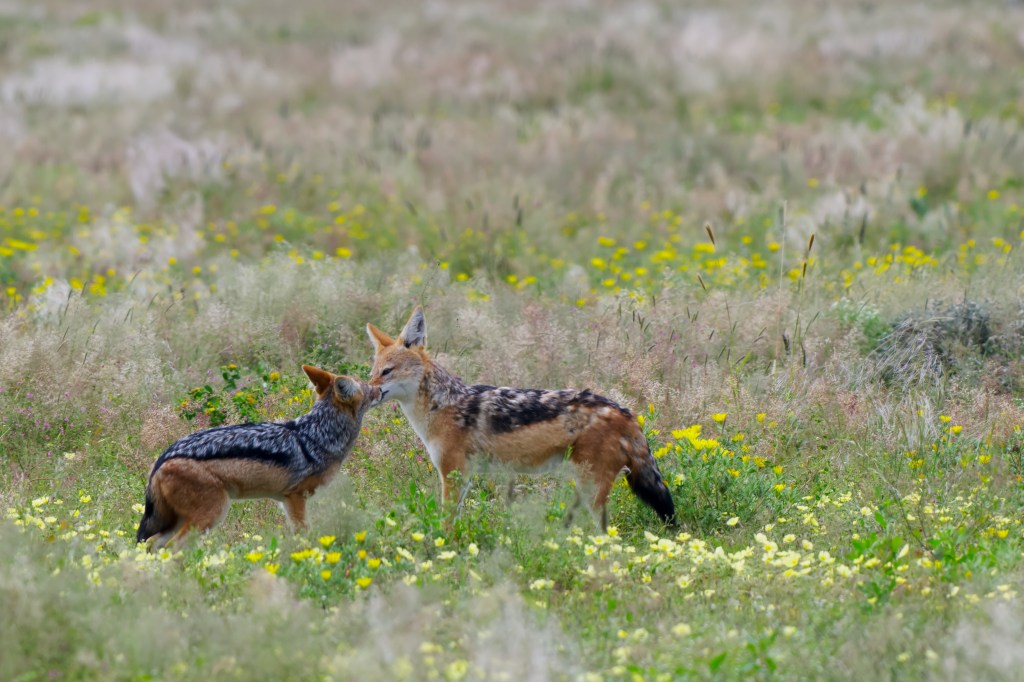
She trotted to him with a soft whine, pushing her nose to his.
They touched foreheads. She sniffed him thoroughly—his face, his neck, his flanks. He stood still, letting her check him, letting her confirm that he was uninjured and still very much her pup.
She licked his chin, a reassuring gesture. He licked her muzzle in return, tail wagging tentatively, grateful for her steady presence.
Her scent grounded him. Her touch reminded him that the world was not always battles and bluffs—that sometimes it was warmth, care, and closeness.

But she did not linger long.
After the moment of grooming, the mother jackal stepped back and studied her son with calm, steady eyes. She gave a soft chuff that meant You’re alright, then leaned in and delivered a quick, gentle nip to his shoulder—just enough to remind him that he was still young, still learning, and that it was time to move along. The nip was affectionate and instructive all at once, a mother’s way of nudging him back into the flow of his day.

With her nip still tingling on his shoulder, the young jackal gave a playful spring out of her reach and bounded toward the open savannah. The vast green fields stretched before him, dotted with flowers and alive with fluttering wings. He trotted forward with renewed energy, leaving the tall, dangerous secretary bird far behind.
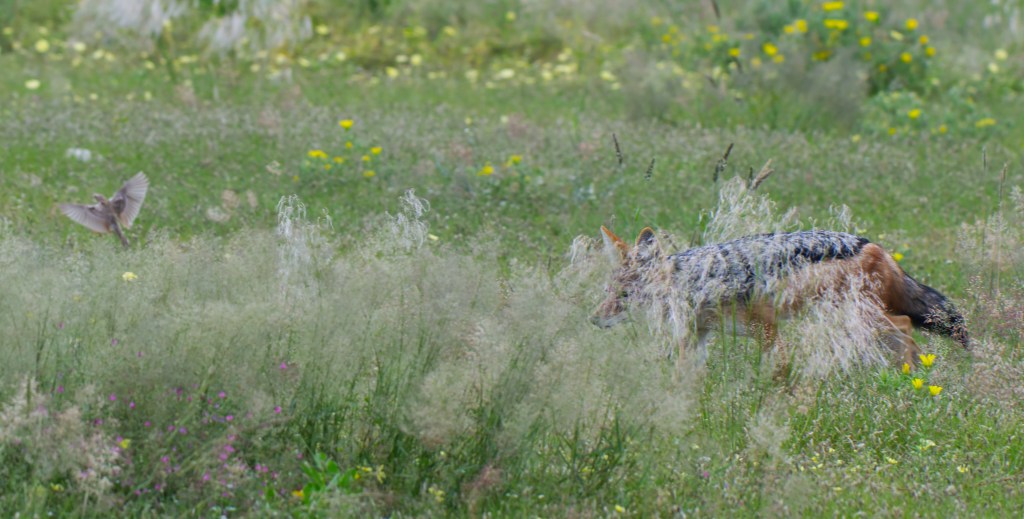
Soon his sharp eyes caught the flicker of tiny shapes darting through the grass—little birds, quick and nervous. Perfect quarry for a youngster still learning his craft. And so he set off again, eager and undeterred, ready to chase whatever small, fluttering adventure the savannah offered next.
 The Footstep Chronicles
So interesting and beautifully observed!
LikeLike