

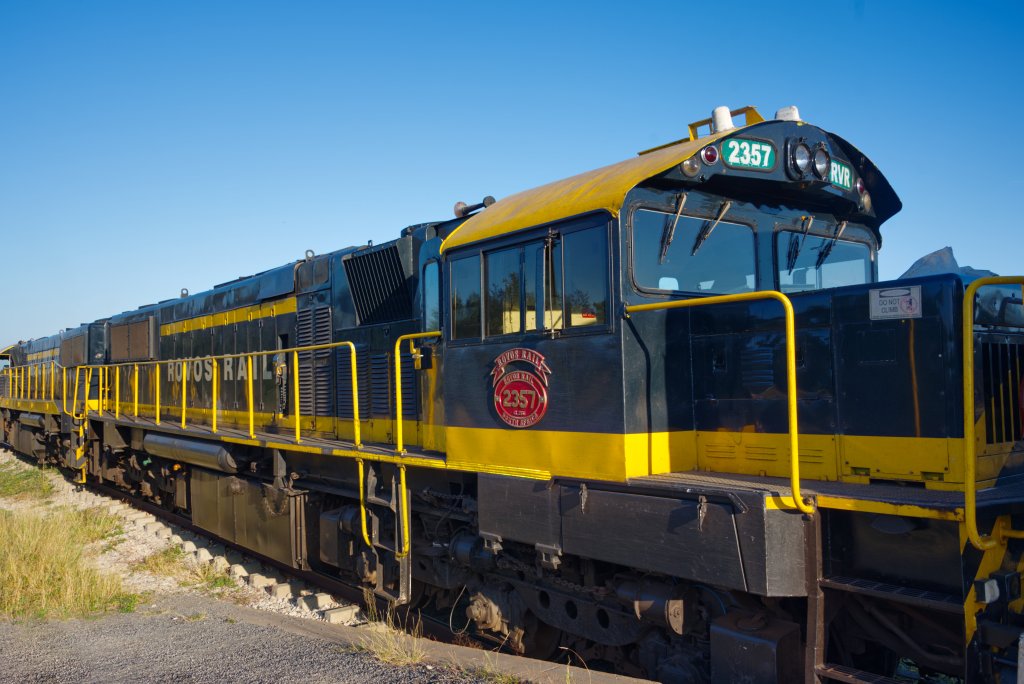
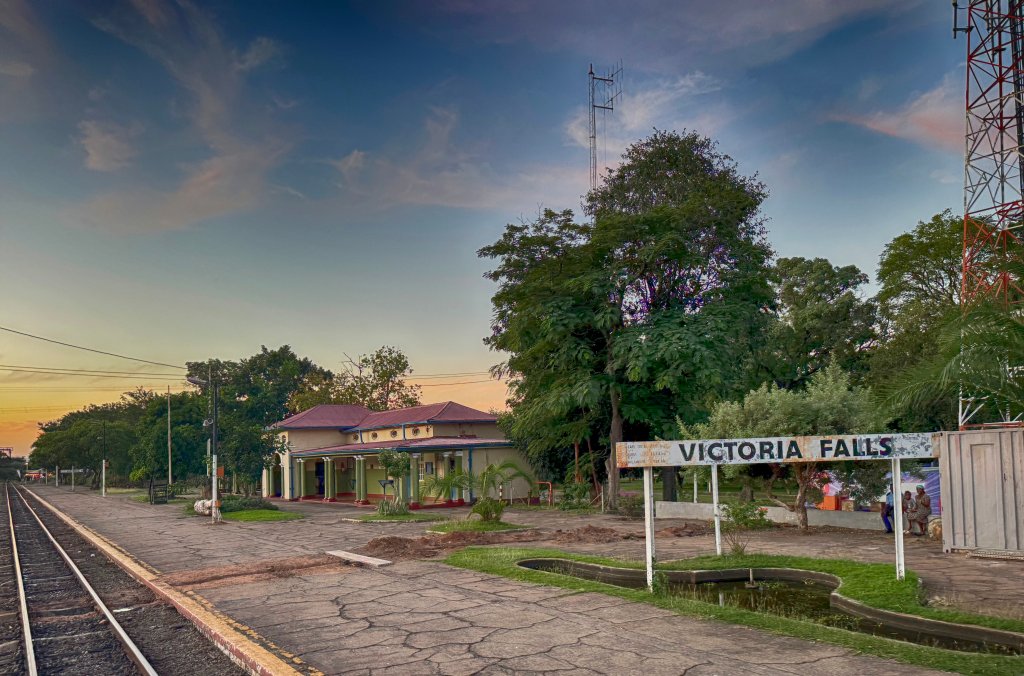
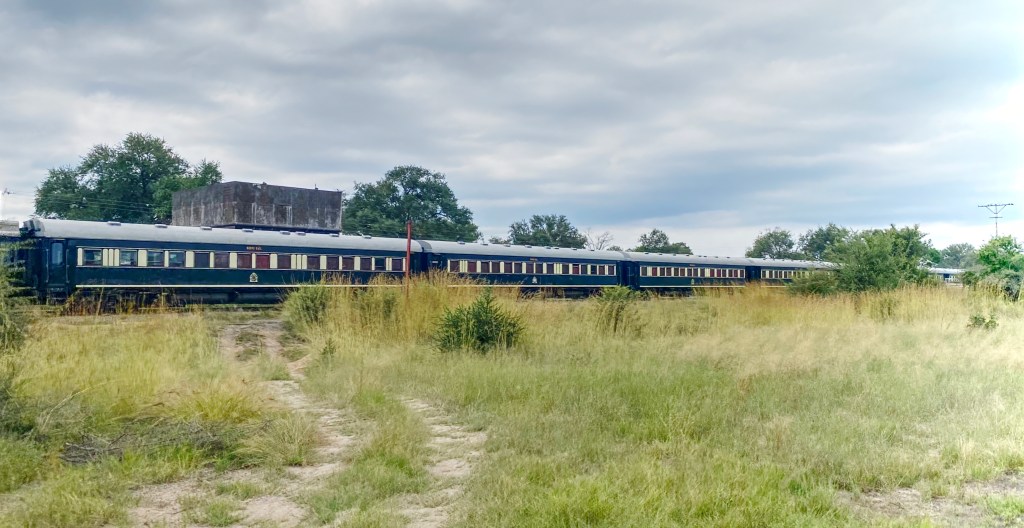
Victoria Falls Station gathers itself with quiet intent. The platform hosts small, purposeful movements: luggage set down and lifted again, documents checked, conversations reduced to brief exchanges. The Blue Train waits along the track, its carriages polished and composed, white detailing catching the afternoon light. It stands with an air of assurance, less spectacle than promise, a vessel designed for long hours and longer distances.
From the terrace of the Victoria Falls Hotel, the land arranges itself into a final, unforgettable composition. The Falls lie to the left, unseen but unmistakable, their presence announced by columns of mist lifting steadily into the afternoon air. The sound carries low and constant, settling into the body rather than demanding attention. To the right, the bridge holds its elegant arc across the gorge, suspended between histories and destinations. Guests linger along the balustrade, drawn into stillness by the scale of it all. This is the last view before departure, a moment of pause before the journey turns south and the rhythm of rail replaces the thunder of water.

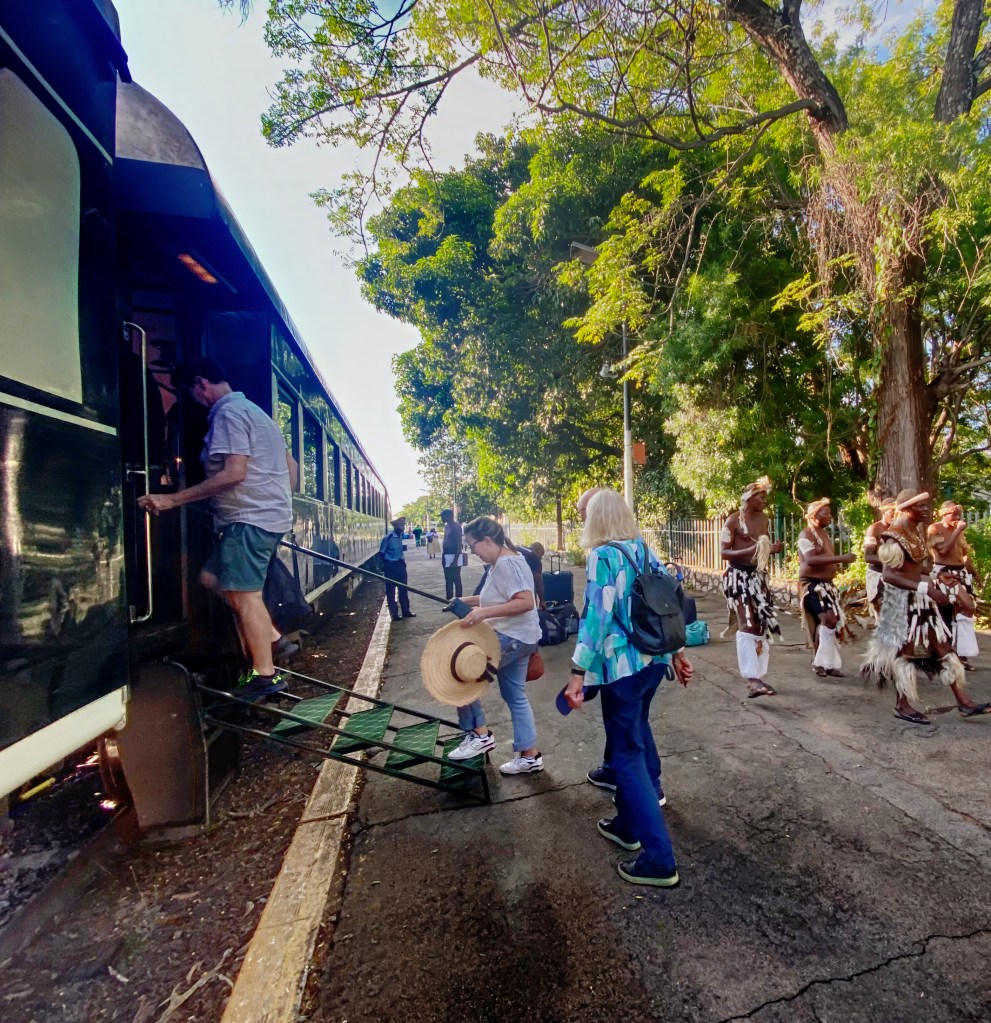
On the platform, the mood shifts from stillness to anticipation. Tickets are checked and returned with practiced efficiency, luggage lifted and guided toward open doors. A small group of Zulu dancers gathers near the edge of the station, their movements light and rhythmic, a brief burst of color and percussion against the muted morning. Drums echo off the concrete, hands clap, feet strike in time, and the platform becomes momentarily celebratory. When boarding resumes, the excitement lingers, carried up the metal steps and into the carriage as the train prepares to pull away.
Stepping aboard places you inside a measured hush. Carpets cradle each stride. Polished wood panels glow with soft varnish. The atmosphere feels curated but not forced, as though the train has long perfected the art of welcoming. Attendants greet you with unhurried warmth, ushering you toward your suite where brass fixtures twinkle and the wide window frames the waiting world.

The lounge car hums with quiet anticipation as the train waits on the platform. The rich aroma of freshly brewed coffee drifts through the air, mixing with the faint scent of polished wood and metal. Flutes of champagne rest on tables, the soft rise of bubbles hinting at celebration. Outside, the platform remains alive with activity, but inside, the car feels suspended in a delicate pause, a space poised between stillness and the first motion of the journey south.
A gentle tremor signals departure. The Blue Train slides forward, gliding so quietly that the station seems to fall away rather than the train pulling ahead. Your chronicle begins its journey south.
The train eases forward along a gentle curve, steel wheels whispering against the rails. Trees and brush slide past on either side, a muted blur of green and ochre, their edges softened by the warm, amber glow of late afternoon. Dust rises faintly where the tracks meet dry earth, stirred by the movement but quickly settling again. The platform recedes, then vanishes, leaving only the quiet rhythm of motion and the slow reveal of the land beyond Victoria Falls, intimate and immediate, yet expansive in its calm persistence.
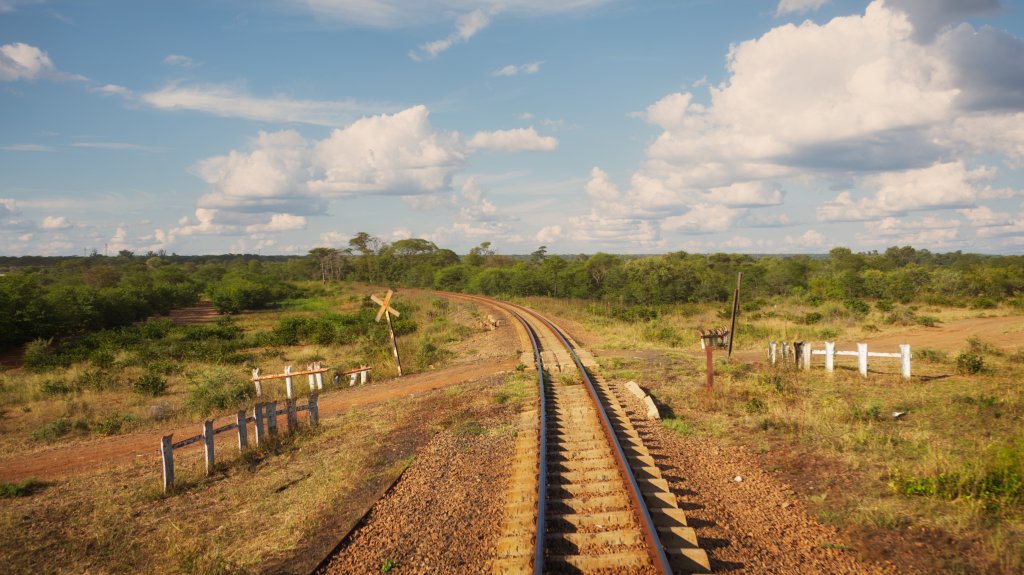
Inside, the Blue Train establishes its atmosphere. Corridors are hushed. Carpets soften footsteps. The low rhythm of wheels on rail forms a steady undercurrent, a sound that gradually recedes into the background of awareness. Windows frame the land generously, inviting observation rather than distraction.

Inside, the Blue Train establishes its atmosphere. Corridors are hushed. Carpets soften footsteps. The low rhythm of wheels on rail forms a steady undercurrent, a sound that gradually recedes into the background of awareness. Windows frame the land generously, inviting observation rather than distraction.
The suites and lounges of the Blue Train are designed to absorb time. Upholstered seating encourages unhurried posture. Polished wood surfaces reflect light softly, never sharply. Attendants move through the carriages with calm precision, offering refreshments, answering questions, anticipating needs without intrusion.
Passengers drift between private spaces and shared ones. Some choose the lounge, where conversation forms easily and dissolves just as gently. Others move toward the rear open-air viewing area, sitting on the benches or standing at the railing, letting the warm breeze carry the scent of the land and the faint dust from the tracks. The wide-open space allows an uninterrupted view of the scenery unfolding on either side, the trees and brush sliding by in late afternoon light, and the rhythmic pull of the train beneath their feet.

The Zimbabwe countryside unfolds slowly, punctuated by signs of daily life. Small villages cluster near dirt roads, and occasional homesteads appear as muted shapes among the grasses. Children pause their games to watch the train pass, their figures silhouetted against the fading afternoon sun. Farmers tend small fields, hoes in hand, turning the soil or gathering crops, while water jugs rest nearby. Each glimpse offers a quiet insight into life lived along the line, fleeting but distinct, stitched together by the rhythm of the rails.
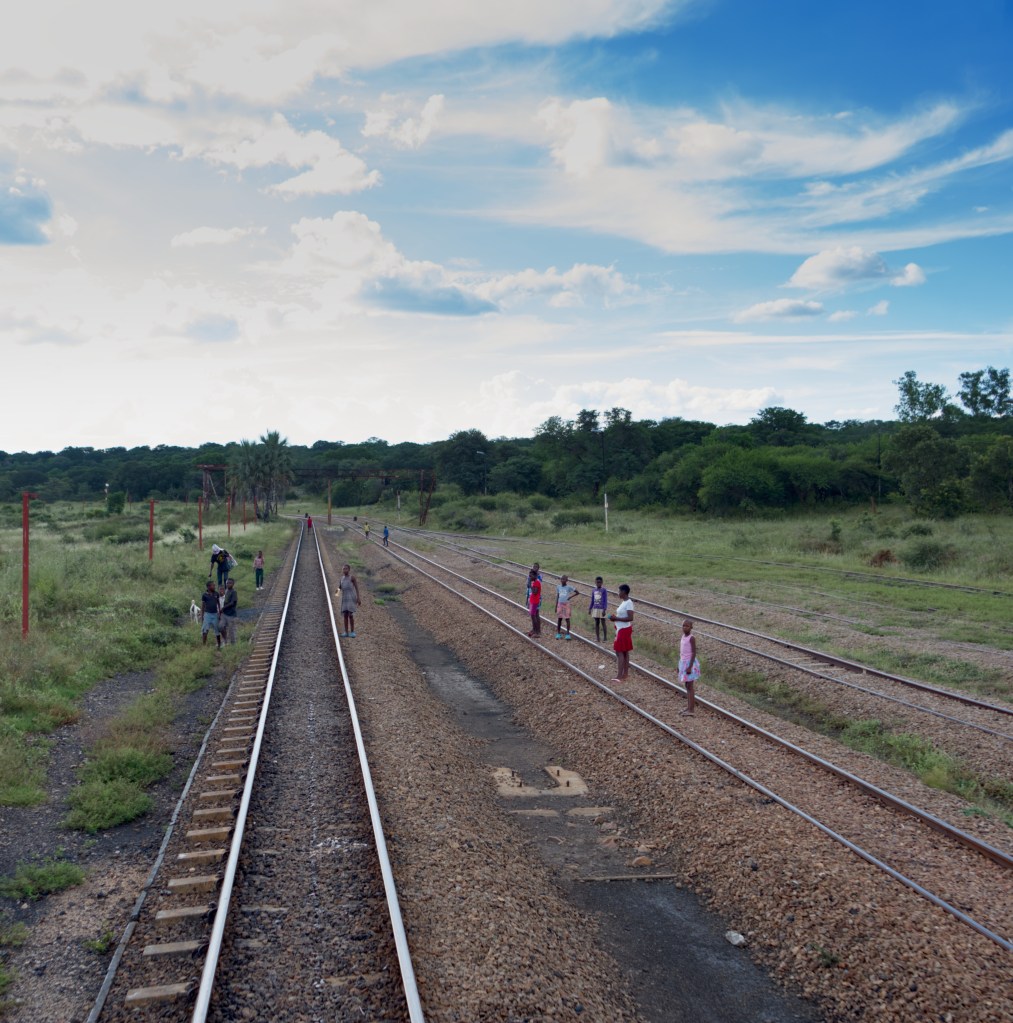
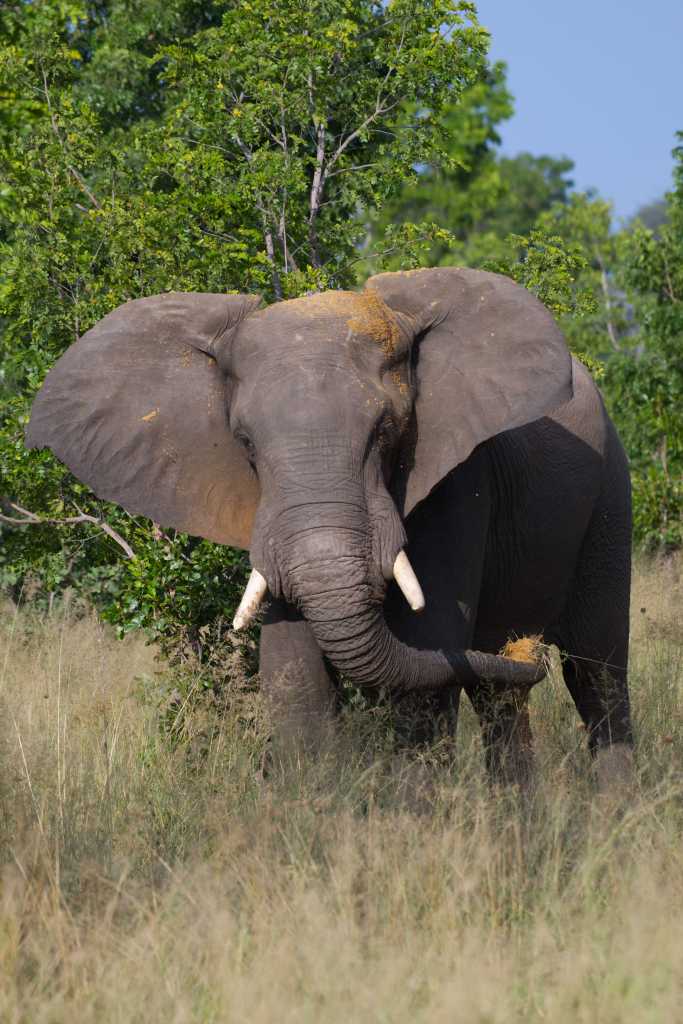
Occasionally the conductor announces a wildlife corridor, and passengers migrate to windows with gentle urgency. Elephants appear as gray fortresses moving with solemn grace, their ears fluttering like heraldic banners. Wildebeests graze in loose clusters nearby, heads dipping and rising in quiet rhythm, their movement a steady counterpoint to the lumbering elephants.

Along the route, the train occasionally eases to a stop at small stations, brief pauses that offer glimpses of the communities and landscapes nearby. At some stops, the journey can extend beyond the rails: vehicles await to take travelers on short excursions, winding into bush paths and open savanna. The air shifts here, hotter and drier, carrying the scent of sun-baked earth. The sound of the train receding behind leaves space for the quiet pulse of life in the surrounding land.

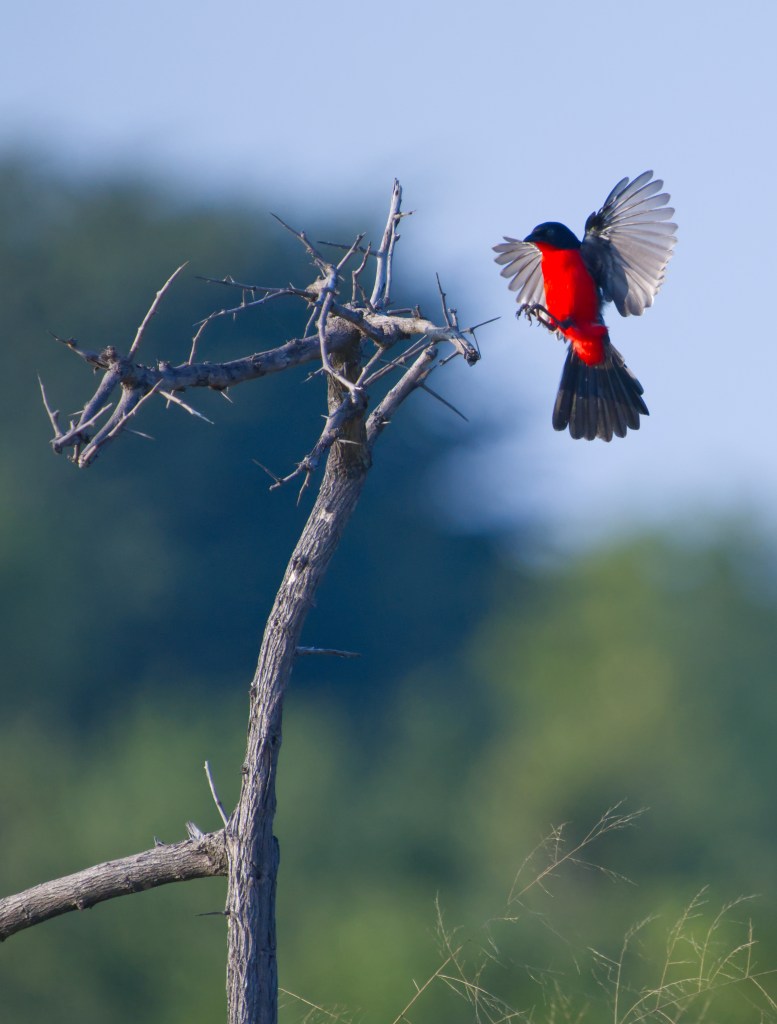
During these excursions, the rhythm of observation changes. Safari drives lead into corridors where lions lounge under acacia trees, their tawny coats blending seamlessly with the dry grass. Zebras graze nearby, heads down in steady repetition, unaware of the predators resting not far off. The conductor’s earlier announcements take on new dimension when experienced on the ground, the scale of movement and sound immediate rather than mediated through glass. Here, the landscape reveals its secrets slowly, measured in the careful steps of both predator and prey, and in the wide, open gaze of travelers temporarily freed from the train’s embrace.


Returning to the train feels like reentering a familiar rhythm. The carriages wait patiently, doors open, their green sides catching the late light. Inside, the atmosphere shifts from dust and open air to quiet order. High tea is already laid out, delicate pastries and warm scones arranged with careful precision, steam lifting gently from porcelain cups. The windows frame the receding landscape as the train settles back into motion, the ritual of tea offering both pause and continuity, a gentle marker of distance traveled and distance still to come.
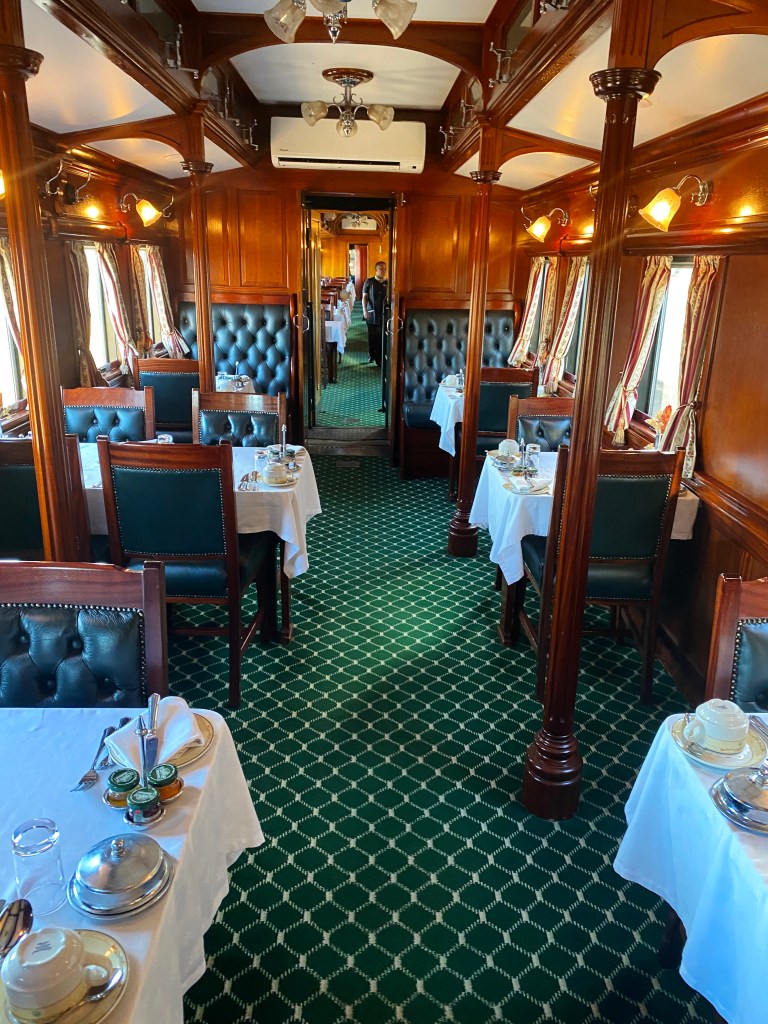
Meals on the train quietly shape the day’s rhythm. Breakfast is served as the landscape stirs awake, the dining car filled with soft light and the muted sounds of morning along the tracks. Fresh fruit, warm breads, and unhurried service encourage lingering rather than efficiency. As the journey continues, a light lunch follows, carefully paced and intentionally restrained, allowing the afternoon to remain open and expansive. Later, afternoon tea stretches comfortably across the day, a generous spread of pastries, scones, and steaming cups offered without urgency, inviting pause as the countryside drifts past in steady procession.
Evening brings a change in tone. The dining car transforms for dinner, tables set with crisp linen and polished glassware, the atmosphere quietly ceremonial. Guests arrive in formal attire, the soft rustle of jackets and dresses replacing daytime ease. Dinner unfolds as a multi-course experience, each dish arriving warm and inviting, from carefully prepared starters to rich mains and satisfying accompaniments. Sauces, spices, and textures are balanced to be enjoyed slowly, the flavors lingering as the train carries the dining car deeper into the night. Conversation softens between courses, shaped as much by the food as by the steady rhythm of the rails.
As the train approaches the border, its pace eases almost imperceptibly. The steady rhythm of the rails softens, and the landscape grows quieter, flatter, as if anticipating the pause ahead. Outside the windows, fences and small official buildings appear, modest markers of a line drawn across the land. The train comes to rest without ceremony, settling into a stillness that feels intentional rather than interruptive.
Inside, the atmosphere remains composed. Staff move through the carriages with practiced assurance as border officials board, their presence orderly and unhurried. Passports are checked, stamped, and returned, the brief exchange marking a shift from one country to another. Beyond the glass, the night holds its shape, unchanged by paperwork or pause. When the formalities conclude, the train stirs again, crossing quietly into South Africa and resuming its southbound journey, carrying its passengers forward with the same steady resolve it held before the border came into view.

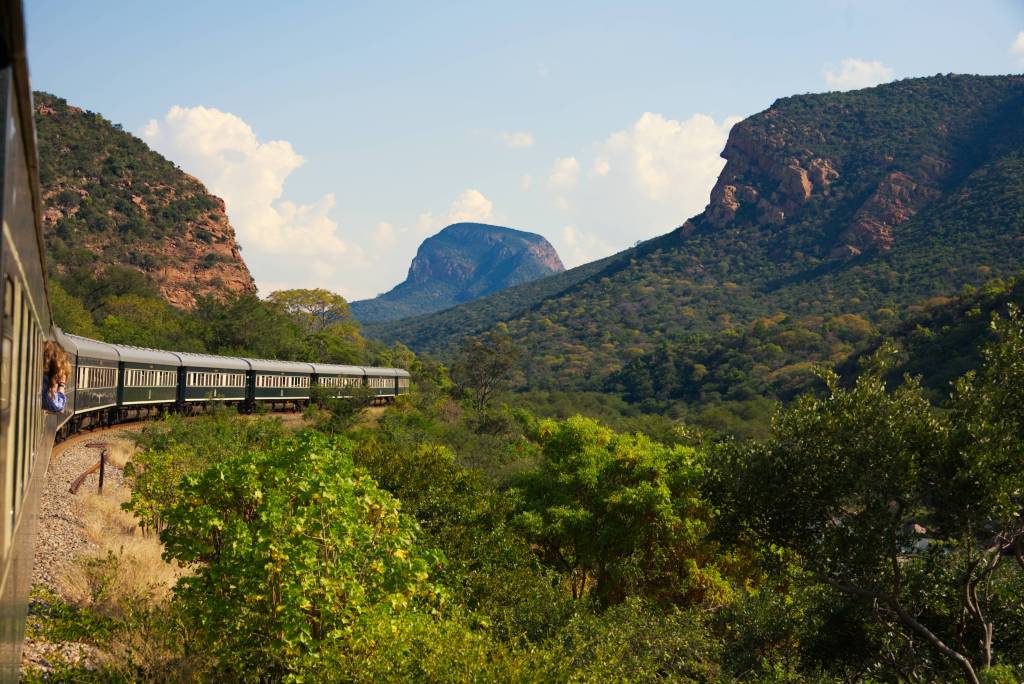
Beyond the border, the train enters a more mountainous stretch of South Africa, where the land rises with quiet authority. Hills stack into ridgelines, their slopes folding into one another, carved by time and shadow. Rock faces appear close to the tracks, weathered and dark, then fall away into shallow valleys threaded with scrub and hardy trees. The vegetation grows denser in places, clinging to the contours of the land, while distant peaks hold the last light along their edges. The journey feels newly vertical here, the train climbing and curving through terrain that slows the eye and deepens the sense of distance traveled.
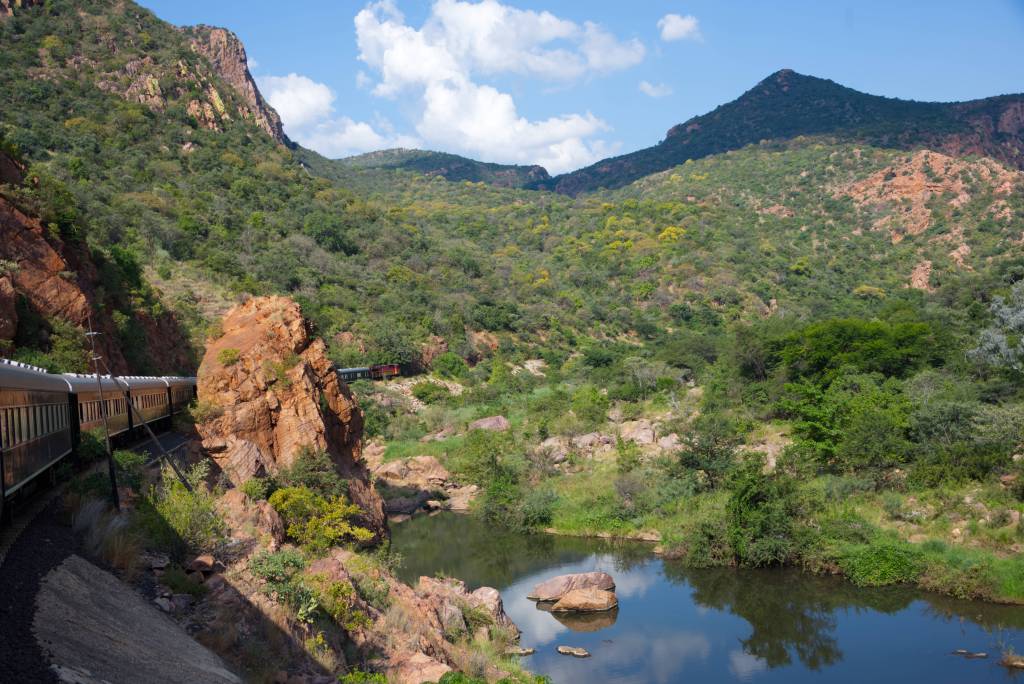
The mountains gradually loosen their hold, giving way to a slow descent into drier country. Slopes soften, rock thins, and the land opens into wide, sun-washed stretches where the soil pales and vegetation thins. The air beyond the windows feels warmer, the light broader, less filtered by elevation. Farmland begins to appear in deliberate patterns, fields edged by fences and dirt roads, farmhouses set back from the tracks.

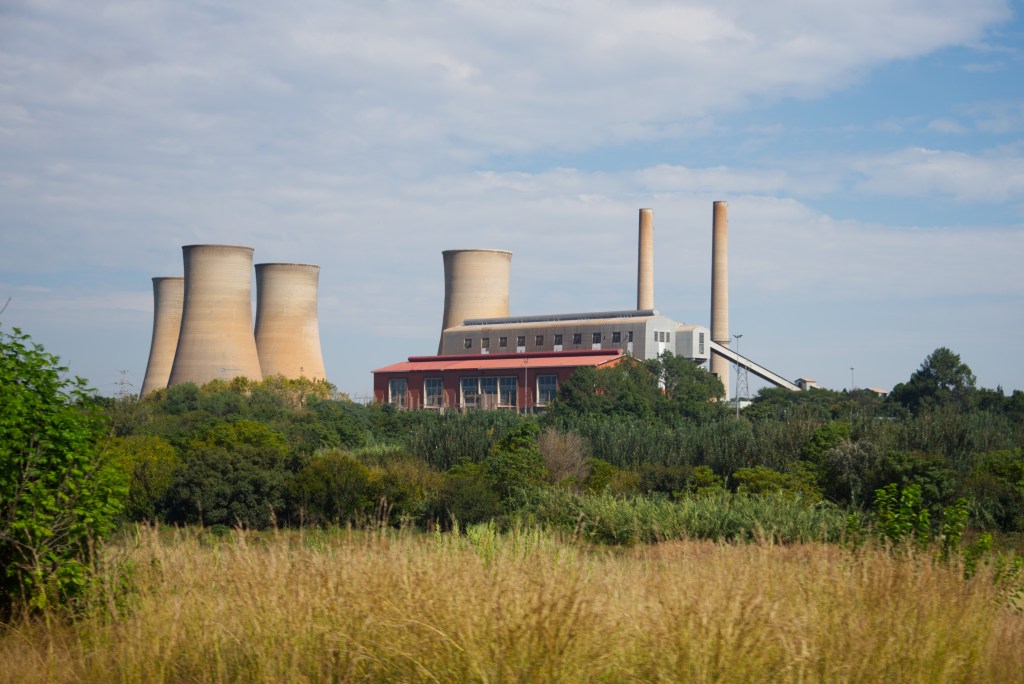
Soon after, small towns emerge in sequence, rooftops clustered, roads crossing the rails with quiet familiarity. The train passes through without pause, threading together wilderness, work, and settlement as it continues its steady approach toward Pretoria. As the train draws closer to Pretoria, the landscape takes on an industrial cadence. Warehouses and processing plants line sections of the track, their long roofs and steel frameworks stretching toward the horizon. A power generation station rises nearby, its stacks sending faint plumes into the sky, a reminder of the city’s infrastructure humming beyond the hills. The air feels heavier here, shaped by work and movement rather than open land, yet the transition is gradual, almost respectful. The train moves steadily through this zone of industry, marking the final shift from countryside to city as Pretoria gathers ahead.

The Blue Train slows as it nears Pretoria Station, the steady rhythm of wheels softening against the tracks. Platforms and buildings come into focus, commuters and porters moving with quiet purpose, breathing a wistful sigh of a journeys end. The train eases to a halt with deliberate calm, doors opening to reveal the station’s polished surfaces and waiting carriages. The journey south, measured in miles, landscapes, and hours of rolling rhythm, concludes here, the rails having carried their passengers from mist and Falls to the structured heart of the city.

As passengers step onto the platform, the train sits quietly behind them, its green carriages still and gleaming, a vessel of distance and memory. The rhythm of rails, the scents of coffee and formal dinners, the shifting landscapes from mist-laden Falls to rolling hills and industrial edges—all linger in the mind. Zimbabwe’s wildlife, the quiet villages, the scrub and stones of South Africa’s highlands, the open-air views, the rising sun and fading light—all become threads woven into the experience of travel itself. The Blue Train’s journey is more than a passage between points on a map; it is a measured unfolding of land, life, and time, leaving passengers with the quiet fulfillment of having witnessed the world at its own pace.

 The Footstep Chronicles
Leave a comment