
Somewhere between a whisper and a spark, the sunbird moves. Not loudly. Not with drama. But with the quiet certainty of color born from light.
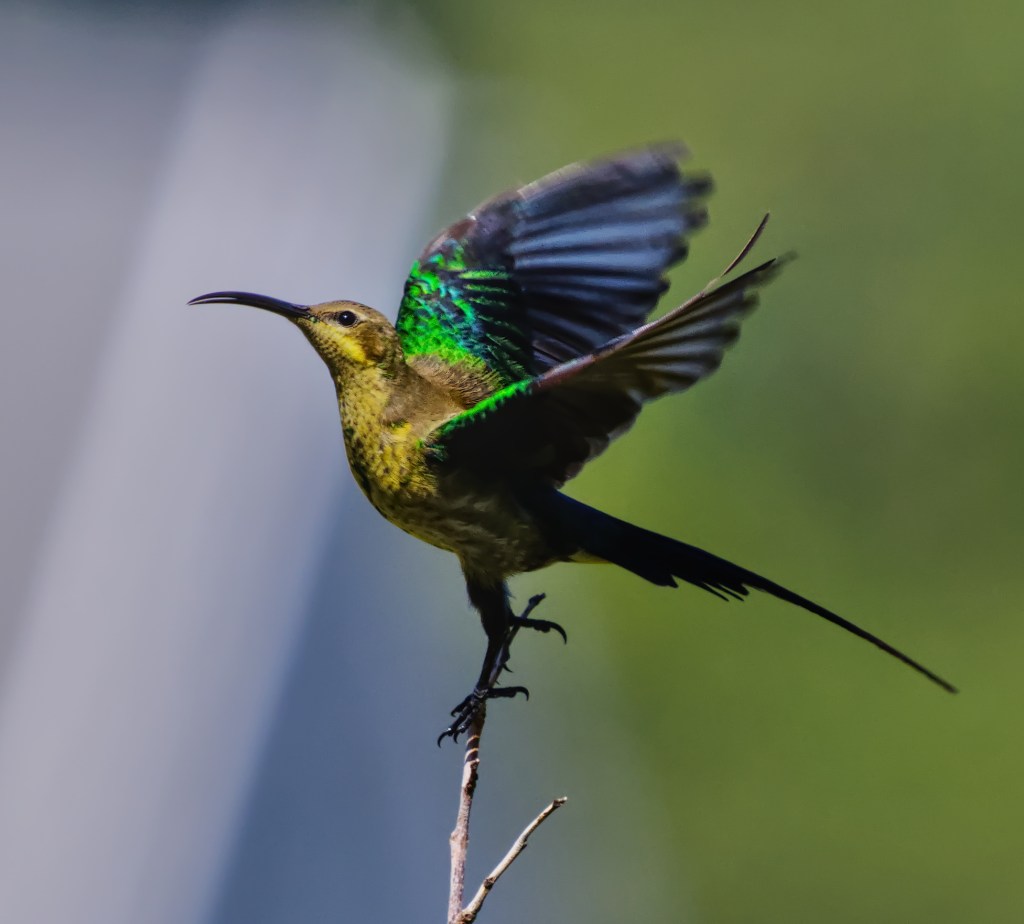
The sunbird is a small, nectar-loving bird found throughout parts of Africa, Asia, and Australasia. Roughly the size of a large hummingbird, its slender frame and curved bill are built for agility — and for drinking straight from the heart of a flower. They are not loud. Not flamboyant in movement. But in the still hours of the morning, when the sun lifts just enough to set the aloes glowing, you’ll find them.
In motion, the sunbird is little more than a flicker — a brushstroke of iridescent green, deep crimson, or violet. When sunlight touches its feathers, it gleams with metallic hues that shift as the bird turns. Some species shimmer blue-black; others glint gold or emerald, depending on the angle and the hour.
Unlike hummingbirds, which hover, sunbirds typically perch on branches as they feed. They’re quick, darting between blossoms with a practiced rhythm, wings fluttering just enough to keep them balanced.
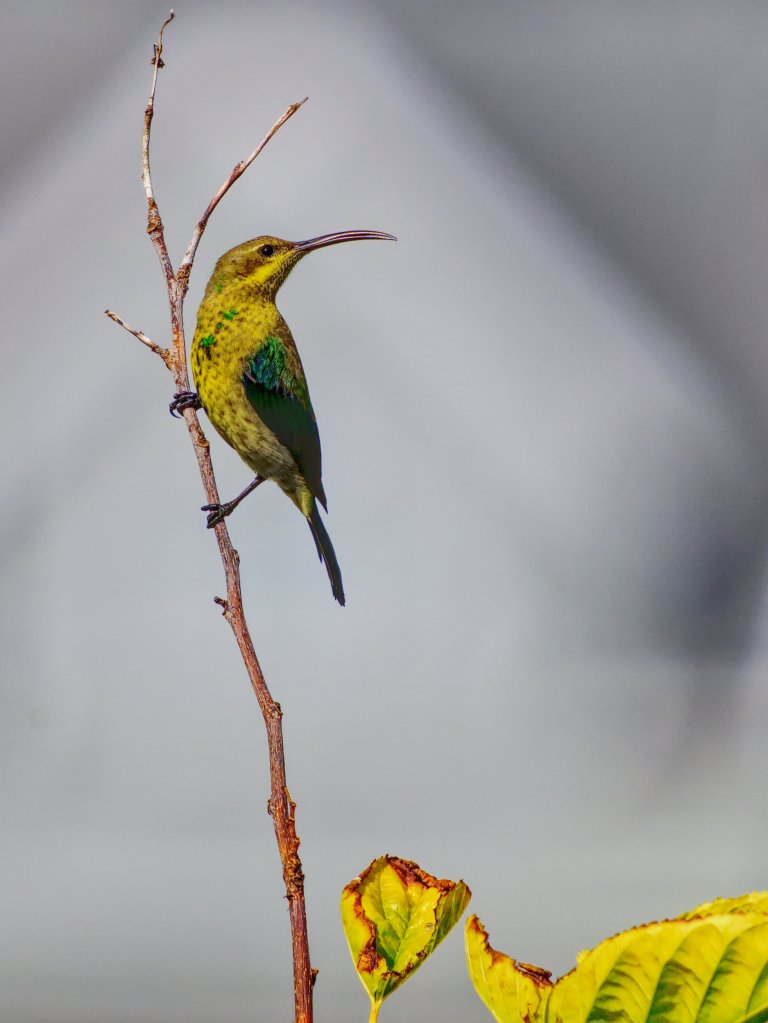
In the fynbos between the pale gold grasses and low, bristling shrubs, a Malachite Sunbird flashes across the path. For a moment, nothing moves. Then he appears again, balancing on a swaying aloe, his feathers catching sunlight like brushed metal.
Here, the land is sculpted by wind and fire. Yet it holds these bright survivors—birds who drink from fire-colored blooms and leave behind nothing but a shimmer and a trail of pollen dust.
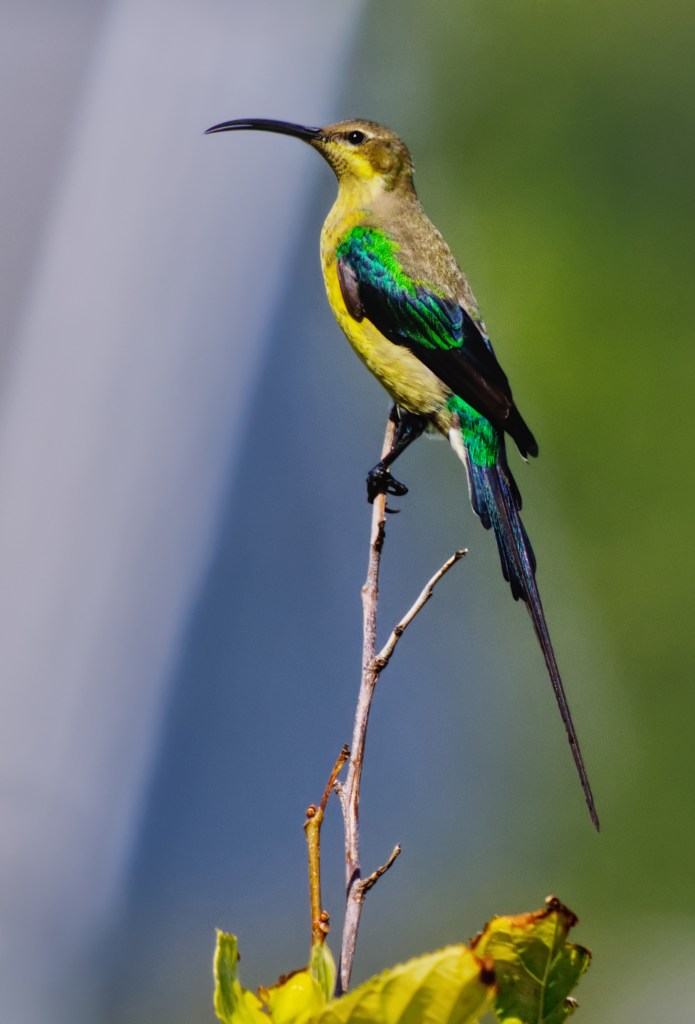
The Malachite is long-tailed and lean, an arrow of color in a world built of restraint. His mate is much quieter and subdued in hue. Their presence is not dramatic, but deliberate—like the fynbos itself.
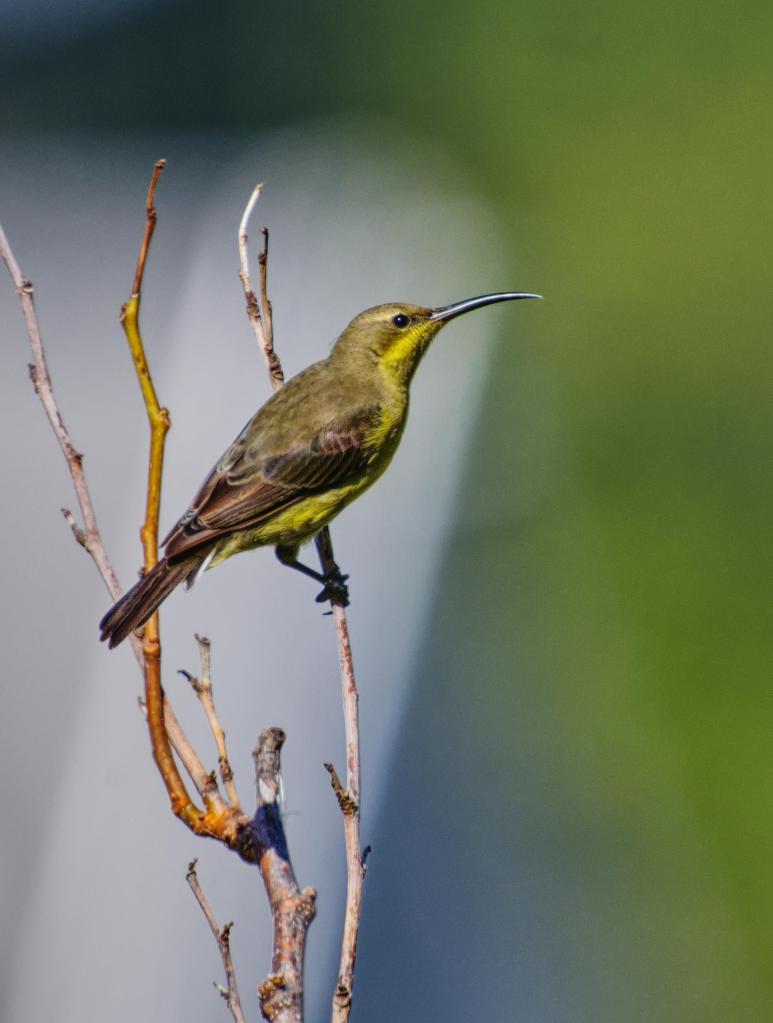
In the northern woodlands, the Amethyst Sunbird is often seen among bright flowers and green leaves. Its feathers shine with deep purples and blues that catch the sunlight as it moves quickly from bloom to bloom. Using its slender beak, the bird drinks nectar, playing an important role in pollination. The Amethyst Sunbird is a common and lively presence in these areas, blending into the colorful landscape of flowers and trees, bringing life and movement to the vibrant surroundings.
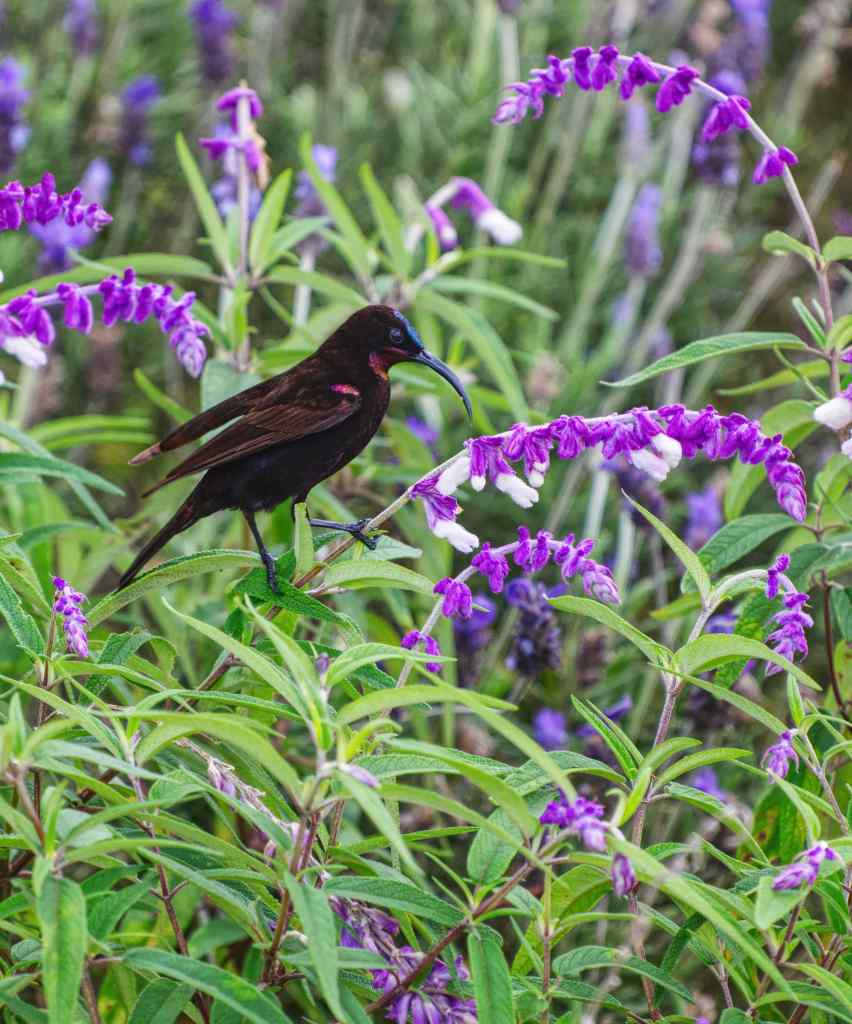
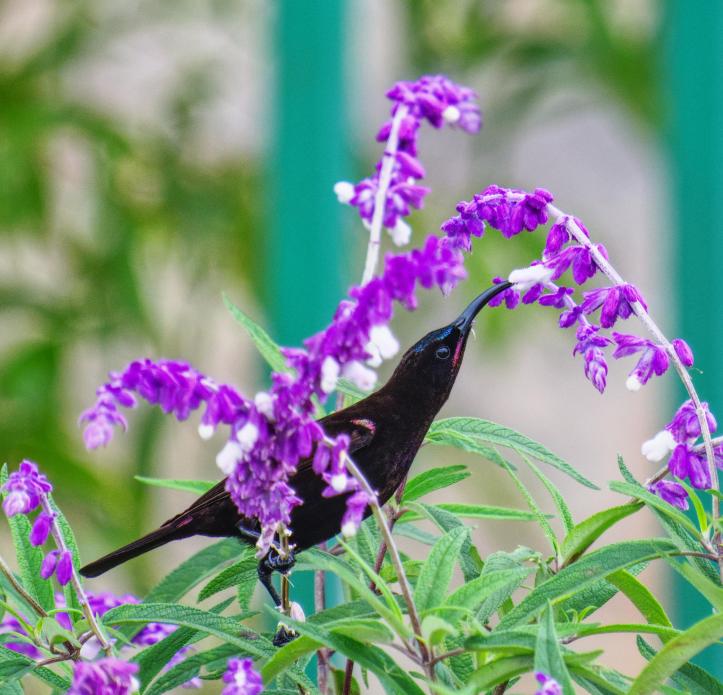
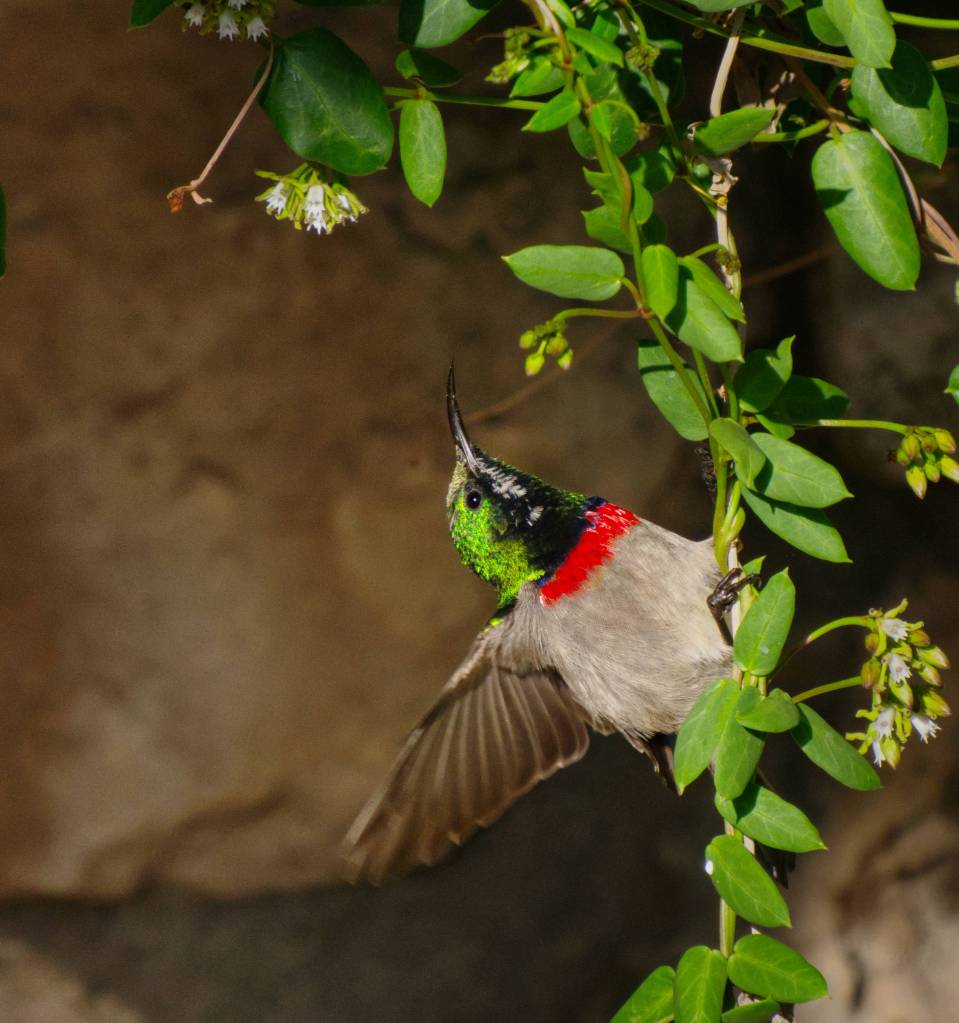
Sunbirds don’t just follow flowers—they wait for them. The birds’ breeding cycles are in sync with the bloom cycles of the plants. Aloes in winter, ericas in spring, tubular flowers after fire—all offer nectar at just the right moment. And the birds return, year after year, to drink and nest. Among these nectar lovers, the Southern Double-collared Sunbird stands out with its striking red collar and vibrant green back, often found flitting through the fynbos and forest edges. Its presence signals the health of these delicate ecosystems, as it plays a vital role in pollinating many native plants that depend on this timely partnership to thrive.
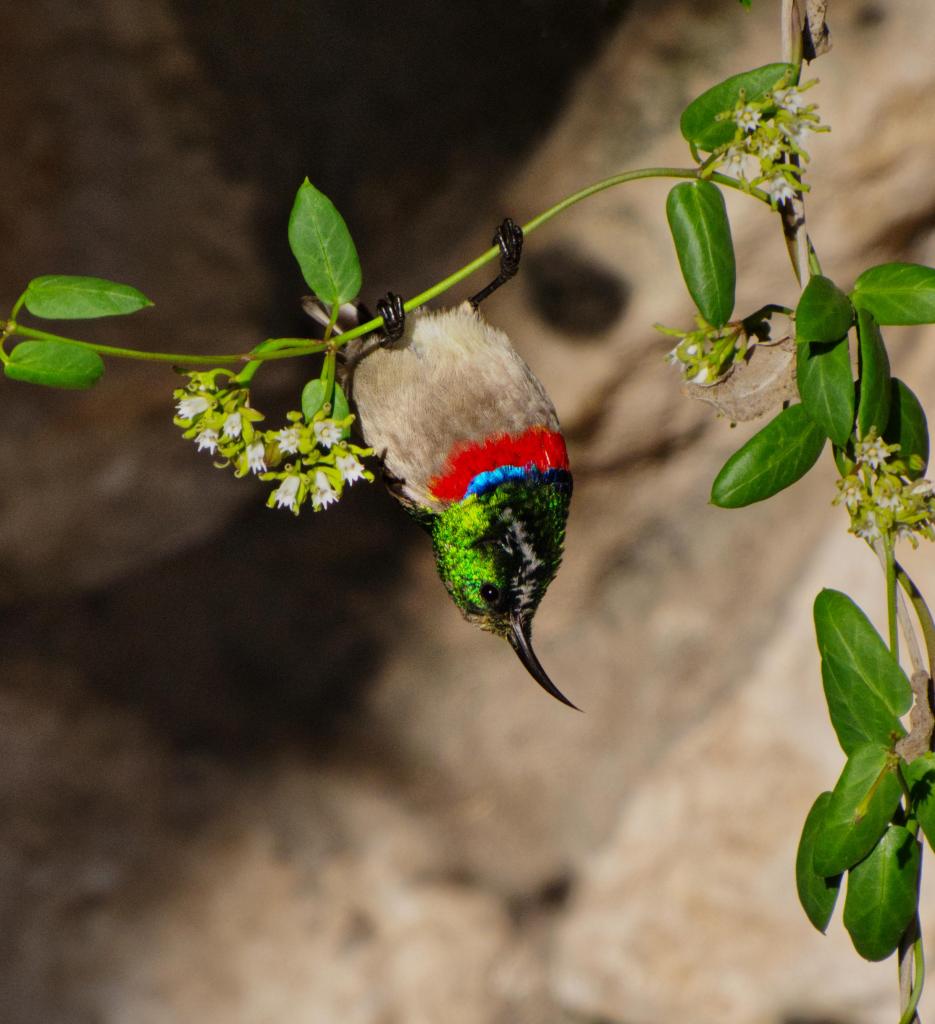
Sunbirds are not just decoration. In Southern Africa’s ecosystems, they’re essential pollinators—especially in habitats like fynbos, where many plants rely entirely on birds for reproduction. Without the sunbirds, some of the region’s most iconic flora—Proteas, Aloes, Red-hot Pokers—would not survive.
Their flight lines write invisible maps between flowers. They stitch together different patches of habitat with movement. Their work is silent, constant, and mostly unseen.
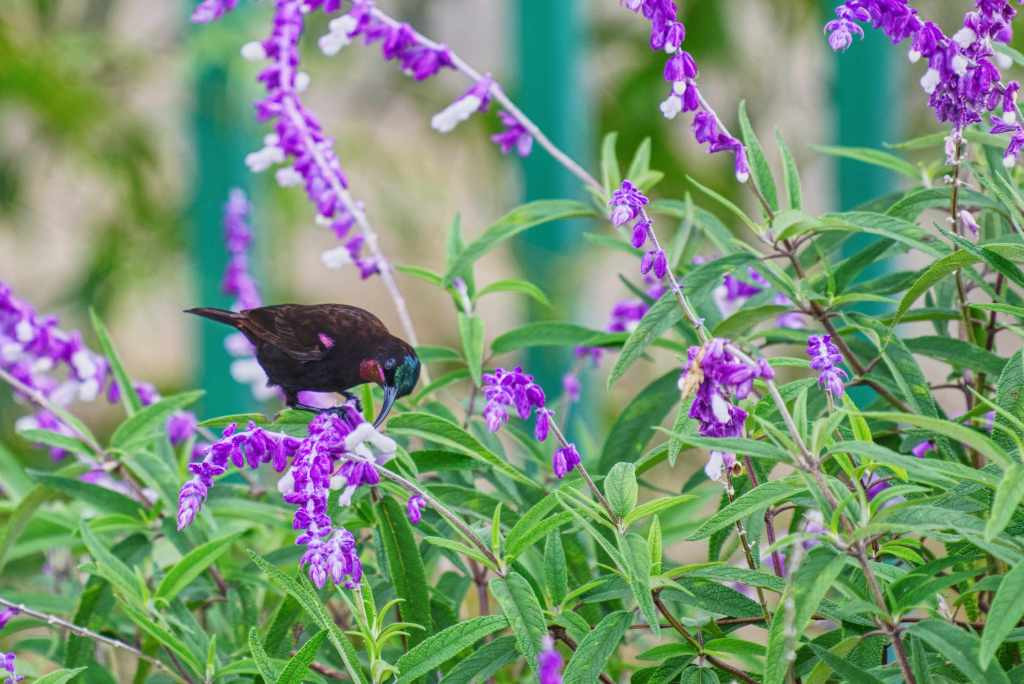
Sunbirds don’t migrate far, but they move constantly—following food, seasons, and bloom. If you follow them, even across small distances, you begin to see how their rhythm maps onto the land. They appear in wild places and cities alike. In reserves, on mountaintops, in roadside trees. They are not rare, but they are easy to miss.
Then, they are everywhere.
Waiting for you to discover them.


Leave a Reply