

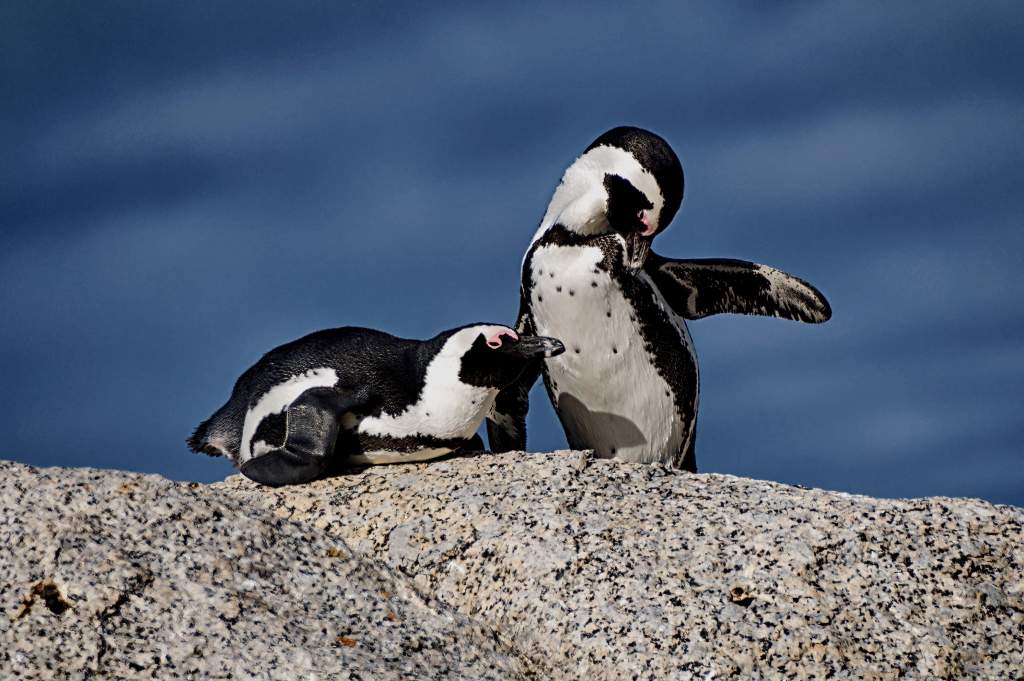
Just a short drive from Cape Town, in the sheltered waters of Simon’s Town, lies one of South Africa’s most beloved natural attractions — Boulders Beach, home to a thriving colony of African penguins (Spheniscus demersus). Known affectionately as the “jackass penguin” for its donkey-like bray, this species is the only penguin native to Africa and one of the few that live in warm-water habitats. Their presence has transformed this small stretch of coastline into a unique wildlife sanctuary, where the line between human and animal worlds narrows to the width of a sandy path.

Boulders Beach is built from giants — great slabs of granite rounded smooth by centuries of wind and tide. They rise from the sand like weathered monuments, holding the waves at bay. Between them, the sea gathers in shallow pools, green and glassy, flecked with drifting kelp. The air carries a mix of salt, seaweed, and the faint mineral scent of wet stone. Between these silent sentinels lie sheltered coves where the ocean slows to a gentle sway, crystal clear water lapping against pale sand. This is where you will find the slow deliberate movement of black and white.

You do not have to look for the penguins; they are simply there. Standing in groups on the beach, shaking off droplets from a recent dive, or tucking their heads into their chests as if to keep their secrets from the wind. Their black-and-white plumage seems almost formal against the bright sand, like they are dressed for an occasion only they understand.
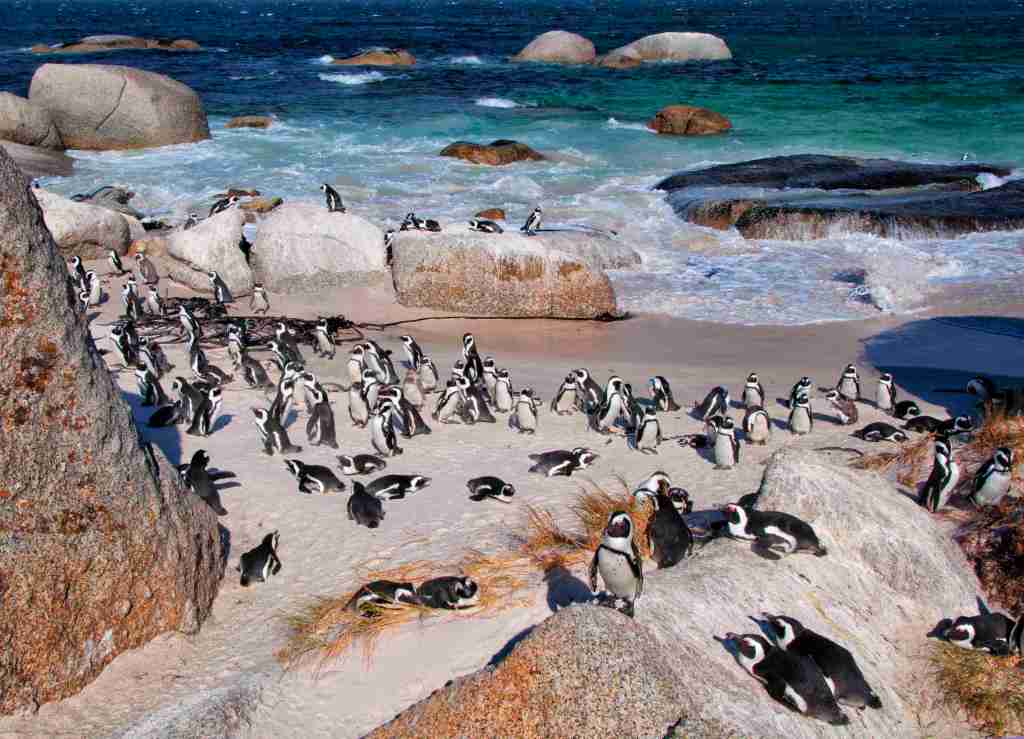
In the water, the penguins move with a precision the land can’t offer — sleek, fast, and endlessly agile as they weave through the kelp and chase flashes of silver in the shallows. On land, the pace shifts. The penguins’ black-and-white plumage contrasts against the rugged granite boulders and soft white sand where they nest.
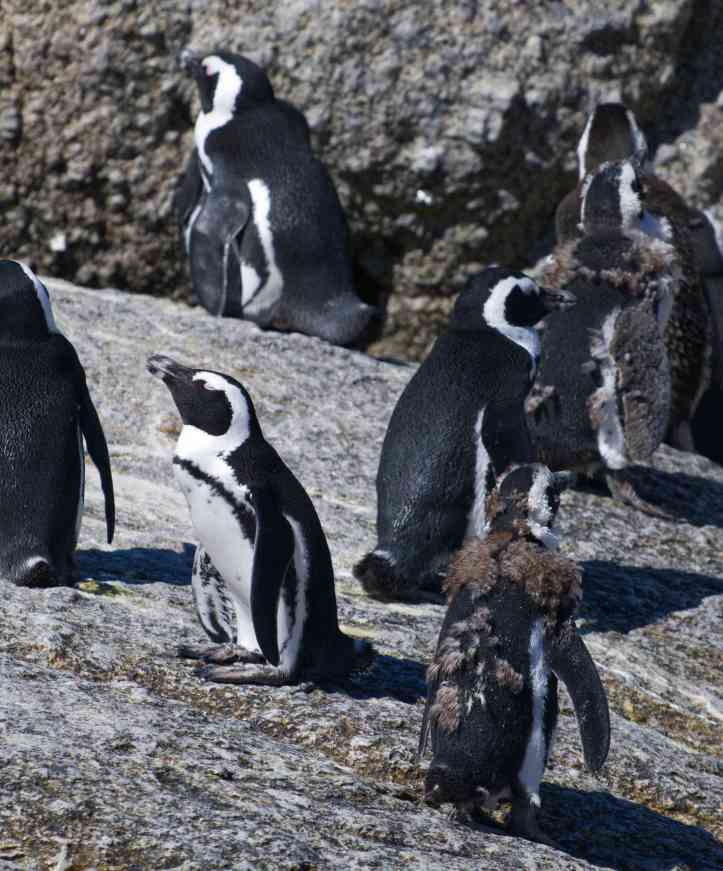
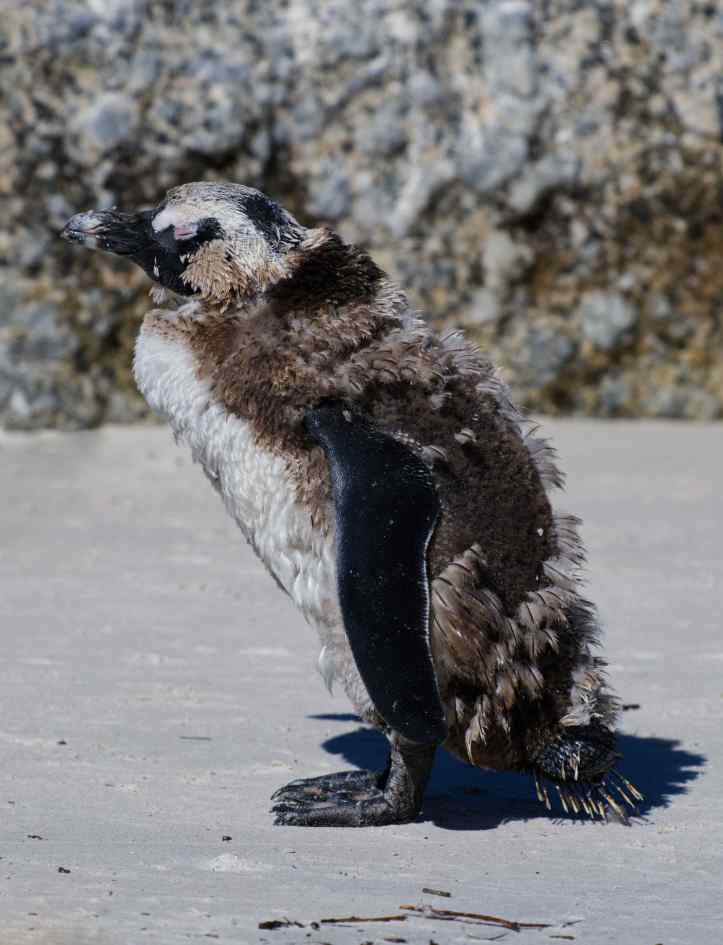
Chicks, still in their soft brown down, linger near the nesting sites, testing their stubby wings against the breeze. Some are caught in the awkward in-between stage of molting, half-covered in tufts of old feathers while the sleek new suit grows in beneath. They stand patiently in the sun or shuffle to a patch of shade, waiting for the day they can slip into the water and join the rhythm of the sea.
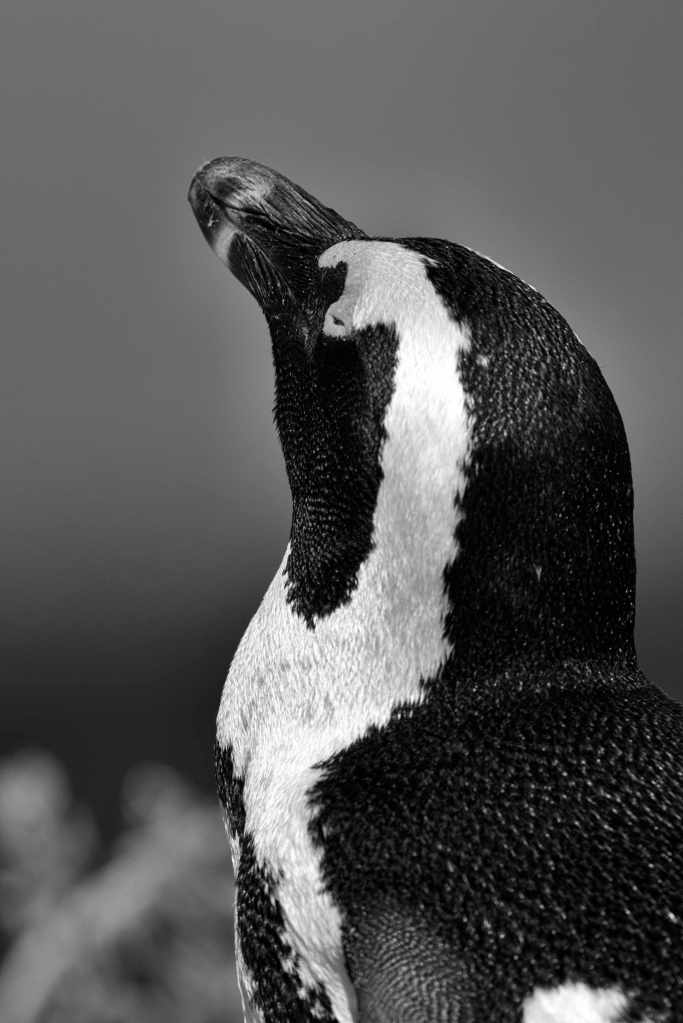
The habitat here is a patchwork of soft, pale sand, kelp-strewn shallows, and tangles of coastal scrub that rustle in the breeze. Penguins make their homes in the quiet corners — under the shade of low bushes, in shallow hollows scratched into the earth, or in burrows where the sand stays cool. In recent years, nest boxes have joined the landscape, blending into the brush and offering shelter from heat and the eyes of predators.
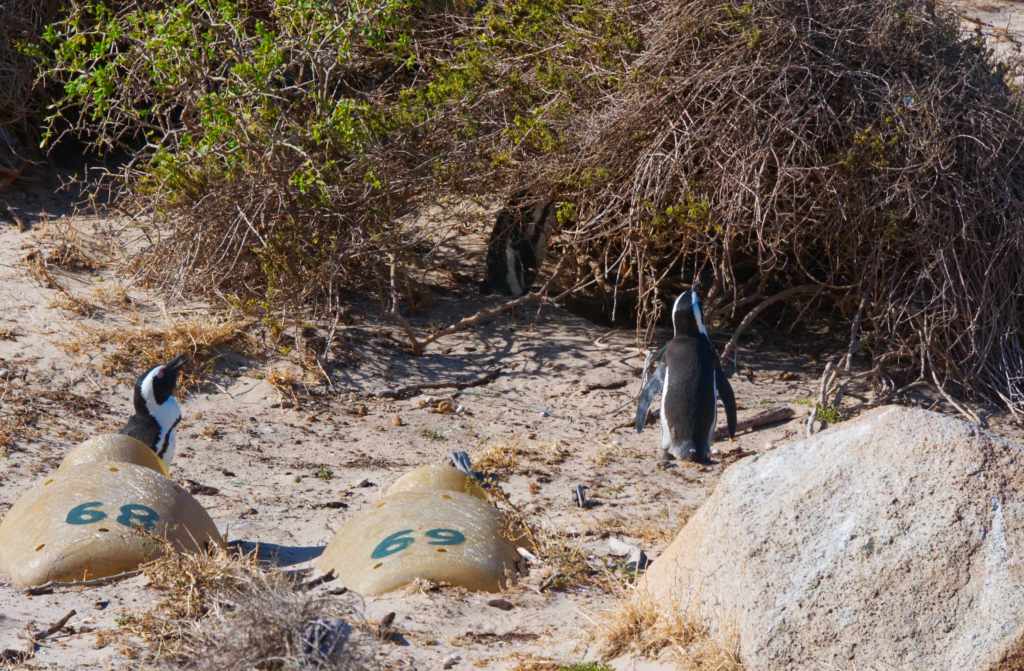

Life on the beach for a penguin is a careful dance between land and sea. Amid the granite boulders and patches of scrub, penguins waddle awkwardly, preen their feathers, and call to one another. It’s a place of rest and socializing —where the next plunge into the water is always just a few steps away.
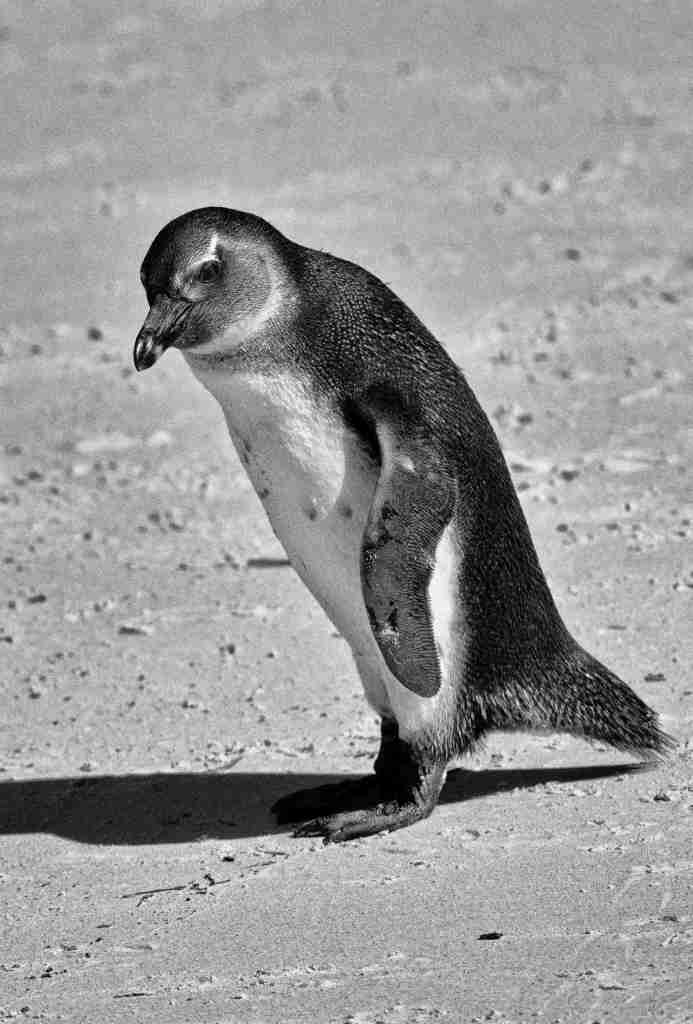
The future of the African penguin at Boulders Beach is a story still being written—one marked by both urgent challenges and flickers of hope. Classified as Endangered, these penguins have seen their numbers decline sharply due to overfishing, habitat loss, and environmental changes. Yet in this sheltered cove, careful conservation and protected waters provide a vital refuge. Visitors to Boulders Beach are granted a rare glimpse into their lives—watching penguins waddle across the sand, dive into the surf, and care for their young—reminders of the fragile beauty we must protect.

 The Footstep Chronicles
Leave a comment