
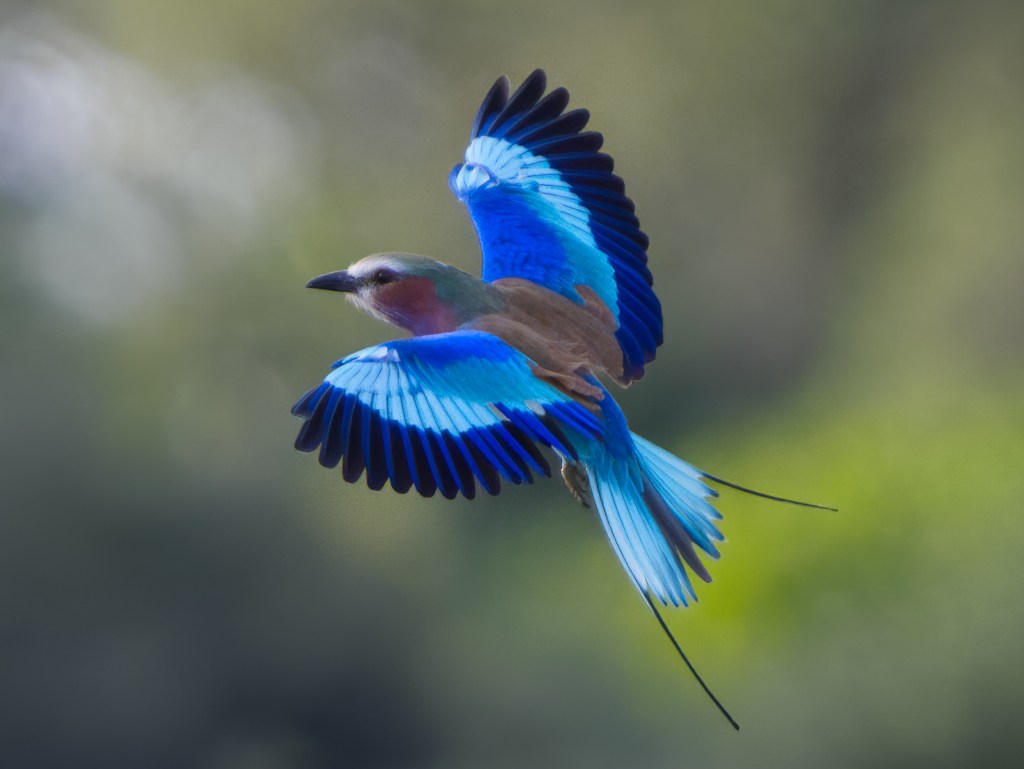
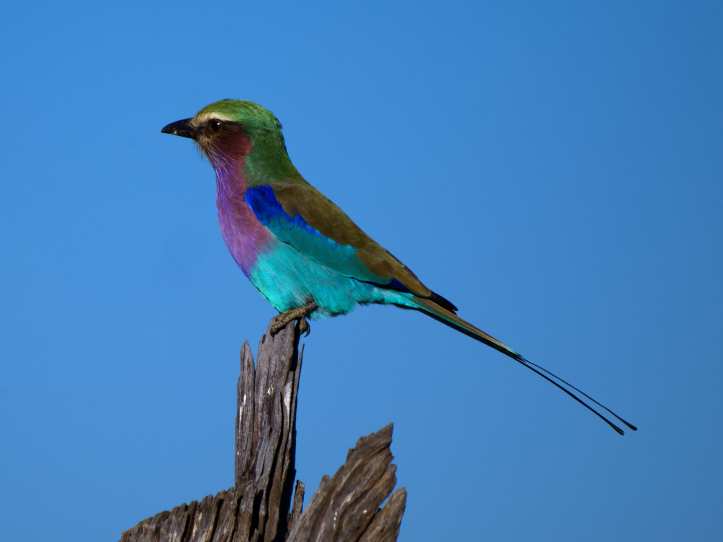
There are birds you notice because they are loud, and there are birds you notice because they are beautiful. The lilac-breasted roller—often called the “wedding bird” in Southern Africa—belongs firmly to the latter. It is impossible to miss. A flash of turquoise against the sky, a breast dipped in lilac and framed by shoulders of green, and long outer tail feathers that flicker like ribbons in the wind. When it flies, it looks as though a painter spilled every bright pigment across its wings. When it perches, it looks like a jewel against the muted backdrop of thorn trees and dry savannas.
Travelers to Southern Africa rarely forget their first roller. For some, it is at the edge of the Chobe River, where one lands dramatically on a reed. For others, it is on a roadside in Etosha, perched bold as brass on a signpost, scanning the ground for prey. The bird does not need to hide; it commands attention, and it always gets it.
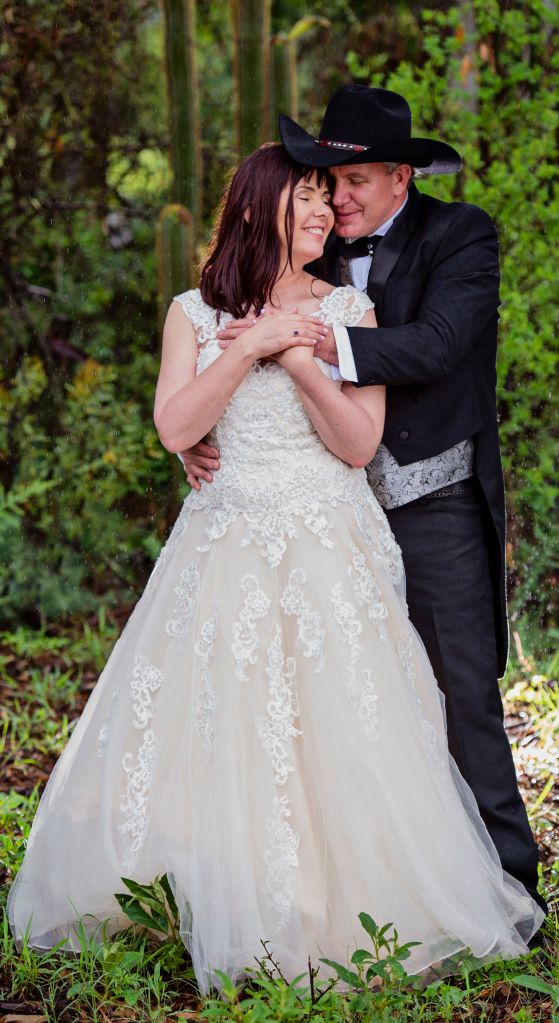
In parts of Southern Africa, the lilac-breasted roller has earned the nickname “the wedding bird.” Some say it is because its dazzling array of colors resembles the celebratory attire of a bride, while others note its habit of performing dramatic aerial displays—dives, swoops, and somersaults—during the breeding season. These courtship flights, filled with twists and turns, resemble a kind of dance in the air, fitting for a bird associated with love and union.
Local stories sometimes call the roller a bearer of blessings. Seeing one on the day of a wedding is thought to bring luck to the couple, a sign that the marriage will be colorful, enduring, and full of life. While not every village carries the same tradition, the roller’s link to beauty and celebration is widespread. Even safari guides will point it out with a certain affection, calling it “our wedding bird,” as if introducing a guest of honor.
Though its symbolism belongs to people, its life belongs to the savanna. The lilac-breasted roller lives across Southern Africa, from Namibia and Botswana to Zimbabwe and northern South Africa, thriving wherever open ground is broken by scattered trees. It perches boldly, not hiding in the foliage but sitting in plain view, as if aware that camouflage is unnecessary when you are this radiant.
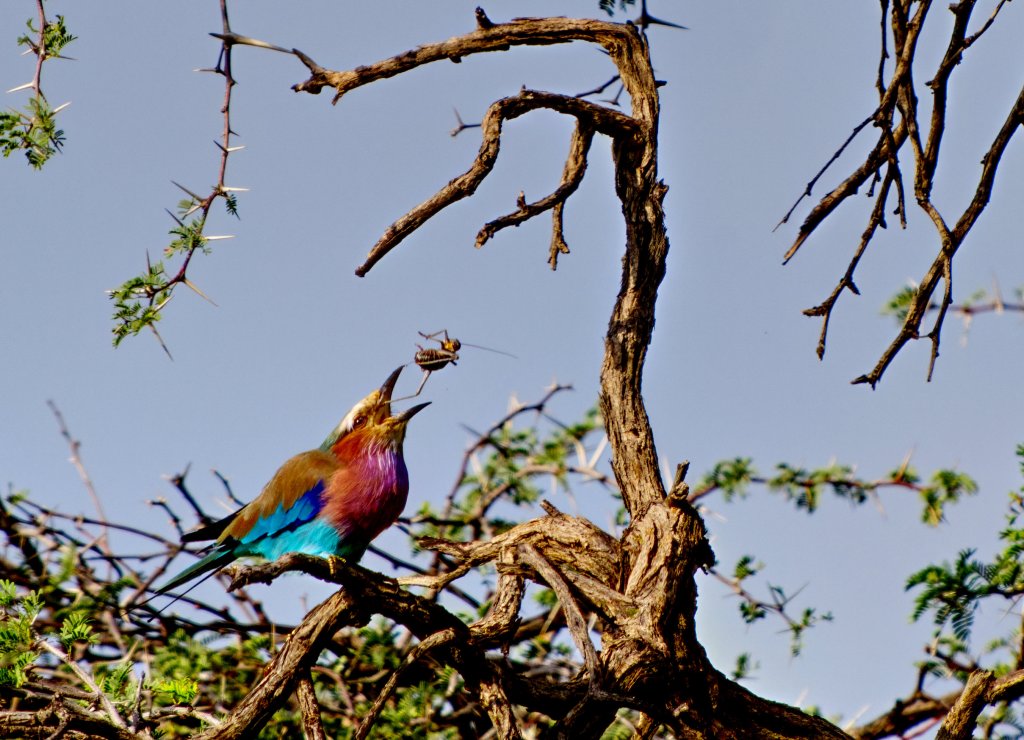
From such a perch, the roller watches the ground for movement. Its prey is not dainty—grasshoppers, beetles, scorpions, lizards, and even small snakes. When it sees something stir, it drops in a sudden dive, wings flashing, to seize its meal. It often beats its catch against a branch or rock before swallowing, an act as practical as it is ruthless.
Pairs are monogamous and fiercely loyal. They nest in tree cavities, often old woodpecker holes, and both partners share the work of raising their chicks. And though their beauty is delicate, their temperament is not. Rollers are bold defenders of their nests, dive-bombing hawks or crows that venture too near. In this, too, their cultural symbolism is apt—love and union, but also protection and strength.
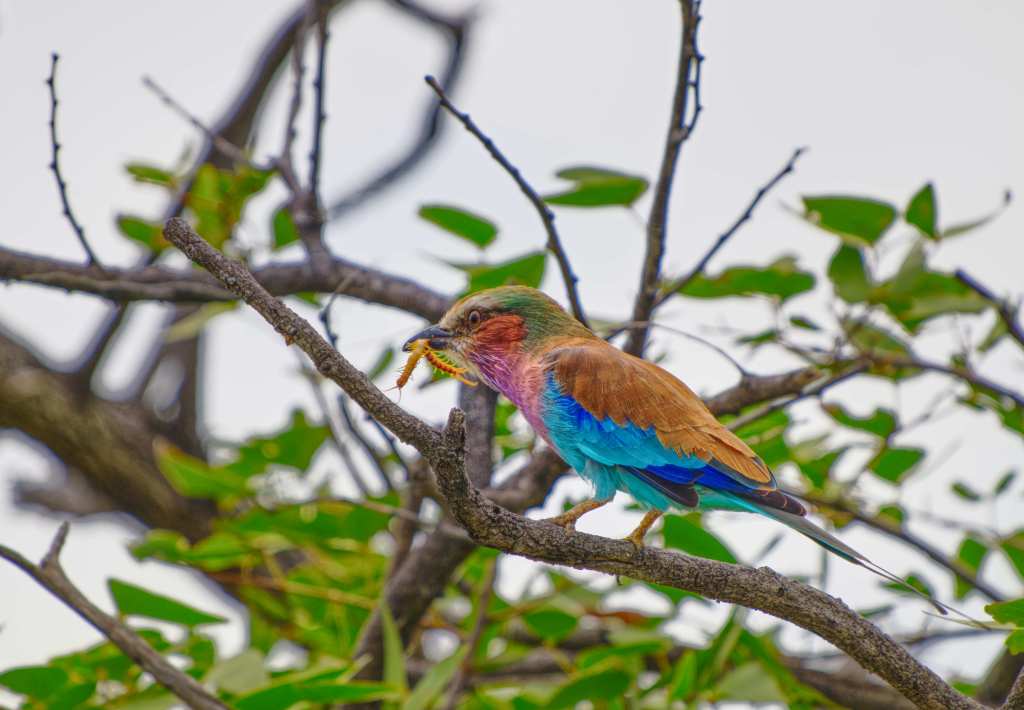
The roller is as much a part of the Southern African landscape as elephants or acacias. In Namibia’s Etosha, they are a common sight on roadside perches, their turquoise wings flashing as they swoop for insects flushed by passing vehicles. In Botswana’s Okavango Delta, they add splashes of color against the mosaic of floodplains and mopane woodland. In Zimbabwe and Kruger National Park in South Africa, their calls—a harsh, churring “rak rak rak”—announce their presence even before you catch sight of their plumage.
One of the joys of encountering the roller is its predictability. Unlike some birds that vanish into thickets, rollers seem to relish visibility. They perch openly, as if aware of their beauty, turning slightly to show off the full spectrum of blues, greens, and purples. For wildlife photographers, it is a gift: the perfect subject, always willing to sit still just long enough for a shot.
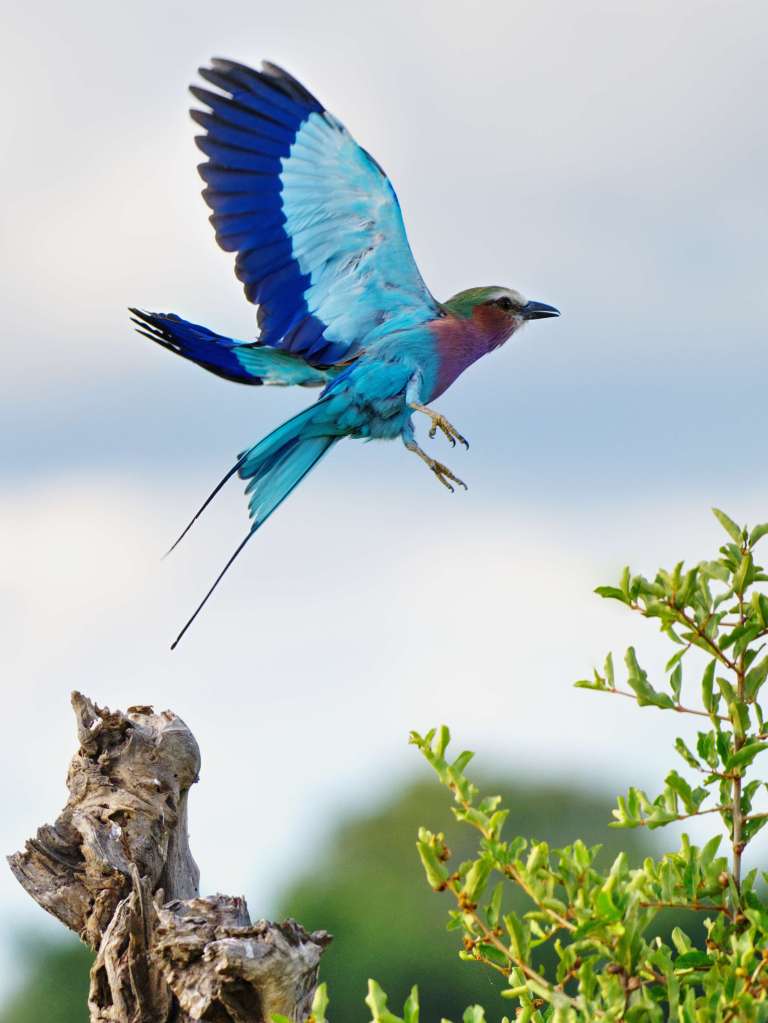
The life of the roller is tied, like all savanna creatures, to the rhythm of rain and drought. In the wet season, insects are abundant, grasses are high, and food is plentiful. Rollers thrive, feeding chicks with ease, filling the skies with their acrobatic flights. Their feathers look brightest then, gleaming in the fresh light of a land reborn.
But when the rains fade and the dry season grips the earth, life grows harder. Insects are fewer, the grass turns brittle, and the land seems to withdraw its generosity. Yet the roller endures. It adapts, searching farther, waiting longer, seizing what meals it can. Its survival in such seasons is not just a testament to resilience—it is part of its symbolism. To those who watch closely, the roller is not only a wedding bird, but a reminder that love, like life, endures both abundance and want.
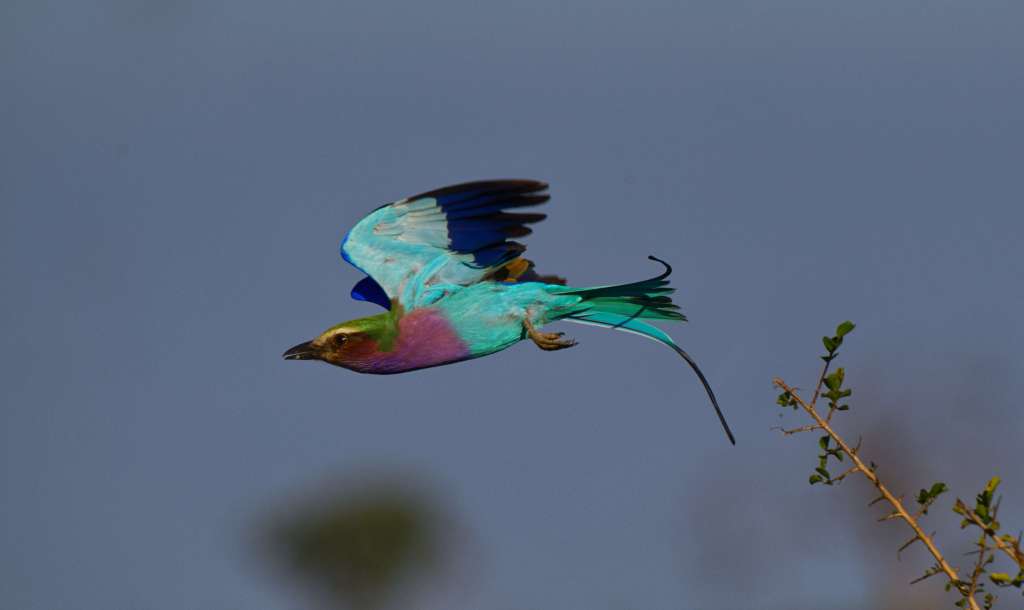
Throughout Africa, bright birds have long carried cultural weight, and the lilac-breasted roller is no exception. In Botswana, its feathers were once used in ceremonial attire. In parts of East Africa, it is a bird of peace, believed to carry balance wherever it flies. Even today, travelers carry its image home in photographs and paintings, the bird serving as a living emblem of joy.
Perhaps what makes the roller unforgettable is the intimacy of the encounter. You are driving across the plain, the horizon wide and empty, when a flicker of impossible color cuts across your vision. The bird lands, tilts its head, and seems to look straight at you. For that moment, you feel chosen, as if the savanna itself has offered you a gift.
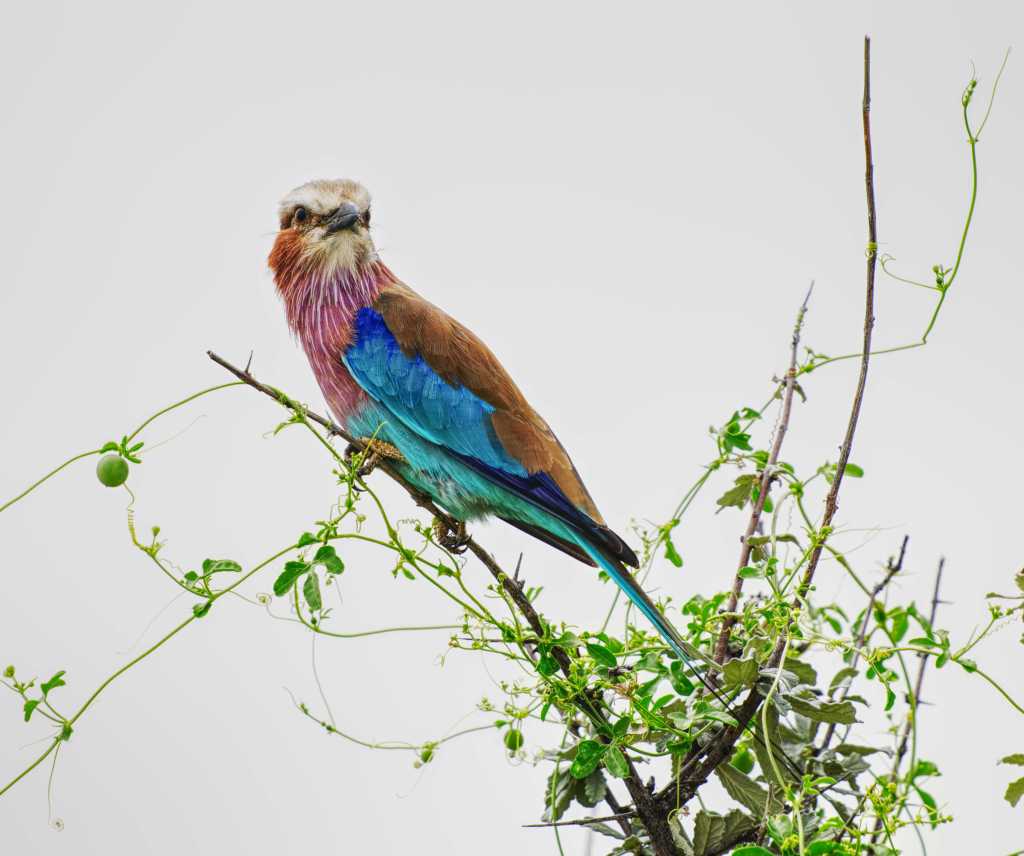
To see a lilac-breasted roller is to see more than a bird. It is to glimpse a story written in color, a celebration stitched into feathers. From Etosha to the Okavango, from Hwange to Kruger, it carries the same message: joy is not always hidden in rarity. Sometimes it comes often, boldly, in plain sight—if only we are willing to look.
The wedding bird is Southern Africa’s reminder that love and beauty are not fragile curiosities, but living, resilient truths. They perch on branches, they dive across the grasslands, they roll through the skies. They wait for us on the roadside, and they bless us in moments we do not expect. And if you are lucky enough to see one at dawn, catching the first light in its feathers, you will understand why so many believe it brings blessings on the wing.


Leave a Reply