
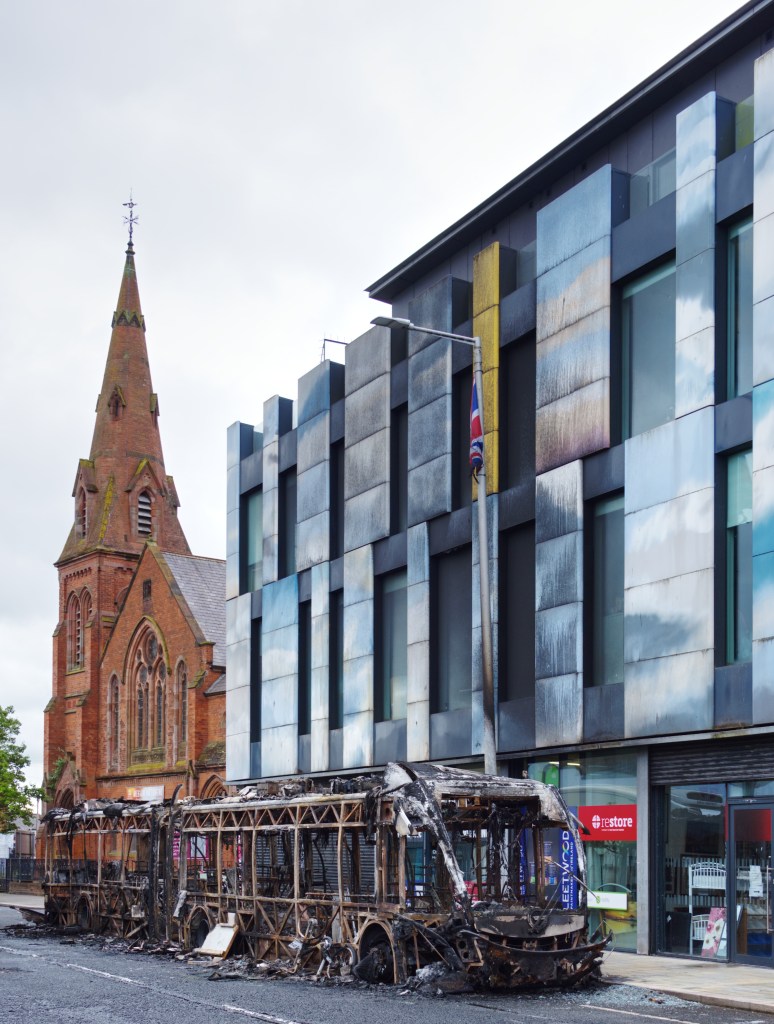
By daylight, the fires were out, but the damage remained. Burned homes, shattered windows, destroyed vehicles, and blackened streets told the story of a night that had changed lives in a matter of hours. For many, the violence had arrived at their doorstep without warning, turning familiar streets and homes into scenes of loss, disruption, and uncertainty.
Members of ethnic minority communities were targeted simply because of their background. The violence was not directed at specific individuals for anything they had done, but at people selected because of who they were perceived to be. Yet the consequences extended far beyond those directly targeted, leaving neighbours, families, and entire streets to deal with the aftermath. Behind every shattered window and fire-scarred doorway are lives abruptly and forever interrupted. In a matter of hours, homes became crime scenes, possessions became ash, and ordinary residents found themselves dealing with the consequences of events they neither started nor controlled. A simple photograph captures the physical aftermath, but they can only hint at the personal cost left behind when violence passes through a community.
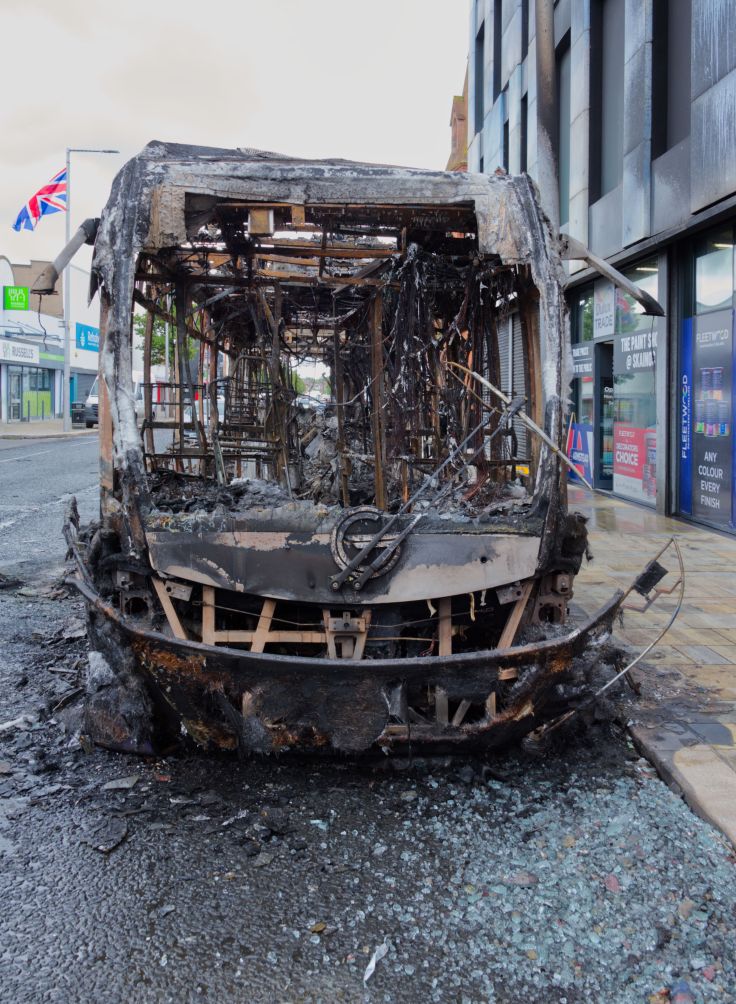
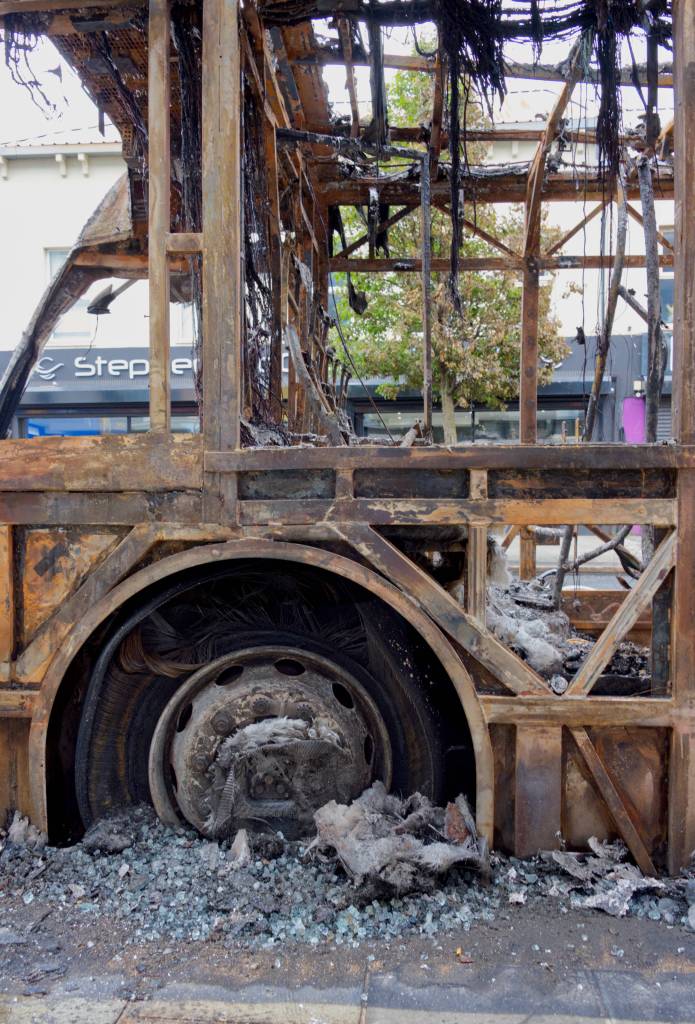
One of the most striking scenes was a burned-out bus. Its windows were gone, its interior exposed, and its once-familiar shape reduced to a darkened frame. Normally a symbol of movement through the city, it now stood motionless, transformed into one of the defining images of the aftermath. Its shell stripped back to blackened metal and empty framing. Windows are gone, seats exposed, interior reduced to ash and structure. It is still positioned as if it had simply stopped mid-service, but there is no service left to continue.
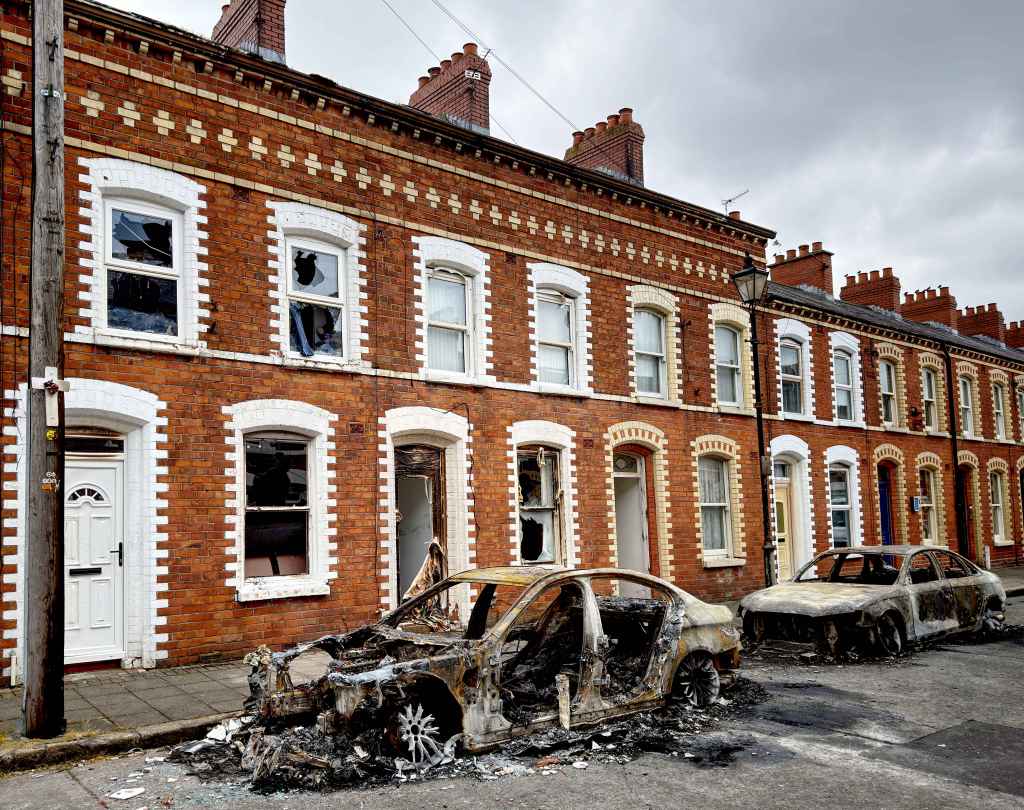
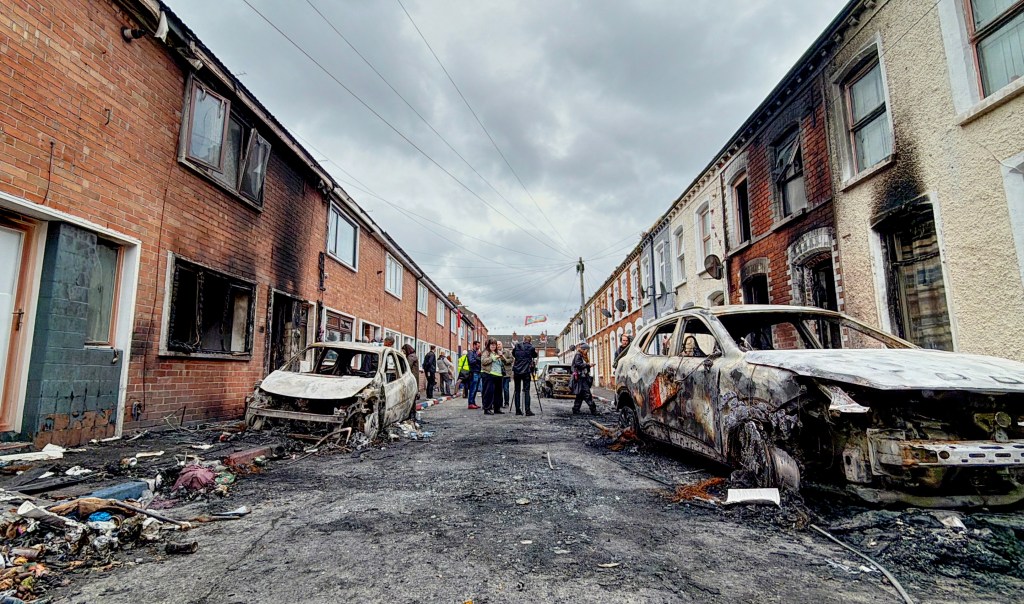
Moving into the residential streets, the damage becomes impossible to ignore. Burned-out cars remain parked where they were left, their blackened shells sitting silently along the kerb outside rows of houses. Some have been reduced to little more than twisted metal frames, their windows blown out and paintwork stripped away by intense heat. Around them, the road is stained with soot and scattered with fragments of glass, melted plastic, and debris. In streets normally defined by parked cars, front walkways, and the routines of everyday life, these charred vehicles stand out as stark reminders of how quickly a familiar scene can be transformed.
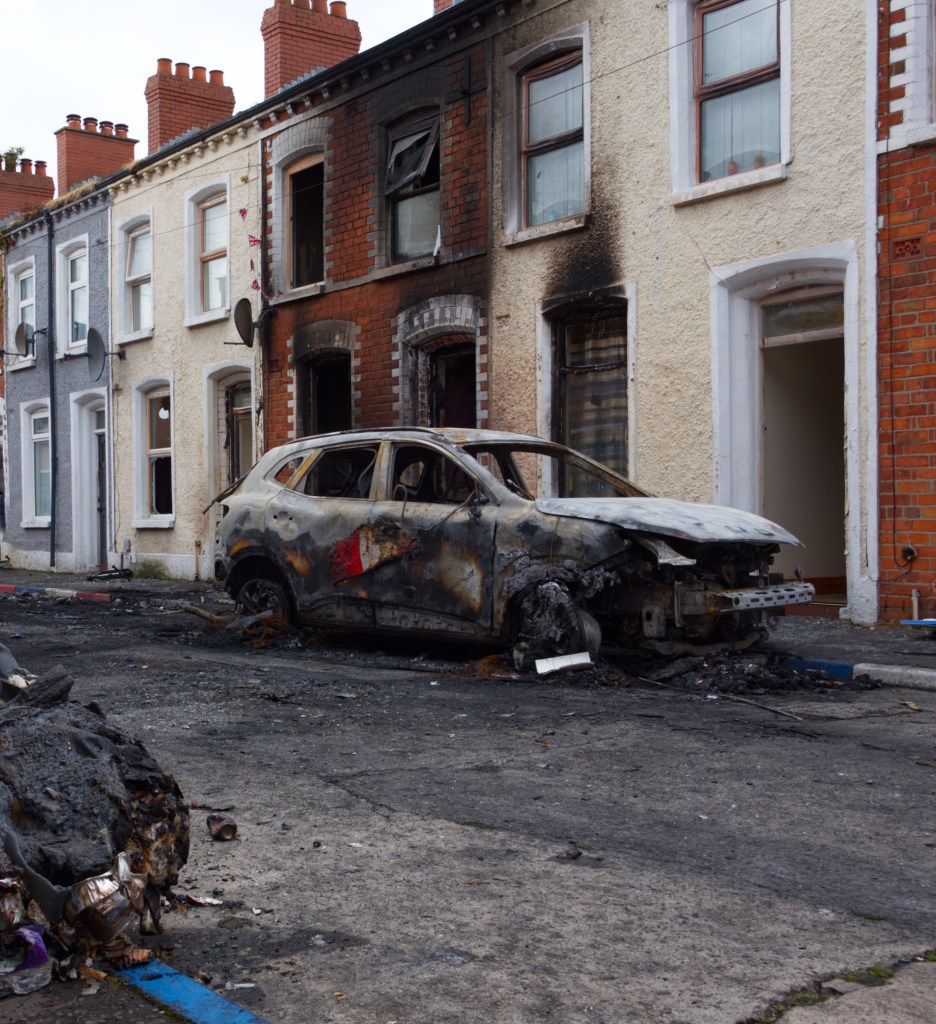
Inside several of the damaged homes and flats, the destruction feels even more personal. Rooms that once held the details of everyday life have been reduced to smoke-blackened shells. Walls are stained dark with soot, ceilings marked by heat and fire damage, and furniture collapsed into charred remains. Beds, sofas, cupboards, and household belongings have either been consumed by the fire or left unrecognisable beneath layers of ash and debris. In some rooms, only fragments remain: a twisted metal frame, a warped appliance, or the scorched outline of where photographs, keepsakes, and personal mementos once stood. Daylight now falls through shattered windows onto interiors stripped of comfort, leaving behind spaces that feel less like homes and more like the remnants of lives abruptly interrupted.
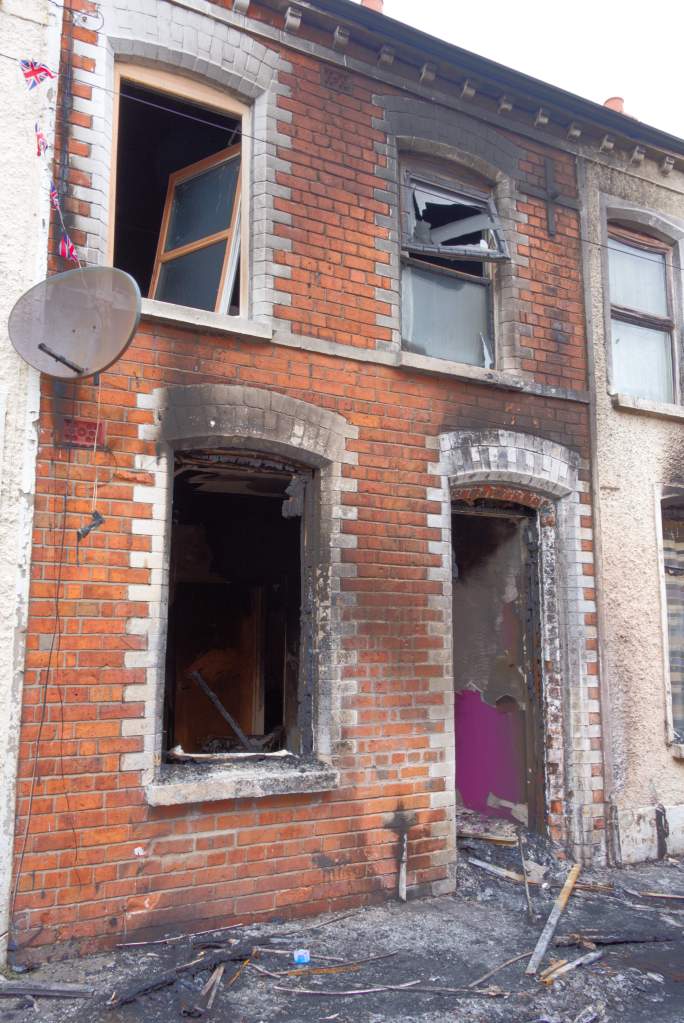
What stands out most in the aftermath is how ordinary the setting feels. The damaged properties sit among rows of family homes, parked cars, and residential streets that, on any other day, would pass without notice. There is no sense of separation between the destruction and the community around it. The burned vehicles, shattered windows, and fire-damaged homes are woven directly into the fabric of everyday life. They were ordinary homes, ordinary vehicles, and ordinary people caught in extraordinary circumstances.

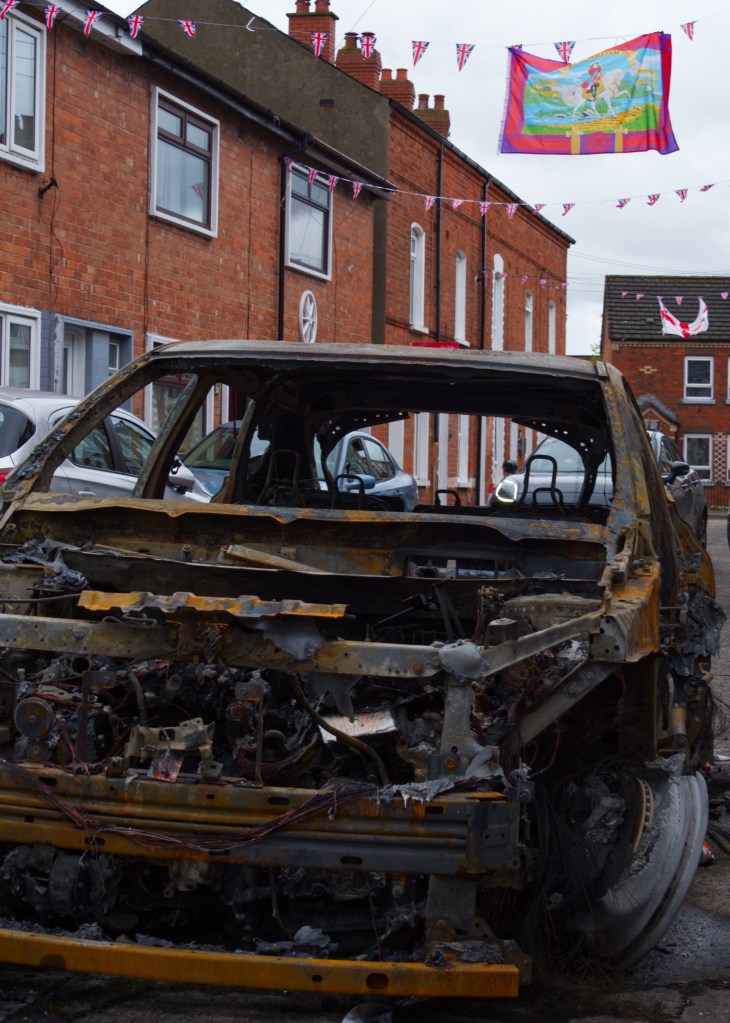
A burned-out car can be removed. Broken windows can be replaced. Walls can be repaired and rooms rebuilt. Yet the photographs reveal something beyond the physical destruction. They capture the sudden interruption of everyday life. Streets that only days before were defined by school runs, parked cars, and neighbours coming and going have been transformed into scenes of recovery and assessment. Residents are left to sort through what remains, secure damaged properties, and begin the long process of replacing what has been lost.
In the aftermath, the scale of the damage is measured not only by what was destroyed, but by what was displaced. Familiar routines are broken, homes are temporarily unlivable, and personal belongings collected over years can disappear in a single night. Looking across the burned vehicles, shattered windows, and blackened interiors, it becomes clear that the real impact extends far beyond the visible damage captured in the photographs.
Belfast itself has long been shaped by change, formed through cycles of industrial expansion, decline, and regeneration that have left their mark across the city in different ways. East Belfast sits within that wider history, once defined by shipbuilding, engineering, and manufacturing that structured both employment and community life for generations. As those industries receded, the area moved through long periods of adjustment, followed by redevelopment and gradual shifts in housing and population.
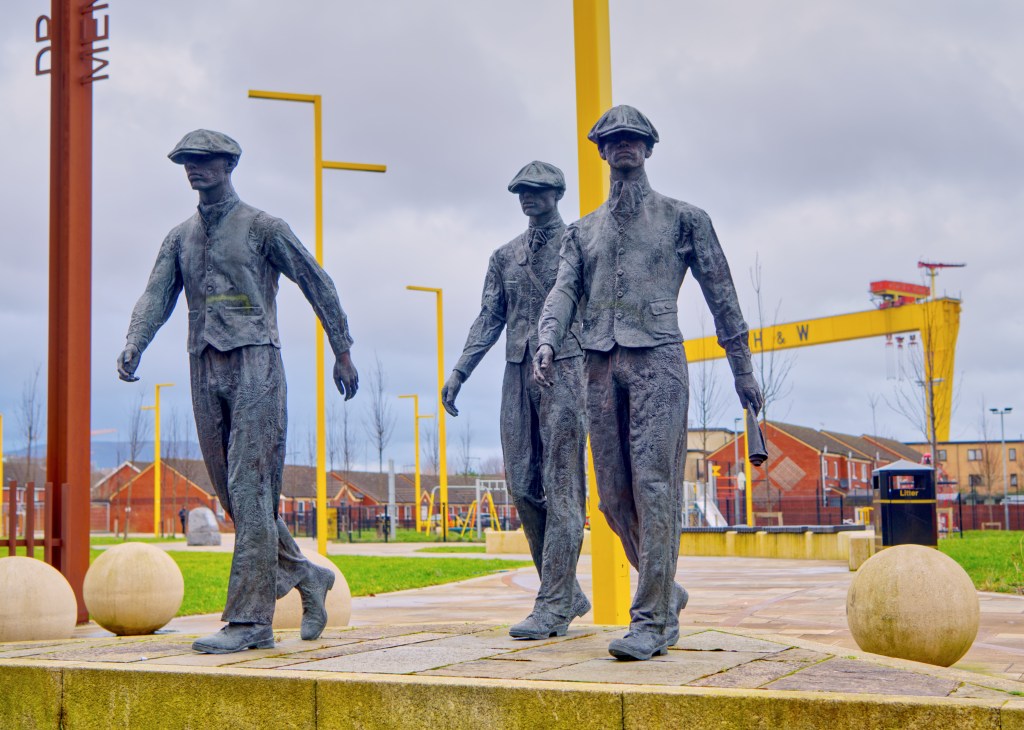
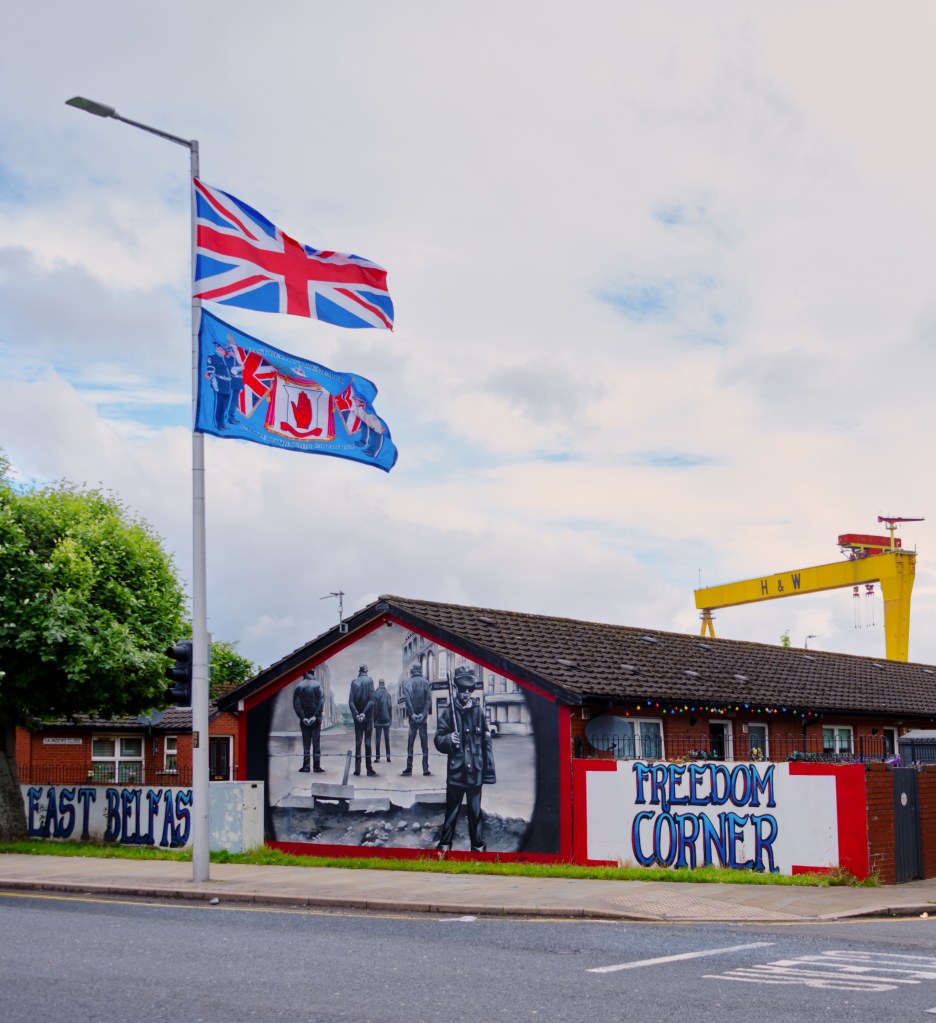
Today it remains a place still evolving. Its past, shaped through decades of division and conflict, including the era of the Troubles and symbolic local landmarks such as Freedom Corner (just down the street from the burned-out bus) still sits in the background of community memory and continues to influence perceptions and attitudes. At the same time, the area is steadily moving forward, becoming more mixed in its everyday life and increasingly part of a broader Belfast that is focused on regeneration, connection, and a more integrated future across the city.
There will no doubt be wider discussion about causes, responsibility, and the politics that sit around events like these, and those conversations will continue in the days and weeks ahead. But on the ground, the reality is simpler and harder to ignore. Ordinary people were caught in the aftermath of violence they did not shape or control, returning to homes damaged, streets disrupted, and belongings lost or destroyed. For many, the impact will not end when the clean-up begins or when the headlines move on.
As East Belfast slowly moves forward again, rebuilding itself in visible and invisible ways, scenes like this remain a reminder that the past is never fully separated from the present. Beneath the surface of change and regeneration, there are still difficult histories and ongoing pressures that continue to surface from time to time, leaving marks on places and people alike. The city keeps moving, but not without carrying what it has yet to fully resolve.

The burned-out bus lingers as the outline of something that once carried more than passengers, moving through the city as part of an ordinary rhythm that quietly linked neighbourhoods through routine journeys and brief, unremarkable crossings between strangers. In its stillness, that movement feels suspended, its empty burnt frame holding the trace of what once passed through it and what it once connected. It sits now as an echo of that shared continuity, a reminder that a city is sustained not only by its streets and structures, but by people living within them together.


Leave a Reply