
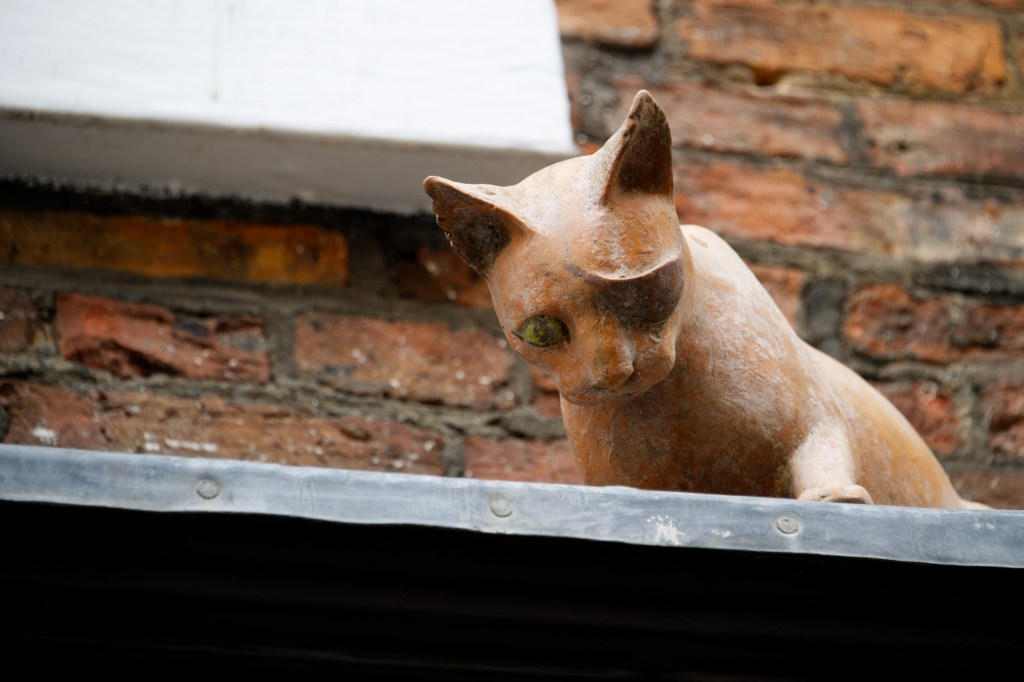
York is a city that rewards a wandering eye. Its most famous landmarks are difficult to miss, with York Minster rising above the rooftops, the ancient city walls tracing their broad circuit around the centre, and narrow streets drawing visitors into a maze of medieval timber, stone and shadow. Yet some of York’s most charming details are considerably smaller and much easier to overlook. They are cats.
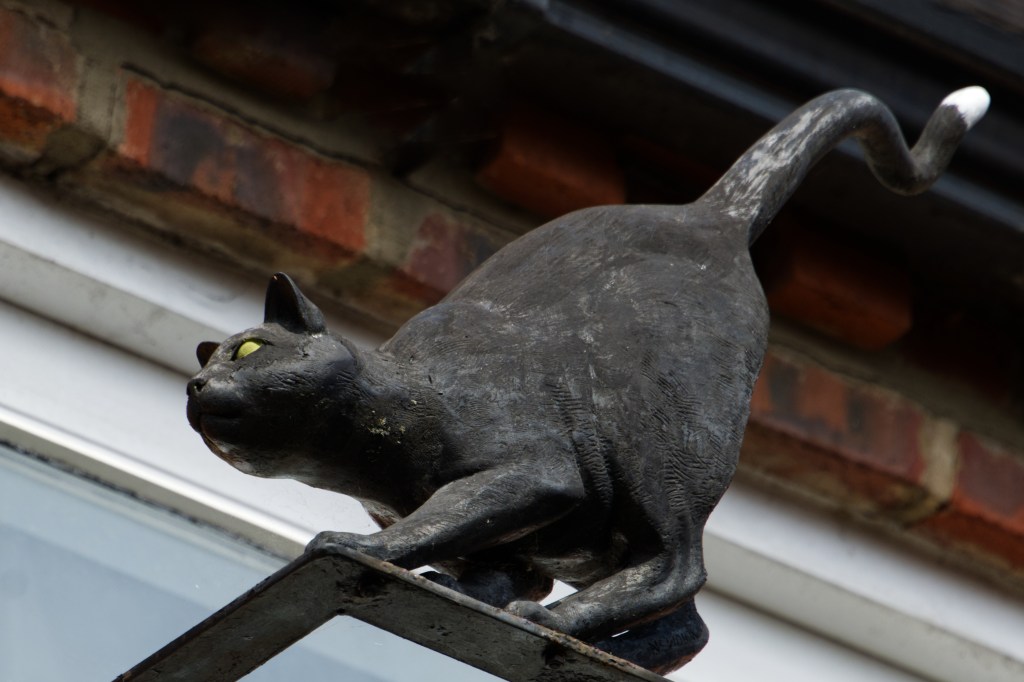
Not the cats that slip beneath parked cars or stretch across sunny windowsills, although York has plenty of those too. These are carved and sculpted into the fabric of the city, perched above streets and watching from walls, rooflines and buildings. Some sit proudly, some appear to be climbing, while others seem to have simply found a comfortable place from which to observe the people passing below. They have become part of York’s character, although the tradition is considerably younger than the medieval streets where many of them appear.
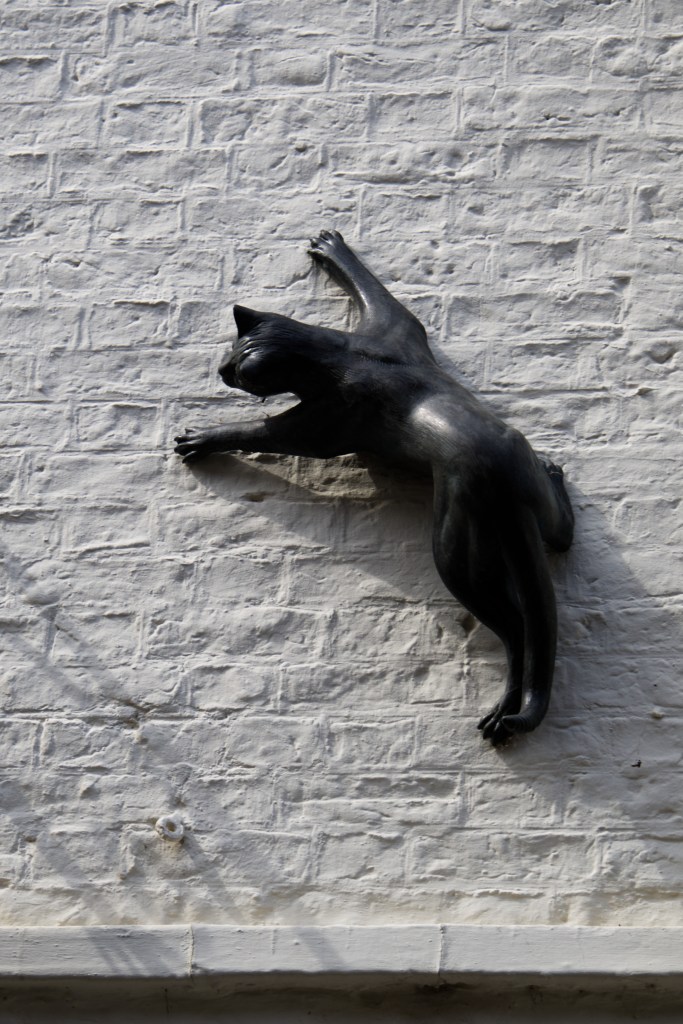
That contrast is part of their appeal. York is a city where the past is usually measured in centuries. Roman foundations lie beneath later streets, medieval buildings lean into one another and the stones of the old walls have witnessed generations of travellers, traders and residents. The cats belong to a much more recent chapter, yet they have settled so comfortably into the city that they can feel as though they have always been there. They do not compete with the history around them. They simply occupy a small corner of it.
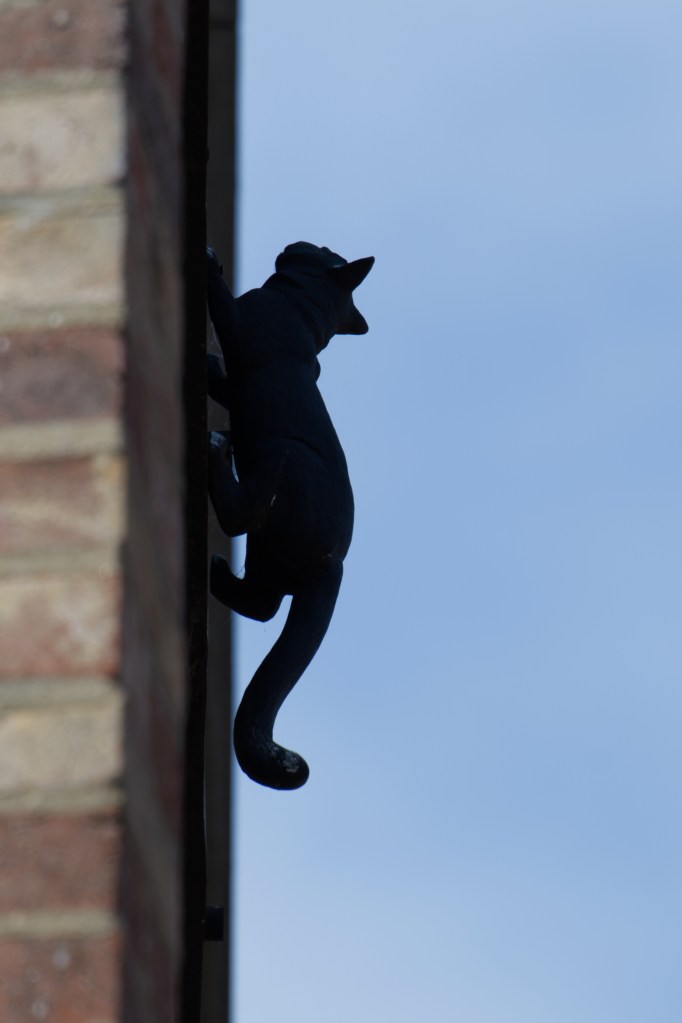
Walking through York can become an exercise in looking differently. The streets, shop windows and crowds naturally draw attention towards ground level, while the cats occupy another world above it. A glance towards a roofline can reveal a small figure sitting against the sky. A turn into another street might produce the outline of a cat tucked into the architecture. Some are obvious once noticed, while others remain hidden until someone takes the time to study the buildings rather than simply pass them.
The cats encourage that change in perspective. They make rooflines, upper floors and otherwise overlooked details suddenly interesting. A historic city is not only its grand monuments. It is also the collection of small things that have accumulated around them, sometimes intentionally and sometimes almost by accident.
The story of York’s modern cats can be traced back to the early twentieth century, when two cat statues were placed on buildings associated with businessman and property owner Sir Stephen Aitcheson. The sculptures appeared around the 1920s and became an unusual feature of the cityscape. Their original purpose has never been entirely certain. Cats had long been valued for controlling rats and mice, making them an appropriate symbol for commercial buildings, while they may also simply have been intended as decorative features.
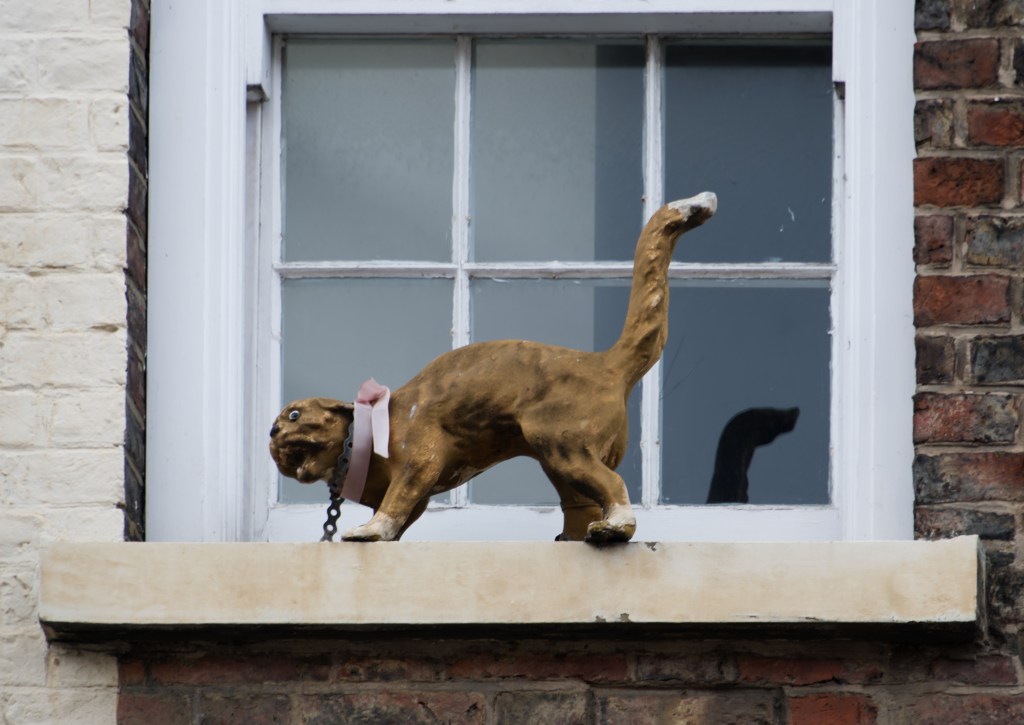
Whatever the original reasoning, the cats survived. Buildings changed, businesses came and went and York developed into one of Britain’s most visited historic cities, but the sculptures remained. They were never intended to become a city-wide collection. That transformation came much later.
Several decades afterwards, York architect Tom Adams revived the idea of architectural cats. Adams had a particular affection for them and used a black cat as a personal symbol on his architectural drawings. During the latter part of the twentieth century, he began incorporating cats into some of his work, turning a private symbol into part of York’s public architecture.
In the late 1970s, Adams worked with sculptor Jonathan Newdick, whose cat sculptures became closely associated with the growing tradition. Rather than creating identical figures, Newdick gave the cats different poses and personalities. Some sit upright, others appear to climb or crouch, and their positions were designed to work with the buildings around them.
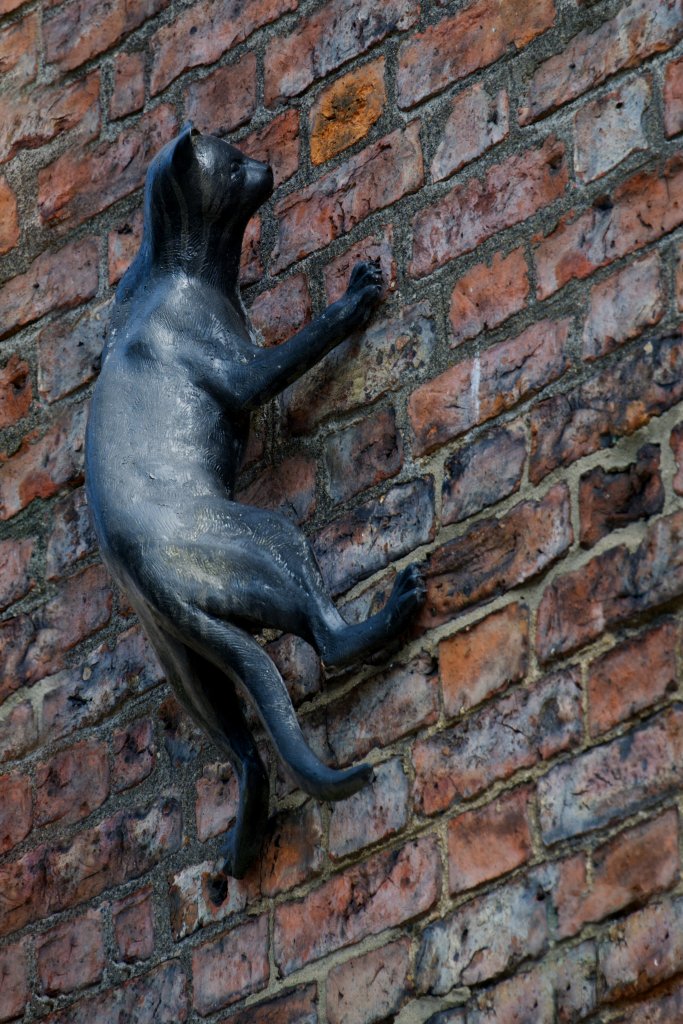
The idea gradually spread. Other buildings acquired cats, and what had begun as a handful of unusual architectural details developed into a larger collection scattered through the city. There is no single York cat. One can look watchful and dignified, another curious, another completely indifferent to the crowds below. Their character comes largely from their posture and surroundings, giving otherwise solid façades a hint of life.
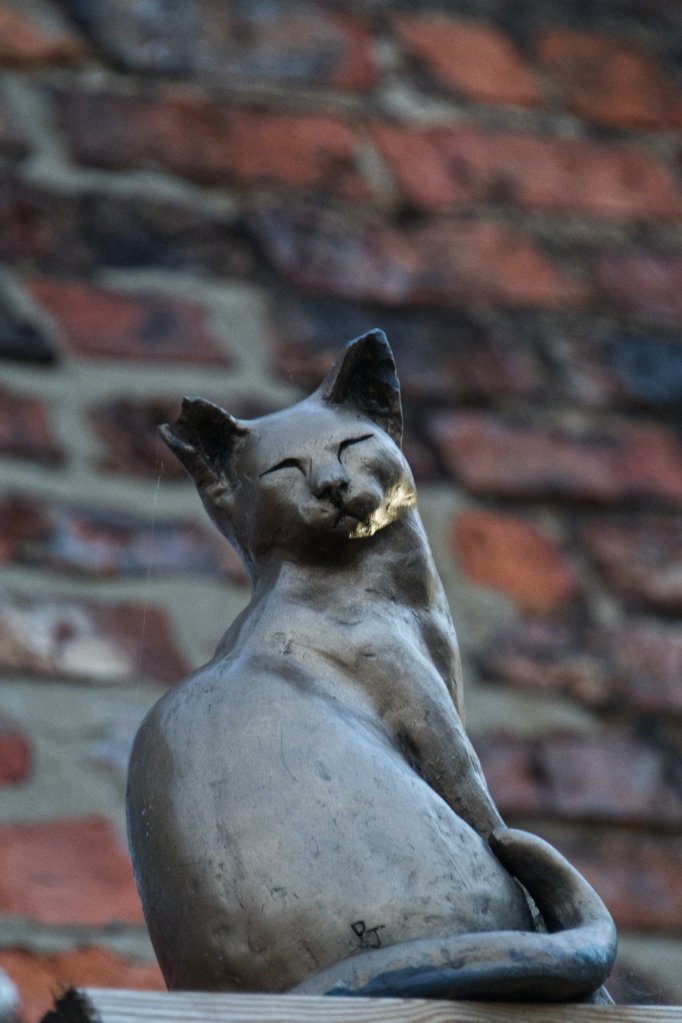
Cats also have a long association with buildings themselves. For centuries they were valued as protectors of food stores and homes because of their ability to control rodents. There are older traditions surrounding cats concealed within buildings, sometimes associated with protection or good fortune. Those customs are quite different from York’s modern sculptures, but they provide an older cultural connection between cats and the places people inhabit.
York’s architecture has always made room for animals, faces and strange figures. Medieval buildings could be decorated with creatures both real and imagined, while later architecture continued the tradition of giving buildings distinctive details. The cats fit naturally into that broader habit of making architecture expressive rather than purely functional.
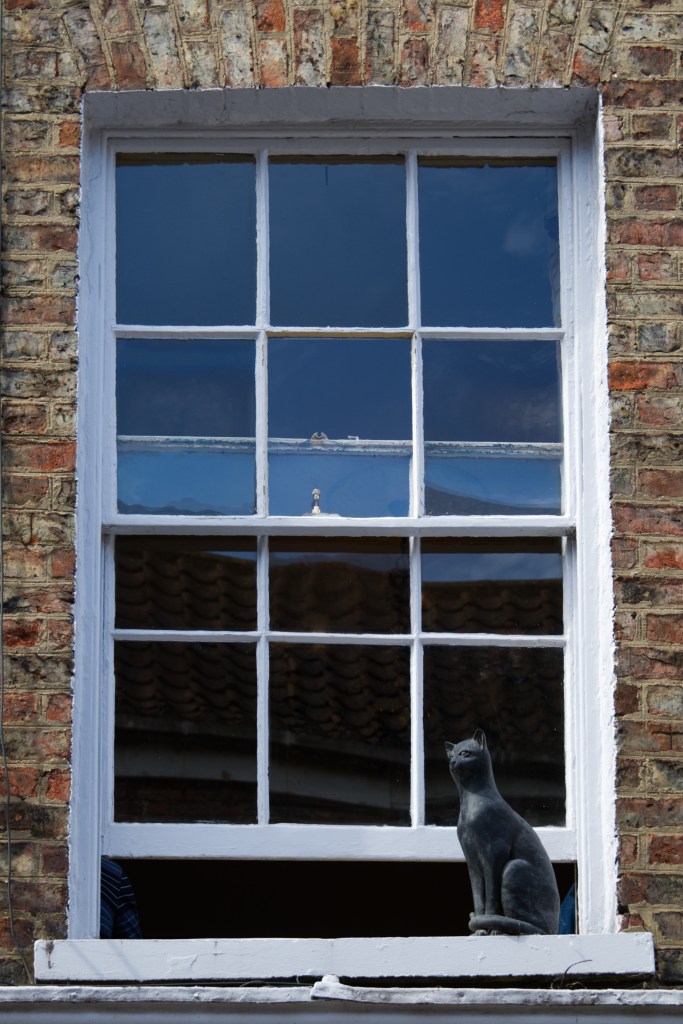
Perhaps the greatest pleasure in finding them is not knowing where the next one will appear. The moment of discovery then becomes part of the experience. The eye follows the shape of an old building and suddenly a cat appears above the street. The sculpture may have been there for decades, yet it feels new because it has only just been noticed. After that, the surrounding architecture seems different. Rooflines become interesting, upper floors deserve attention and the next street becomes a possibility.
The cats have also acquired a history of their own. Some have been stolen and recovered, while others have been repaired or altered over the years. Their survival has given them a significance that their creators could hardly have anticipated. What began as unusual architectural decoration has gradually become one of York’s more distinctive visual traditions.
That tradition is interesting precisely because it is not ancient. York’s identity is so closely associated with Roman, Viking and medieval history that it would be easy to assume everything worth noticing must belong to the distant past. The cats tell a different story. Their origins are comparatively recent, yet successive generations have accepted them as part of the city.
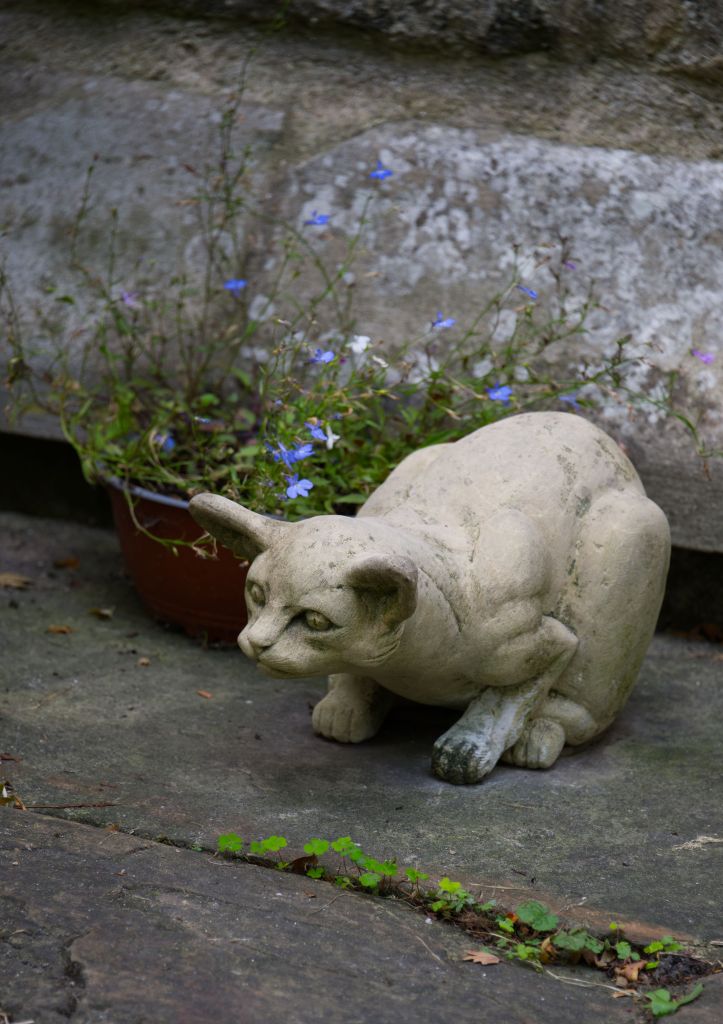
What makes the sculptures particularly appealing is the way each one has its own character. A cat sitting upright can appear almost stately, while another seems ready to climb away from the building. Some are remarkably visible once the eye becomes accustomed to looking for them; others blend so neatly into their surroundings that they seem almost to have grown there.
Perhaps that is their greatest charm. They are not monuments to a battle, a king or a great historical event. They commemorate nothing in particular. They simply occupy their places within the architecture, quietly becoming familiar through the passage of time.
York has room for grand history, but it also has room for things that exist simply because they make the city more interesting. The cats belong to that second category. They are small, unexpected and unmistakably themselves.
Look closely enough at the buildings and eventually one will appear, sitting above the street as though it has every right to be there.
In York, it seems, even the cats have found their own piece of history.


Leave a comment