
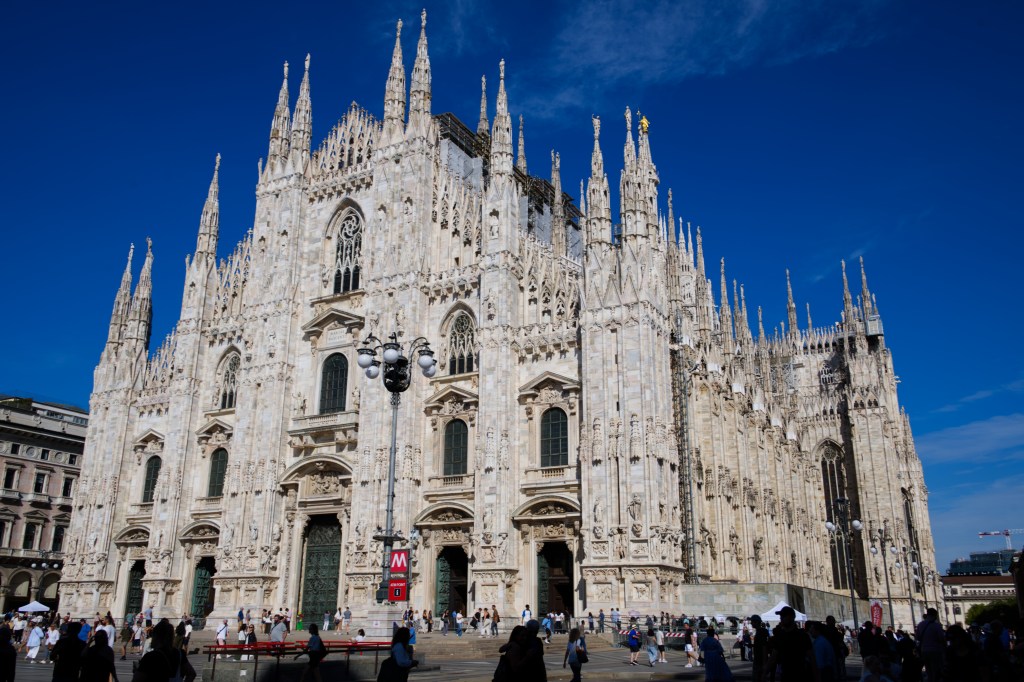
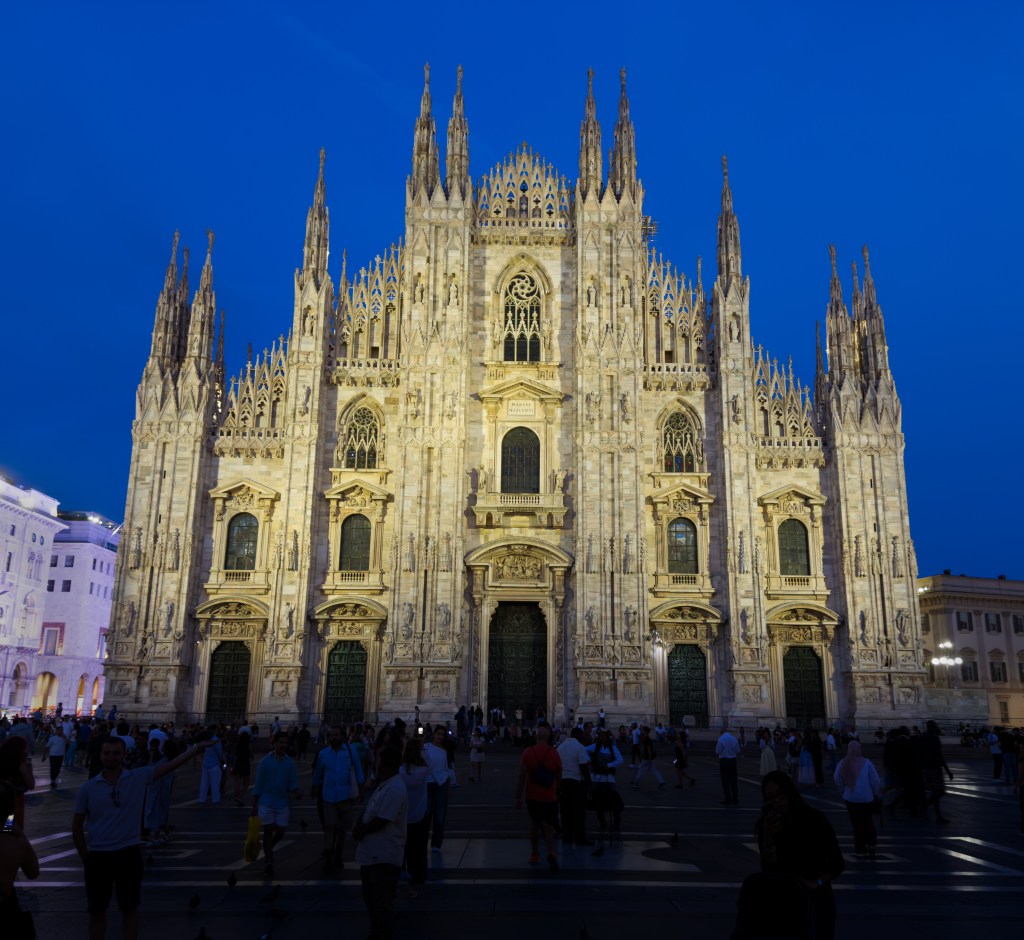
In the center of Milan, the streets eventually open onto the Piazza del Duomo, revealing a building that seems to occupy an entirely different world from the busy city surrounding it. Trams pass along nearby streets, cafés fill with conversation, and the shop windows reflect the movement of people going about their day. Then the cathedral rises into view, its pale marble façade covered in spires, statues and intricate carvings that seem to multiply the longer they are observed. The Duomo stands at the heart of Milan, but its presence reaches far beyond the square, drawing the eye upwards and creating a landmark that is difficult to mistake for anywhere else.
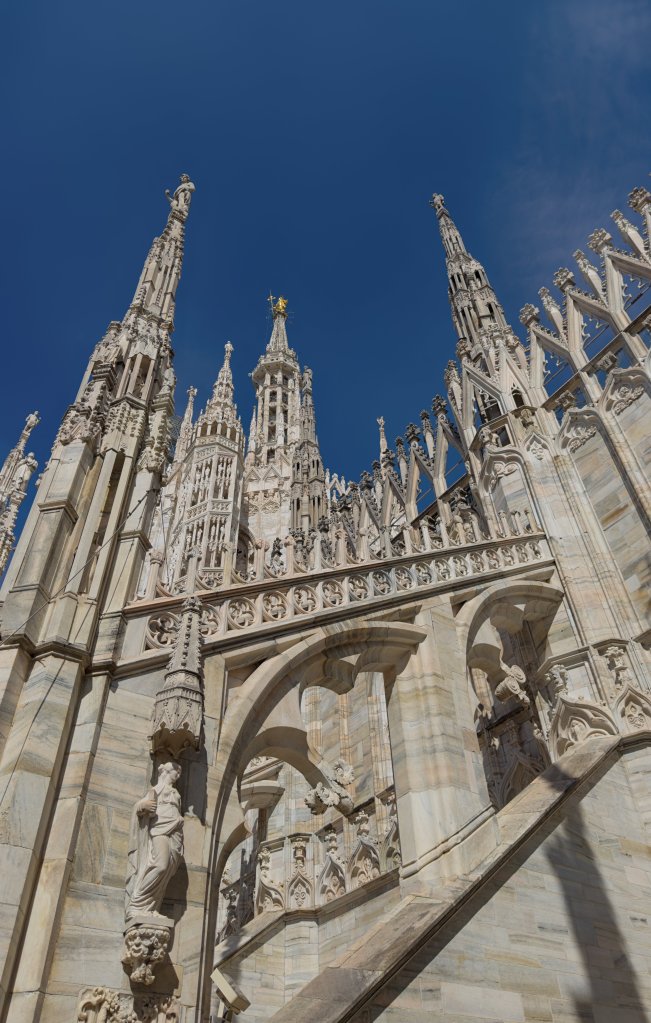
The first impression is one of scale, although size alone does not explain the cathedral’s appeal. Its exterior is so densely decorated that the building seems almost to have been carved rather than constructed. Arches rise above doorways, figures occupy narrow niches, and pinnacles climb behind one another until the uppermost details begin to merge with the sky. There is no broad expanse of undecorated stone to provide a resting place for the eye. Even the spaces between the larger architectural features contain smaller details, making the façade feel like an enormous collection of individual works brought together into a single structure.
The cathedral is built largely from Candoglia marble, a pale stone whose appearance changes with the light. Under a bright sky, the surface can look almost white, while softer light brings out warmer tones and creates deeper shadows around the sculptures. The effect is particularly noticeable when moving around the Piazza, where the angle of the sun changes the appearance of the façade and reveals different aspects of the stonework. A detail that seemed almost flat from one position may become sharply defined from another, giving the building a constantly changing appearance without altering its extraordinary structure.
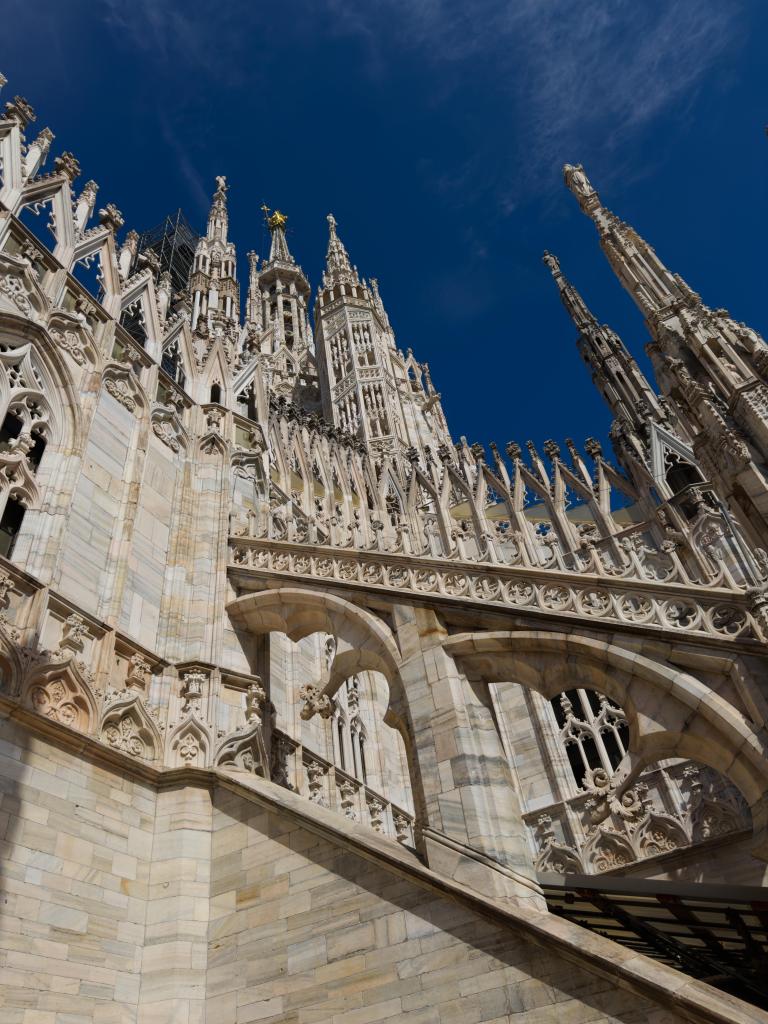
Looking at the main façade from across the square provides a sense of the cathedral’s overall design, but moving closer reveals how much is hidden within that first impression. The great entrance doors sit beneath elaborate arches, surrounded by columns and carved ornament. Above them, the architecture becomes increasingly intricate, with narrow openings, statues and layers of decorative stonework drawing attention towards the spires. The higher sections can be difficult to examine from ground level, but even the lower parts contain enough detail to occupy considerable time. Faces emerge from the carvings, figures stand within architectural frames, and patterns of foliage and stonework fill the spaces around them.
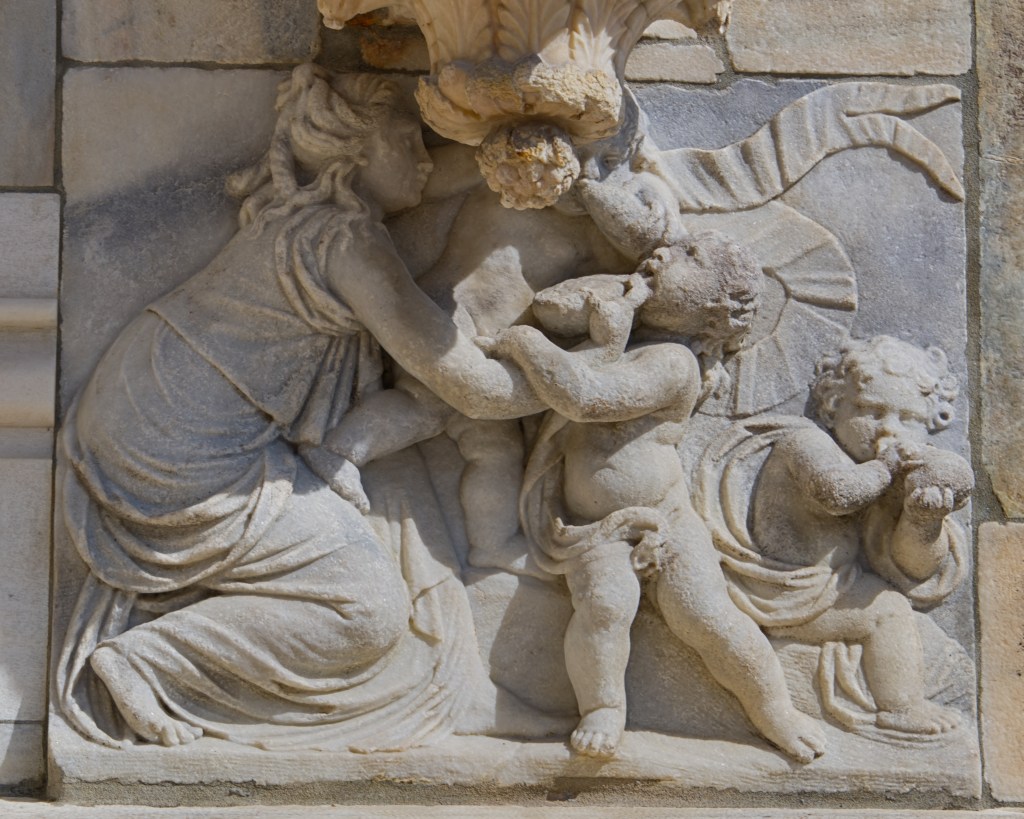
The Duomo rewards movement rather than a single carefully chosen viewpoint. Walking around its exterior changes the relationship between the visitor and the building, revealing different arrangements of buttresses, pinnacles and sculptures. The façade facing the Piazza is the most familiar, yet the sides and other elevations provide their own views of the architecture. From some angles, the cathedral appears almost solid, with its pale stone forming an imposing mass above the surrounding streets. From others, the structure seems to open up, exposing arches and supporting elements that reveal how the building achieves its remarkable height.
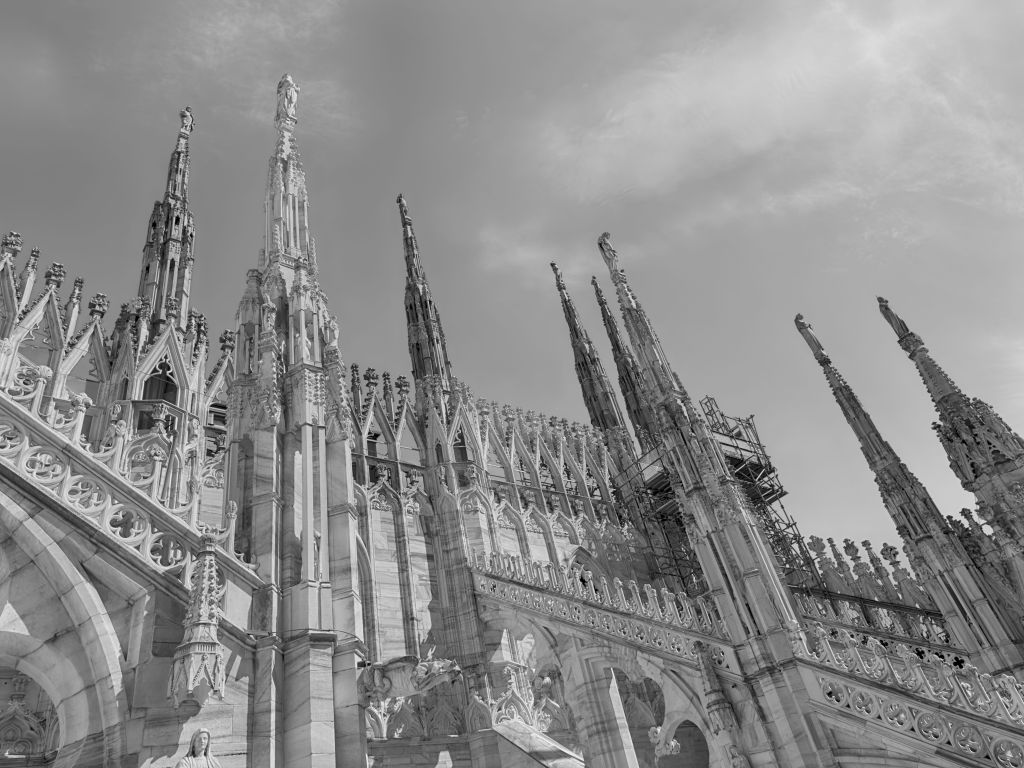
Construction of Milan’s Duomo began in 1386, under the direction of Gian Galeazzo Visconti, Lord of Milan, with the ambition of creating a cathedral unlike anything the city had seen before. The decision to build in the Gothic style, using pale Candoglia marble rather than the traditional Lombard brick, brought together architects, engineers, sculptors and stoneworkers from across Europe. Yet the scale of the undertaking meant that no single generation would see the finished result. The high altar was consecrated in 1418, just over thirty years after work began, allowing the cathedral to serve its religious purpose while construction continued around it for centuries. The great spire crowned by the golden Madonnina was completed in 1774, and Napoleon ordered the façade to be brought towards completion for his coronation as King of Italy in 1805. Even then, the work was not finished; the cathedral’s final bronze doors were installed between 1909 and 1965, bringing the long building project to its recognised conclusion nearly 580 years after construction began. The Duomo is therefore more than a monument to medieval ambition. Its marble holds the work of generations, shaped by changing architectural tastes, political fortunes and the patient labour of craftsmen who could only contribute a small part to a vision that outlasted them all.
One of the most striking features is the forest of spires that rises above the roof. These slender structures give the cathedral its distinctive skyline, lifting the eye away from the broad walls and towards the sky. Each spire is surrounded by smaller pinnacles, carved details and sculptural elements, creating a dense arrangement that can seem almost impossible to understand from the ground. The architecture becomes progressively finer as it rises, with the uppermost sections appearing delicate against the sky despite the weight of the stone from which they are made.
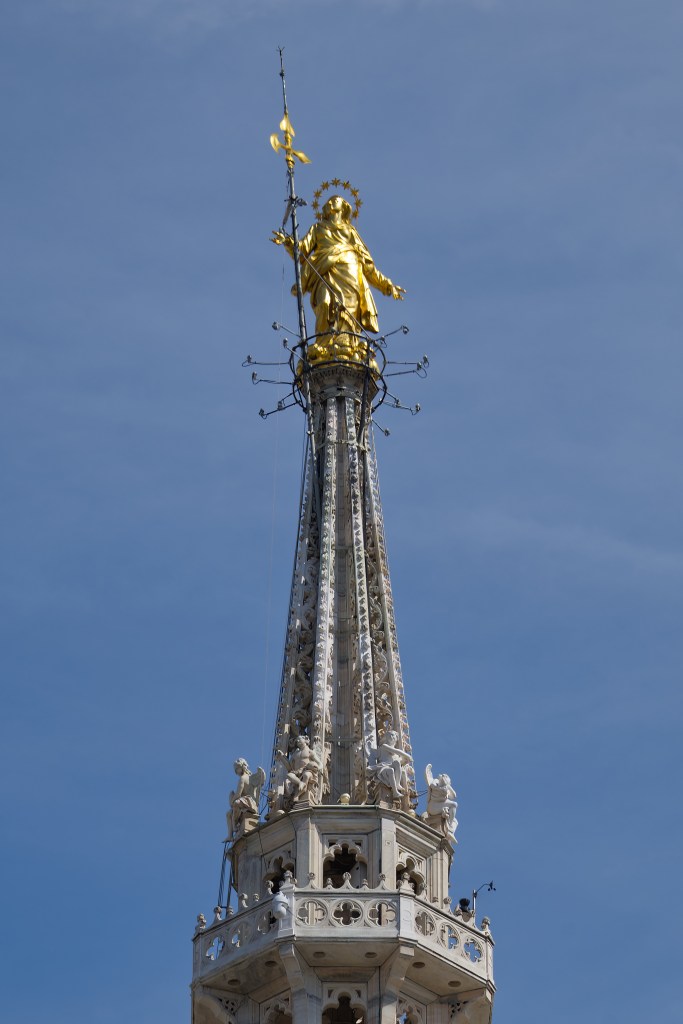
High above the city stands the Madonnina, the gilded statue of the Virgin Mary that has become one of Milan’s most recognisable symbols. From the Piazza, the figure appears small against the enormous cathedral, yet the gold provides a point of focus amid the pale marble. The statue has a special place in the city’s identity, and its position above the spires makes it visible from many parts of Milan. Seen from below, it is a distant figure watching over the city, while the architecture beneath it seems to lead the eye upwards towards that final point of gold.
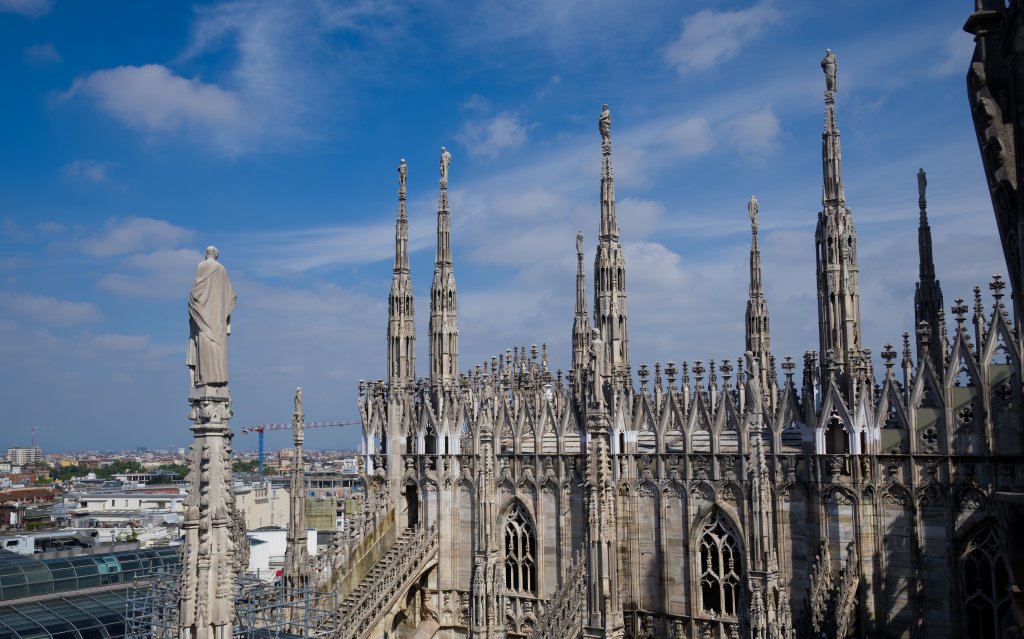
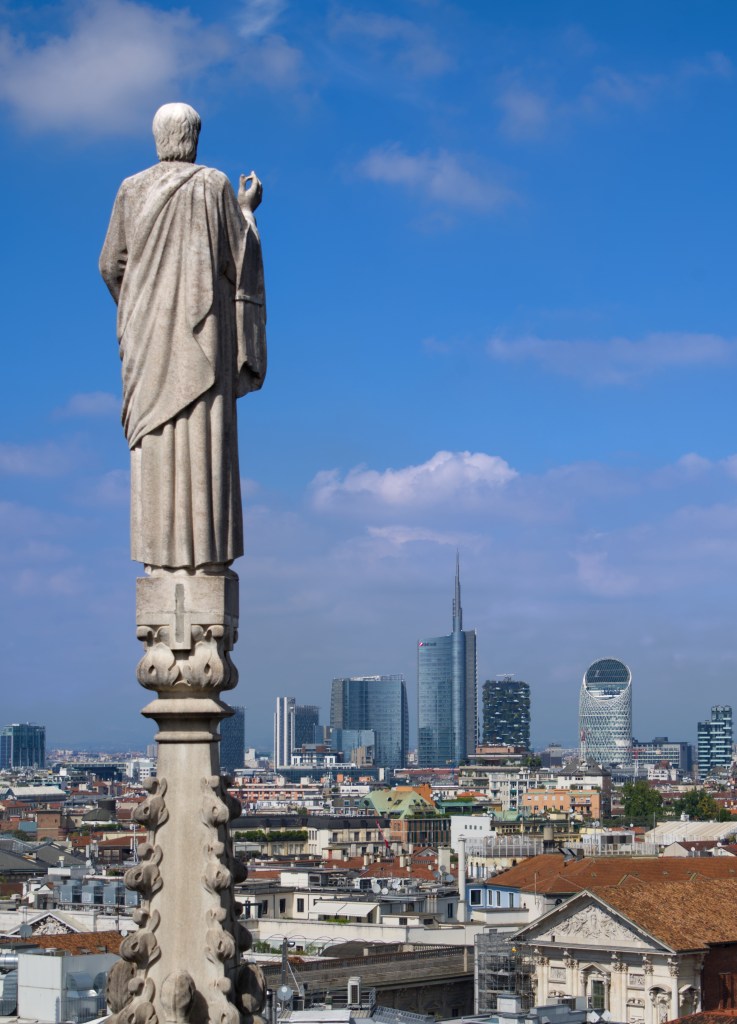
The rooftop reveals another dimension of the cathedral, one that is difficult to appreciate from the square. From below, the upper levels appear to form a complicated pattern of stone, with the statues and spires merging into an almost continuous silhouette. On the rooftop terraces, however, the individual elements become much easier to distinguish. The visitor can move among the pinnacles and examine the sculptures at close range, discovering details that are largely lost when viewed from the streets below. The cathedral becomes less like a single enormous monument and more like an intricate landscape made from marble.
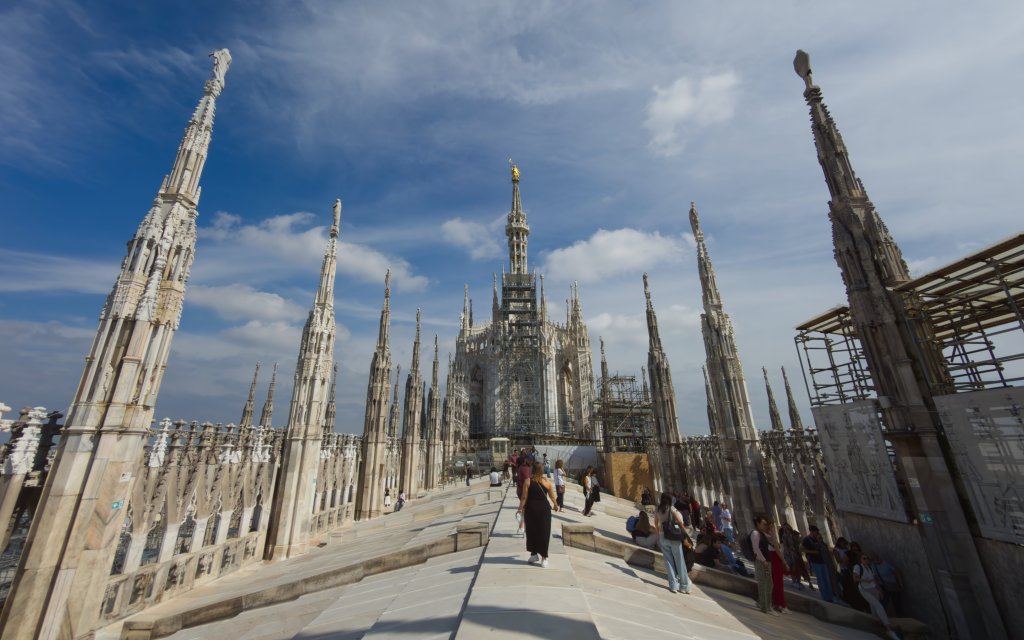
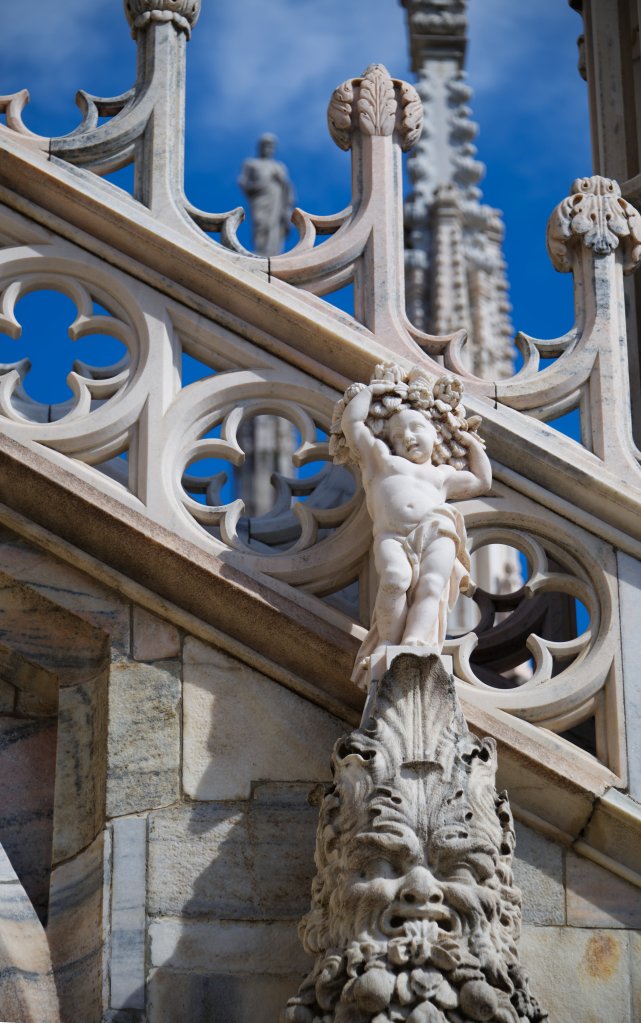
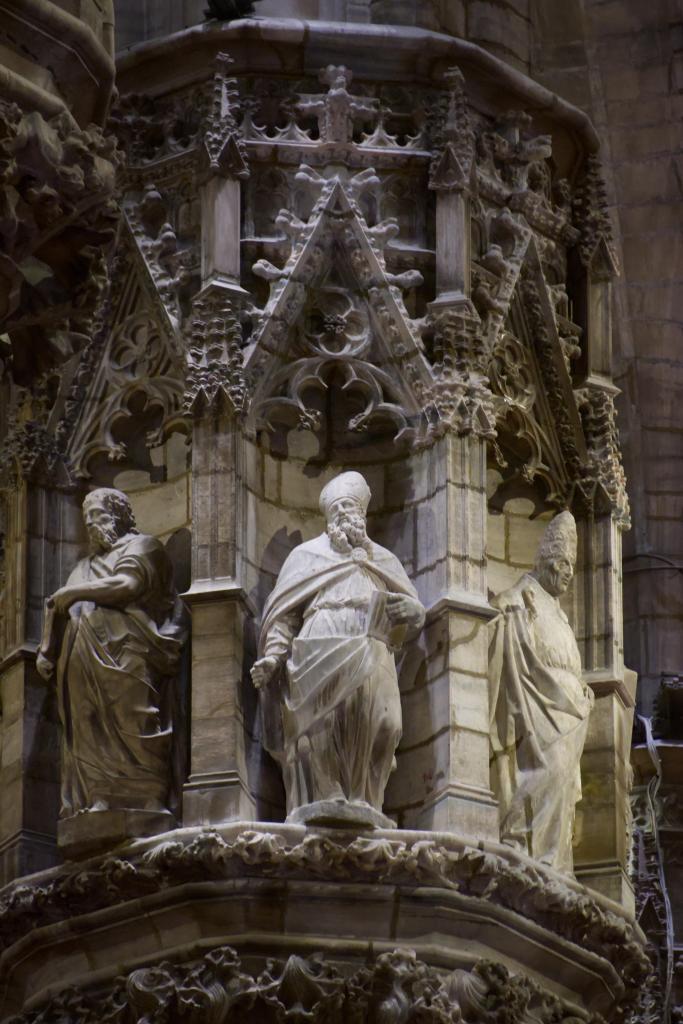
The rooftop sculptures deserve particular attention because they are not simply repeated decorations added to create a dramatic skyline. The figures vary in appearance, posture and character, and their placement contributes to the complexity of the building. Some stand prominently against the sky, while others occupy niches or architectural corners where they can be difficult to see from a distance. Their faces, clothing and gestures reveal the work involved in carving individual figures from stone, and the variety makes the upper levels far more interesting than a simple line of spires might suggest.
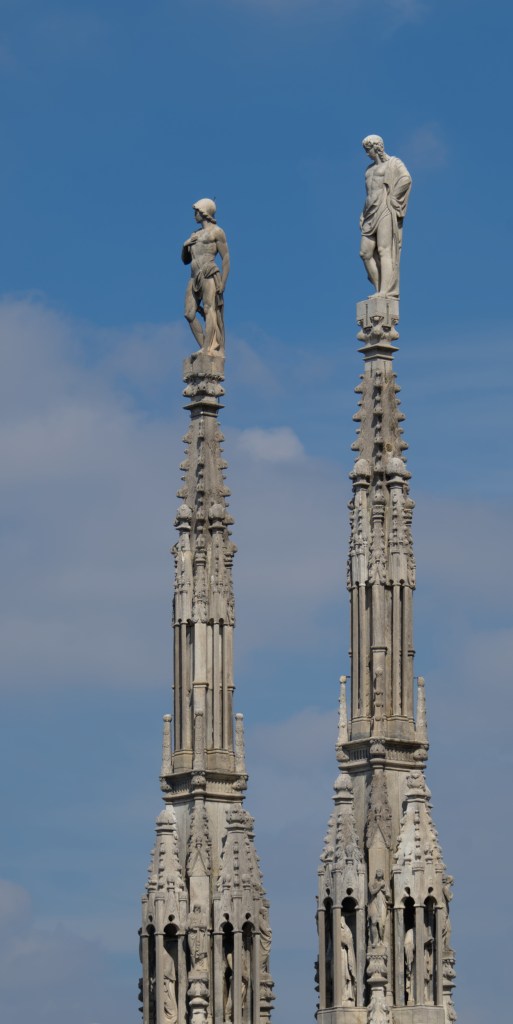
Standing close to these sculptures changes the impression created from the Piazza. A figure that appeared little more than a small shape against the sky becomes an individual piece of craftsmanship, with details that can be examined rather than merely glimpsed. The marble itself reveals variations in colour and texture, while the shadows around the figures emphasise their forms. Looking across the rooftop, the eye moves from one sculpture to another, finding differences in the way the figures are arranged and how they relate to the surrounding architecture. It becomes clear that the upper sections of the Duomo contain a remarkable amount of work that is almost invisible from the ground.
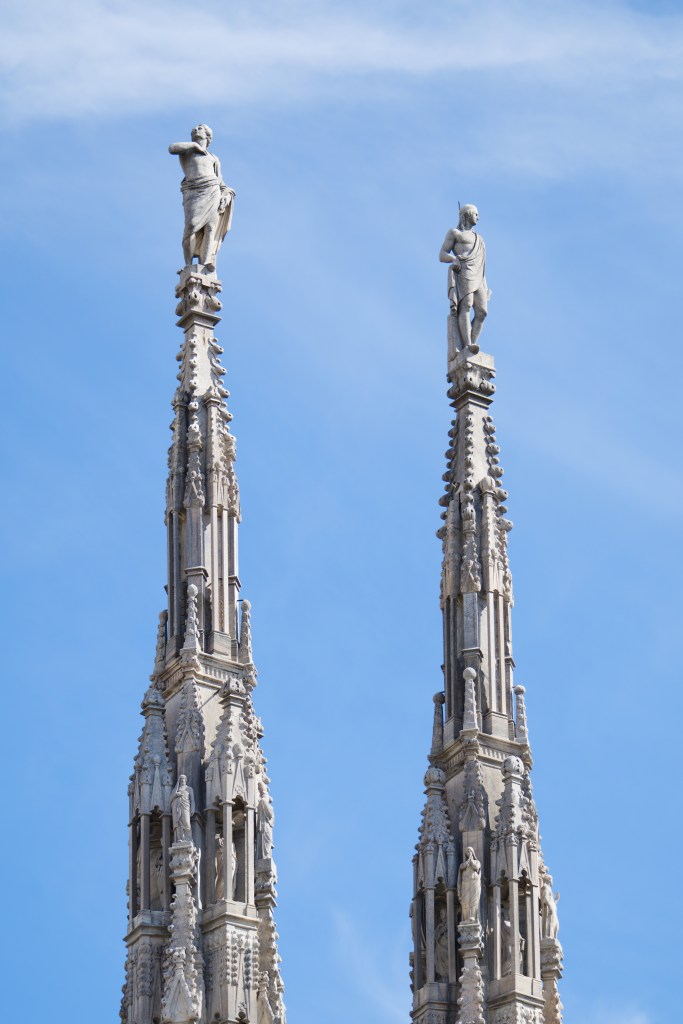
The stone pinnacles create their own patterns, rising at different heights and framing views of the city beyond. Their narrow forms draw the eye upwards, while the surrounding sculptures provide visual interest at a more human scale. There is a pleasing contrast between the delicate appearance of the spires and the solid mass of the cathedral beneath them. The upper levels seem almost weightless from certain viewpoints, although every pinnacle and statue is supported by the larger structure below. The impression of lightness is achieved through careful design, with the vertical elements breaking up the mass of stone and giving the skyline its distinctive character.
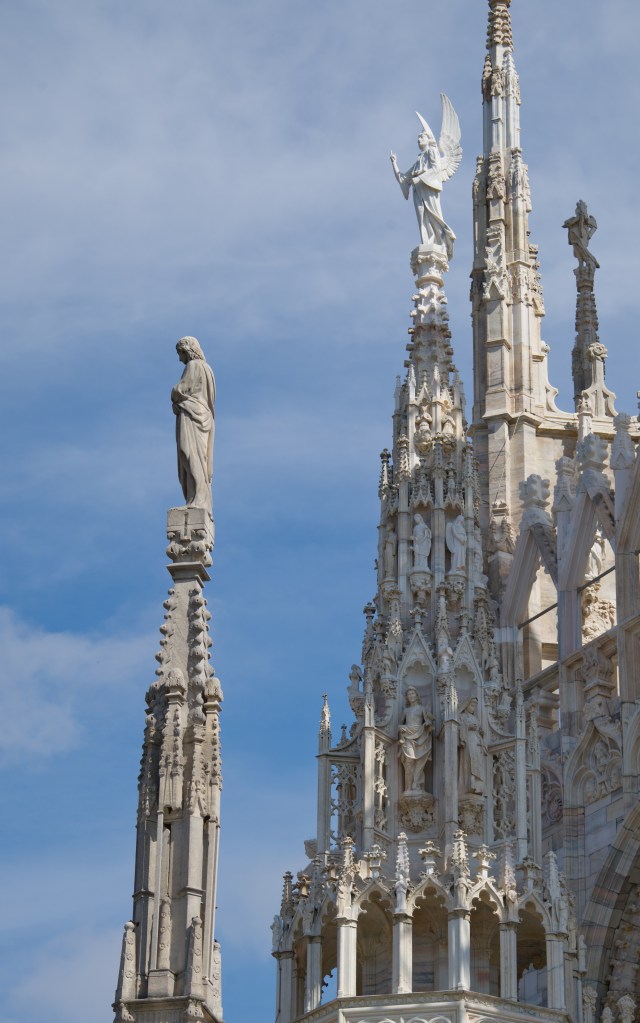
The rooftop also offers a closer understanding of the cathedral’s engineering. Gothic architecture is often remembered for its pointed arches, tall windows and soaring ceilings, but its achievements depend just as much on the systems that support those features. The great height of the Duomo required ways to manage the forces created by its vaulted roof and the weight of the stone above. Its exterior supports are an important part of that story, demonstrating how structural requirements became integrated into the cathedral’s visual design.
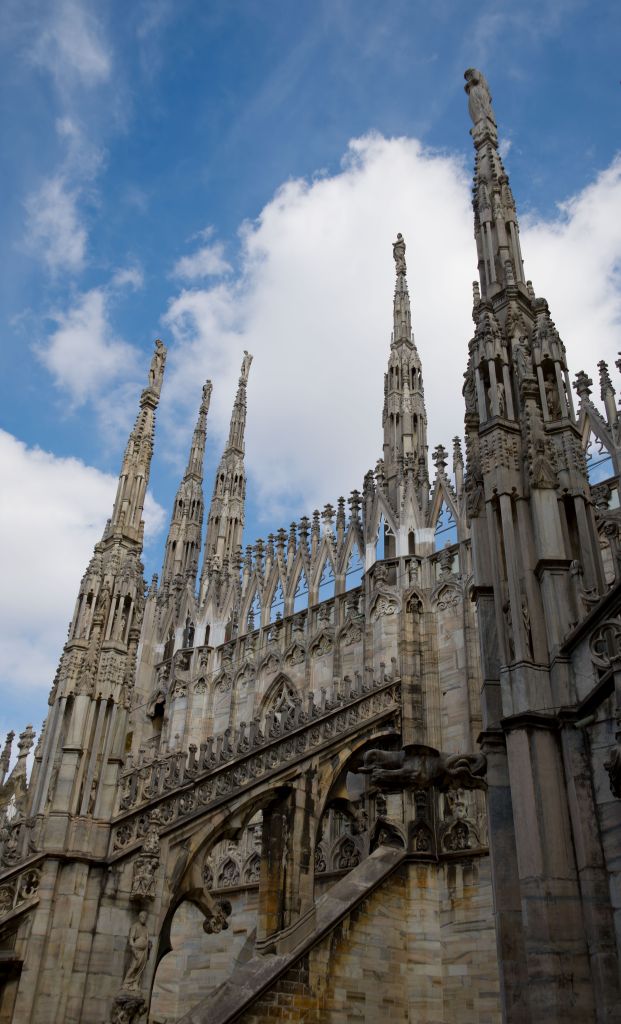
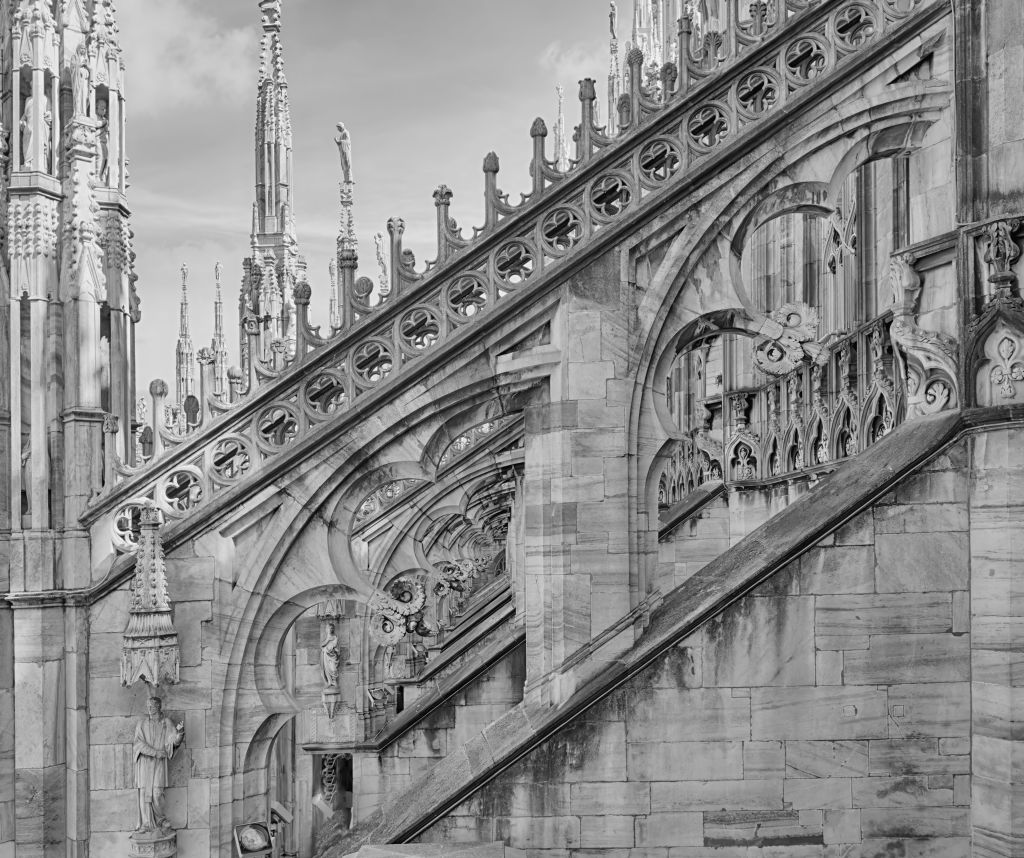
The flying buttresses are particularly revealing. These arched stone supports extend outwards from the main structure, transferring the outward thrust generated by the vaults towards external supports. Without such arrangements, the pressure from the high stone ceilings would place greater demands on the walls themselves. By carrying those forces outwards, the buttresses help make it possible to construct a building with such height and complexity. Their form is functional, but it also contributes to the visual character of the cathedral, with arches and supports creating another layer of architectural detail around the exterior.
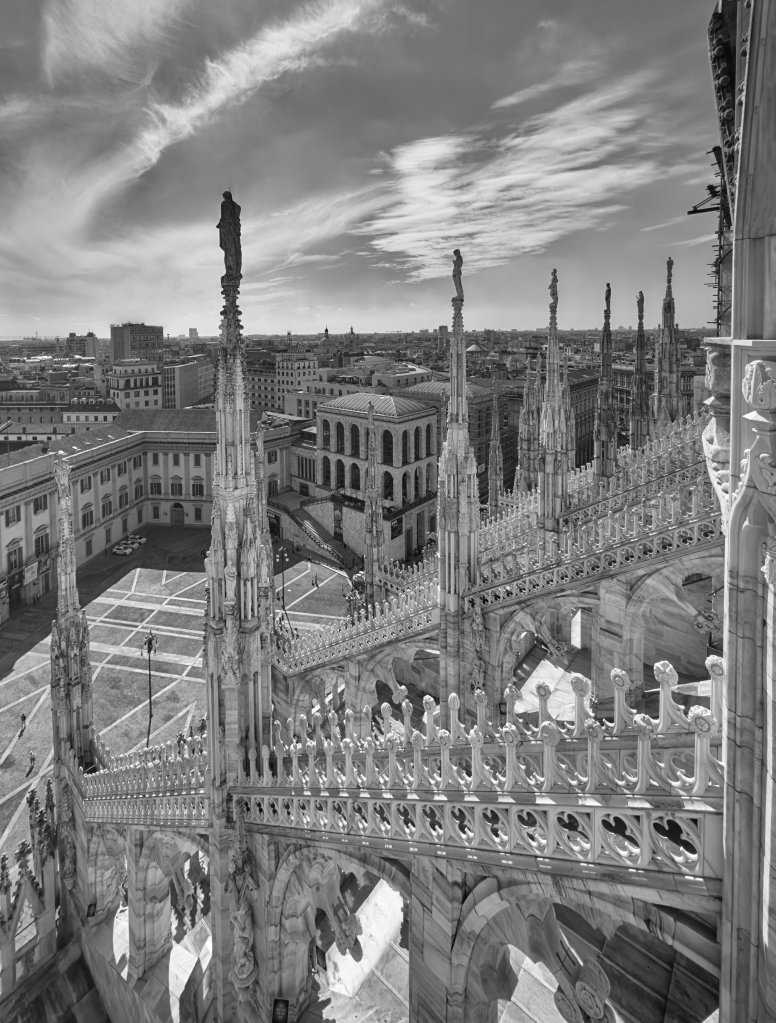
From the ground, the flying buttresses can appear as part of the elaborate decoration, especially when viewed among the pinnacles and sculptures. Their purpose becomes clearer when the structure is examined more carefully. The arches connect the upper parts of the building with supporting elements farther out, creating a visible system of stonework that helps carry the loads of the cathedral. Rather than hiding the engineering, the Gothic design allows these structural elements to become part of the architecture itself. The result is a building where function and decoration are closely connected, each contributing to the overall impression.
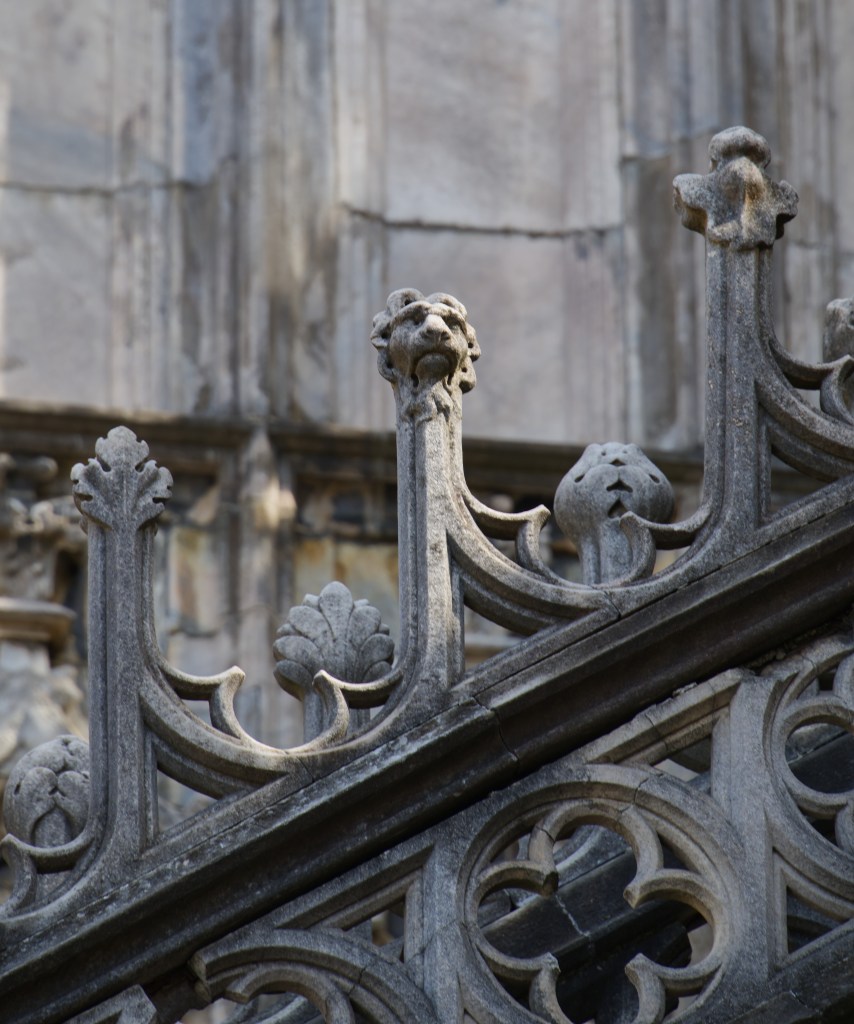
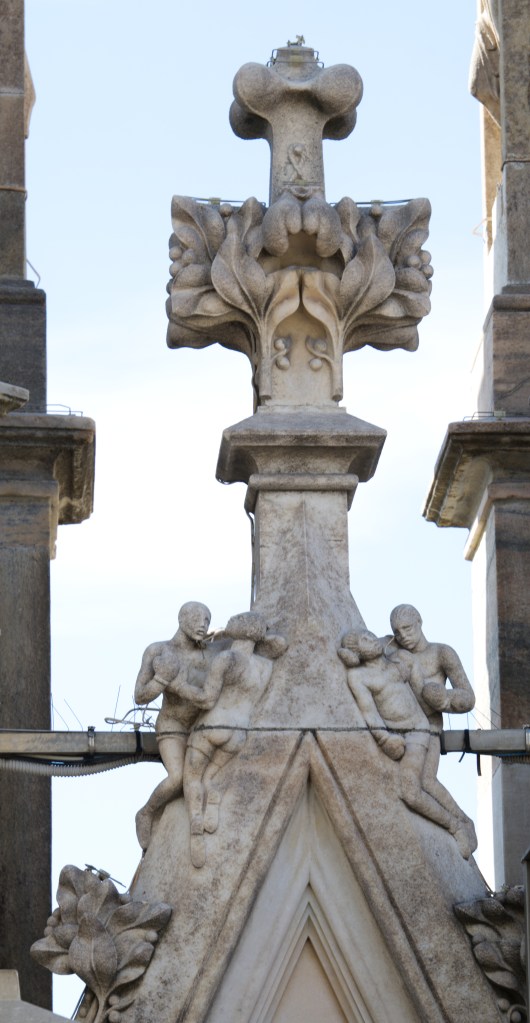
The buttresses also help explain why the Duomo’s exterior looks so different from a simple arrangement of tall walls. Its structure extends outwards and upwards, creating a complicated network of arches, supports and vertical elements. The building appears to spread its weight through the surrounding stonework while continuing to rise towards the sky. Seen alongside the spires, the buttresses become part of a larger architectural system in which each element contributes to both stability and appearance. The cathedral’s beauty is not separate from its engineering. Much of that beauty comes from the way the engineering has been expressed.
After spending time among the spires and sculptures, returning to the interior brings a completely different experience. The bright openness of the Piazza gives way to a vast space where the light is more subdued and the surrounding architecture creates an atmosphere of stillness. The first impression is often the height of the columns and the distance between the floor and the vaulted ceiling. Outside, the cathedral seems to reach towards the sky through its pinnacles. Inside, the same vertical movement continues through enormous stone supports that rise into the darkness above.
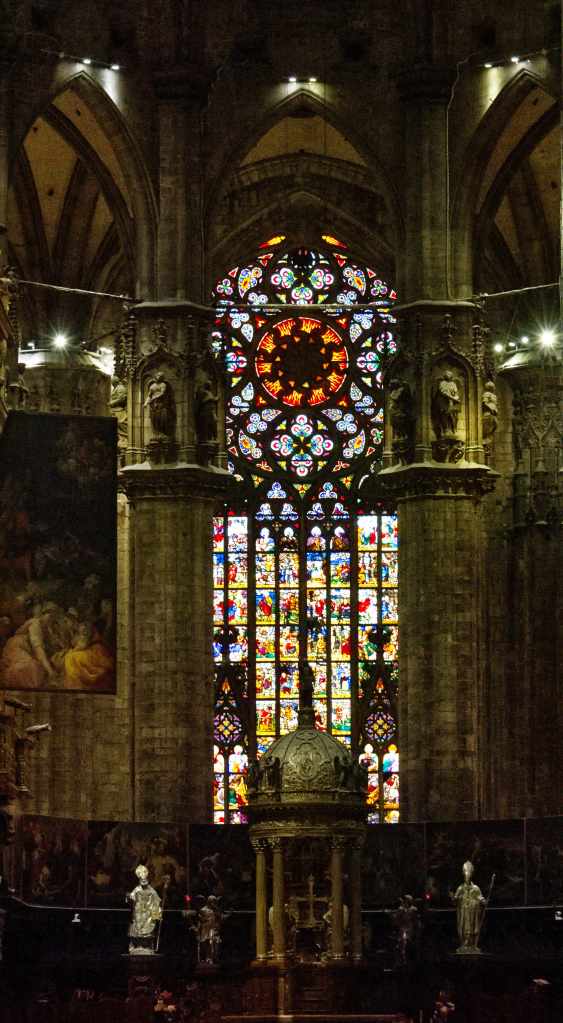
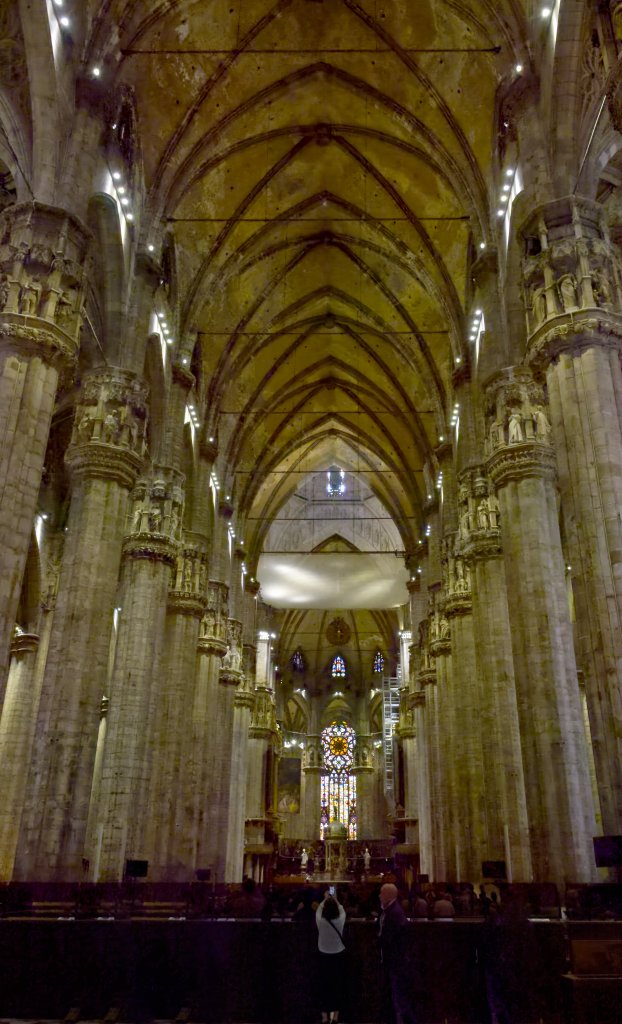
The nave stretches ahead, framed by massive columns that divide the interior into a sequence of architectural spaces. Looking along its length reveals a succession of arches and vaults, with the perspective drawing the eye towards the far end of the cathedral. The side aisles provide further views into chapels and darker areas, where sculptures and other details emerge from the surrounding shadows. There is so much space that individual features can initially seem small, but standing closer reveals the scale of the work involved in creating them.
The columns are particularly impressive because of their proportions. Their lower sections are substantial, providing a strong visual foundation for the enormous structure above, while their upper reaches disappear into the intricate ceiling. Looking upwards, the eye follows the stonework until it becomes difficult to distinguish individual elements. The cathedral seems to extend beyond the limits of comfortable perspective, making it difficult to judge just how high the ceiling really is. The effect is not produced by height alone, but by the repeated lines of the columns and arches that guide the gaze upwards and into the building.
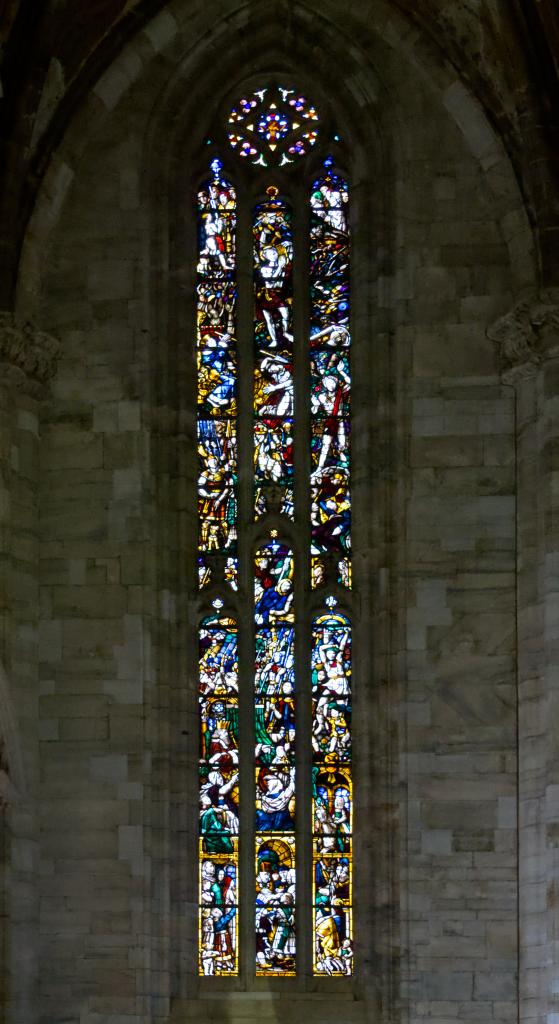
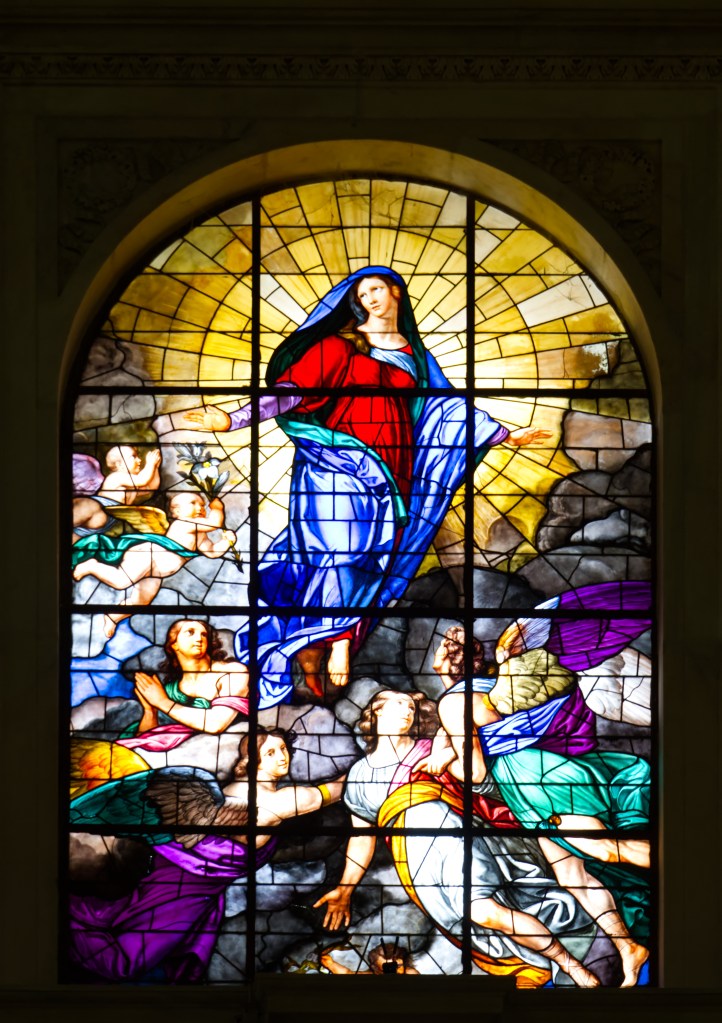
The interior also reveals the importance of light in shaping the atmosphere. Compared with the brightness of the exterior, the cathedral feels darker and more enclosed, with sunlight entering through the stained-glass windows and introducing patches of colour into the vast space. The windows contain intricate designs and figures, although their details can be difficult to appreciate from a distance. Their colours become more noticeable when sunlight passes through the glass, adding reds, blues, greens and golds to the muted tones of the stone. The changing light creates subtle variations across the interior, bringing certain areas into focus while leaving others in shadow.
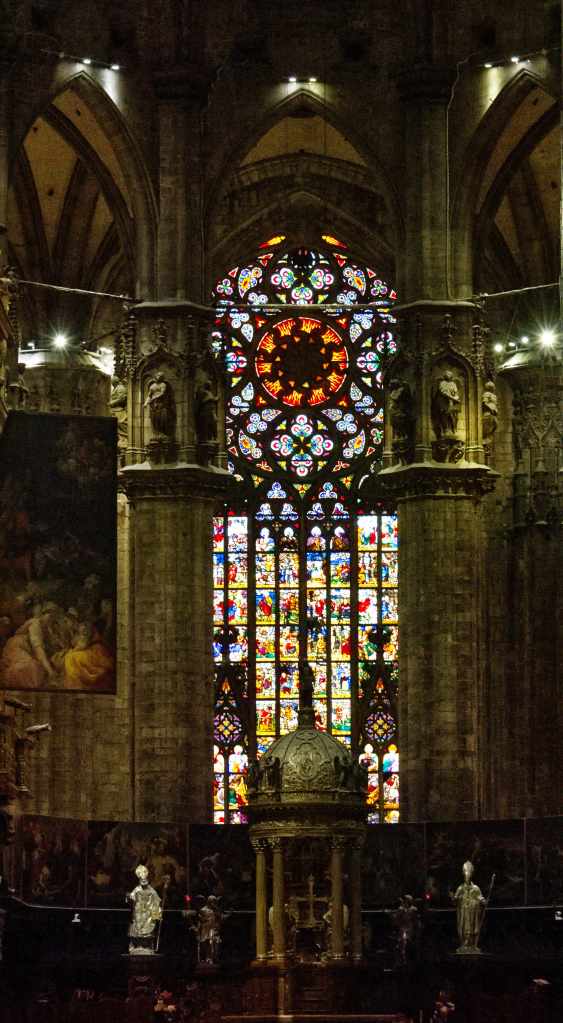
The stained glass rewards a closer look because it adds another layer to the cathedral’s already extensive collection of detail. From across the nave, the windows may appear as large panels of colour, but individual figures and scenes emerge when viewed more carefully. Their designs form part of the religious character of the building, while their colours contribute to the visual atmosphere. As with the exterior sculptures, there is a difference between seeing the windows as part of the whole and examining the individual work within them. Both perspectives matter, but neither entirely replaces the other.
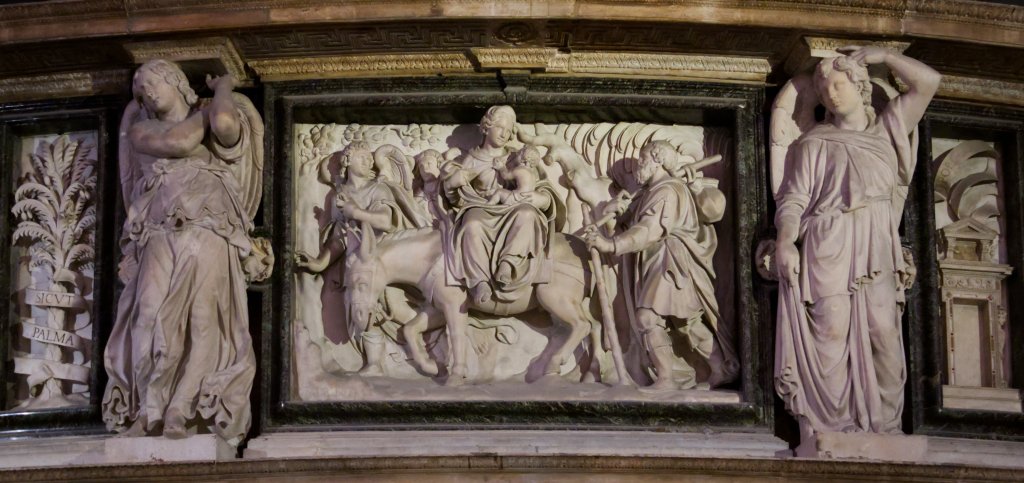
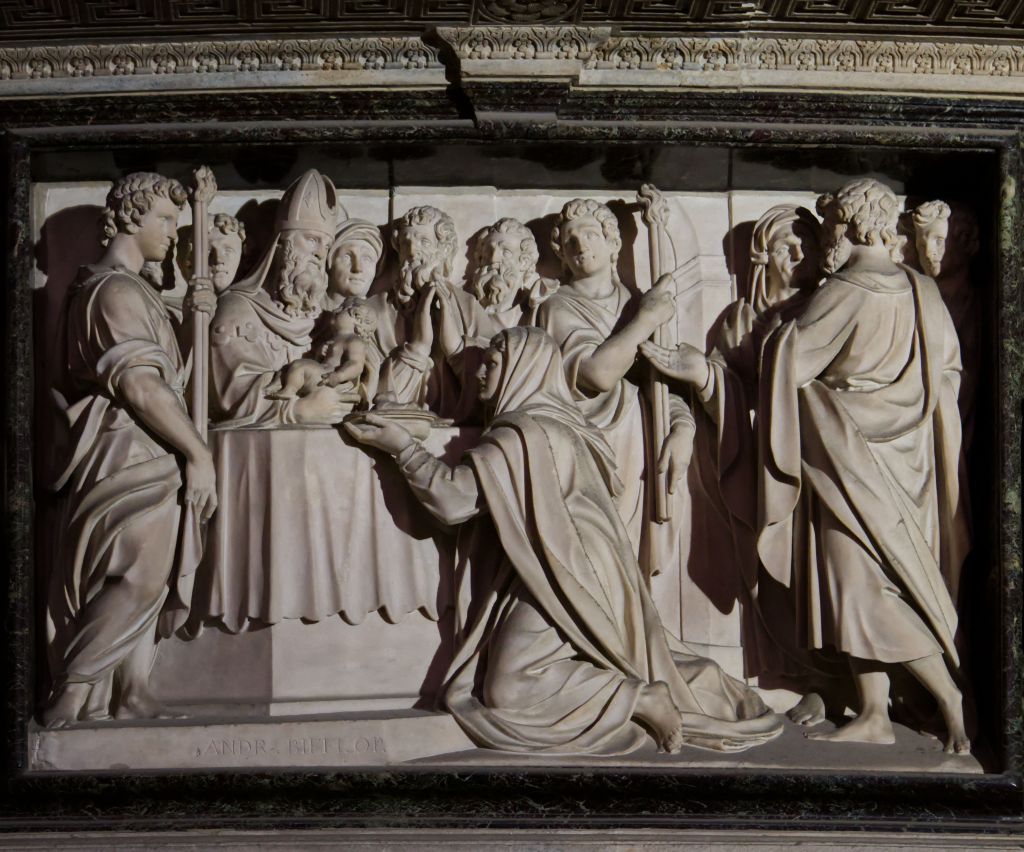
Sculpture is equally important inside the Duomo, where figures occupy chapels and architectural spaces throughout the cathedral. Some are immediately visible, while others become apparent only after the eye adjusts to the subdued light. The surrounding stone gives the figures a sense of permanence, but the shadows help distinguish them from the larger structure. Their placement creates points of interest throughout the interior, encouraging visitors to look away from the main nave and explore the details along its sides. The result is a space that can be experienced both as a vast architectural whole and as a collection of smaller, more intimate features.
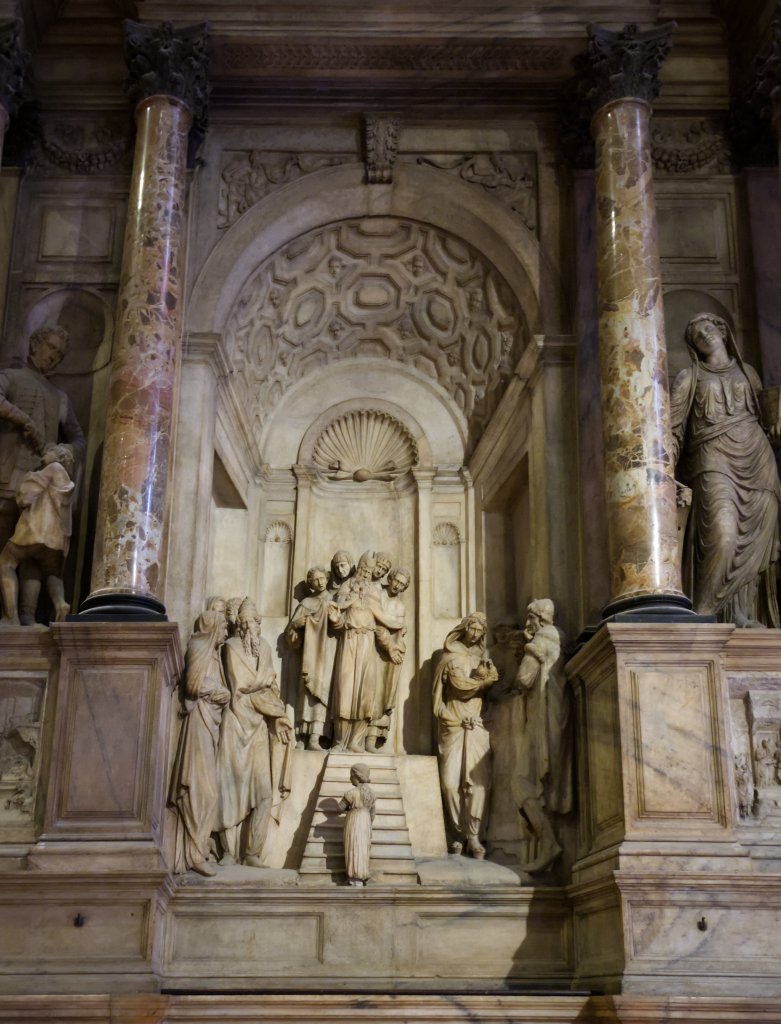
There is a noticeable contrast between the exterior and interior sculpture. Outside, the statues form part of the cathedral’s dramatic outline, contributing to the impression of a building that has been covered in carved stone from ground to roof. Inside, the figures often feel more closely connected to the visitor, partly because the enclosed space changes the way they are seen. The quieter light makes it easier to concentrate on individual forms, while the surrounding architecture gives each sculpture a different setting. The cathedral’s many figures therefore contribute to two distinct experiences, one open to the sky and the other contained within the enormous interior.
The atmosphere inside is shaped not only by the architecture but also by the people moving through it. Visitors walk slowly along the nave, stop to look at the windows or pause beneath the columns, while others sit quietly away from the main flow of movement. Even when the cathedral is busy, the sheer scale of the space creates a sense of separation from the city outside. Milan continues only a short distance beyond the doors, but the noise and movement of the streets seem less immediate once the interior surrounds the visitor. The cathedral offers a different pace without needing to be empty or silent.
The transition back to the Piazza brings the city into view again, and the contrast is particularly apparent in the space immediately in front of the cathedral. The square is one of Milan’s great gathering places, attracting visitors who come to admire the building, meet friends, take photographs or simply spend time in the centre of the city. People cross the open space in every direction, while the cathedral forms an extraordinary backdrop to the ordinary business of the day. The architecture may be centuries old, but the life around it is constantly changing.
Wedding parties are a familiar sight in front of the Duomo, where the pale marble façade and soaring spires create a striking backdrop for couples celebrating their marriage. Bridal dresses and formal clothing stand out against the intricate stonework, while the Piazza continues its everyday life around them. Photographs may capture the cathedral rising behind the couple or place them within the wider square, where the movement of Milan carries on as these private moments unfold in public view.
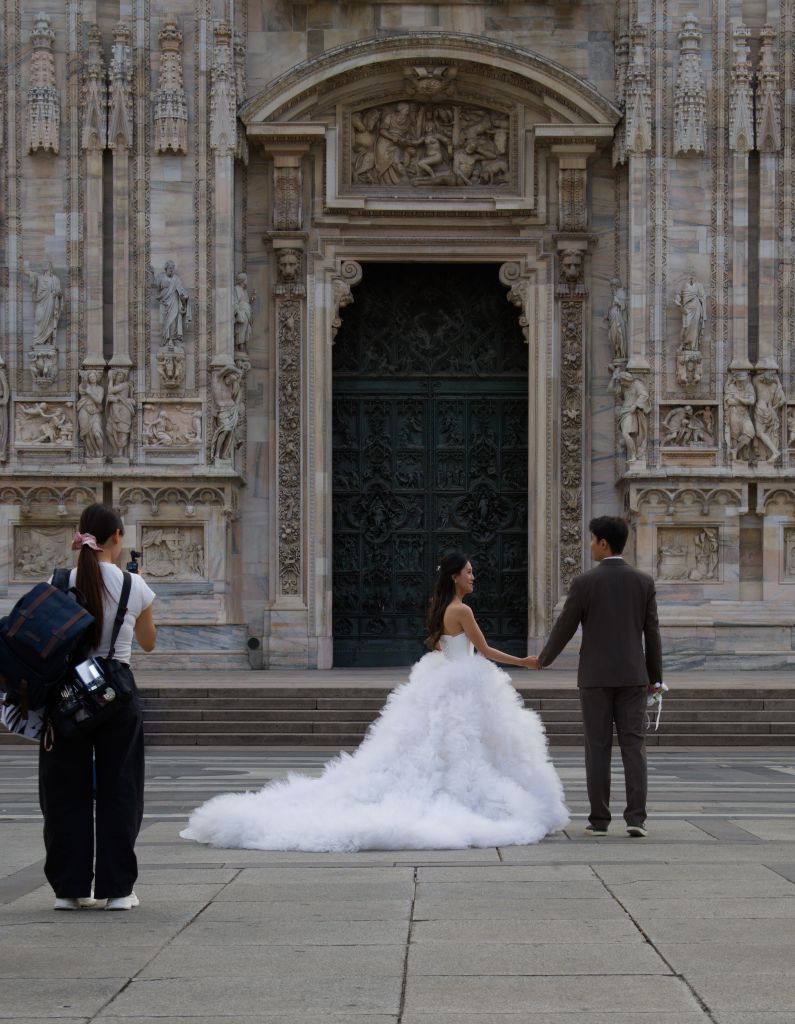
There is something poignant about marking the beginning of a shared life before a building that has stood for centuries, bearing witness to generations of change. The cathedral’s immense scale places each celebration within a much longer story, yet it is the personal moment at its centre that draws the eye. For a brief time, the Duomo becomes more than a monument to Milan’s history; it becomes the setting for a memory that two people will carry long after they have left the Piazza.
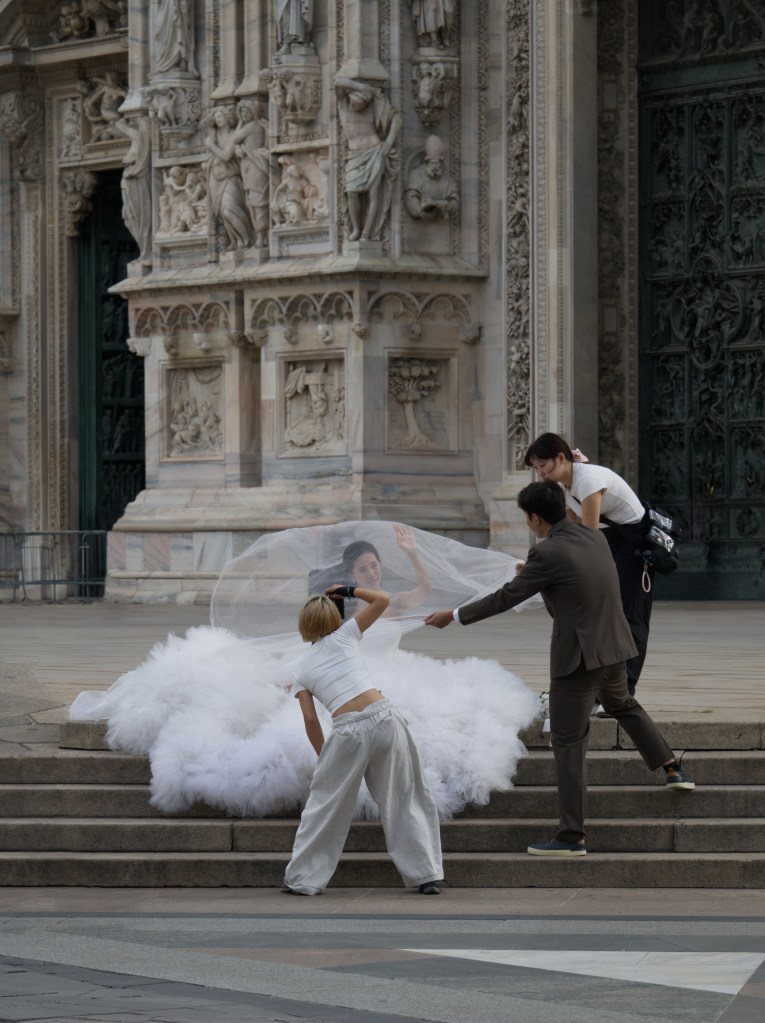
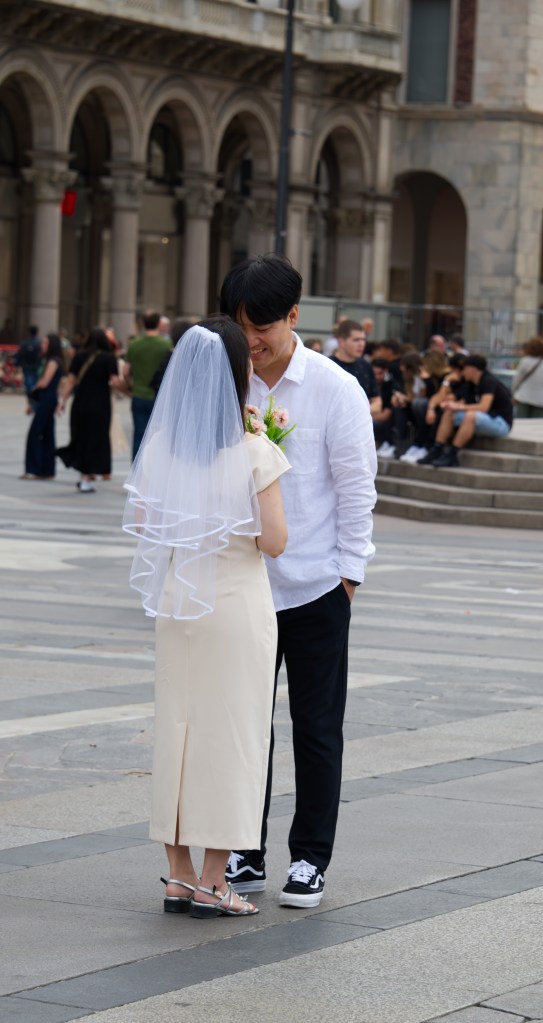
The square also makes clear that the Duomo is more than a monument to be viewed from a distance. It is a living part of Milan, surrounded by movement and used as a meeting place by people with very different reasons for being there. Some visitors arrive to explore the architecture, others come for the rooftop views, and many simply want to see the cathedral that has become such a defining feature of the city. Wedding parties add another dimension to the scene, showing how the Piazza continues to serve as a backdrop for important moments in people’s lives.
The Duomo is difficult to appreciate fully in a single visit because its character changes with every viewpoint. From the square, the first impression is dominated by the scale of the façade and the forest of spires above it. Walking around the exterior reveals the complexity of the carvings and the engineering of the flying buttresses, while the rooftop brings the sculptures close enough to examine individually. Inside, the vast columns, stained glass and shadowed spaces create an atmosphere that feels entirely different from the brightness of the Piazza. Each perspective adds something new without exhausting the experience.
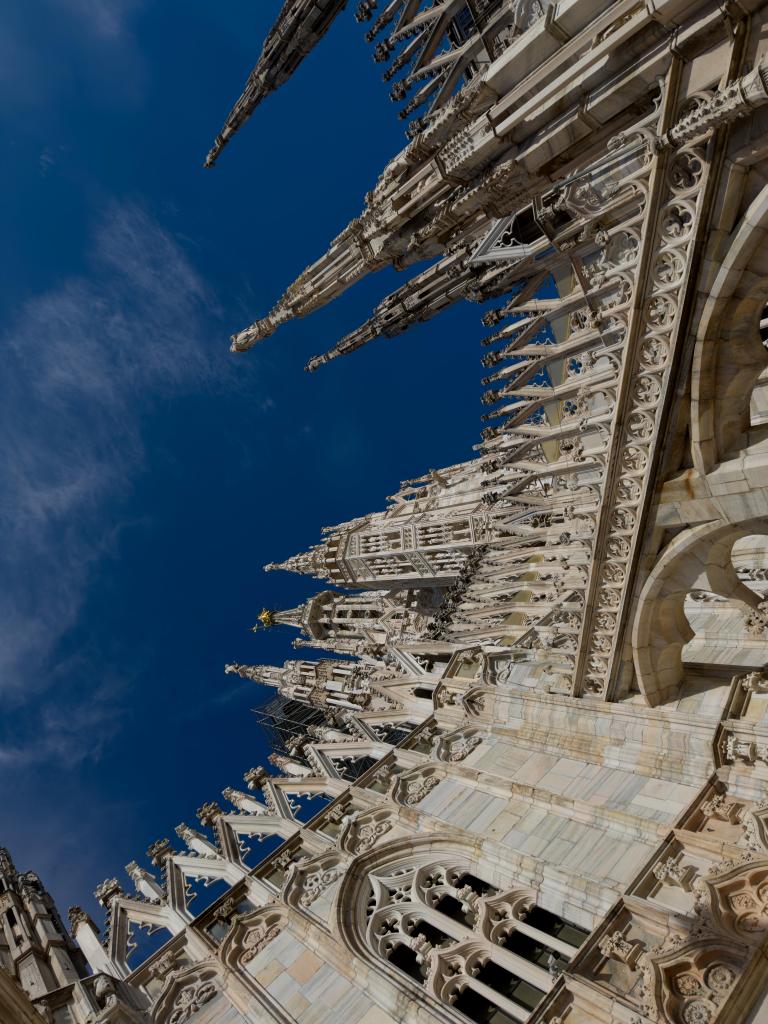
The smallest details often remain in the memory longer than the overall view. A carved face high among the pinnacles, the shape of an arch supporting the upper structure, or a figure emerging from the shadows inside the cathedral can become a point of interest long after the first impression of scale has passed. On the rooftop, the craftsmanship becomes more tangible, while the flying buttresses reveal how the beauty of the building is connected to the practical demands of supporting its immense stone vaults. The cathedral is remarkable not simply because it is large, but because so much thought and work have gone into its individual parts.
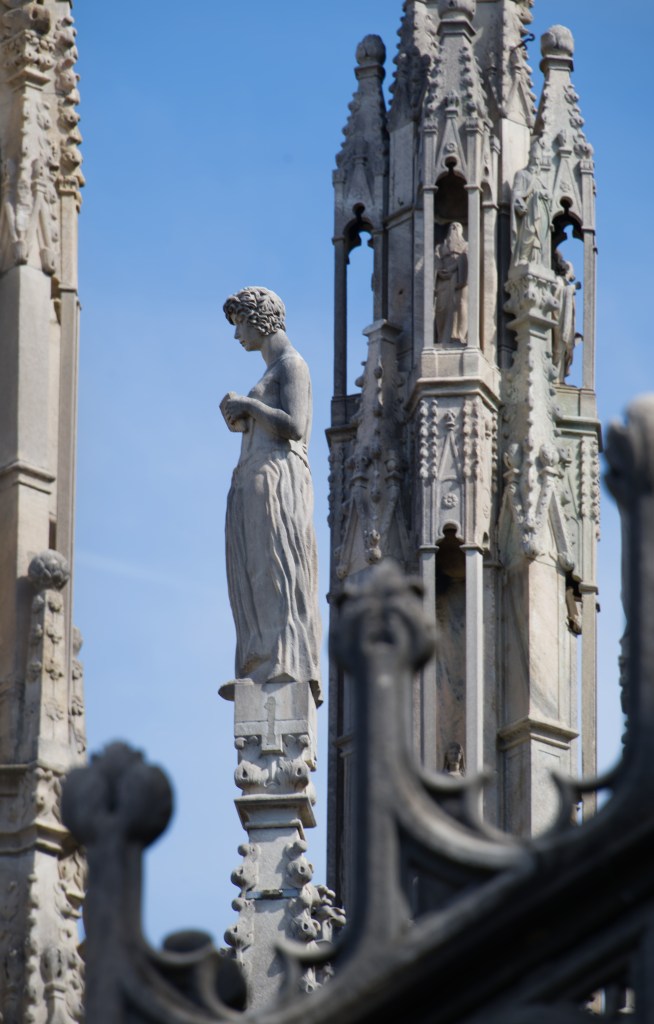
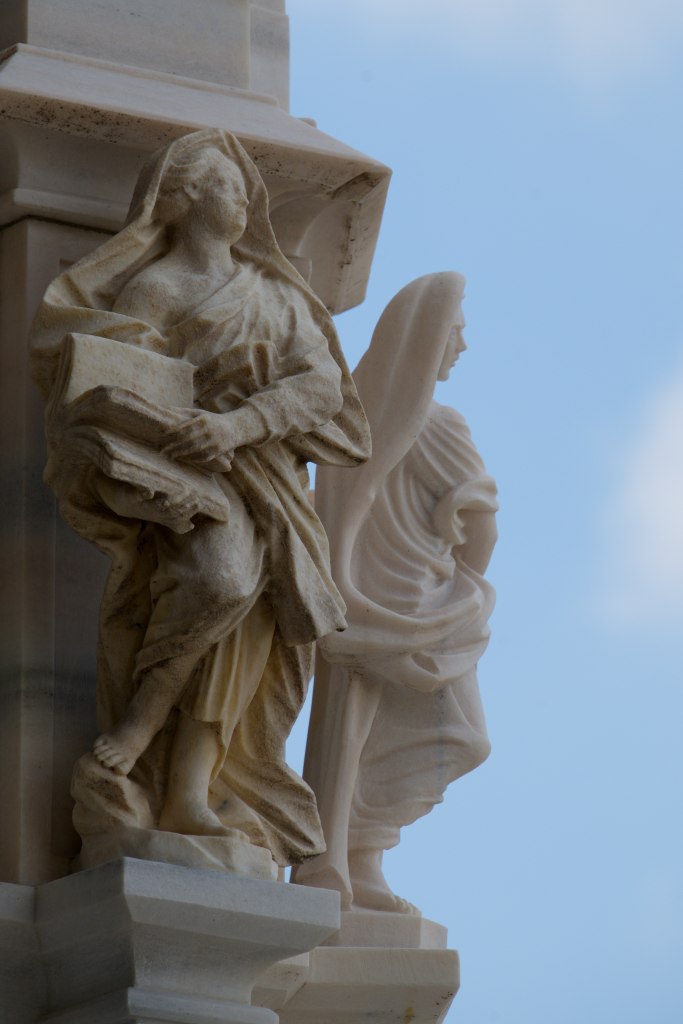
Milan’s cathedral is more than a building that dominates a square. It is a place that changes depending on how it is experienced, offering a different perspective from the streets, the interior and the rooftop terraces. Its sculptures and spires reward close attention, while its scale creates an immediate impression that remains difficult to forget. Above the movement of the Piazza, the pale marble continues to catch the light, carrying centuries of craftsmanship into the skyline of a city that has never stopped changing.
Eventually, the visitor returns to the Piazza, where the Duomo once again becomes part of the broader view of Milan. The crowds continue to move through the square, wedding parties gather for photographs, and the changing light plays across the marble façade. From this distance, the rooftop sculptures merge into the familiar outline of the cathedral, and the flying buttresses become part of the intricate mass of stone rising above the surrounding streets. After exploring the building more closely, that outline carries a different meaning, filled with details that are now easier to recognise. What first appeared to be an overwhelming display of Gothic grandeur reveals itself as a work of extraordinary patience, shaped by the hands and imaginations of generations. The Duomo remains rooted in the heart of Milan, its countless carved figures and soaring spires bearing witness to the centuries that have passed, while the life of the city continues to unfold at its feet.


Leave a Reply