
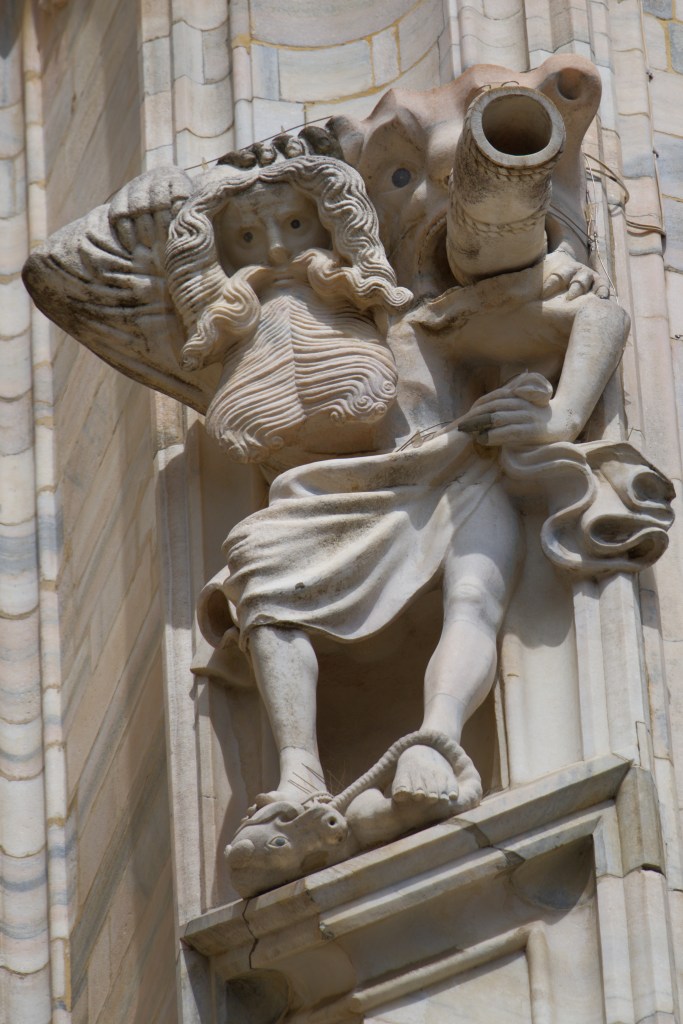
Across Europe, the great cathedrals of the medieval and Renaissance periods were conceived as more than places of worship. Their architecture expressed religious belief, civic pride and the ambitions of the communities that built them, while their decoration transformed stone walls into a rich visual language of sacred stories, human figures and imagined creatures. Sculptors were given a remarkable degree of freedom to explore the beauty of the human form, the drama of biblical events and the stranger corners of the imagination. At Milan’s Duomo, this tradition developed on an extraordinary scale, creating a collection of sculpture that extends from the great entrances to the highest points of the roof and deep into the cathedral’s interior. Built and embellished over nearly six centuries, the Duomo brought together generations of sculptors working in different periods and styles, each leaving their mark on its extraordinary collection of grotesque creatures and gargoyles. The result is a striking variety of forms, from medieval-inspired beasts to more naturalistic figures, reflecting the changing tastes and imagination of the people who shaped the cathedral over time.
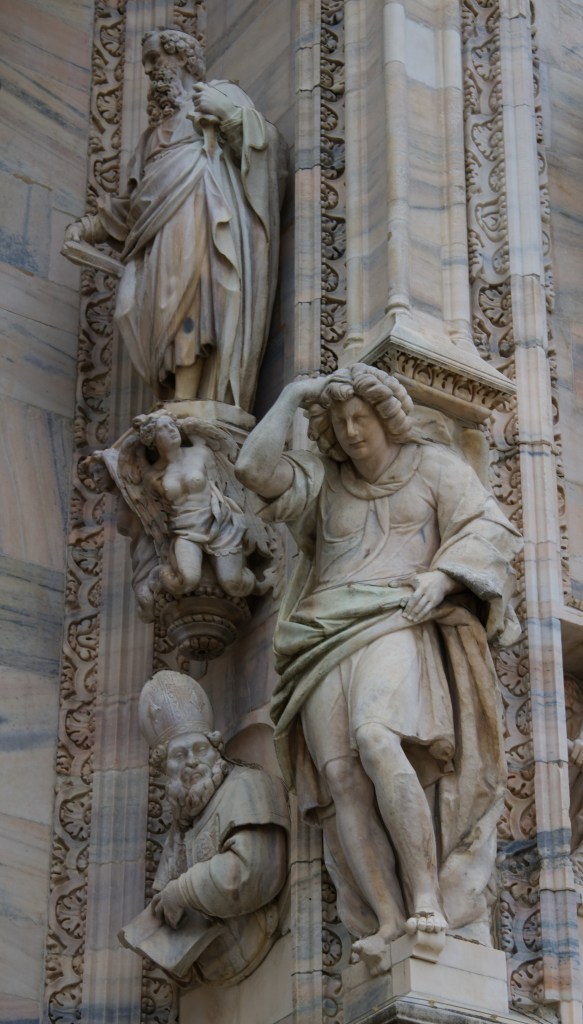
Look closely at the stonework of Milan’s Duomo and an extraordinary cast of characters begins to emerge. Strange creatures jut from the roofline, their open mouths and contorted faces frozen above the streets, while saints, angels and solemn biblical figures occupy niches, doorways and lofty pinnacles. Some sculptures appear graceful and composed; others are fierce, unsettling or unexpectedly playful. Carved into pale marble, these figures inhabit the cathedral’s exterior and interior in their thousands, each contributing to a visual world that extends far beyond conventional architectural decoration. Together, they reveal a fascinating side of the Duomo, where religious devotion meets the imagination of sculptors and where even the smallest detail can hold the attention of anyone willing to look a little closer.
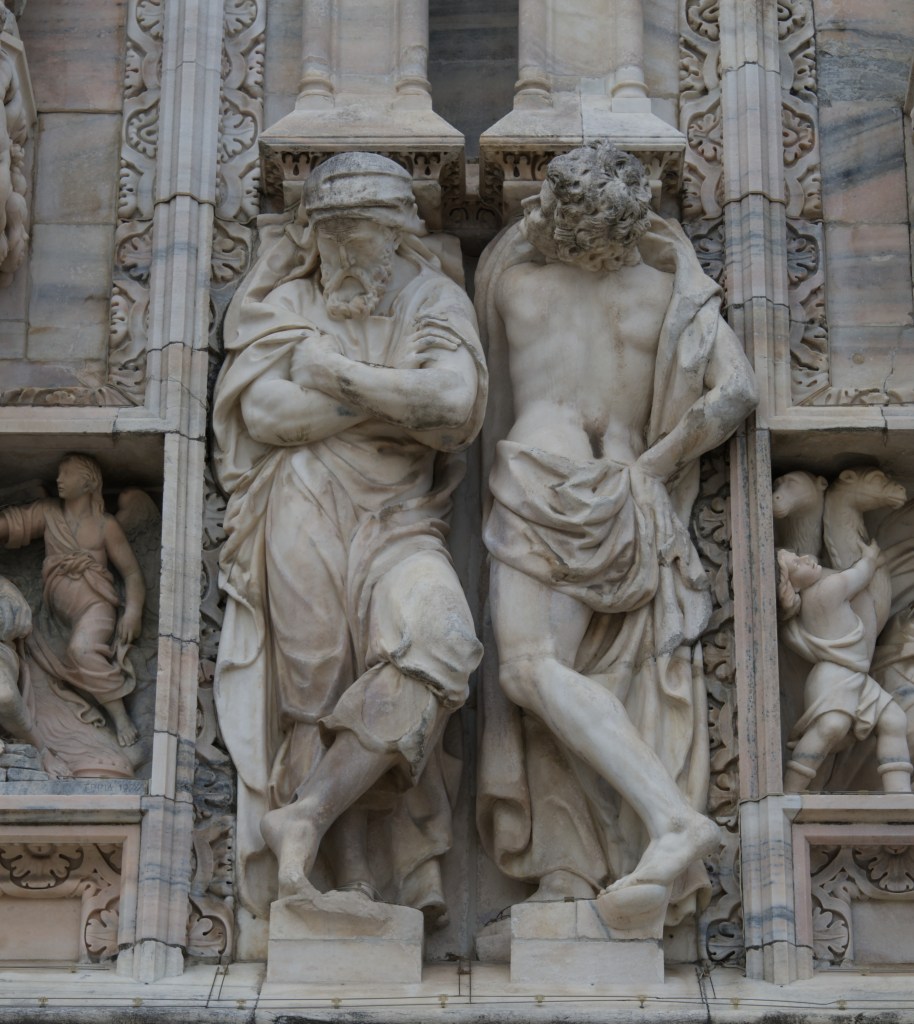
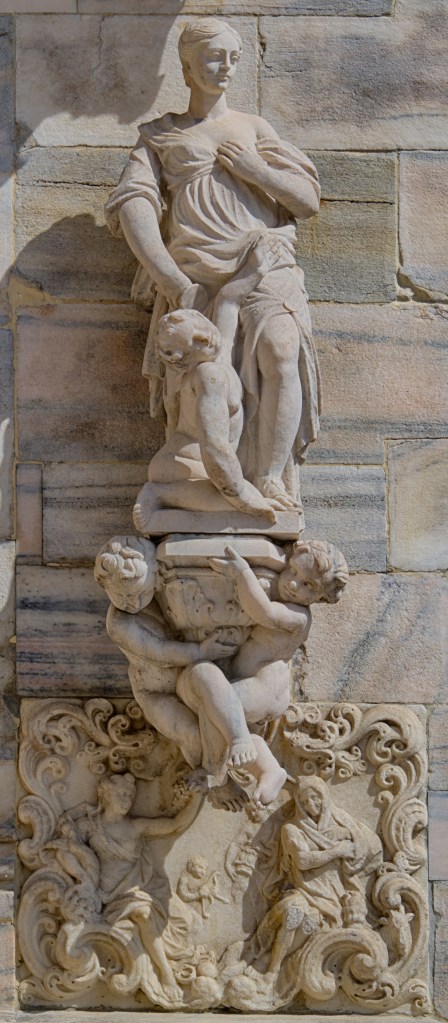
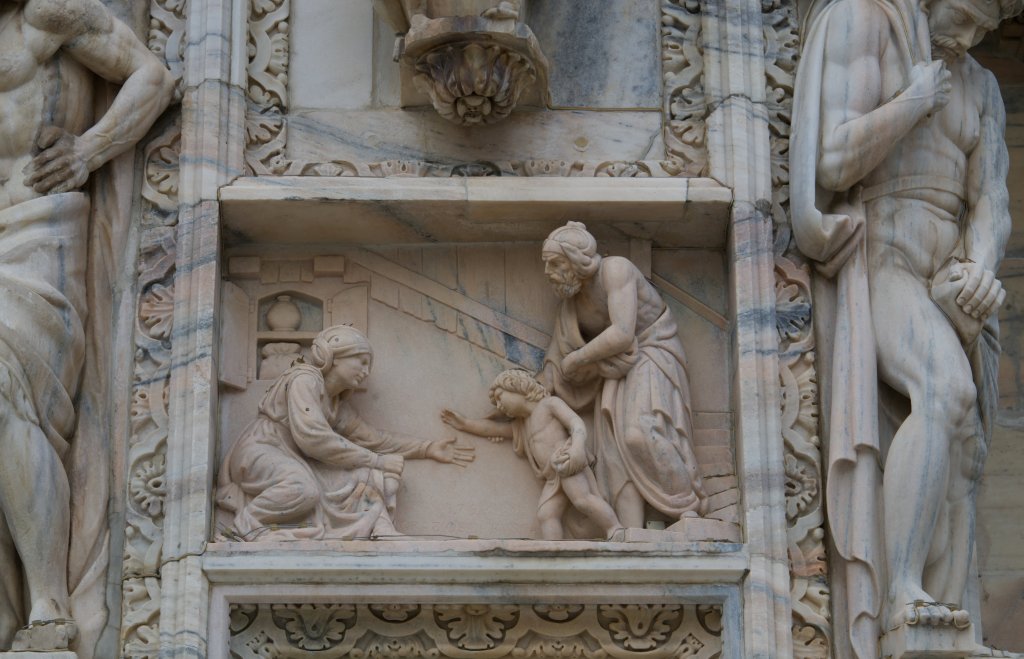
The main façade offers the most immediate introduction to the Duomo’s sculptural character. Its pointed arches and elaborate doorways are surrounded by statues, reliefs and decorative carvings, with figures occupying niches and projecting from the stonework at different heights. Some appear formal and composed, their bodies arranged in traditional religious poses, while others seem to turn towards the square or look down from their elevated positions. The eye moves between them without ever quite settling, discovering another face or carved detail each time the façade is examined. Even at ground level, the number of individual elements makes it difficult to take in the whole building at once.
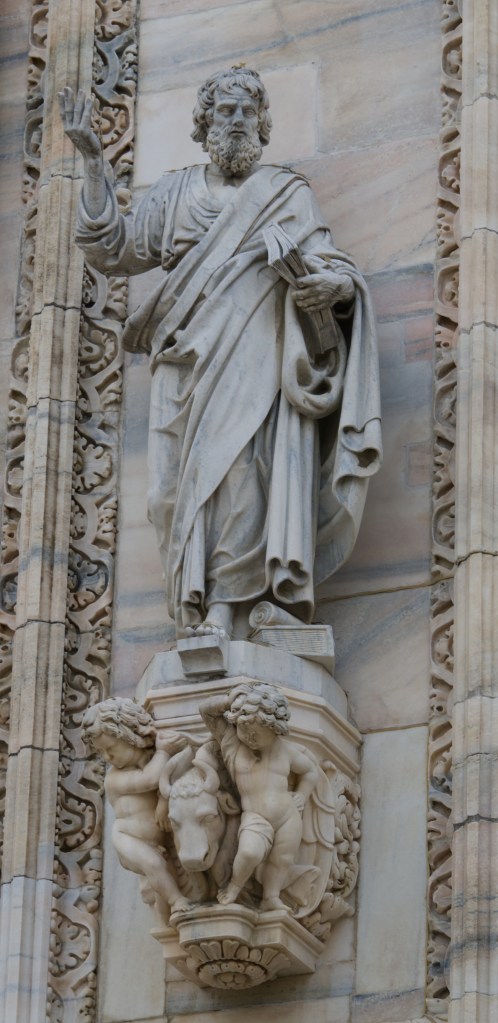
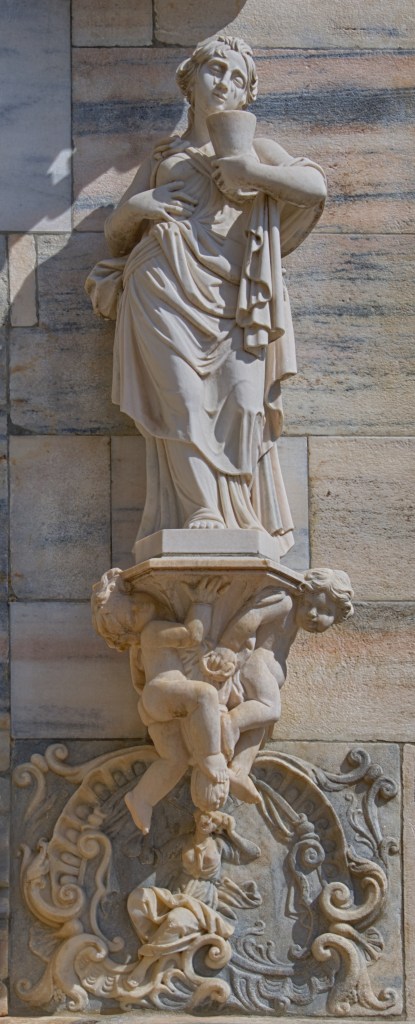
Many of the figures represent saints and other important characters from Christian tradition. Their presence gives the cathedral an identity that extends beyond its physical structure, connecting the stonework to stories of faith, sacrifice, leadership and redemption. In medieval and Renaissance religious art, sculpture served as more than decoration. It helped communicate beliefs and familiar narratives to people for whom the church was a central part of public life, and it gave sacred figures a visible presence within the everyday world. Although the Duomo developed over a much longer period than a single medieval building campaign, its sculptural programme retains this relationship between architecture and religious meaning. The figures are placed where people can encounter them, whether approaching the great doors or looking upwards towards the towers and pinnacles.
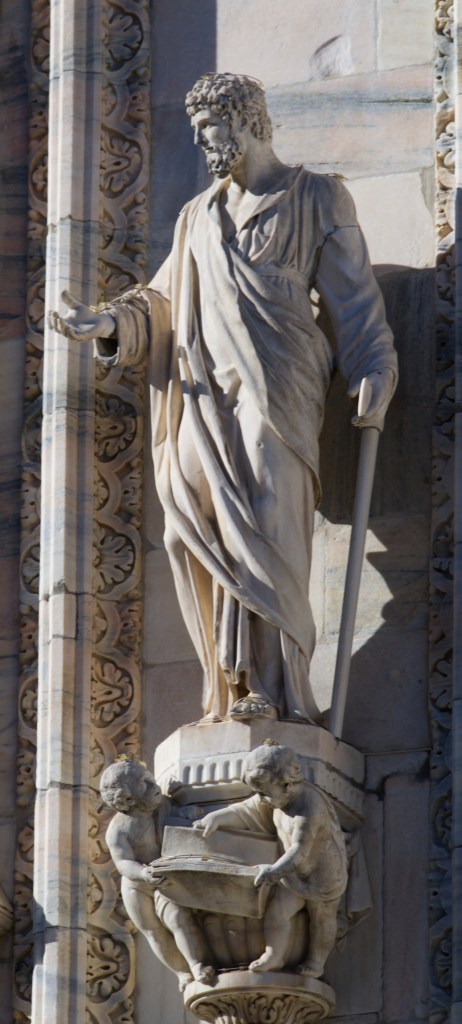
The cathedral’s marble also allows the sculptors’ skill to become part of the experience. Faces, folds of clothing, curls of hair and the edges of garments are carefully defined, even where distance makes the smallest details difficult to see from the square. The stone can appear almost soft in the hands of a skilled carver, taking on the impression of fabric or flesh despite its permanence and weight. Close to the façade, the individual marks of craftsmanship become easier to appreciate, while from farther away the same details merge into a continuous field of light and shadow. The cathedral therefore offers two different experiences at once: the overwhelming effect of the whole and the quieter discovery of the individual figures that make it possible.
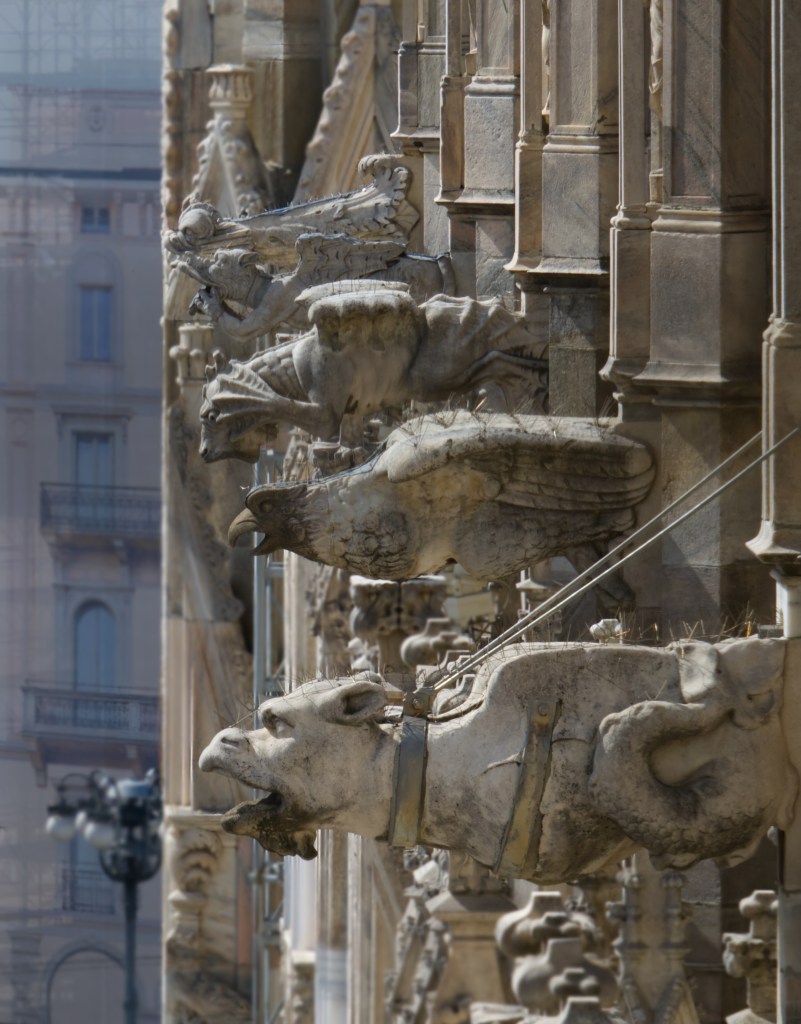
Among the most intriguing sculptures on the Duomo are its gargoyles, those projecting stone creatures that seem to emerge from the walls and ledges. Some have elongated bodies and exaggerated features; others resemble animals, fantastical beasts or beings that are difficult to place in any familiar category. Their expressions can be fierce, comic or simply strange, and their positions make them appear to be watching the city from the edges of the cathedral. Unlike the solemn saints and biblical figures, these creatures introduce a more unpredictable character into the building’s decoration, adding an element of fantasy to the carefully ordered world of Gothic architecture.
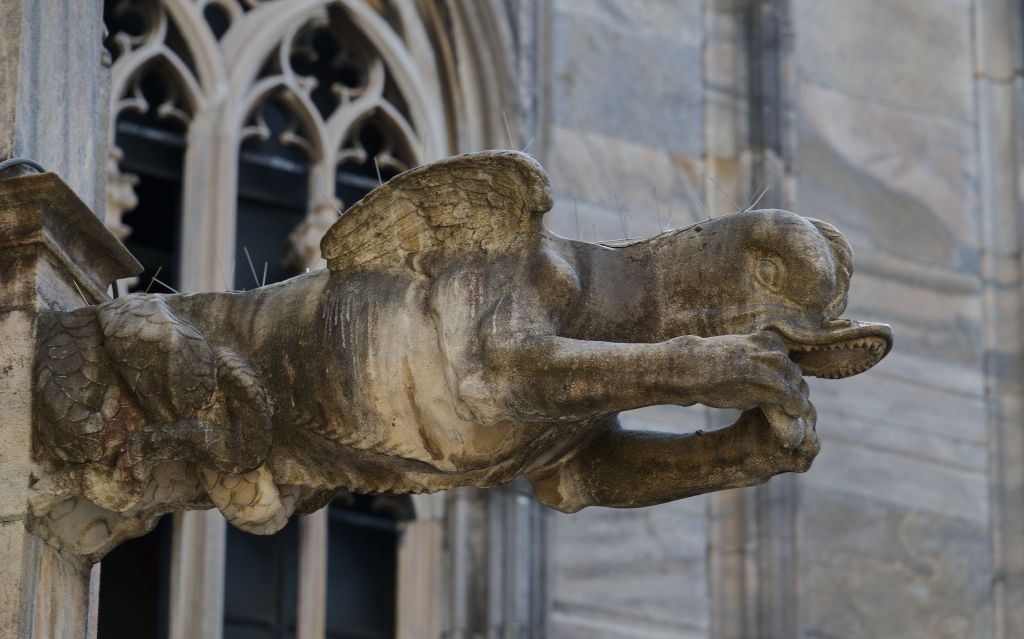
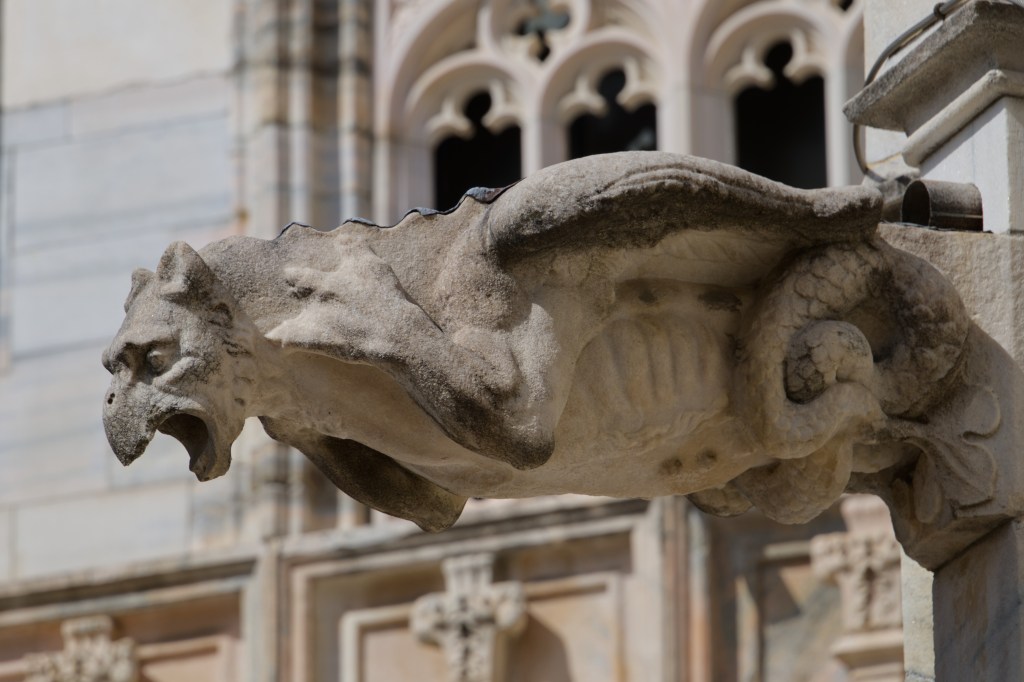
The word gargoyle has a practical meaning as well as an artistic one. A true gargoyle is designed to carry rainwater away from a building, directing it through a projecting spout so that water does not run directly down the masonry. Over time, the term has also become associated more broadly with grotesque creatures carved onto churches and other historic buildings. The distinction matters at the Duomo, where the rooftop contains both functional water spouts and an abundance of other sculptural forms. Not every frightening face or fantastic animal is necessarily a gargoyle in the strict architectural sense, even when it looks the part. The cathedral’s official figures include approximately 150 gargoyles among its thousands of statues and decorative elements.
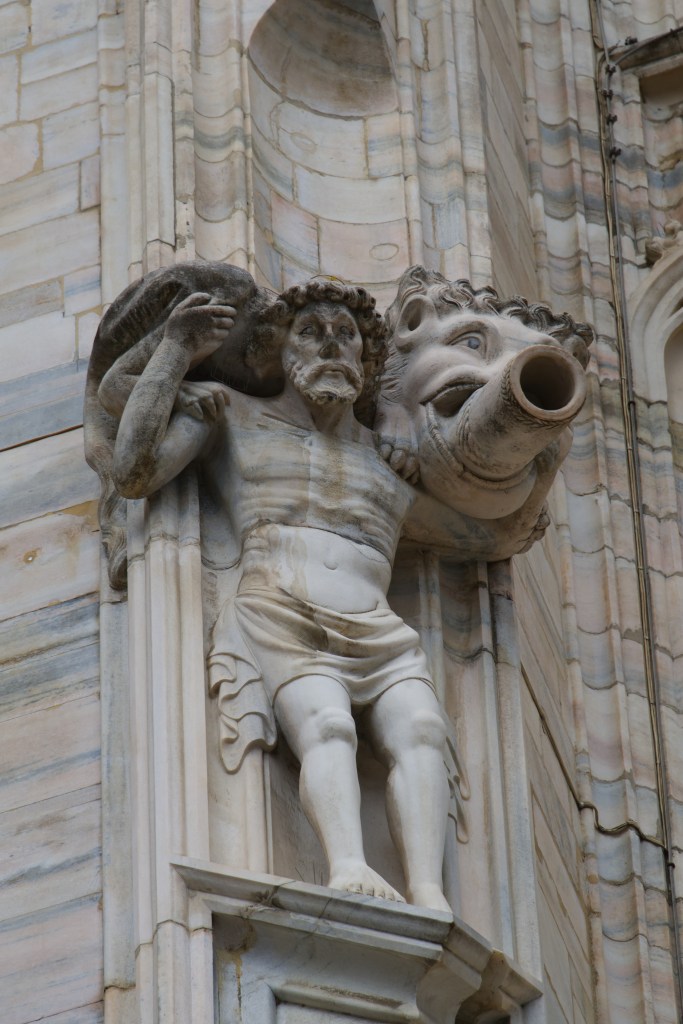
Their practical purpose does not diminish their visual appeal. The projecting forms create strong silhouettes against the sky, while the open mouths and extended bodies make the creatures seem caught in the act of movement. Water flowing through a stone beast’s mouth adds a final, functional dimension to the sculpture, linking the artistry to the demands of protecting the building. Over centuries, rain, wind and changing temperatures have weathered the marble, softening some edges and altering the surface of the stone. These signs of age contribute to the creatures’ character, although the cathedral’s continuing restoration work is essential to preserving the details and structural integrity of the sculptures.
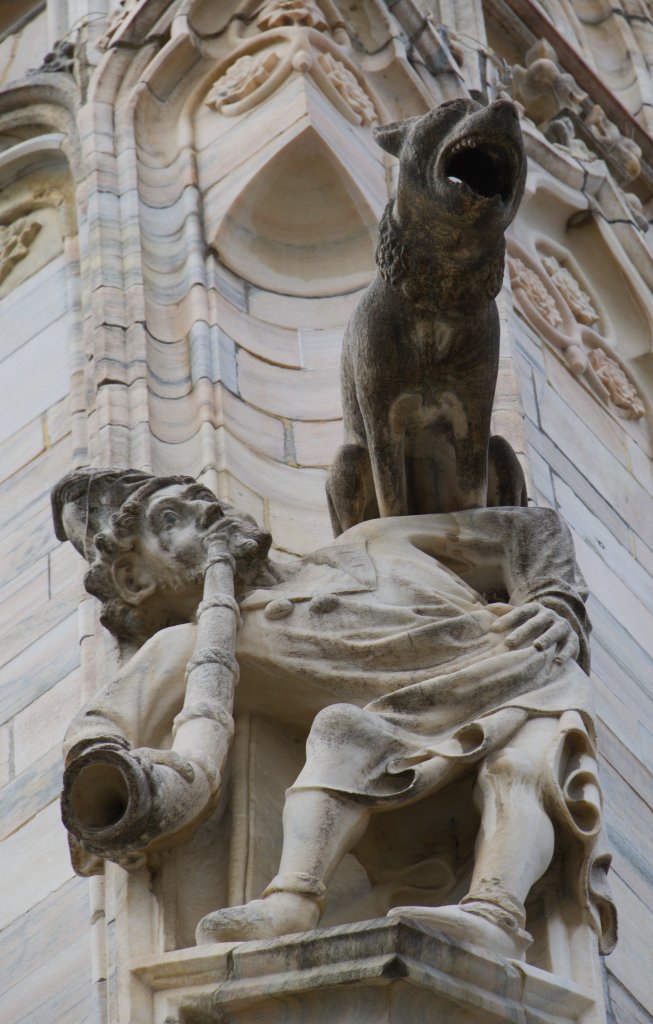
The origins and meanings of individual gargoyle designs should not be treated as a single, settled code. Across European Gothic architecture, fantastic creatures have been interpreted in many ways: as warnings, as reminders of the struggle between good and evil, as expressions of the mysterious world beyond ordinary experience, or simply as opportunities for sculptors to exercise their imagination. Water drainage is the clearest practical explanation for the true gargoyles, while the symbolism of particular figures depends on their context and documented history. At the Duomo, the variety of forms invites speculation, but not every creature has a confirmed story attached to it. Their lasting appeal lies partly in this uncertainty, allowing the imagination to engage with the stone without needing to assign a precise meaning to every face.
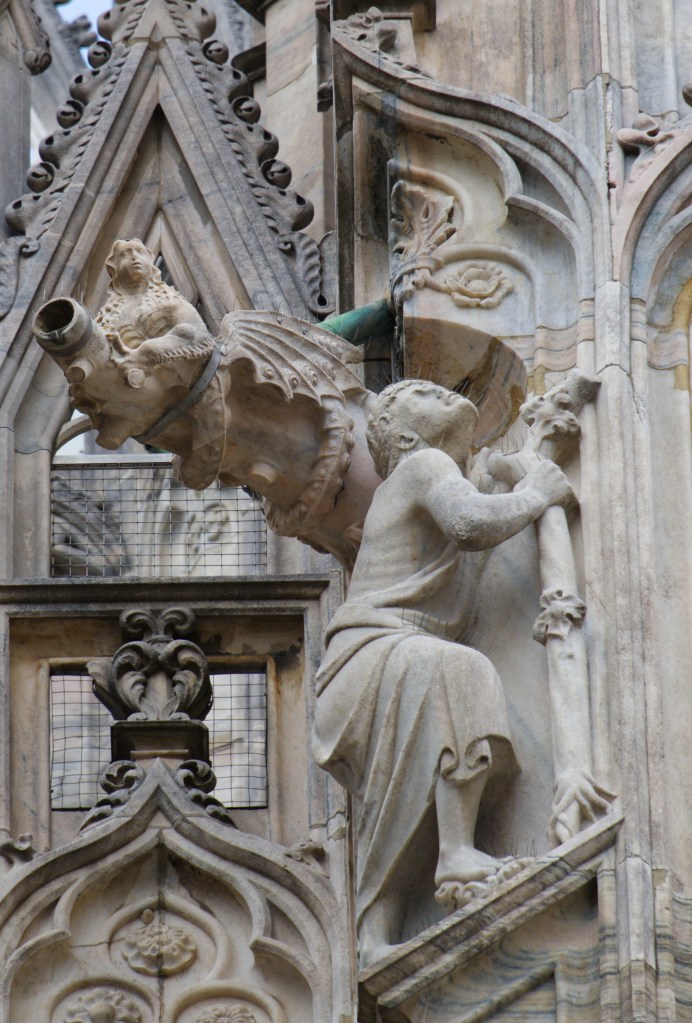
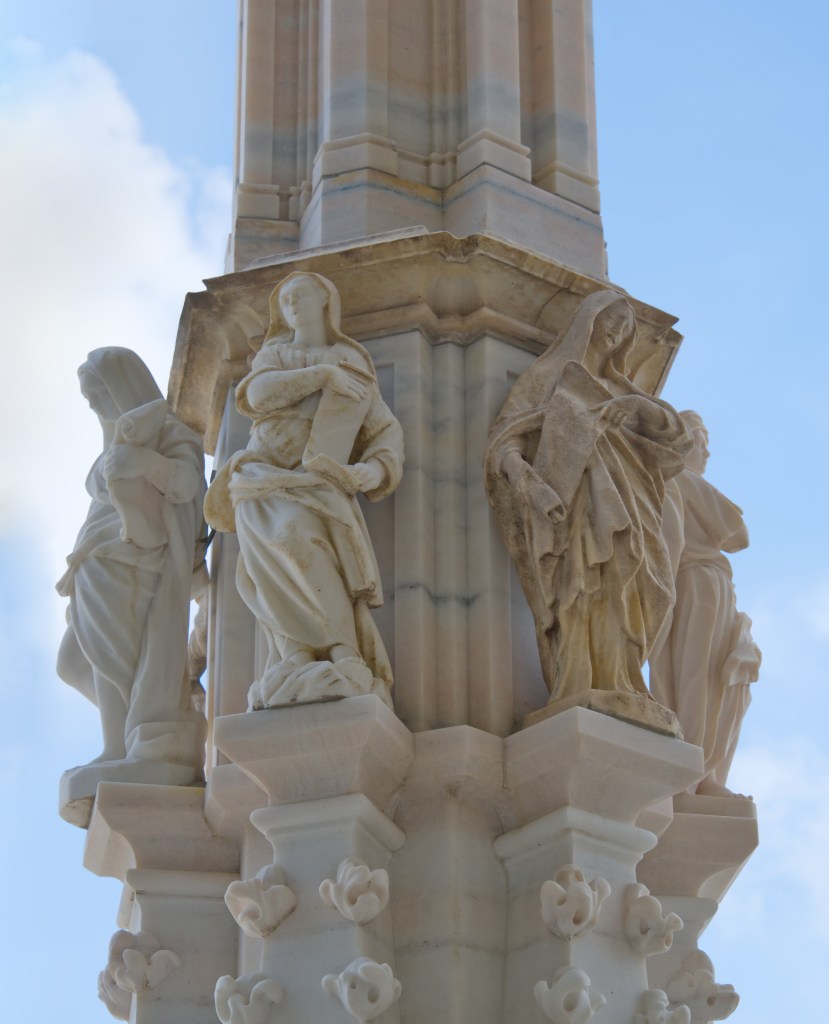
Above the main body of the cathedral rises a remarkable forest of spires, each drawing the eye towards the sky. The Duomo has 135 richly ornamented spires, many approximately seventeen metres tall, with statues and decorative details appearing at their upper levels. Their repeated vertical lines create the cathedral’s distinctive skyline, but closer inspection reveals that no single view captures the full range of their decoration. Some are topped by figures that stand clearly against the open sky, while others appear amid layers of pinnacles, arches and carved stone. The effect is less like a simple roofline than a crowded landscape populated by silent witnesses.
The spires also reveal the way sculpture and structure work together. Gothic architecture draws the eye upwards through pointed forms, narrow vertical lines and the interplay of solid stone with open space. Statues placed high above the roof extend that movement, giving the architecture a human and symbolic presence. The figures may be difficult to identify from the ground, yet their positions are important to the overall composition. They break up the geometry of the building and turn its upper reaches into a sequence of individual landmarks.
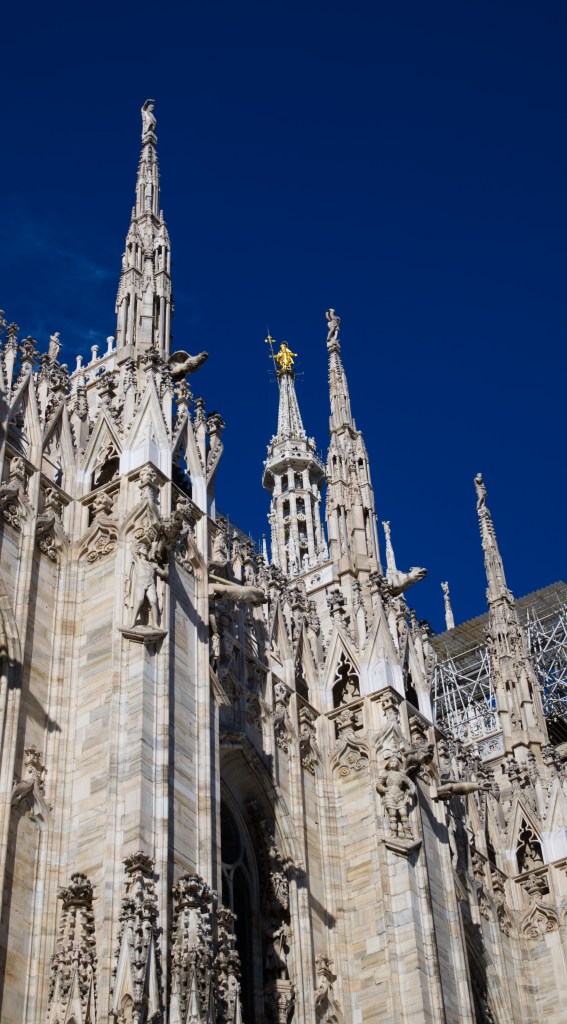
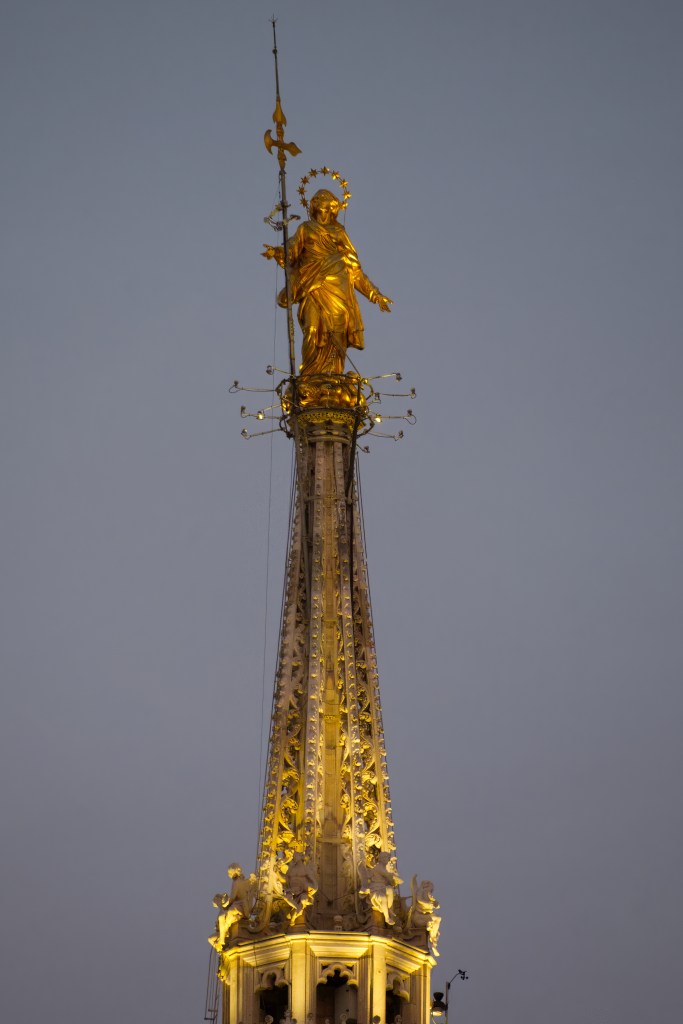
The most famous figure above Milan is the Madonnina, the gilded statue of the Virgin Mary that crowns the main spire. Made from copper sheets covered in gold, she was placed in position in 1774, becoming one of the city’s most cherished symbols. Standing above the dense collection of pinnacles and statues, she provides a focal point for the entire composition. The smaller figures and decorative details seem to gather beneath her, drawing the eye towards the golden form at the summit. Her presence also connects the cathedral’s enormous sculptural collection to a central religious image, bringing the many individual elements together beneath a single figure.
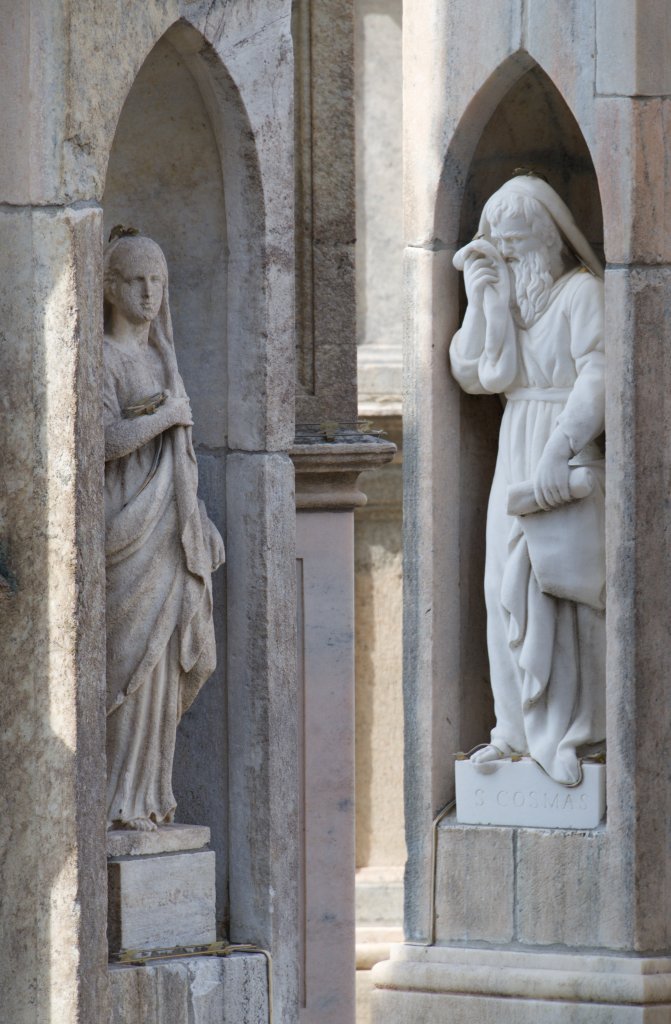
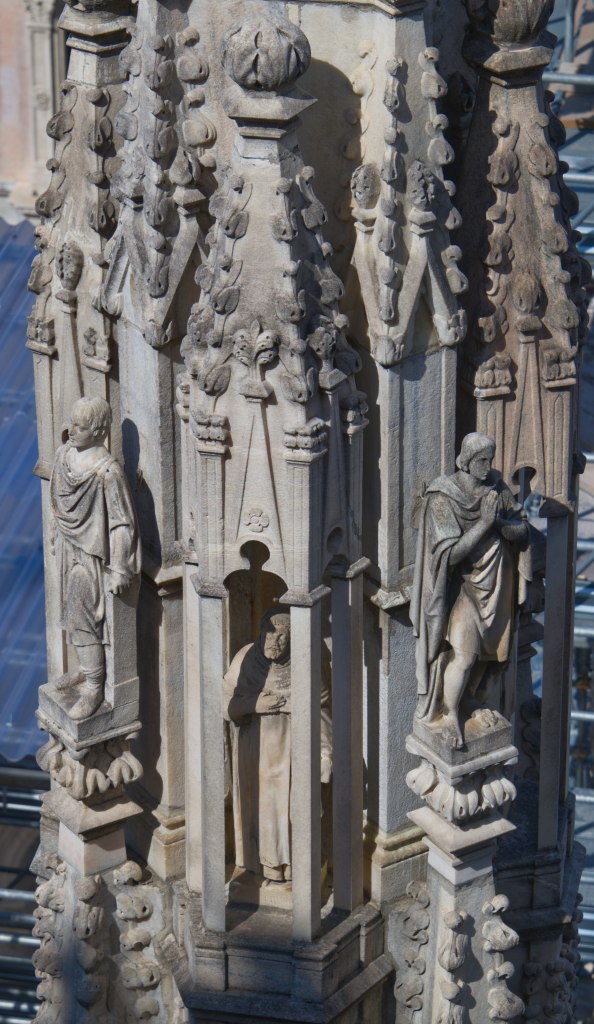
The Madonnina is not the only figure with a distinctive history. The cathedral’s statues have been created, replaced, repaired and restored across different periods, and the roof contains evidence of that continuing work. Some sculptures have survived for centuries, while others have been replaced as weathering or structural concerns required intervention. The Duomo Museum preserves original works and other objects associated with the cathedral, allowing visitors to examine sculpture at closer range than is possible when the figures remain high on the building. What appears from the Piazza to be a single, unified design is therefore also a record of ongoing maintenance, changing artistic tastes and generations of skilled workers.
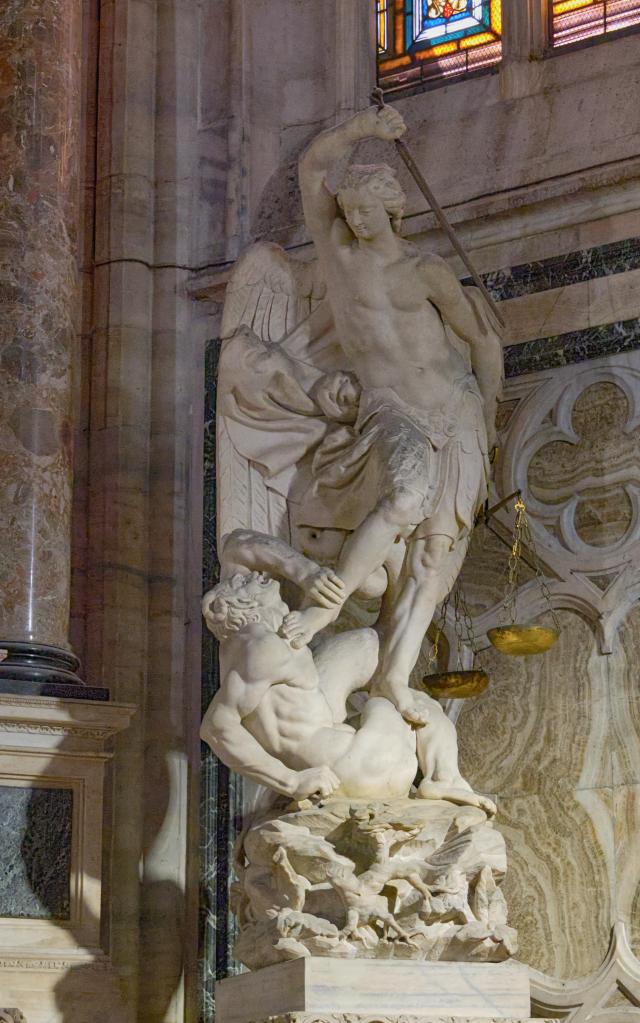
Stepping inside the Duomo changes the relationship between the visitor and the sculpture. Outside, the figures occupy a broad architectural landscape, often viewed against the sky or from a considerable distance. Inside, they stand within the vast spaces between columns, beneath soaring vaults and alongside altars, where the atmosphere is quieter and the light more subdued. The immense pillars draw the eye upwards, but their capitals and surrounding spaces also reward closer attention. Statues appear in niches and along architectural features, linking the vertical structure of the interior with the human figures that populate it.
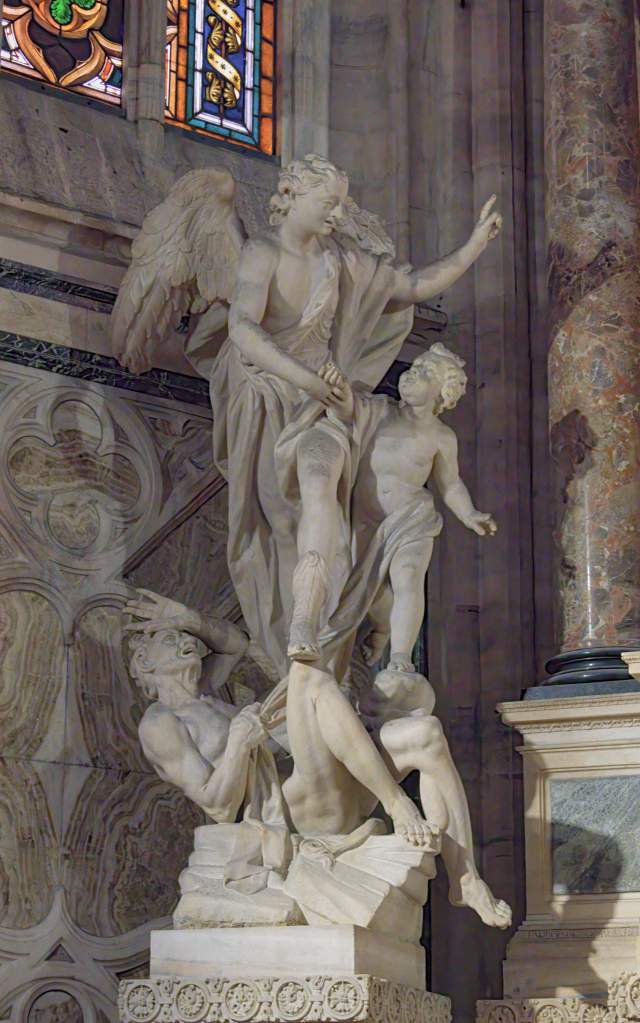
The interior’s sculptures range from devotional images to elaborate works that explore the human body with striking realism. Religious figures are presented in many forms: some are calm and contemplative, others show grief, suffering or spiritual resolve. Their gestures and expressions create a more intimate encounter than the distant figures on the exterior, encouraging the visitor to pause and consider each work individually. The building’s scale can initially make these sculptures seem like small details within an enormous space, but the closer they are examined, the more clearly their individual character emerges.
One of the most memorable works is Marco d’Agrate’s statue of Saint Bartholomew, completed in 1562. The apostle, traditionally associated with martyrdom by flaying, is depicted with his skin draped over his shoulders like a garment. The treatment of the body is strikingly anatomical, with the figure’s muscles and physical structure exposed in a way that makes the sculpture both powerful and unsettling. The skin is rendered as an object that can be worn, rather than as the surface of the body, creating a visual contrast between the saint’s living form and the suffering that defines his story. It is a work that can be difficult to forget, not because it relies on grandeur, but because of the directness with which it confronts the physical consequences of martyrdom.
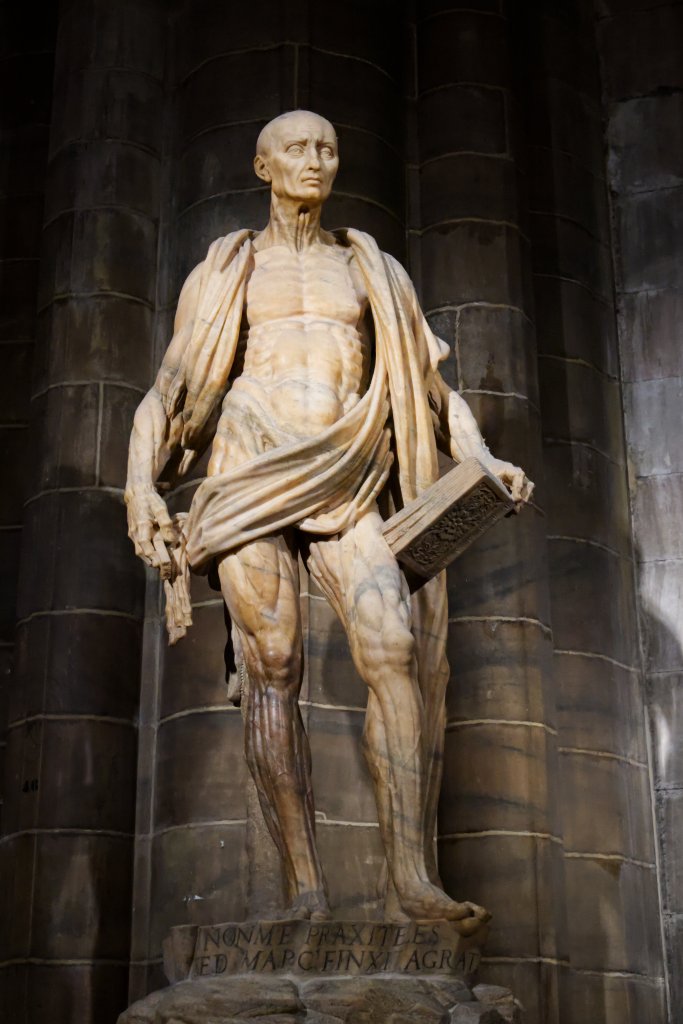
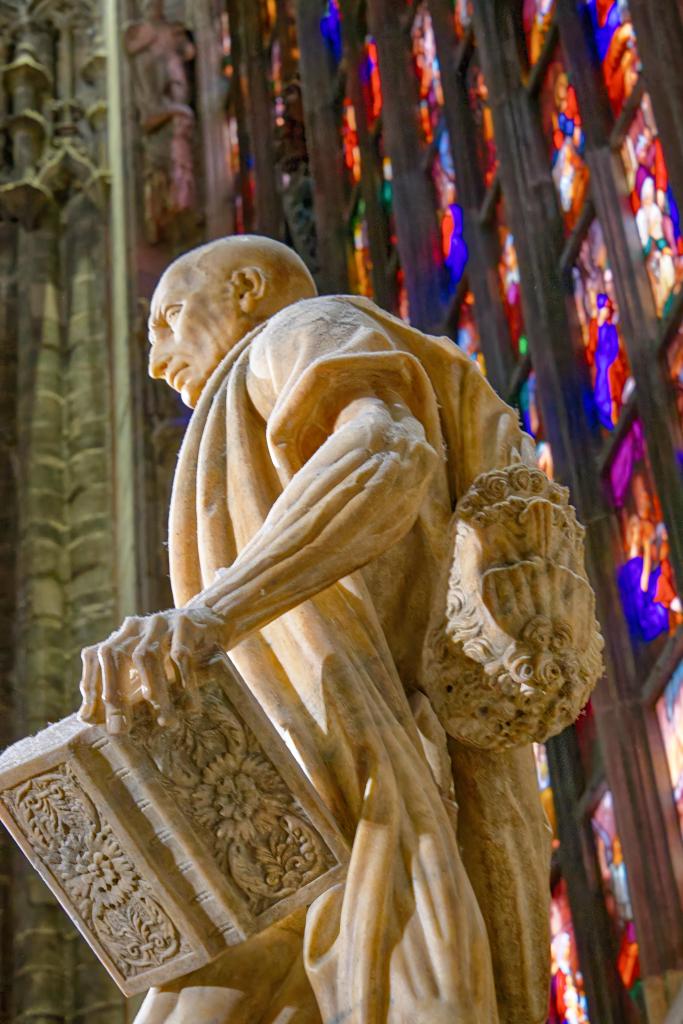
Saint Bartholomew also demonstrates the different ways religious sculpture can communicate. Many statues present holiness through serene expressions, idealised features or gestures of blessing. Here, the artist instead draws attention to the body and its vulnerability. The result is a figure that seems to stand between the spiritual meaning of the story and the physical reality of suffering. The sculpture’s impact depends on its detail, but also on the stillness of the figure and the way the skin falls across the shoulders. It is a reminder that the cathedral’s sculpture is not exclusively concerned with beauty in the conventional sense. It can also be dramatic, confronting and deeply human.
Elsewhere, saints and sacred figures are incorporated into altars, monuments and the architecture of the church. Their individual histories vary, and their significance often depends on the place they occupy within the cathedral and the traditions associated with them. Some are intended for prayer and devotion; others form part of larger decorative or commemorative works. Seen together, they create a visual community of figures whose stories connect the cathedral to the wider history of Christianity and to the people who commissioned, made and used these works over the centuries.
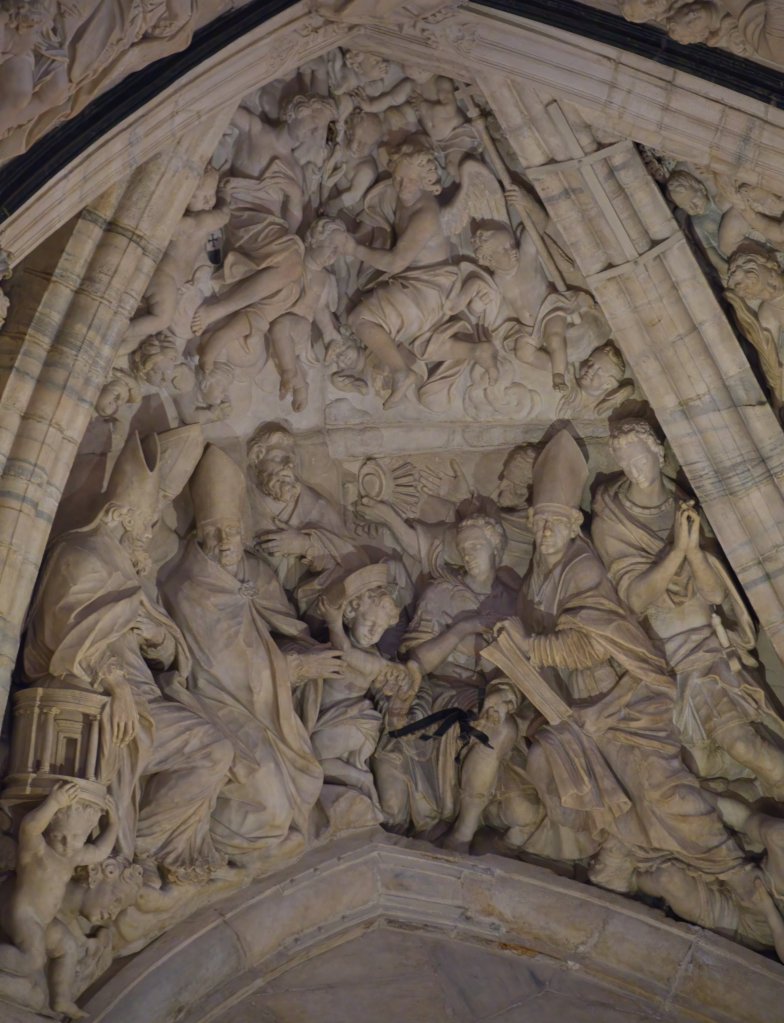
The extraordinary number of sculptures at the Duomo represents an immense undertaking in both design and labour. Each figure began as a concept that had to be translated into stone, with the sculptor considering the shape of the body, the direction of the gaze, the fall of clothing and the way the finished work would appear from its intended position. A statue destined for a high pinnacle had different demands from one placed within easy view at ground level. Its silhouette needed to remain legible at a distance, while the most important details had to survive exposure to the elements. Sculptors were therefore working not only with the material itself, but also with height, light, weather and the architecture surrounding each figure.
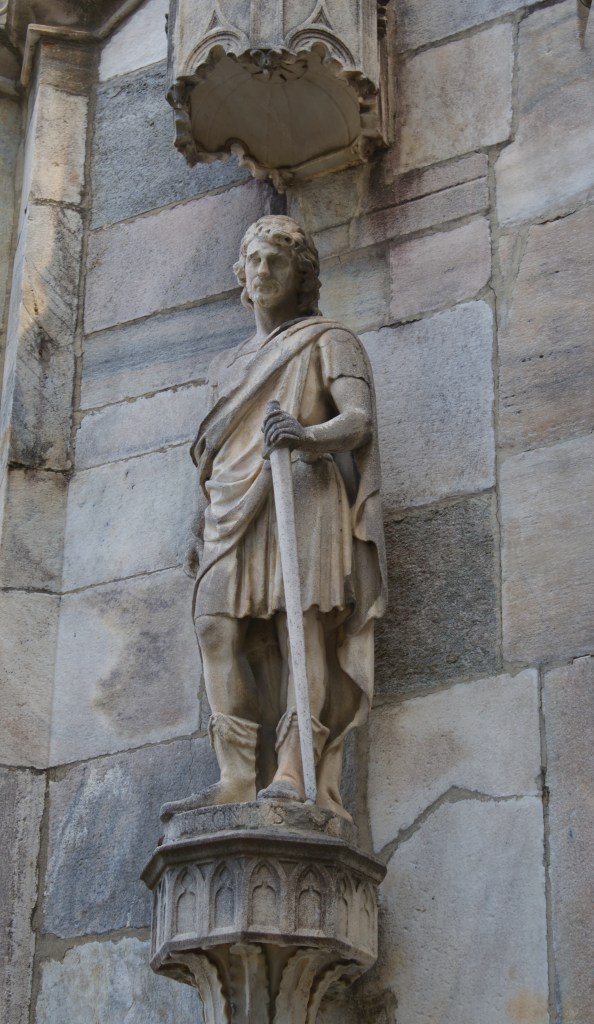
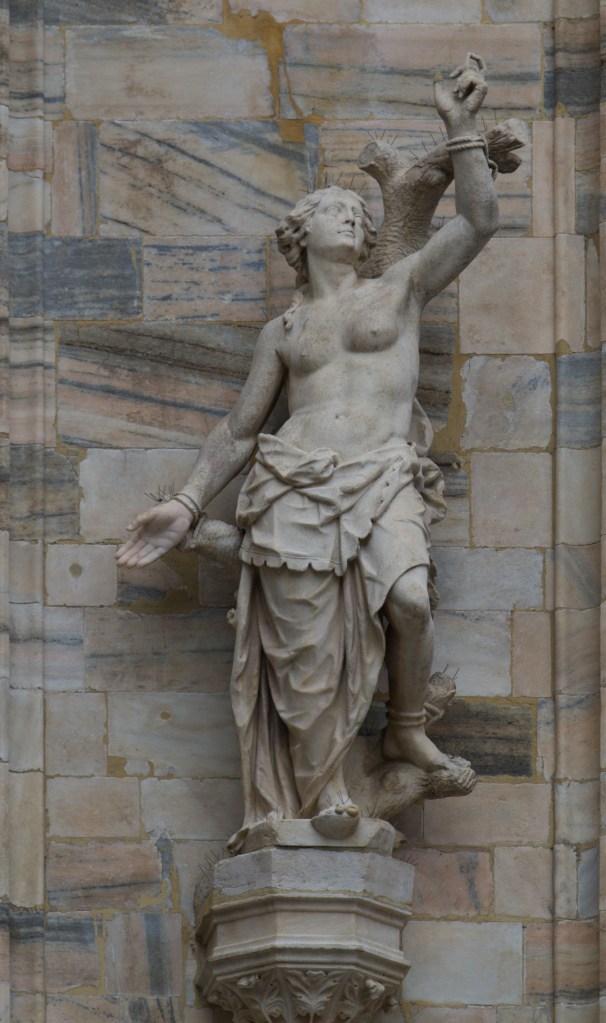
Candoglia marble gives the cathedral much of its visual identity, but working with it required considerable skill. Stone must be removed carefully, since a misplaced cut can damage a form that cannot simply be restored by adding material back. Fine details such as fingers, facial features and folds of fabric demand control and patience, particularly when they must remain durable in an exposed position. Over time, the surfaces can be altered by pollution, moisture and weathering, making conservation a continuing responsibility rather than a task completed once and for all.
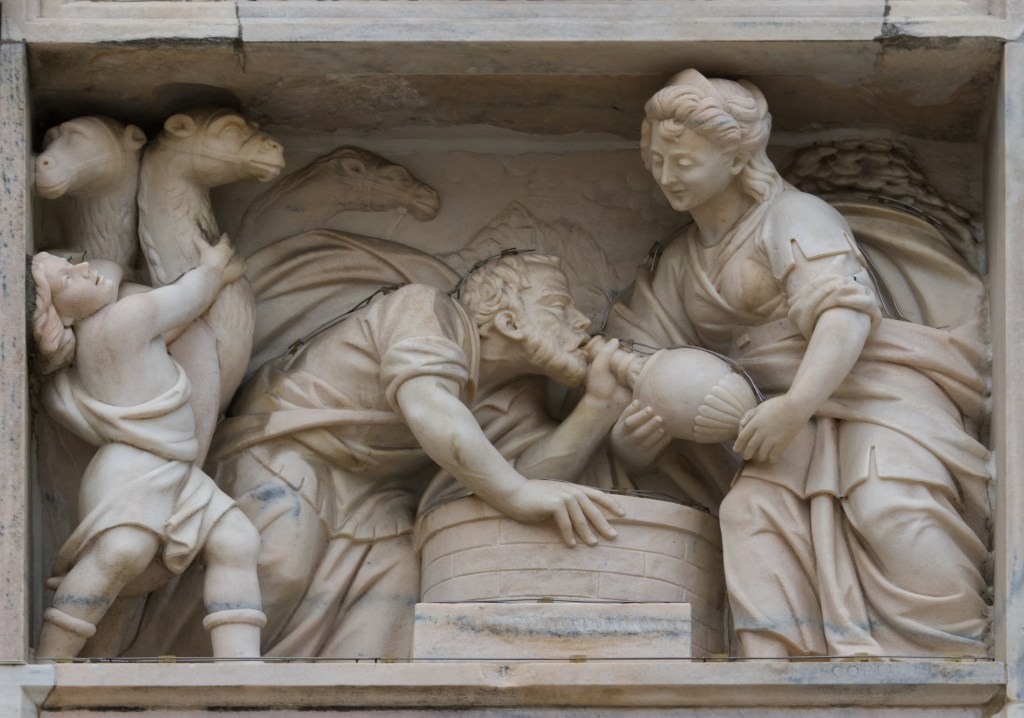
The cathedral’s long construction history means its sculpture is not the product of a single artistic vision. Different generations brought their own approaches, influenced by changing styles and religious expectations. Some works emphasise the elegance and idealised forms associated with earlier traditions, while others show a greater interest in anatomical detail or expressive movement. Rather than weakening the cathedral’s unity, these variations give its sculptural collection depth. The Duomo becomes a record of artistic change, preserved within a building that continued to evolve long after its original foundations were laid.
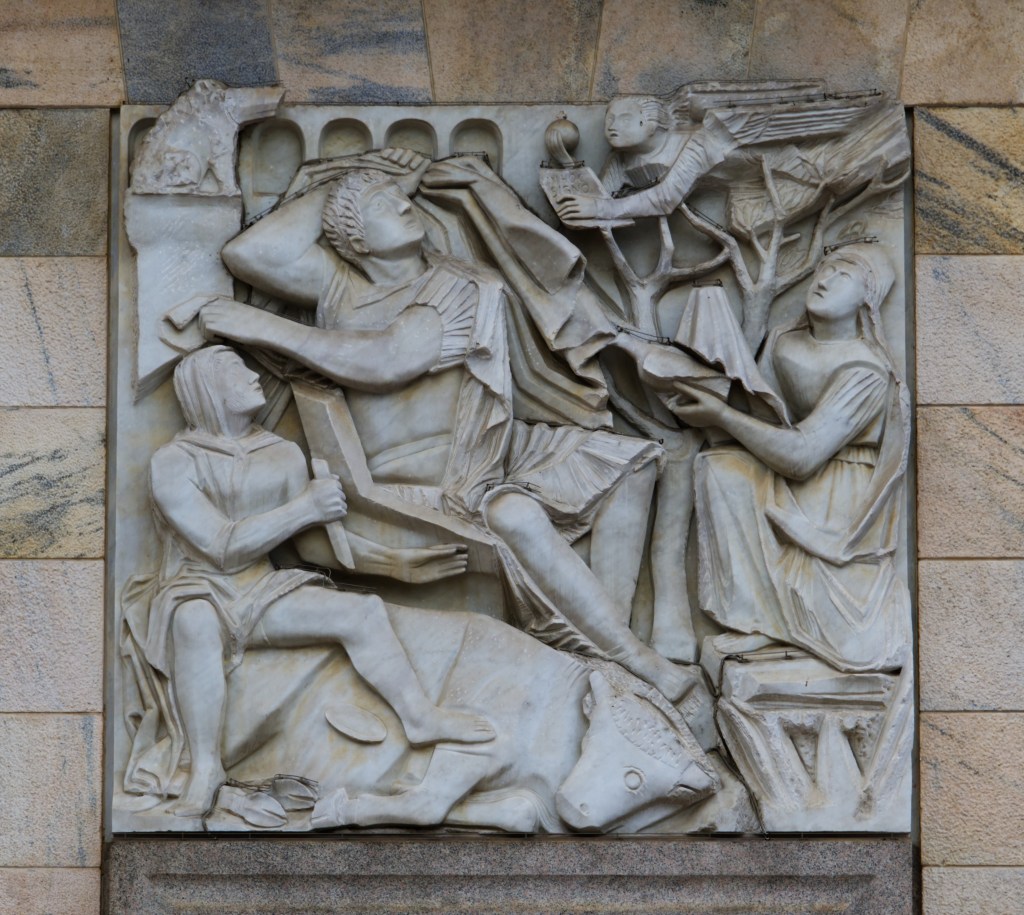
Restoration is an essential part of that story. Sculptures exposed to the elements cannot remain untouched indefinitely, and the removal, repair or replacement of damaged works helps protect both the figures and the architecture they belong to. The Duomo Museum provides another way to encounter this heritage, bringing visitors closer to original sculptures and related works that might otherwise remain far above their heads. The figures on the cathedral are therefore not merely remnants of the past; they are part of a living conservation effort that seeks to preserve their detail and meaning for future generations.
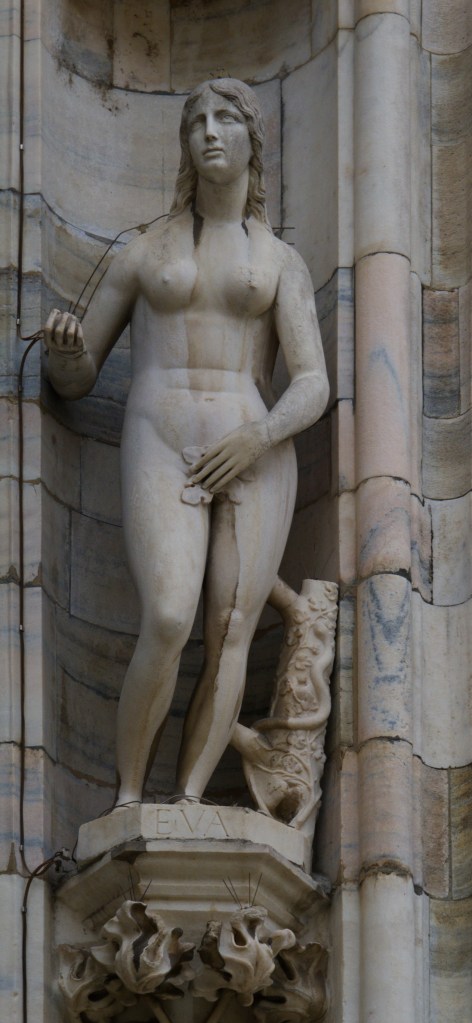
Returning to the Piazza after exploring the Duomo’s sculptures, the façade appears both familiar and newly complex. The spires still rise above the square, and the marble catches the changing light, but the surface now seems populated with individual presences rather than simply covered in decoration. The saints, grotesque creatures and carved figures belong to different artistic moments, yet together they give the building a remarkable continuity. Their expressions and gestures carry traces of the people who imagined them, shaped them and placed them within the cathedral’s vast design.
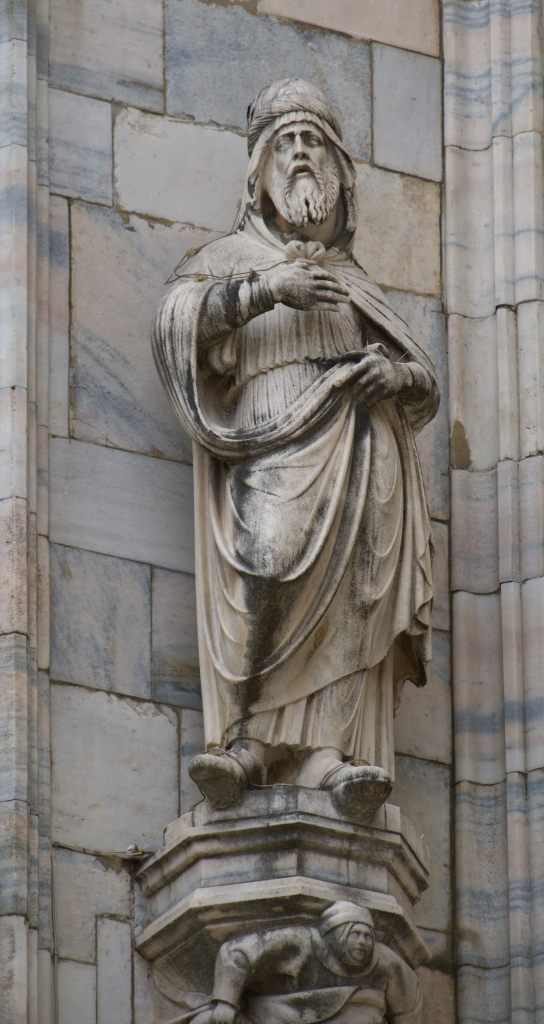
From the grotesque faces of the roofline to the carefully sculpted figures within the cathedral, the Duomo’s stonework reflects centuries of changing artistic tastes and religious traditions. The gargoyles serve a practical purpose, carrying rainwater away from the building, yet their imaginative forms reveal a freedom of expression that contrasts with the solemnity of the saints and biblical figures nearby. Together, these varied works give the cathedral a distinctive character, preserving not only the skill of the sculptors who created them, but also the different ideas and influences that shaped the building across generations.
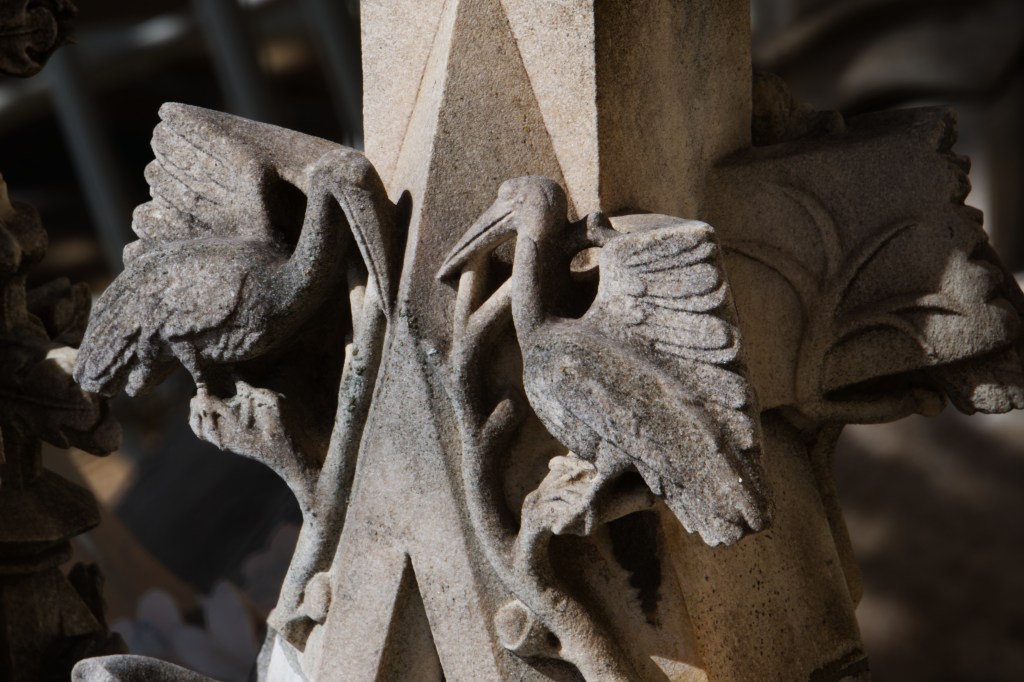
The Duomo’s greatness lies not only in the height of its spires or the breadth of its marble façade, but in the thousands of individual details that reward attention. Some figures are easy to recognise, while others remain mysterious, their identities blurred by distance or the passing centuries. Together they make the cathedral more than a monument to architecture. They turn it into a world of stone where faith, fantasy, craftsmanship and human imagination have endured across generations, quietly watching over Milan as the life of the city continues below.


Leave a Reply