
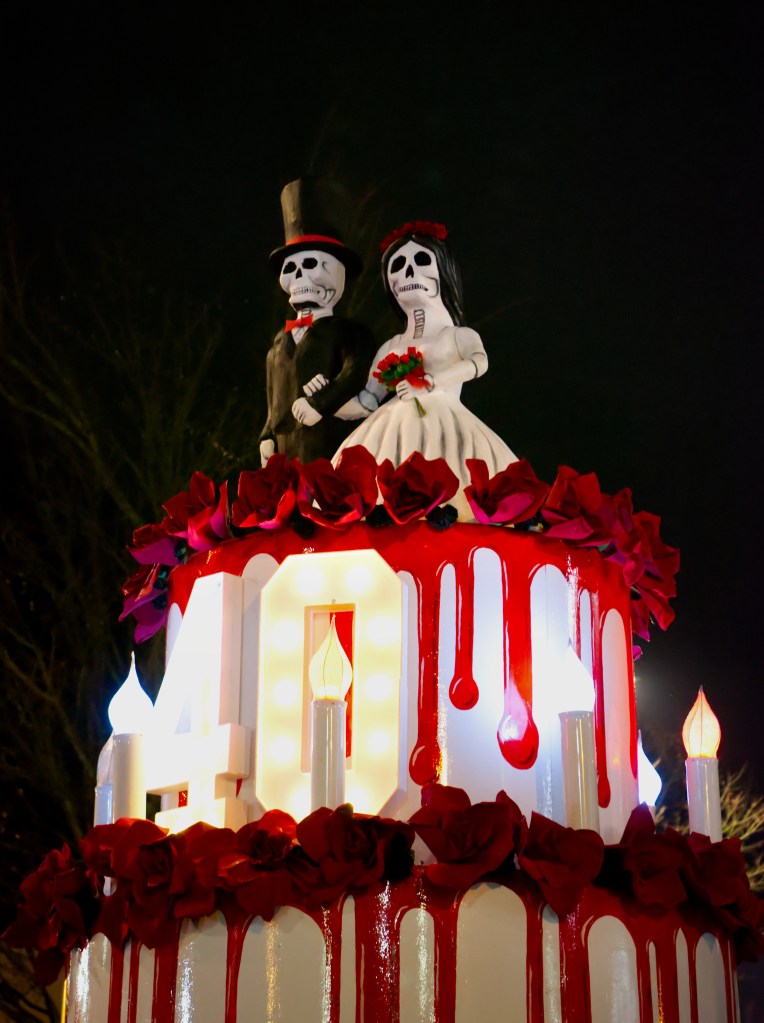
Derry, home of Derry Girls, the setting of one of the most pivotal chapters in the Troubles, and arguably the home of Halloween, is a city with a rather extraordinary claim to fame. Every October, its historic streets become the setting for one of Europe’s largest Halloween celebrations, drawing thousands of visitors to experience a festival filled with ancient folklore, enormous mythical creatures, elaborate costumes, music and a spectacular carnival parade. For several days, the ordinary character of the city gives way to something altogether different, as Derry embraces its supernatural heritage and welcomes the arrival of Halloween.
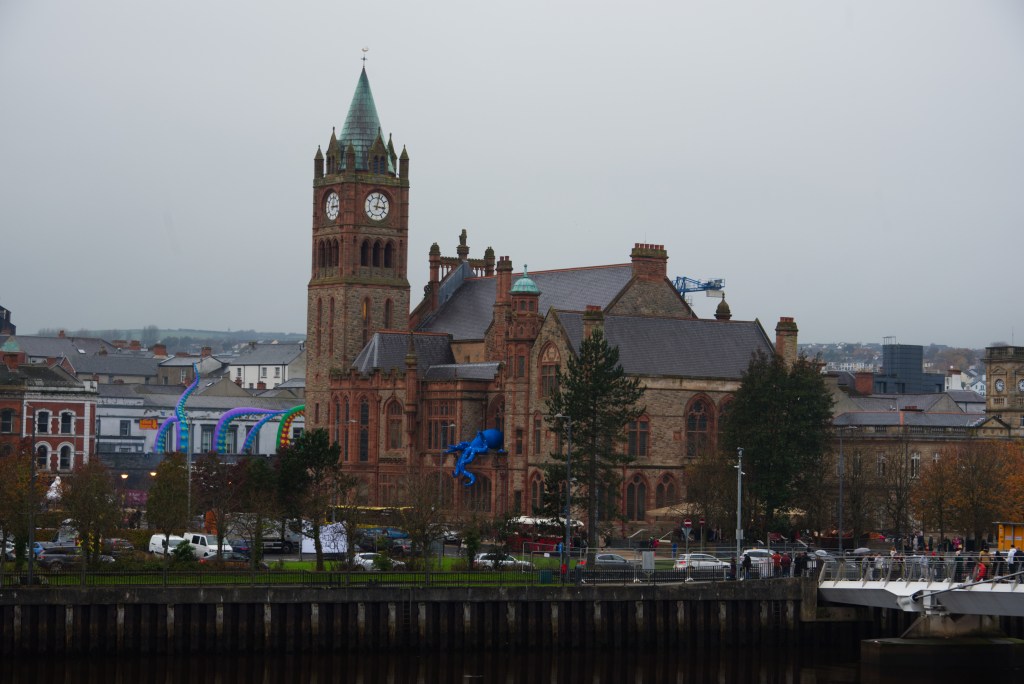
There is perhaps nowhere more appropriate for such a celebration. Ireland has a particularly deep connection to the origins of Halloween, with traditions stretching back thousands of years to a time when the changing seasons, the harvest and the spirit world were closely intertwined. In Derry, those ancient customs have found a modern expression, bringing together folklore, imagination and a rather impressive appetite for a good celebration.
Long before Halloween became associated with carved pumpkins, children knocking on doors and elaborate fancy dress, the people of ancient Ireland observed a festival known as Samhain, pronounced sow-in. Celebrated around 31 October, it marked the end of the harvest and the beginning of winter, traditionally regarded as the start of the darker half of the year.
For the ancient Celts, the changing seasons were more than a shift in the weather. They were an important part of the agricultural and spiritual calendar, marking the transition between the abundance of summer and the uncertainty of winter. Livestock was brought in from the fields, crops were gathered and communities prepared for the colder months ahead.
Samhain was also surrounded by stories of the supernatural. According to ancient Irish beliefs, the boundary separating the world of the living from the world of spirits became particularly thin at this time of year. It was believed that spirits and otherworldly beings could cross into the human world, making the night both a time of celebration and one requiring a little caution.
Bonfires were lit, gatherings took place and people wore disguises, sometimes believing that concealing their identities would protect them from wandering spirits. Food was prepared and offerings were left, while carved turnips with frightening faces were used as lanterns. These traditions would eventually contribute to the customs that became familiar parts of Halloween.
As Christianity spread through Ireland, older seasonal celebrations gradually became intertwined with Christian observances. All Saints’ Day, celebrated on 1 November, and All Souls’ Day, which followed, became part of the calendar, while the evening before became known as All Hallows’ Eve. Over time, the name shortened to Halloween.
Although the celebrations have travelled far beyond Ireland, changing considerably along the way, the connection to Samhain remains an important part of Irish cultural heritage. It is a connection that Derry has embraced wholeheartedly, turning the ancient association with spirits and the supernatural into a festival that attracts visitors from around the world.
Derry itself provides an atmospheric setting for the celebrations. Its history stretches back to an early Christian settlement associated with St Columba in the sixth century, while its name comes from the Irish word Doire, meaning oak grove.The famous city walls, built between 1613 and 1618, still encircle much of the historic centre, offering views across the rooftops and towards the River Foyle. For a few days, the old streets take on a different character. Buildings and shopfronts become part of the decorations, performers appear throughout the city and the usual distinction between spectator and participant begins to disappear. Halloween is not simply something happening in a designated part of Derry. It seems to find its way into almost every corner.
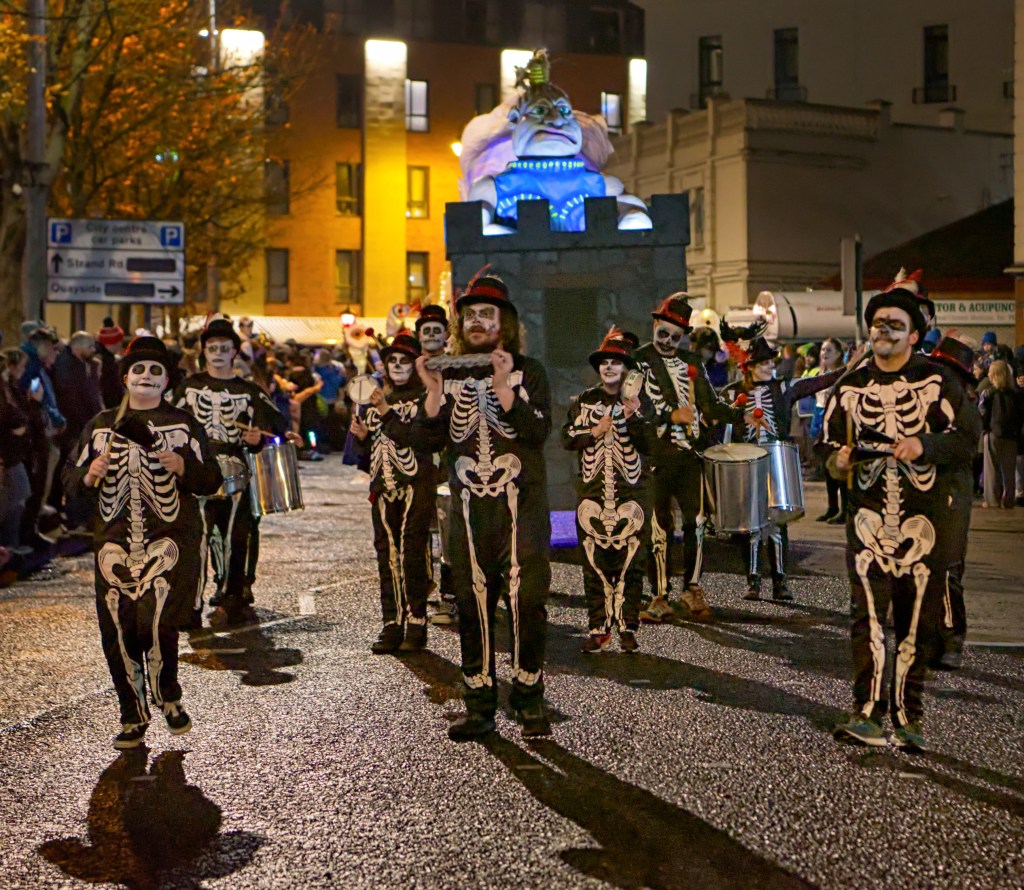
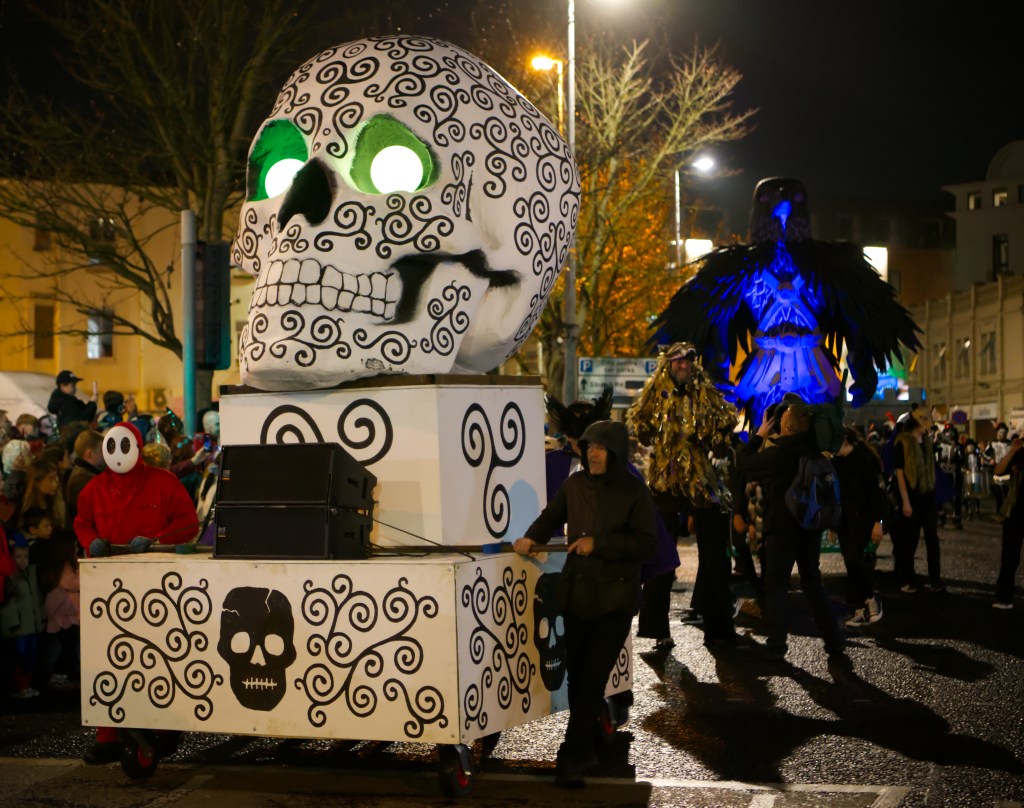
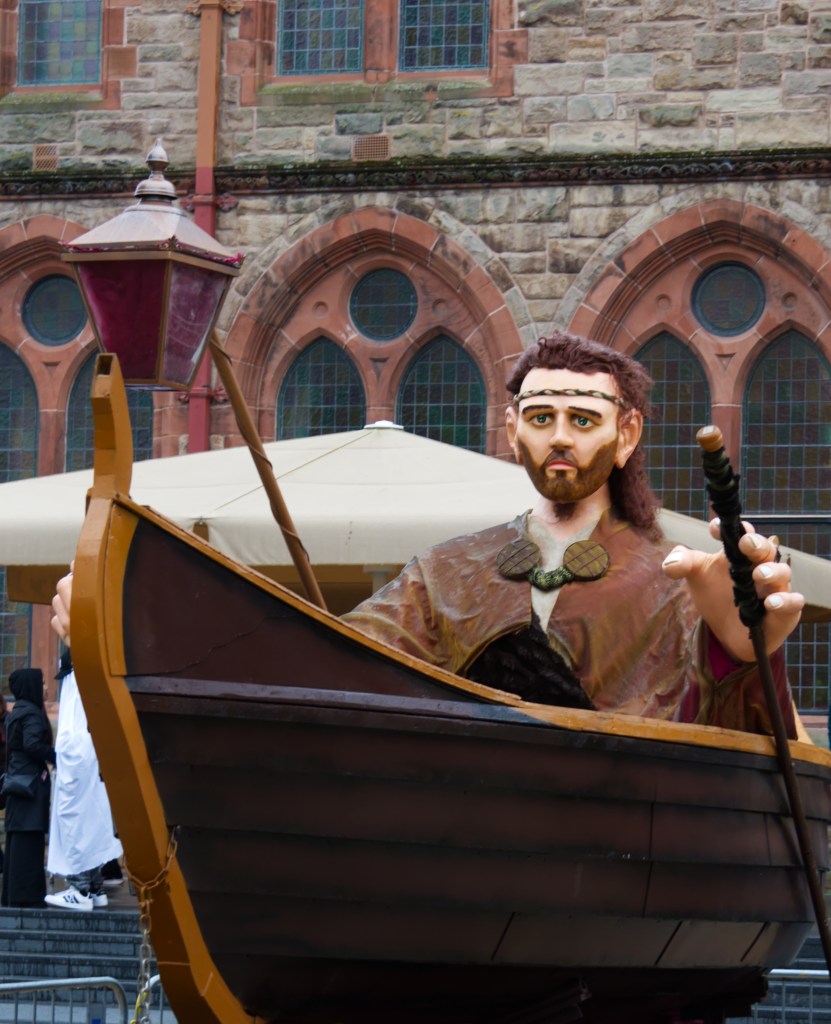
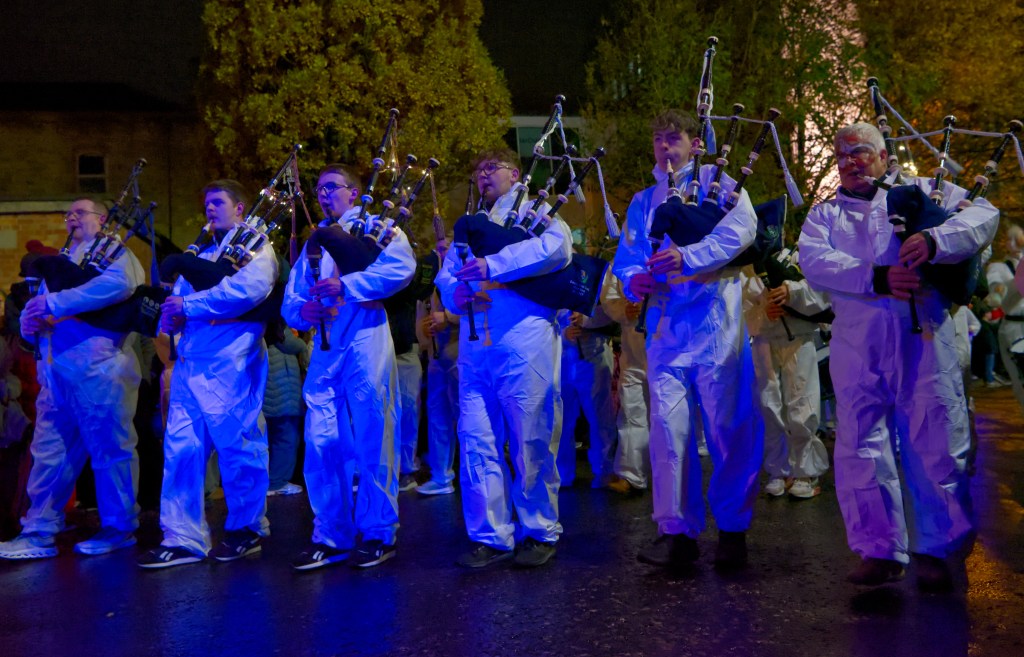
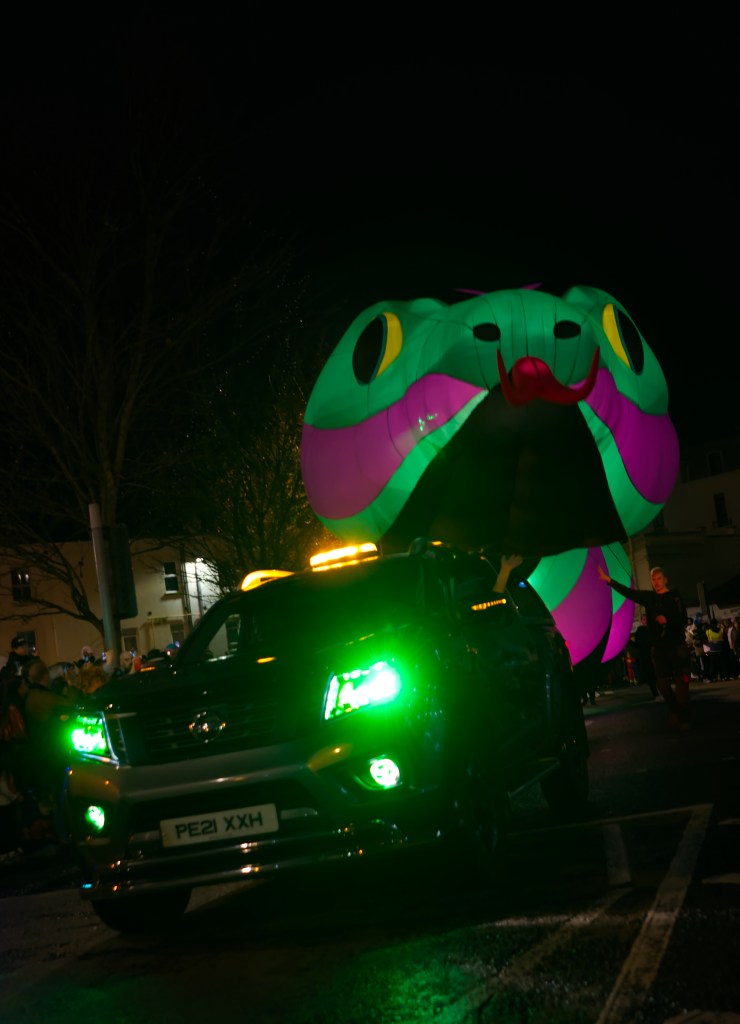
The centrepiece of the celebrations is the Halloween carnival parade, held on the evening of 31 October. This is no ordinary Halloween procession. Enormous illuminated figures, fantastical beasts, strange spirits and extraordinary theatrical creations make their way through the historic streets. Giant puppets tower above the spectators, their movements bringing them to life, while performers in elaborate costumes dance, march and weave their way through the crowds.
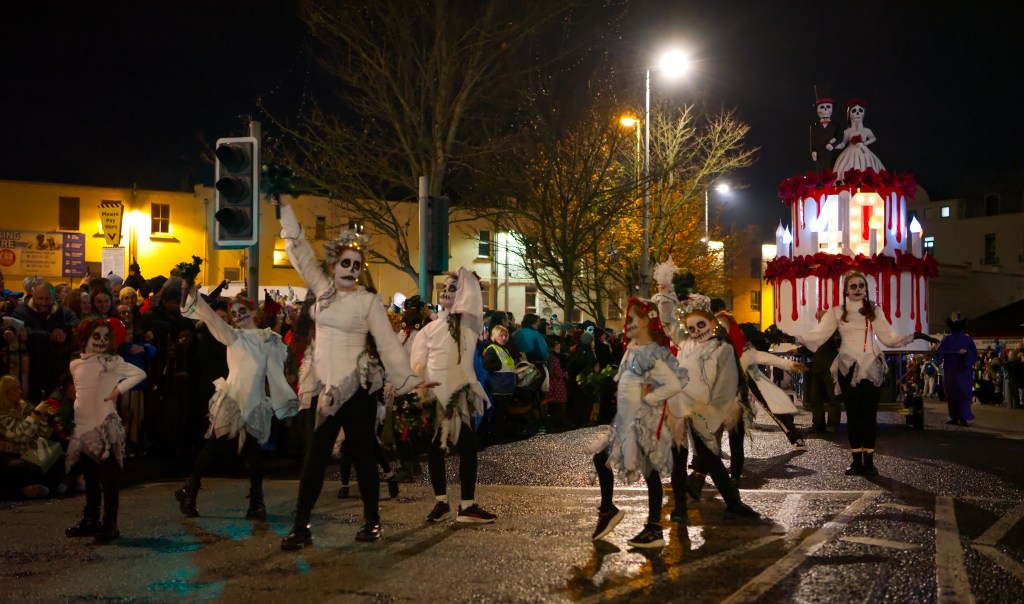
The inspiration comes from Irish folklore, Celtic mythology and the supernatural stories associated with Samhain. Banshees, spirits, ancient creatures and characters from the otherworld all find their place in the procession. Some are wonderfully sinister, with exaggerated faces and unsettling expressions, while others are colourful, playful and almost dreamlike. There is a tremendous amount of imagination involved, and the variety of creations means there is always something unexpected appearing around the next corner.
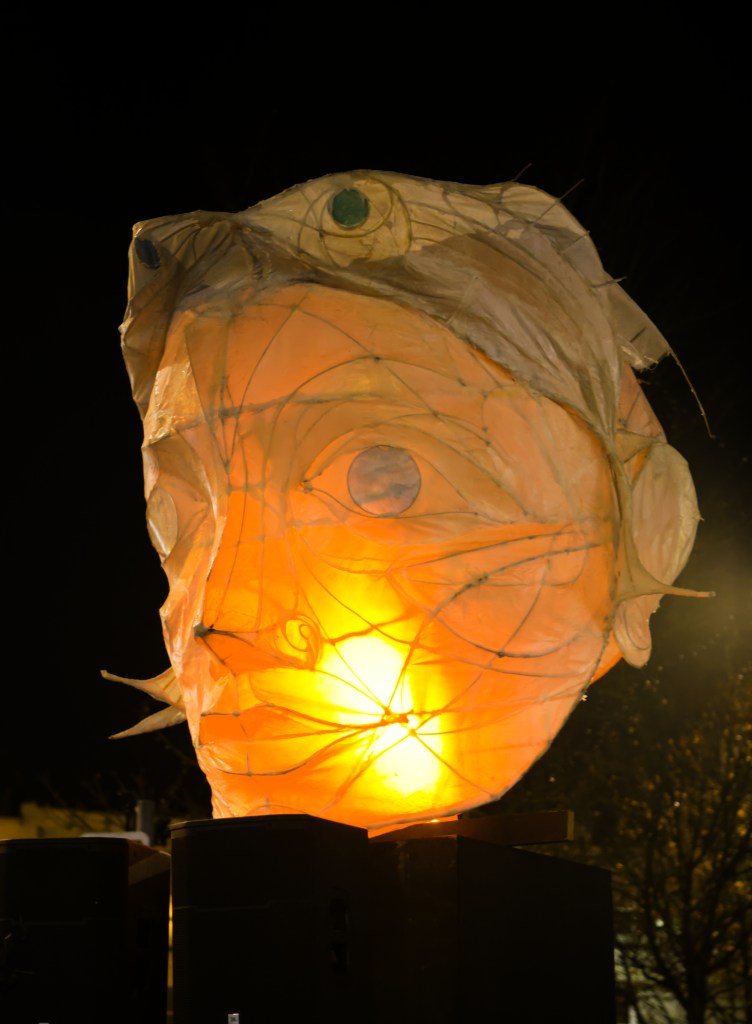
Some of the largest puppets are particularly impressive. Their sheer scale makes them impossible to miss, with towering heads, enormous limbs and elaborate costumes illuminated from within. As they move through the streets, their movements give them an almost living quality. Some sway above the crowds, others turn their heads or open enormous mouths, while performers beneath and around them bring each character to life.
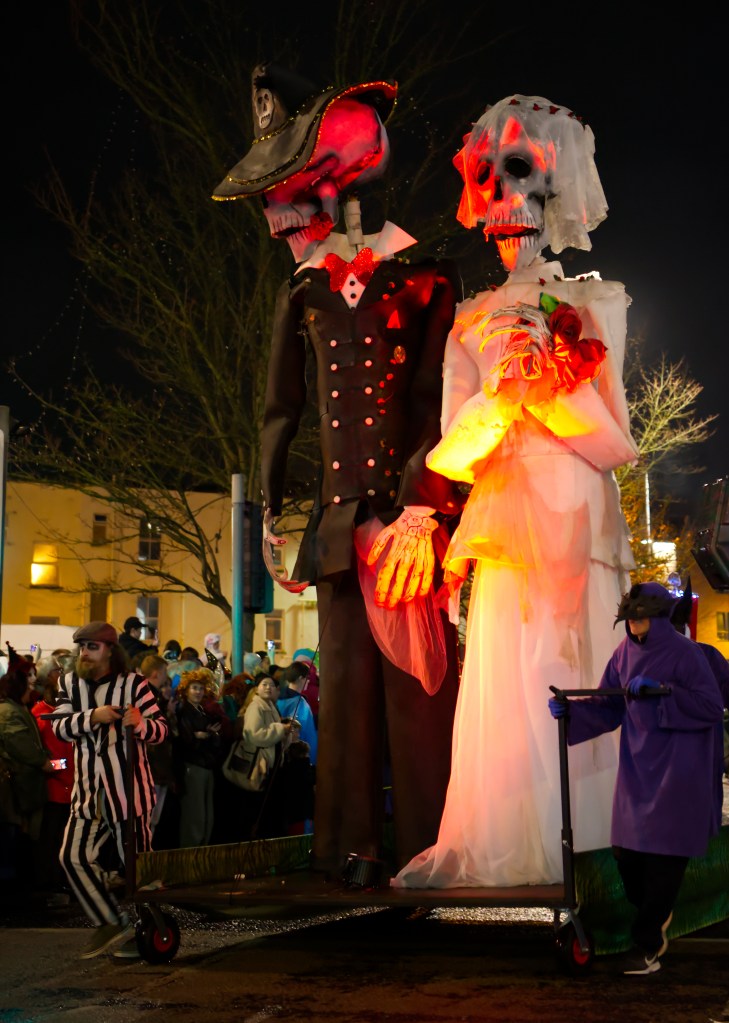
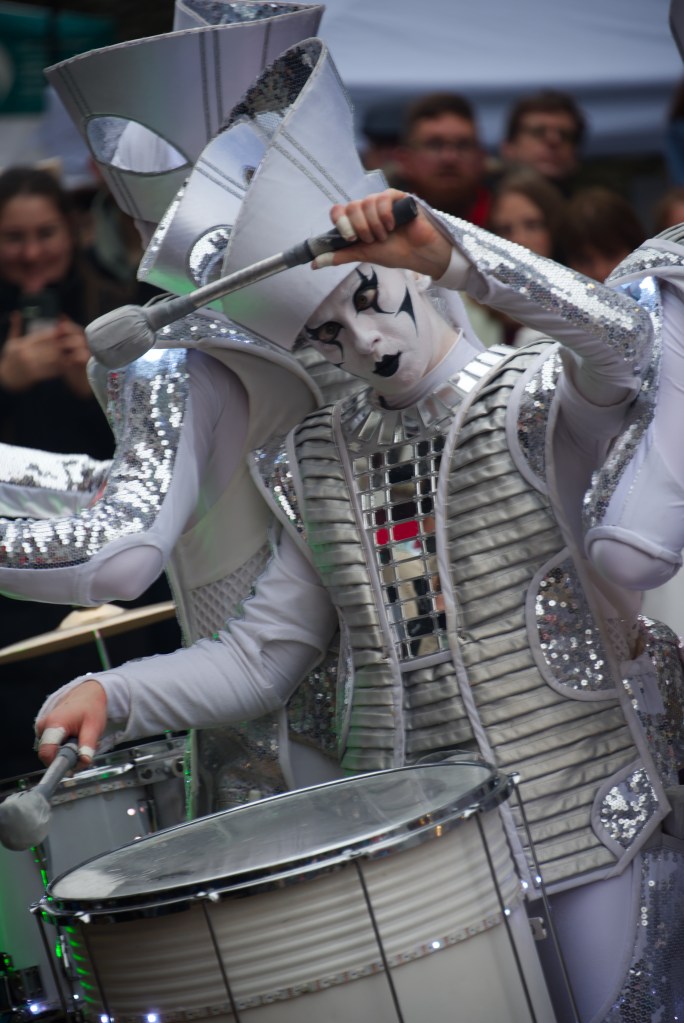
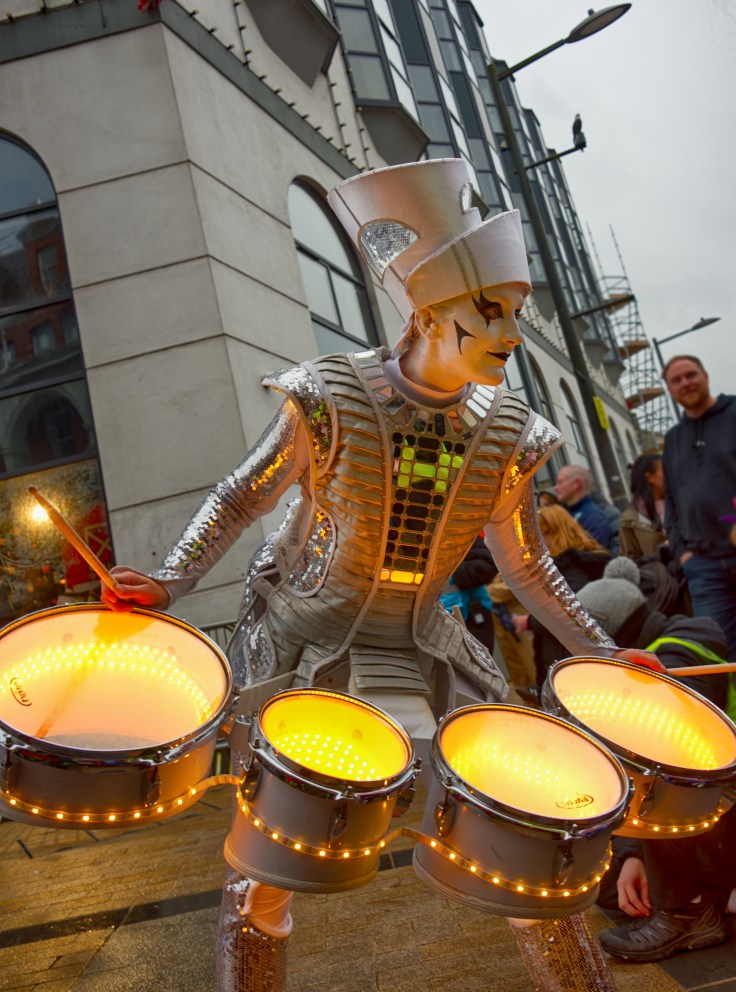
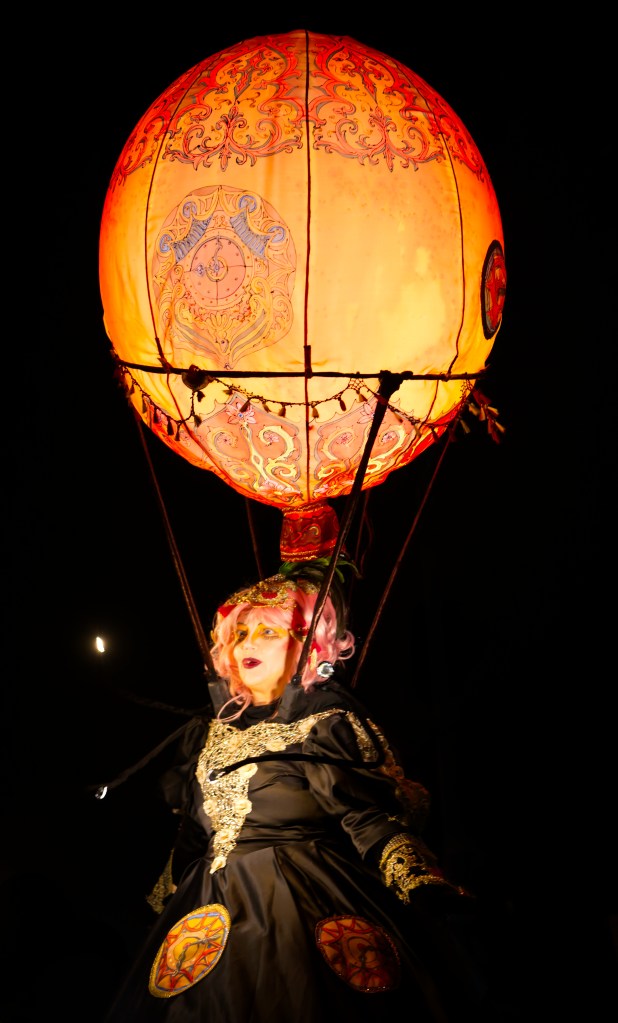
The smaller details are just as interesting. Elaborate masks, feathered costumes, extraordinary headpieces and painted faces turn the procession into a moving gallery of Halloween imagination. Some characters are dark and sinister, others bright and flamboyant, and many are difficult to categorise at all. It is a parade where the unexpected is very much part of the attraction.
The parade is not simply something to watch from a distance. Its scale and movement make it an immersive experience, with the crowds becoming part of the evening. Spectators arrive in costumes of their own, adding witches, skeletons, vampires and an assortment of rather unusual characters to the streets. Children watch the enormous creatures pass overhead, enthralled by the familiar characters and fantastical creations that bring their favourite Halloween stories to life.
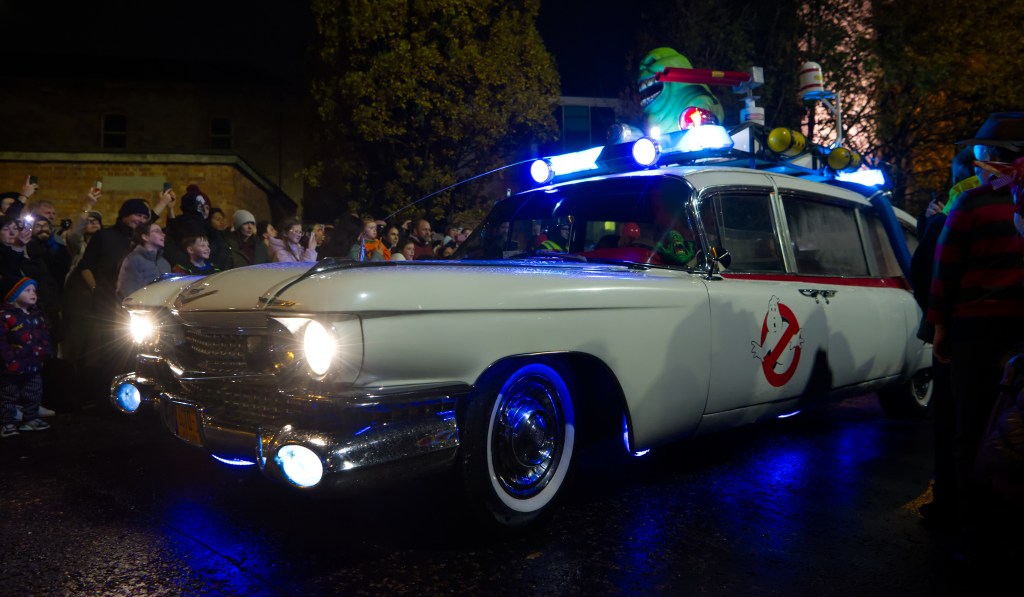
There is also a wonderful contrast between the old and the new. The parade draws inspiration from stories and beliefs that have existed for centuries, yet presents them through enormous modern puppets, theatrical lighting and elaborate special effects. Ancient spirits and mythical creatures are given a new appearance, without losing the sense of mystery that has surrounded them for generations.
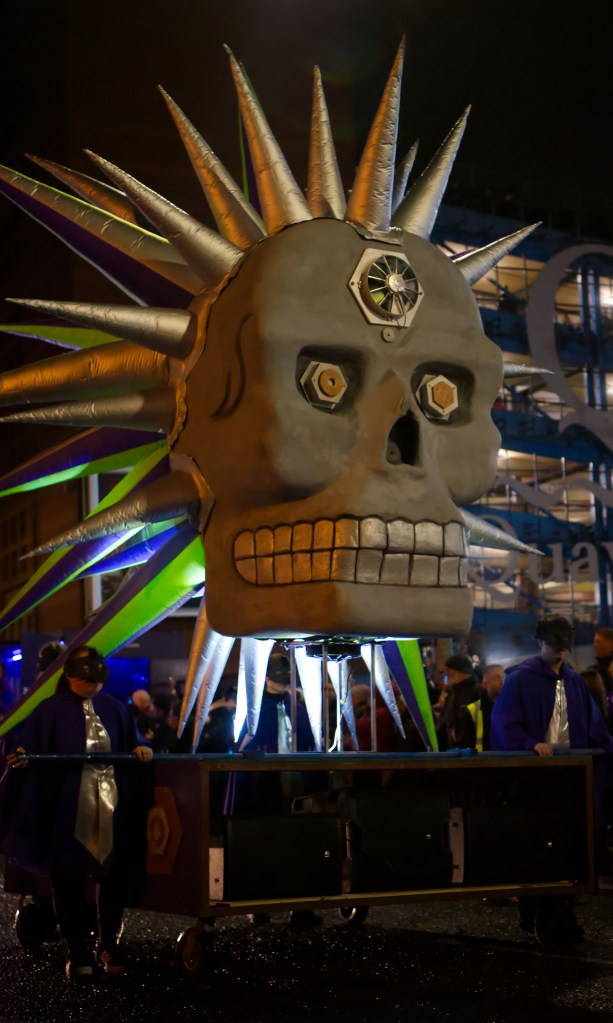
The setting makes the experience even more memorable. Derry’s historic streets and old buildings provide a dramatic backdrop, with the famous city walls looking down over the procession. The narrow streets help concentrate the atmosphere, while the illuminated creations stand out against the dark outlines of the surrounding architecture. It is easy to imagine that some of the strange characters appearing in the parade might have been wandering these streets long before anyone thought of turning Halloween into a festival.
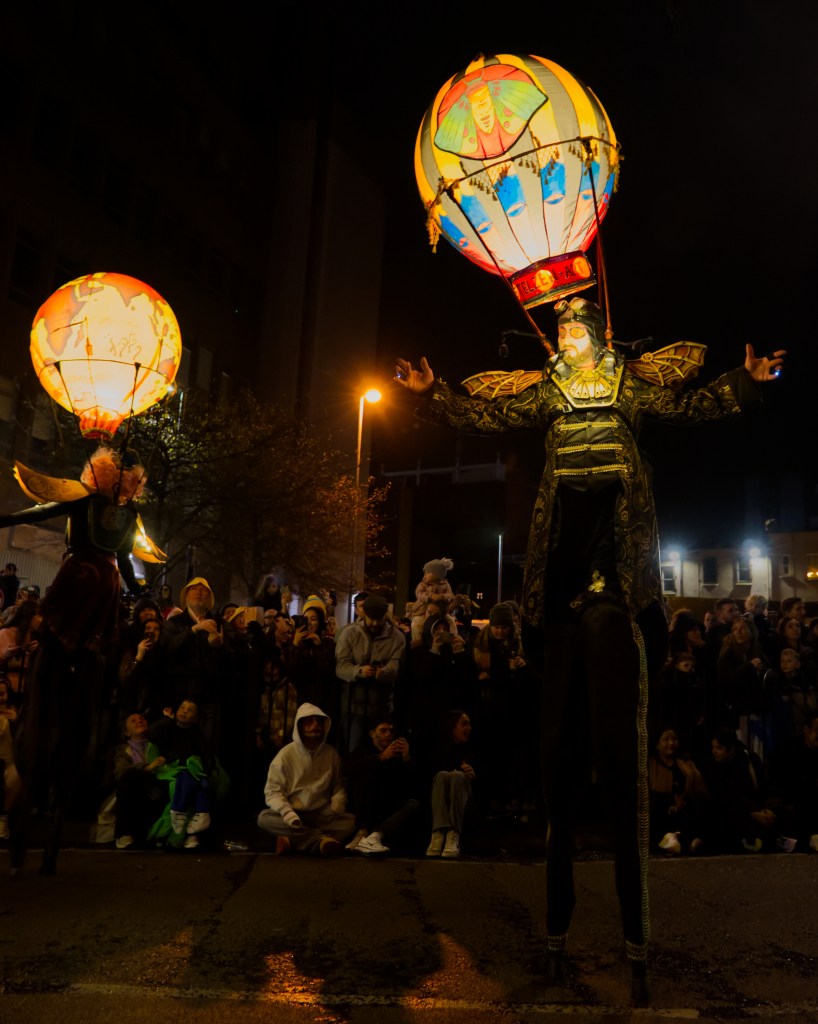
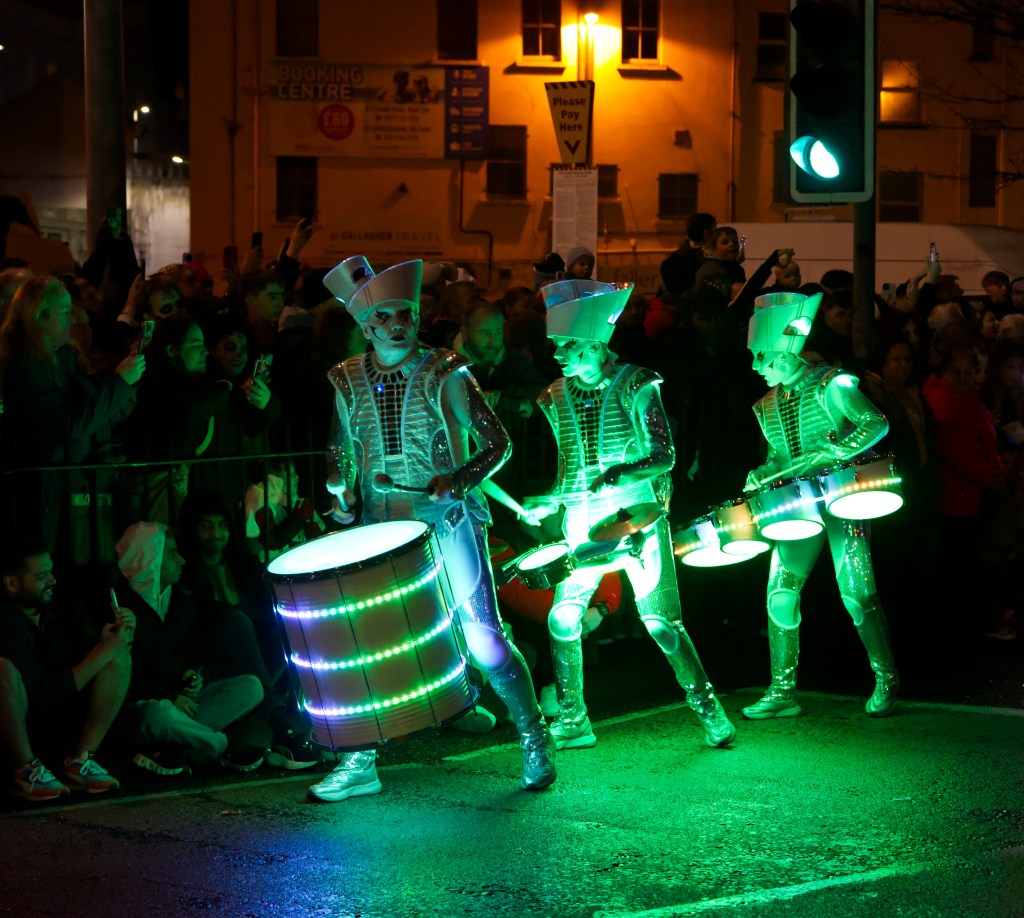
As the procession moves through the city, there is always another spectacle waiting to appear. A towering creature gives way to a group of dancers, a burst of flames is followed by an enormous illuminated figure, and the music carries on through the streets. It is a constantly changing display, with enough detail and variety to keep the attention moving from one creation to the next.
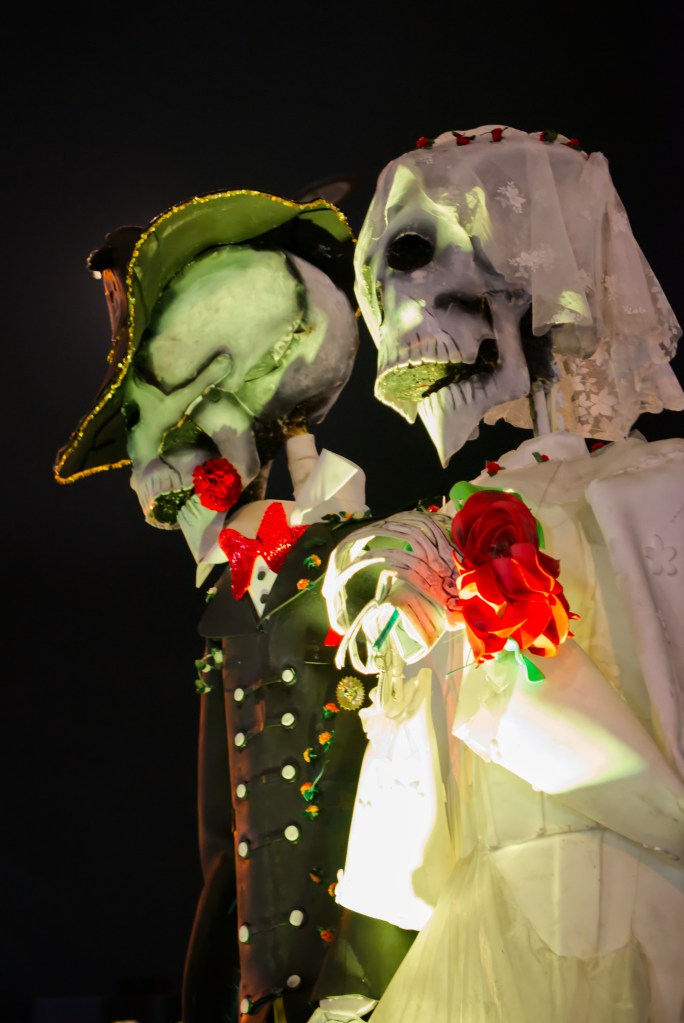
What makes Derry’s parade so distinctive is that it embraces the full imaginative world of Halloween. It is not limited to the familiar collection of witches, ghosts and pumpkins. Instead, it reaches back into Irish folklore, drawing out the strange, the mysterious and the supernatural, then presenting it on a scale that is difficult to forget.
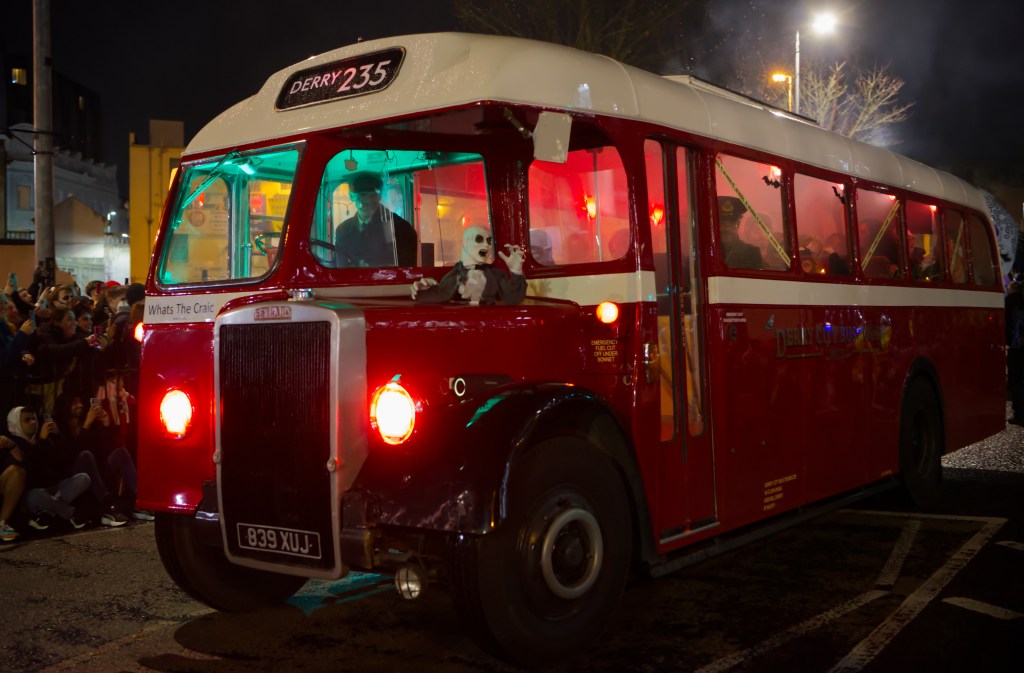
The sounds of the parade add another layer to the evening’s strange atmosphere. Drums roll through the streets, joined by haunting melodies, mournful pipes and music that seems to drift in from another time. Some pieces are drawn from traditional Irish music, while others have a darker, more theatrical quality, with deep percussion and eerie notes that linger in the air. Against the glow of the illuminated figures and the shadows of the old city walls, these sounds give the procession an almost otherworldly character.
There are Halloween celebrations in cities and towns across the world, but Derry has a particularly compelling connection to the occasion. Its Irish heritage reaches back to the ancient traditions of Samhain, while its modern celebrations have developed into an extraordinary display of folklore, imagination and theatrical spectacle.
The parade is undoubtedly the centrepiece. Its enormous illuminated figures, fantastical creatures, elaborate costumes and dramatic performances bring the historic streets to life in a way that few other celebrations can match. It is a reminder that Halloween is about more than decorations and fancy dress. It is an opportunity to explore the stories, traditions and imagination that have surrounded this particular night for centuries.
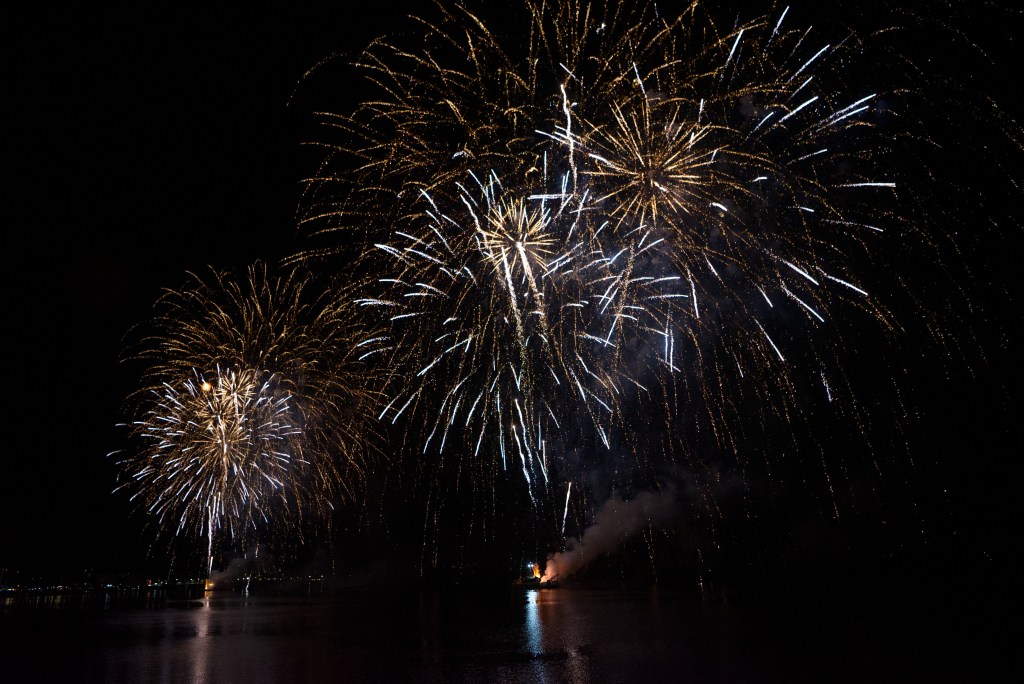
As the celebrations reach their conclusion, attention eventually turns towards the River Foyle for the fireworks finale. The fireworks burst above the city, their colours reflected across the water and illuminating the surrounding buildings. After an evening of enormous puppets, strange creatures, music and theatrical performances, it is a fitting conclusion to the celebrations.
Halloween may have travelled a long way from its ancient Irish beginnings, but in Derry, it feels very much as though it has come home.


Leave a Reply