

There are few objects in the British landscape as familiar as the red postbox. Standing beside an old stone wall, at the edge of a village green or on a busy city pavement, its familiar shape has become part of everyday life. Its bright paint catches the eye against the muted colours of brick, stone and weathered streets, while its sturdy cast-iron body seems to belong to an earlier age. Some have stood in the same spot for generations, quietly watching the world change around them, their narrow posting slots still receiving letters just as they did more than a century ago. Few people give them a second thought as they pass, yet beneath the little crown and royal initials lies a history that stretches back to Victorian Britain. Each one carries a little piece of Britain’s history, its royal initials and crown connecting the familiar streets of today with the monarchs and generations that came before.
Look a little closer, however, and the postbox becomes something rather more interesting. The initials beneath its crown reveal the monarch who reigned when it was installed, offering a small record of Britain’s changing monarchy. From the VR of Queen Victoria to the EIIR of Elizabeth II and the newer CRIII of Charles III, these markings connect ordinary street furniture to some of the most significant periods in British history. In Scotland, the story takes a slightly different turn, with a distinctive crown replacing the royal initials and a constitutional disagreement giving the humble postbox an unexpected place in national history. The British postbox is more than a convenient place to send a letter. It is a survivor of changing times, a familiar landmark and an unlikely historical record, quietly occupying its place on streets that have transformed around it.
The story begins in the nineteenth century, when Britain’s postal service was undergoing considerable change. Before the introduction of roadside postboxes, sending a letter generally meant taking it to a post office or receiving house. For people living in rural communities, or some distance from a town centre, this could involve a considerable journey.
The introduction of the Penny Post in 1840 transformed the way people sent letters across Britain. For the first time, a standard charge of just one penny allowed a letter weighing up to half an ounce to be sent anywhere within the country, making correspondence far more affordable and accessible. The change also introduced the use of prepaid postage stamps, removing the need for the recipient to pay when the letter arrived. The first of these stamps was the famous Penny Black, a small black stamp bearing the profile of Queen Victoria. Issued on 1 May 1840 and valid for postage from 6 May, it became the world’s first adhesive postage stamp and marked the beginning of a new chapter in postal history. With sending letters now simpler and cheaper, more people began using the service, and the volume of mail moving around the country grew rapidly.
There was, however, a practical problem. Although sending a letter had become cheaper, it still needed to be taken to a place where it could enter the postal system. A more convenient method of collection was needed, particularly in places where post offices were few and far between.
The idea of roadside letter boxes was already being used in parts of Europe, and it was a novelist who helped bring the concept to Britain. Anthony Trollope, best known for his literary works, also enjoyed a long career with the General Post Office. During his work as a postal surveyor, he encountered roadside collection boxes in Europe and recognised their potential for British communities.
In 1852, four cast-iron pillar boxes were installed in St Helier, Jersey, as an experiment. They came into use on 23 November, marking the beginning of the British roadside pillar box system. The trial proved successful, and the following year the idea was extended to Guernsey and mainland Britain. The first mainland box was installed in Botchergate, Carlisle, in 1853.
These early boxes were not quite the familiar red landmarks seen today. Designs varied considerably, with local surveyors and foundries having considerable influence over their appearance. Some were hexagonal, others cylindrical, and decorative details differed from one region to another. Even the position of the letter slot was experimented with before a more practical arrangement was established.
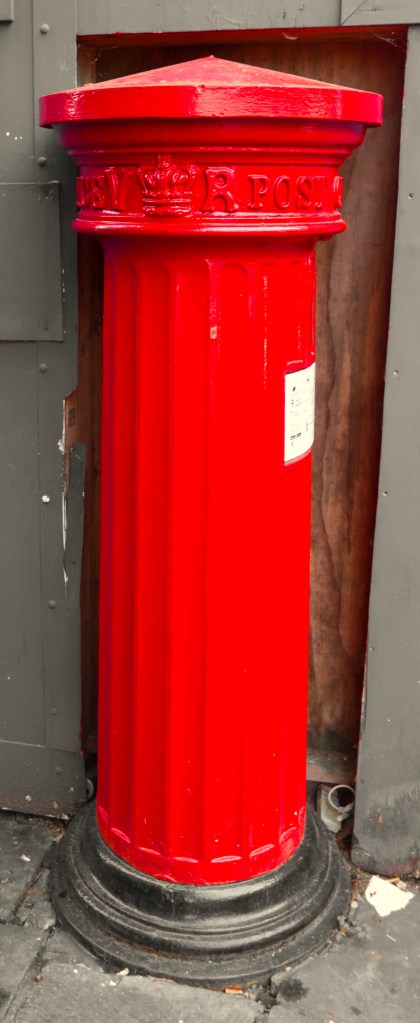
The first boxes were built to be sturdy and secure, but they also needed to withstand Britain’s unpredictable weather. Their design gradually evolved, with improvements to the posting aperture and protective flaps helping to keep rainwater away from the letters inside.
It may come as a surprise that the earliest British postboxes were not all red. The original Jersey boxes were painted red, but when the Post Office introduced a national standard colour in 1859, green was selected. It was considered a more unobtrusive choice, allowing the boxes to blend into their surroundings.
In practice, this proved rather too successful. Against trees, hedgerows and the stonework of British streets, the green boxes could be surprisingly difficult to spot. Complaints followed, and in 1874 the Post Office decided that red should become the standard colour once again. Repainting the country’s boxes was a considerable undertaking, and the process took around ten years to complete.
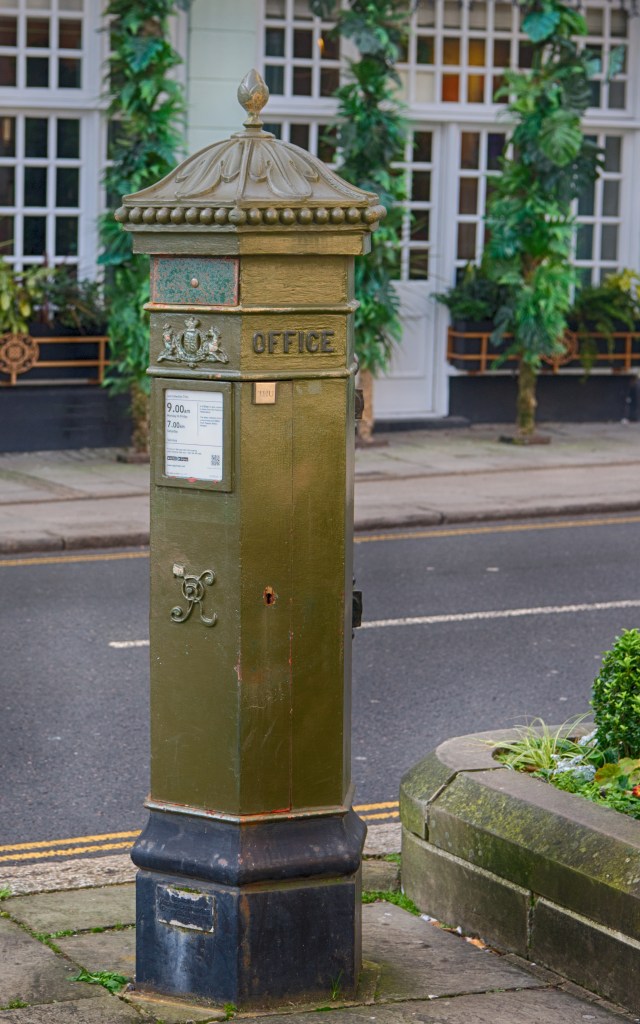
The red that eventually became so familiar was not simply a decorative choice. It made the boxes easier to identify, particularly for people unfamiliar with an area, and established a visual identity that has endured for generations.
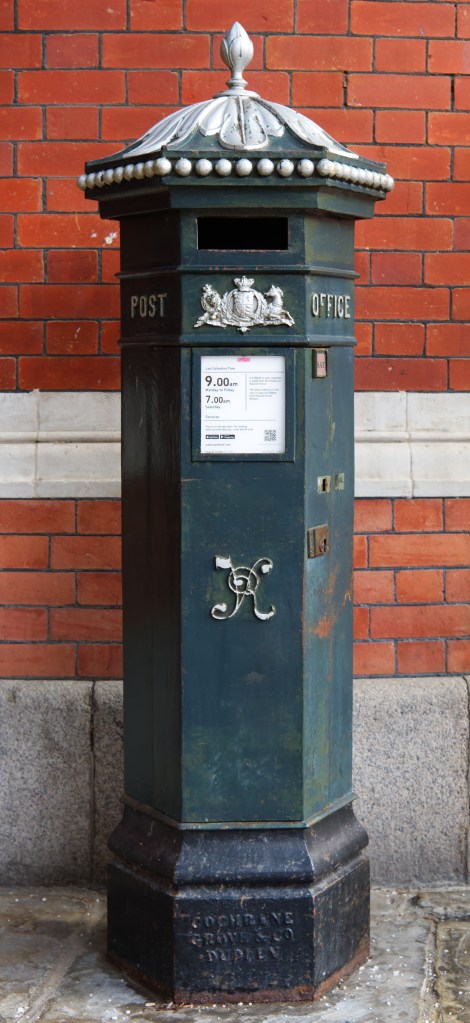
The design itself was also becoming more consistent. In 1859, a national standard pillar box was introduced, replacing much of the regional variation that had characterised the earliest examples. This was followed in 1866 by the arrival of the Penfold pillar box, named after its designer, John Penfold.
The Penfold is one of the most distinctive designs in British postal history. Its six-sided body, decorative detailing and ornamental top give it an almost architectural appearance. Rather than simply standing as a functional container, it has the proportions and detailing of a carefully considered piece of Victorian street furniture. The design remained in production until 1879, when a simpler cylindrical form took its place.
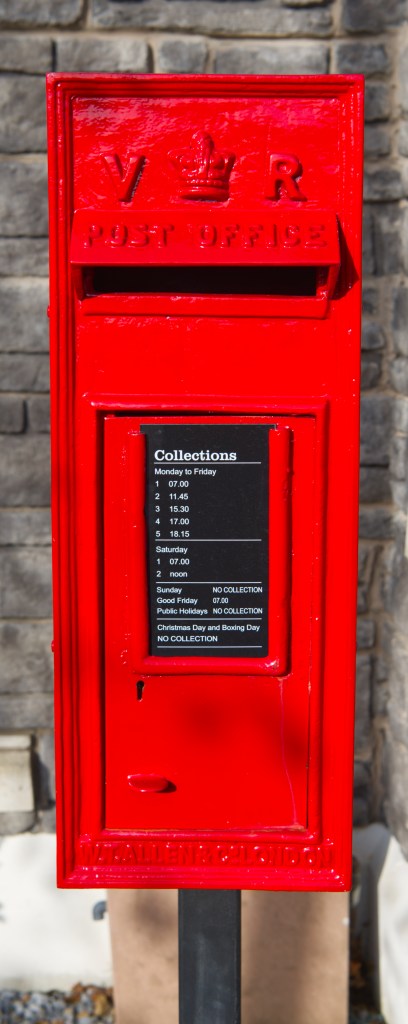
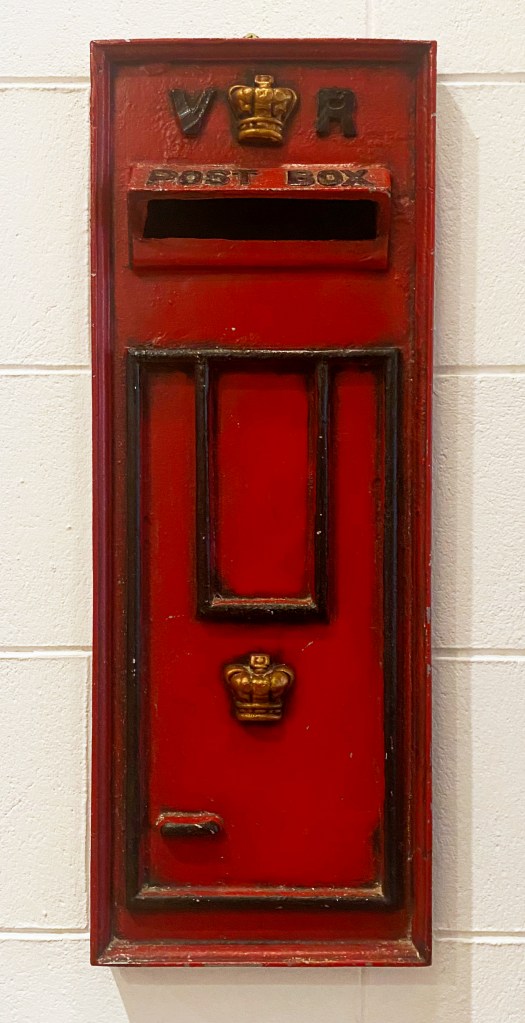
That cylindrical design would become the familiar image of the British postbox. It was practical, relatively economical to manufacture and easily recognised. Over time, other variations appeared, including wall-mounted boxes for buildings and smaller lamp boxes that could be attached to posts. These allowed the postal service to reach smaller communities and locations where a full-sized pillar box was unnecessary.
By the end of the nineteenth century, postboxes had become an established feature of British streets. Their presence reflected a society increasingly connected by written communication, with letters carrying everything from business correspondence to family news and personal messages.
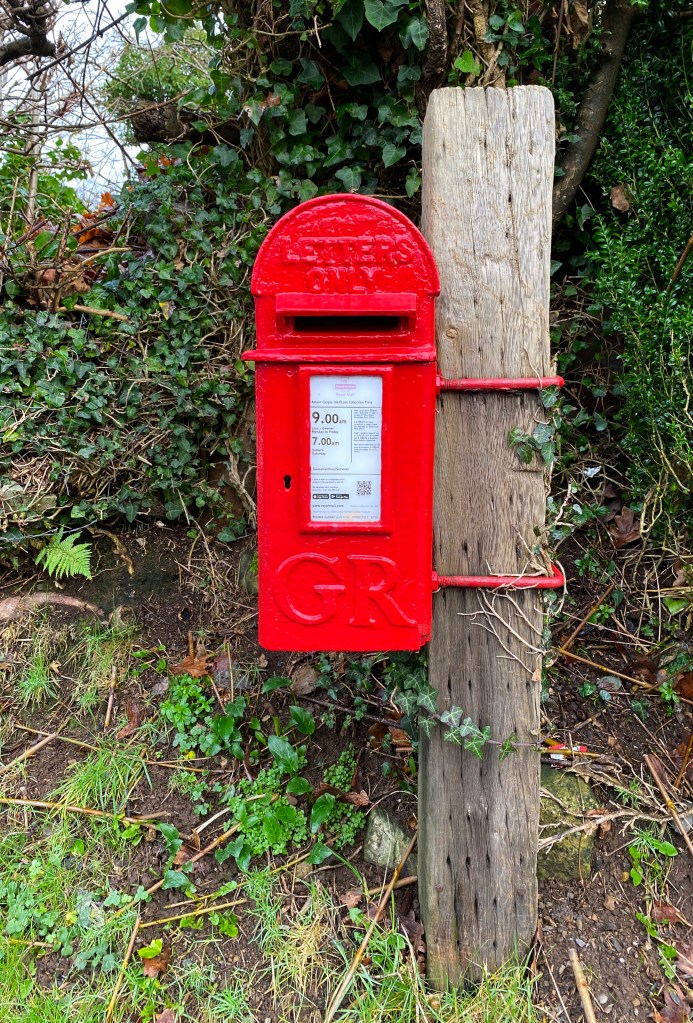
One of the most fascinating features of the British postbox is the small royal cypher displayed on its front. The initials, usually accompanied by a crown, identify the reigning monarch and provide a clue to the period in which the box was manufactured or installed.
The markings are not an exact dating system, as boxes can remain in service for many decades, and some may be installed after their manufacture. Nevertheless, they provide a wonderful way of recognising the different royal periods represented on Britain’s streets.
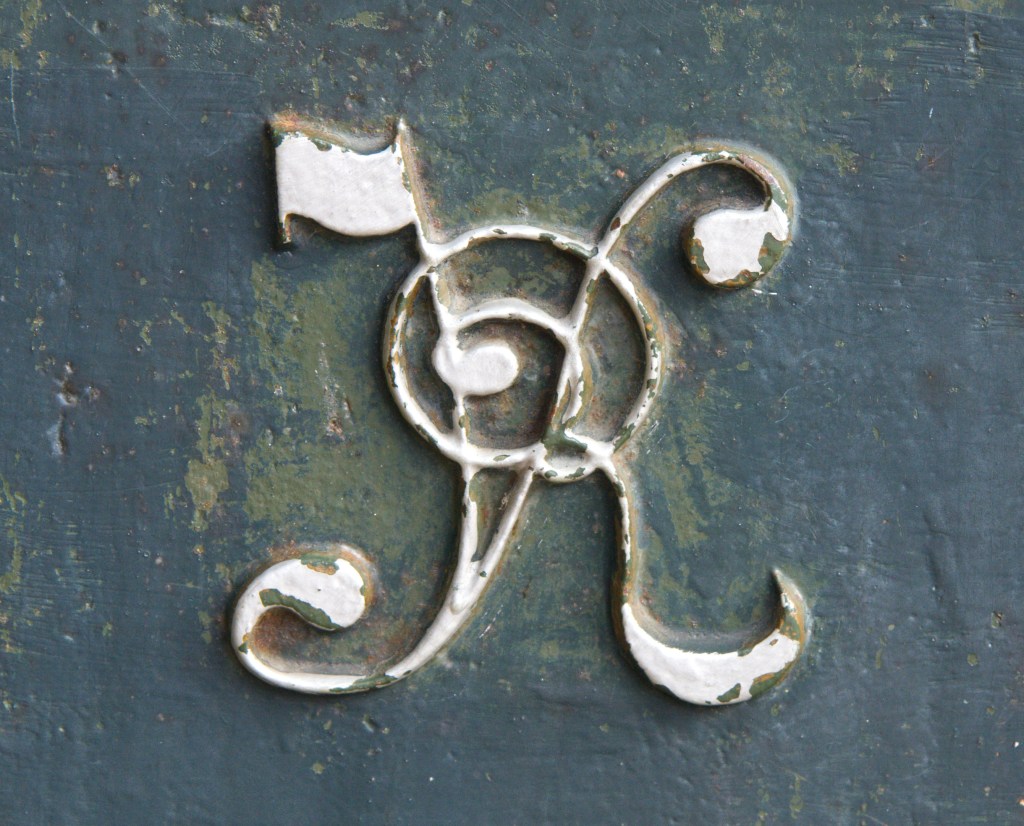
Queen Victoria’s name remained on British postboxes for more than six decades, her reign lasting 63 years (1837-1901) and encompassing a period of extraordinary transformation. Railways spread across the country, industrial cities grew, and the postal service became an increasingly important part of daily life. It was during these decades that the pillar box began to find its place on British streets, becoming a familiar sight in a world that was learning to communicate with greater speed and ease. The VR cypher, standing for Victoria Regina, is often accompanied by an ornate crown, with the lettering and decorative ironwork reflecting the elaborate style of the Victorian era. Some of the surviving boxes bearing her initials are among the oldest reminders of Britain’s early public postal system.
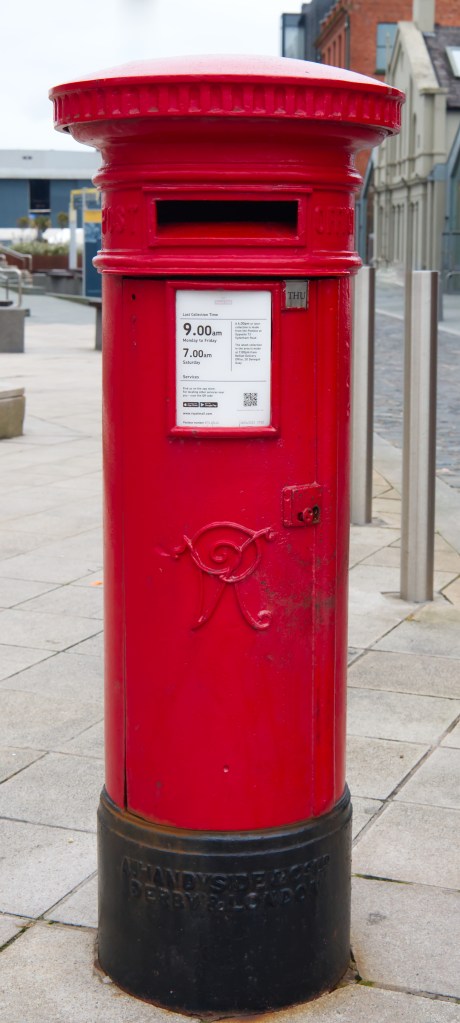
Queen Victoria’s name remained on British postboxes for more than six decades, her reign lasting 63 years (1837-1901) and encompassing a period of extraordinary transformation. Railways spread across the country, industrial cities grew, and the postal service became an increasingly important part of daily life. It was during these decades that the pillar box began to find its place on British streets, becoming a familiar sight in a world that was learning to communicate with greater speed and ease. The VR cypher, standing for Victoria Regina, is often accompanied by an ornate crown, with the lettering and decorative ironwork reflecting the elaborate style of the Victorian era. Some of the surviving boxes bearing her initials are among the oldest reminders of Britain’s early public postal system.
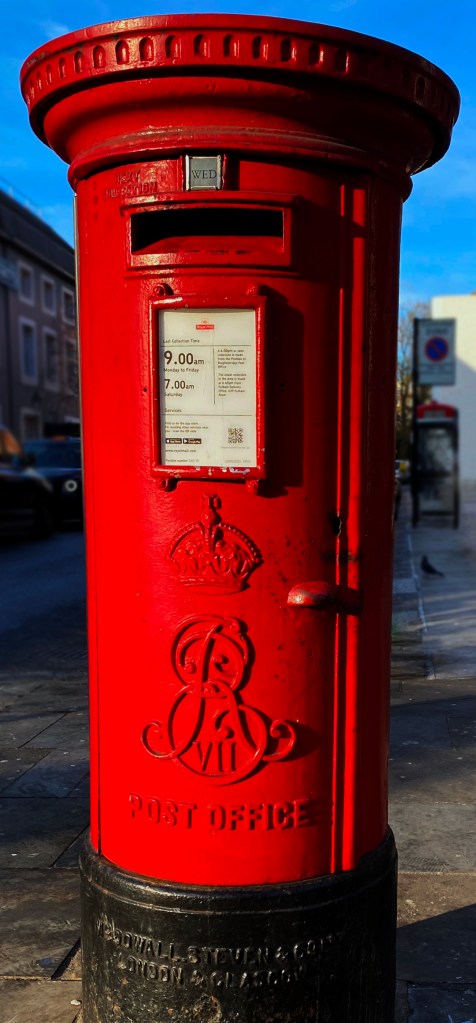
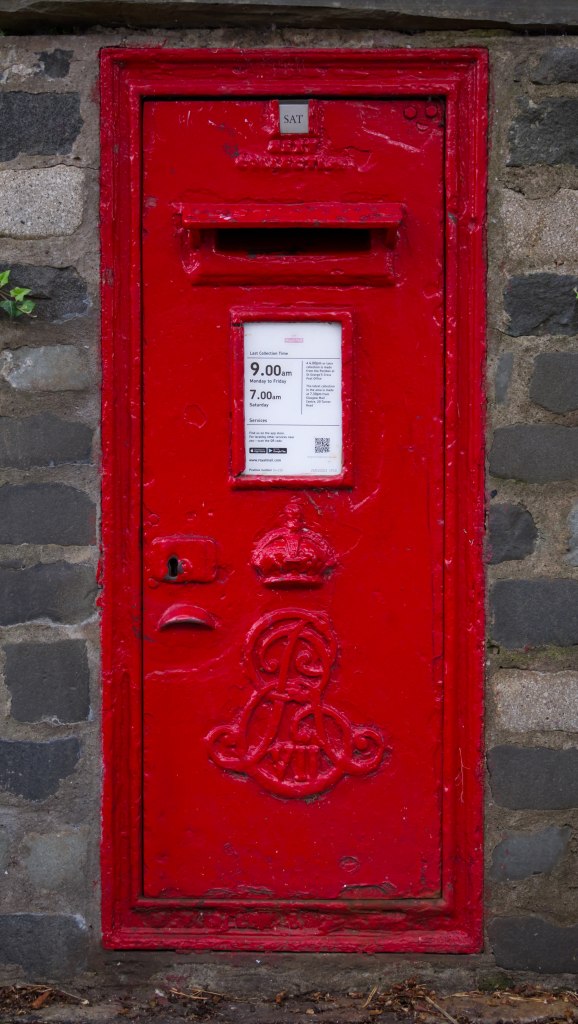
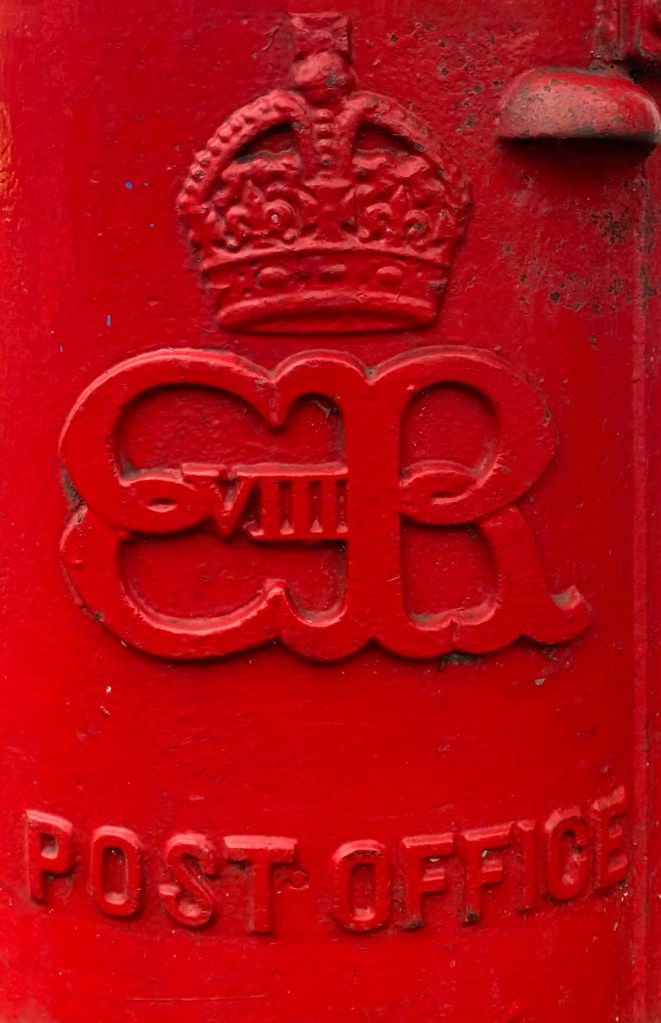
The Edwardian years brought a change in monarch and a new century, with Edward VII reigning from 1901 until 1910. Although his time on the throne was relatively short, it was a period associated with changing fashions, social expectations and the beginnings of a more modern Britain. His E VIII R cypher, standing for Edwardus VIII Rex, is particularly distinctive, with the two letters joined together in an intertwined design around the Roman numerals VIII. This creates an elaborate and unusual arrangement beneath the crown that sets it apart from the cyphers of the other monarchs.On an old street corner, the markings offer a subtle distinction between two generations of postboxes, separated by little more than a decade but belonging to quite different periods.
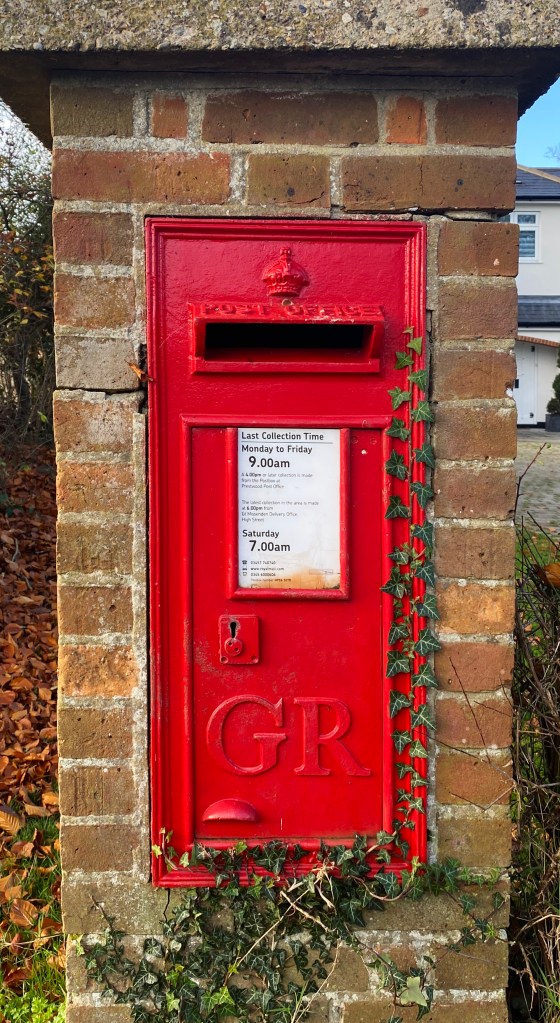
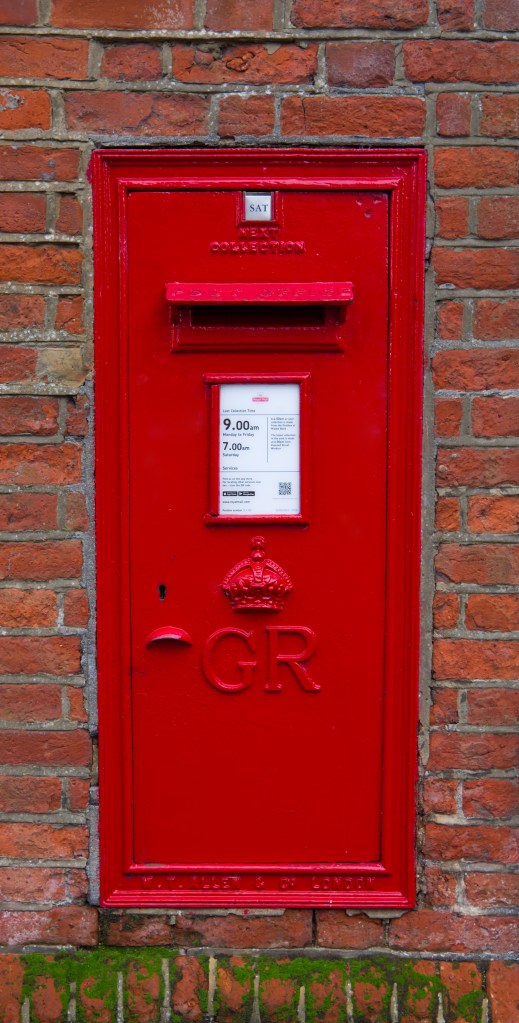
George V’s 25-year reign, from 1910 to 1936, carried the country through the First World War and the difficult years that followed. The conflict touched almost every community, bringing separation, loss and an enormous change in the lives of ordinary people, while the years afterwards saw Britain slowly adapt to a changing social and industrial landscape. His GR cypher, standing for Georgius Rex, is generally formed in solid, clearly defined lettering beneath the crown, its design less decorative than some of the earlier Victorian examples. These postboxes stood through years of extraordinary uncertainty, receiving letters from a country whose history was unfolding around them, one envelope at a time
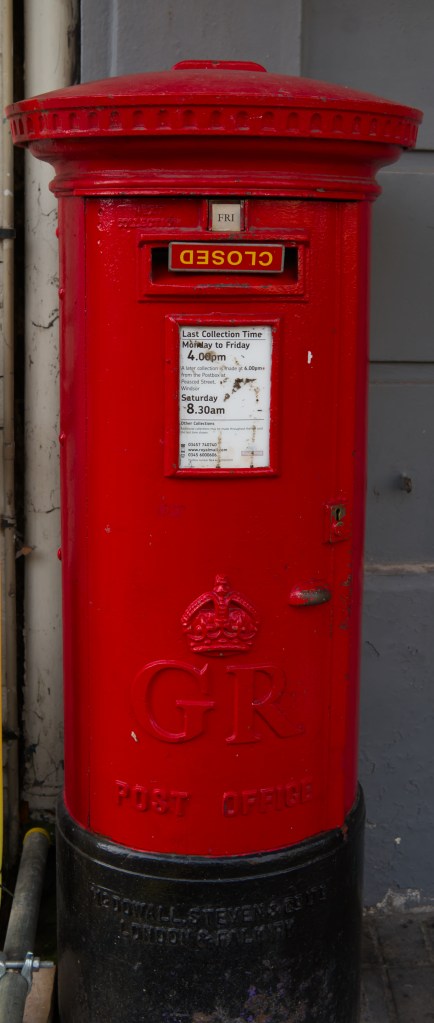
Edward VIII’s reign lasted only 326 days, from January to December 1936, making it one of the shortest in British history. His decision to abdicate in order to marry Wallis Simpson brought an unexpected end to his time on the throne, leaving a royal chapter that was barely begun. His E VIII R cypher is particularly unusual on postboxes, with the Roman numeral VIII incorporated into the lettering beneath the crown. Because his reign was so brief, examples bearing his initials are relatively uncommon, making them an intriguing discovery for those who take the time to look closely at the ironwork.
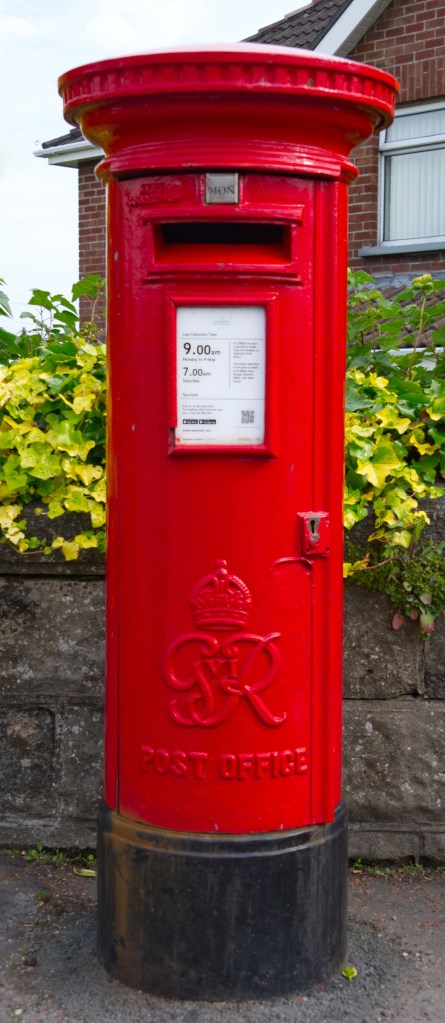
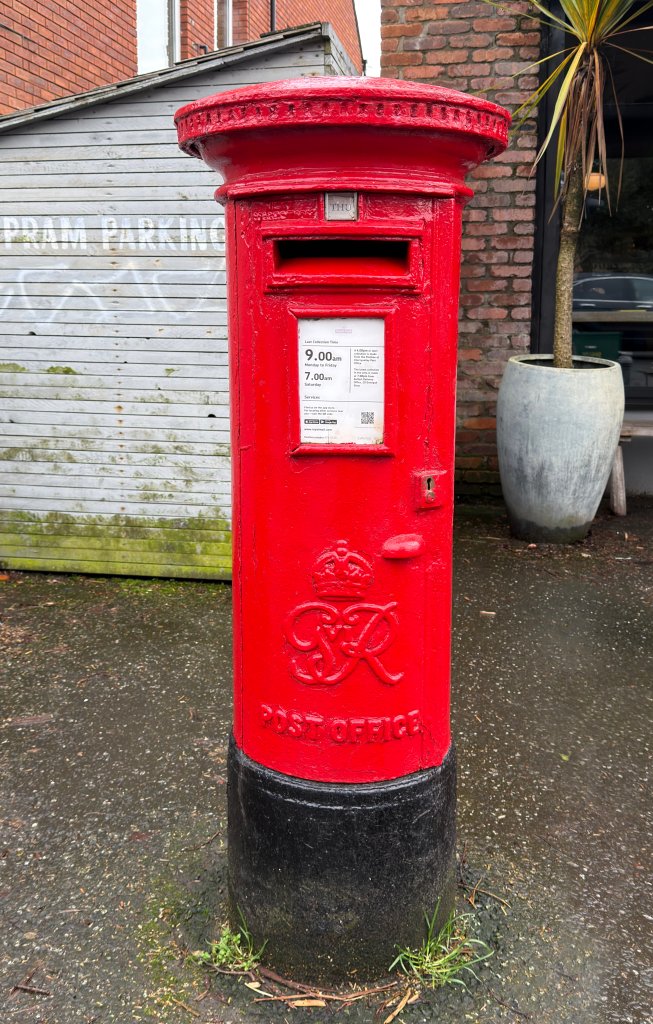
George VI came to the throne in December 1936, following his brother’s abdication, and reigned until 1952. His years were shaped by the Second World War, when Britain endured bombing, rationing and years of uncertainty, followed by the long process of rebuilding in the aftermath. His G VI R cypher, standing for Georgius VI Rex, is usually formed in clear, traditional lettering beneath the crown, its arrangement reflecting the familiar design of British postboxes. Boxes bearing his initials stood through wartime years when letters carried news from distant battlefields, reassurance between separated families and messages that connected people through some of the darkest days of the century.
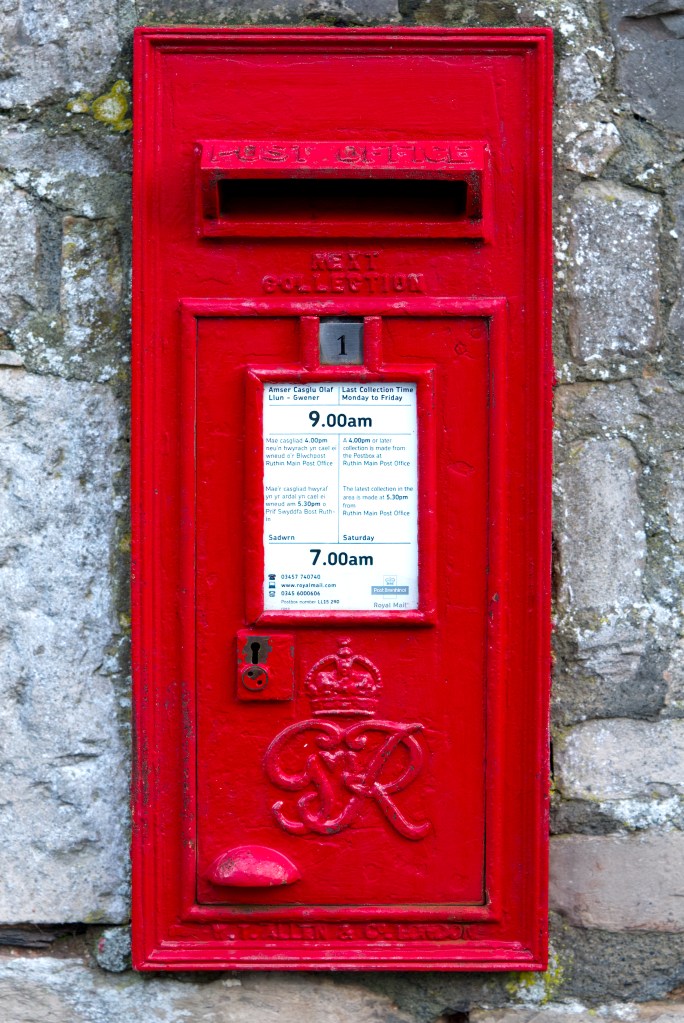
When Elizabeth II became queen in 1952, a new royal cypher appeared on British postboxes. Her initials, EIIR, became one of the most familiar markings on the country’s streets, reflecting a reign that would last 70 years and 214 days. She became the longest-reigning British monarch, and her initials are still found on a substantial proportion of the boxes in use today.
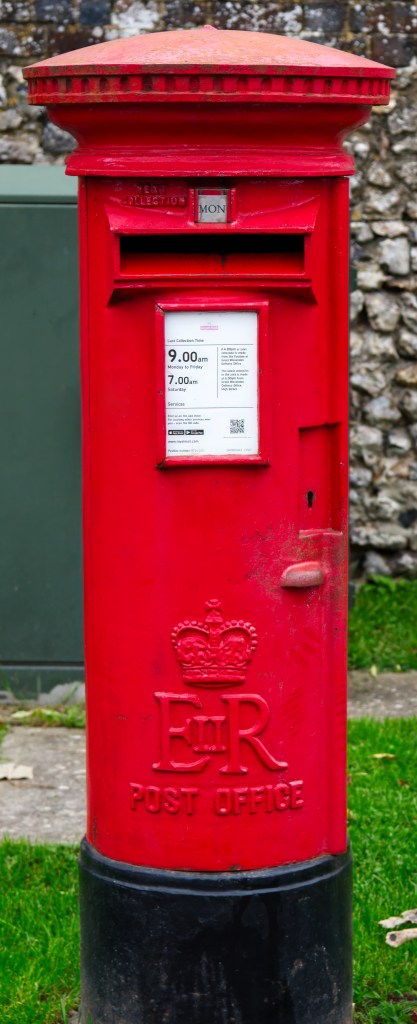
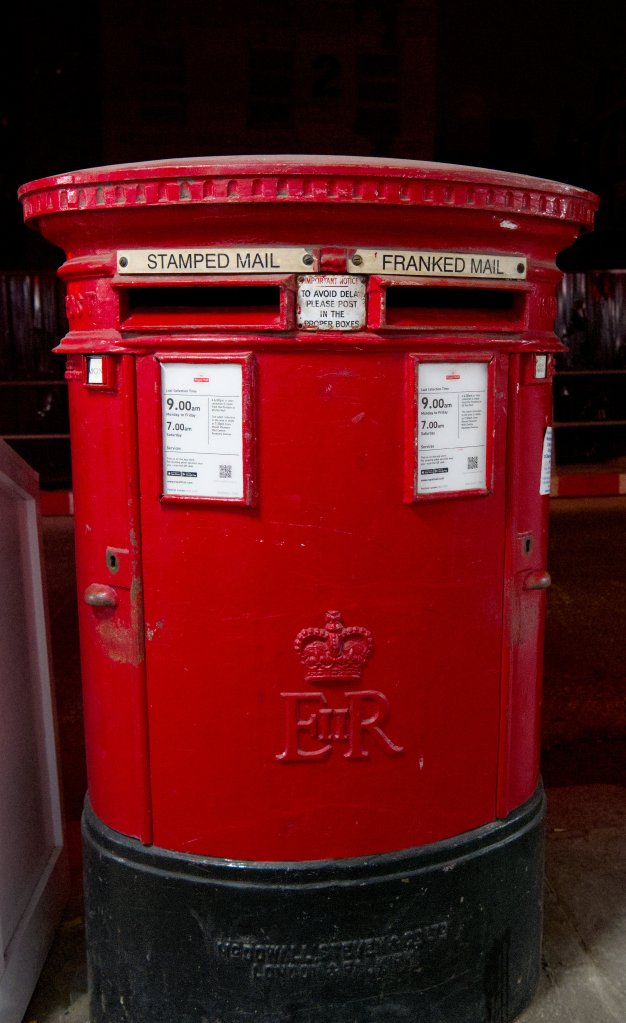
The period of her reign brought enormous changes to communication. Telephones became commonplace, television entered British homes and, eventually, electronic mail transformed the way people exchanged messages. Yet the traditional red postbox remained. Older examples were retained, newer ones were installed and the familiar design continued to occupy its place in towns and villages across the country.
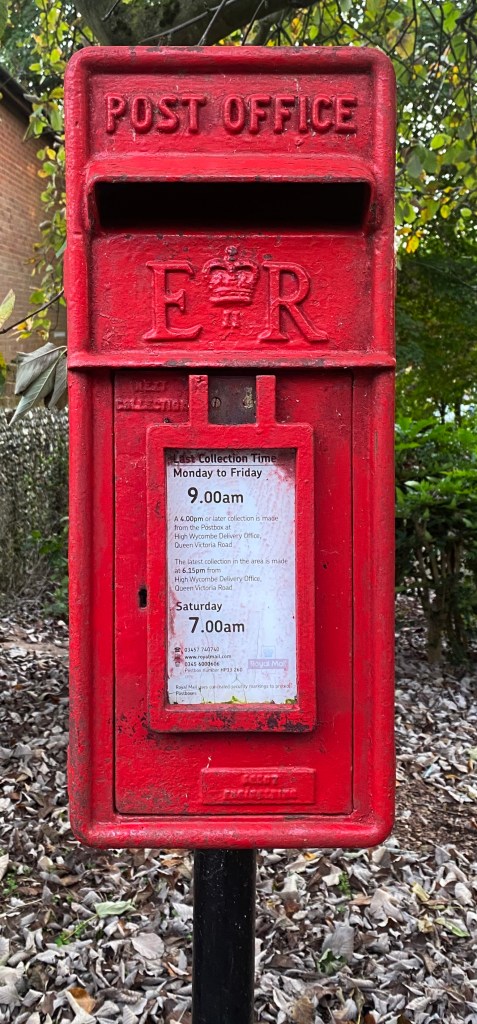
Scotland, however, has a rather different story when it comes to Elizabeth II’s royal cypher. When new boxes began appearing with the royal cypher EIIR, the use of the numeral II caused considerable objection in Scotland, where there had never been an Elizabeth I. For some, it was more than a question of lettering on a postbox; it touched on Scotland’s distinct royal history and the long-standing sensitivities surrounding its place within the United Kingdom. What might have seemed a small detail elsewhere became a surprisingly heated public dispute north of the border.
The disagreement became known as the Pillar Box War, and some of the protests went well beyond words. Postboxes bearing the disputed cypher were vandalised, and in February 1953 a box in Edinburgh was destroyed by a gelignite bomb. The incident brought the controversy into sharp focus, eventually leading to a different approach for Scotland. Rather than displaying the Queen’s initials and numeral, Scottish postboxes adopted the Crown of Scotland as their royal emblem, a distinctive feature that can still be seen on boxes across the country today.
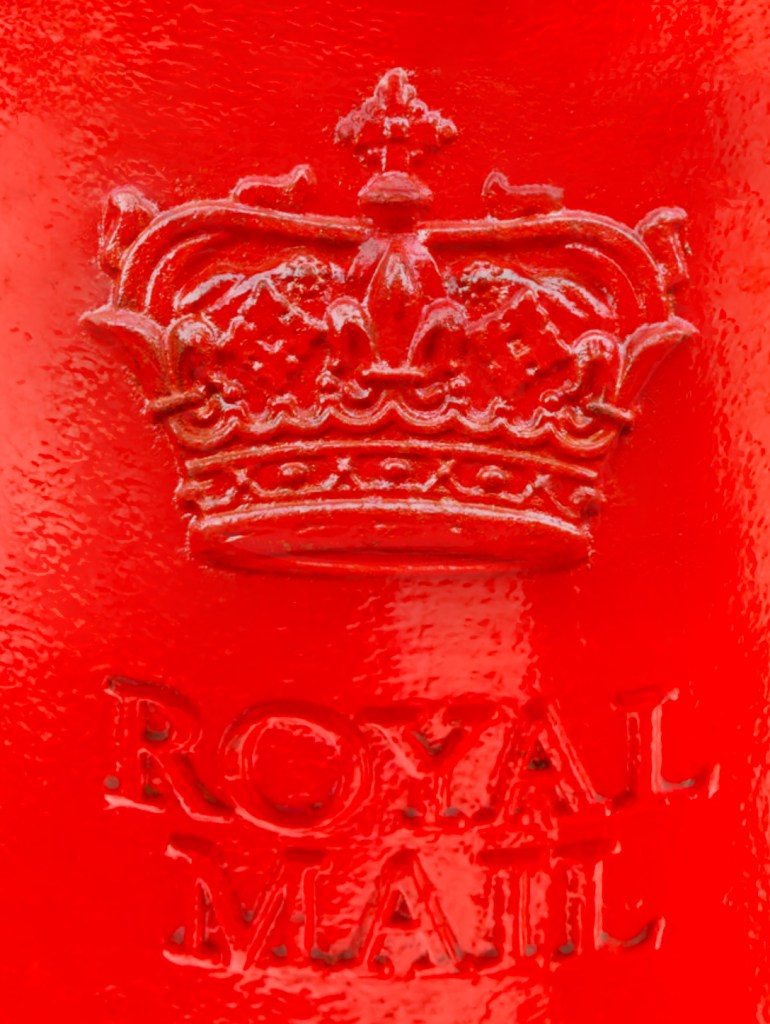
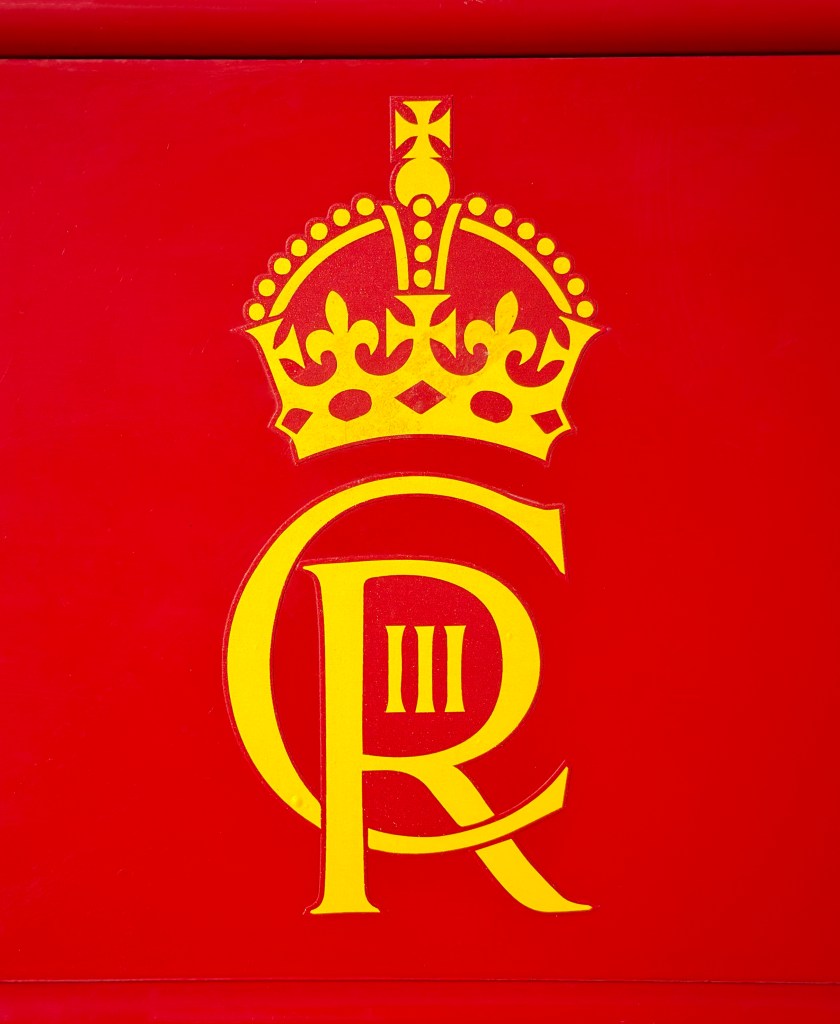
Following the death of Elizabeth II in 2022, a new royal cypher began to appear on Britain’s postboxes, marking the arrival of King Charles III and the beginning of another reign. The new C R III cypher features the letters of Charles Rex arranged around the Roman numeral III, beneath the Tudor Crown, giving it a distinctive appearance of its own. The first postbox bearing the new cypher was unveiled in Great Cambourne, Cambridgeshire, in 2024. With the familiar red boxes having carried the initials of monarchs for nearly two centuries, the change represents another small piece of history being added to streets that have witnessed generations come and go.
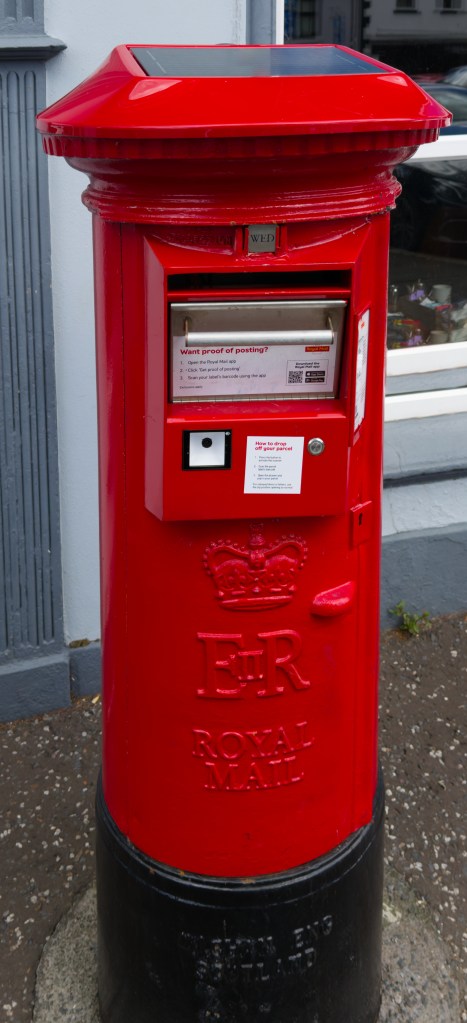
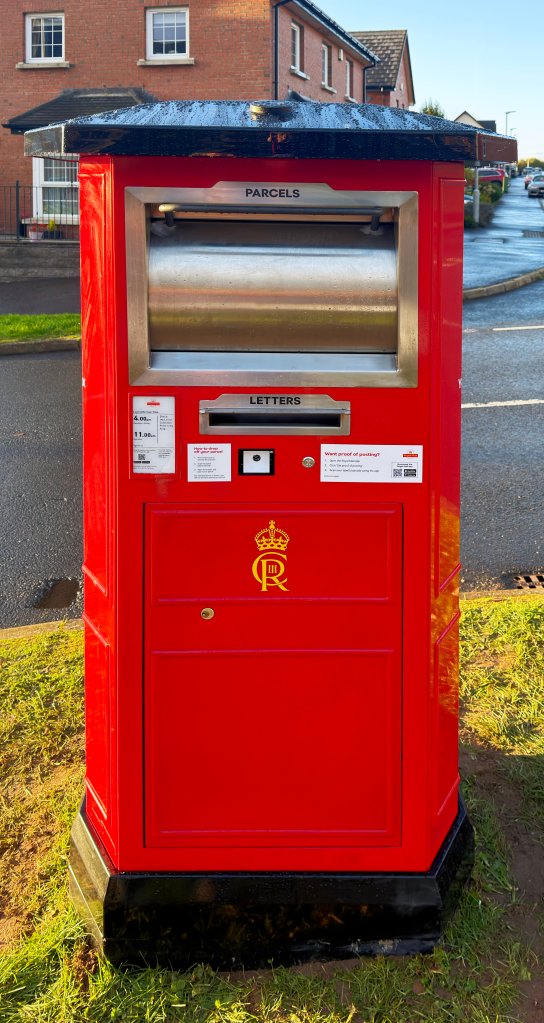
Yet the changes are not confined to the royal lettering. Some of the newest postboxes have been given a distinctly modern makeover, with solar panels powering barcode scanners and electronically operated parcel drawers, allowing letters and small packages to be sent from the same familiar street corner. Connected to Royal Mail’s digital services, these updated boxes reflect a postal world increasingly shaped by online shopping, parcel returns and technology, bringing a Victorian landmark into an entirely different age. The familiar red exterior may still evoke generations past, but beneath it, the humble postbox is quietly adapting to the way Britain sends and receives mail today.
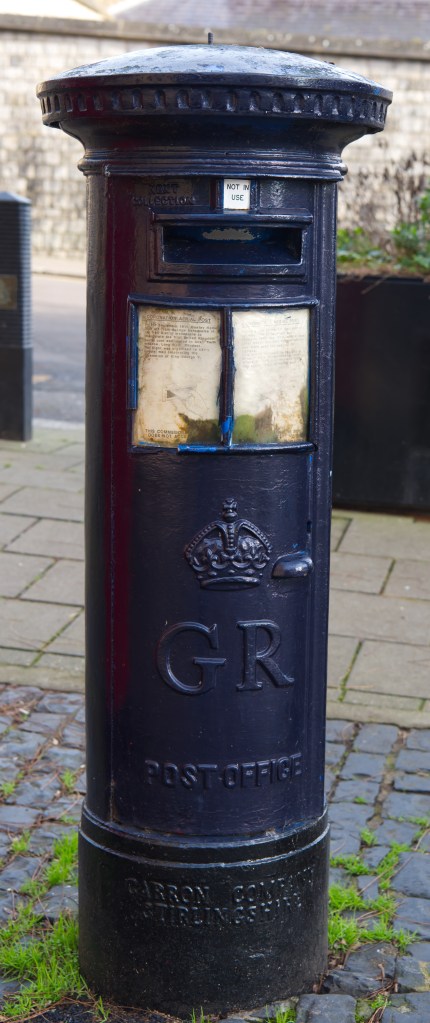
The familiar red postbox was not the only colour to appear on Britain’s streets, as the arrival of air-mail services introduced a striking blue variation designed specifically for letters travelling by aircraft.In 1930, special blue air-mail boxes began appearing, initially in London, providing a dedicated place for letters destined to travel by aircraft. Their bright blue paint and prominent AIR MAIL lettering made them stand apart from the familiar red pillar boxes, while collection times were arranged around departing flights, allowing correspondence to travel overseas with greater speed. At a time when air travel was still relatively new and carried an air of excitement, these boxes offered an intriguing glimpse of a world becoming increasingly connected, where a letter could cross continents in a matter of days rather than weeks.
Today, just one original blue air-mail postbox is widely recognised as surviving in its distinctive colour and original location, standing outside Windsor Castle. Others were returned to ordinary service and repainted red when the air-mail scheme ended, leaving traces of a brief but fascinating chapter in Britain’s postal history.
There is no requirement to replace the older boxes, and many bearing the initials of previous monarchs will continue to serve their communities for years to come. A George V box can stand alongside an EIIR example, while a newer CRIII box introduces the latest chapter in the sequence. Each remains part of the same postal network, despite the different eras represented in its metalwork. There is something particularly appealing about the way these boxes preserve their history without needing to stand apart from everyday life. They are not monuments or museum exhibits, although some of the oldest examples are certainly worthy of preservation. They continue to serve the people who pass them, accepting letters just as their predecessors did more than a century ago.
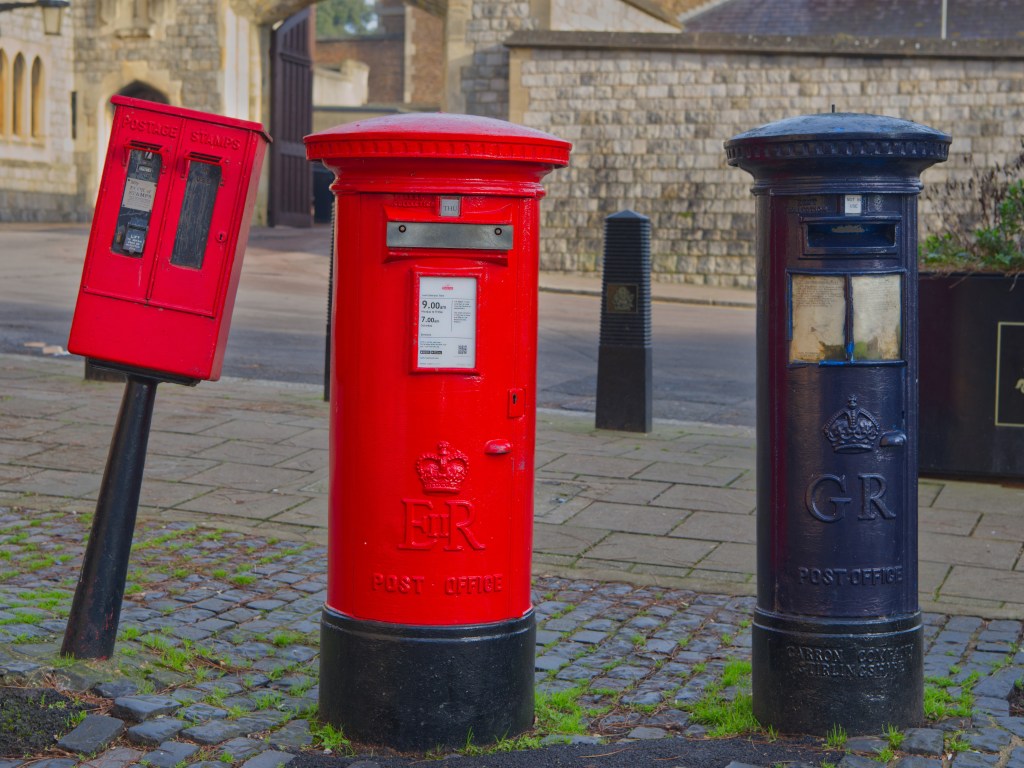
The next time a red postbox appears at the corner of a street, it is worth taking a moment to look at the small details. The initials beneath the crown may reveal a Victorian origin, an Edwardian connection or a place in the long reign of Elizabeth II, while in Scotland, the distinctive crown carries its own story, rooted in the history of the monarchy and the country’s identity. These familiar landmarks have witnessed generations come and go, standing through wars, changing streets, new inventions and an ever-shifting world, yet continuing to serve the same simple purpose of carrying messages from one place to another.
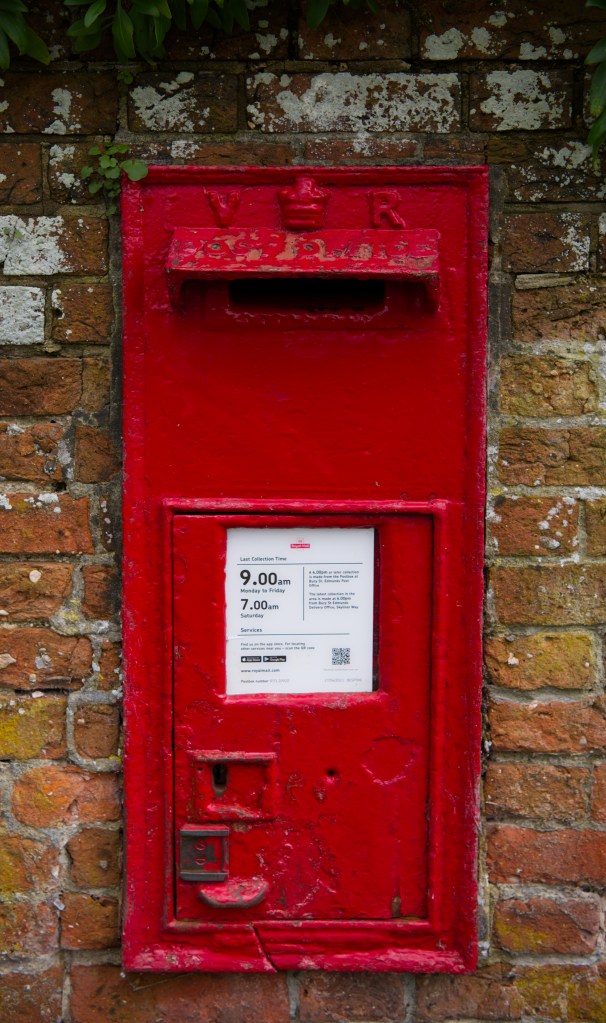
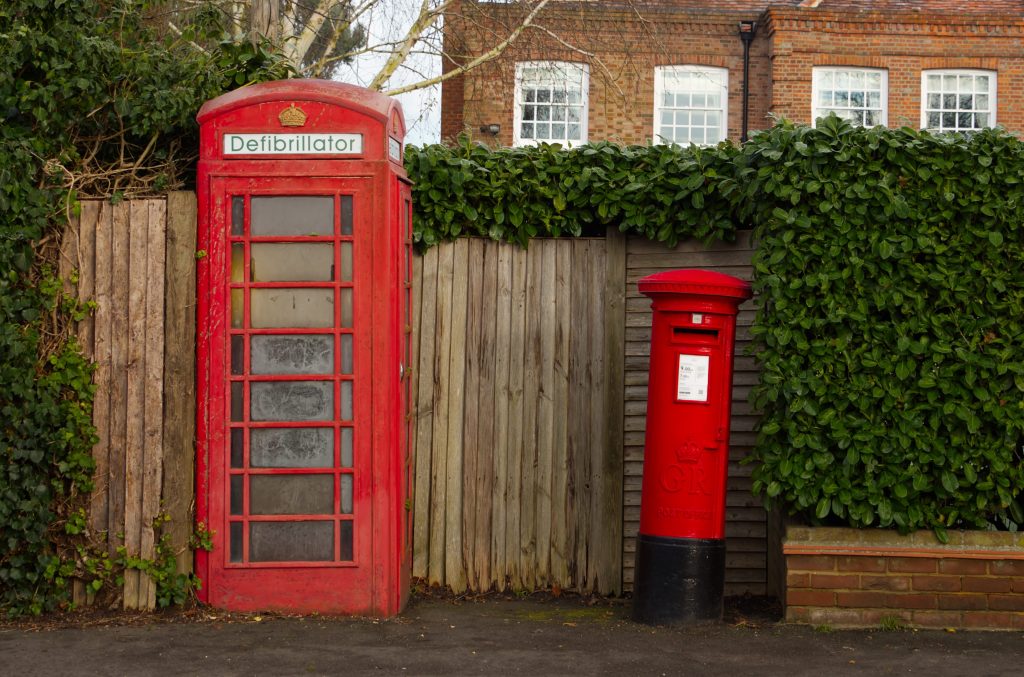
Unlike some of Britain’s other familiar street landmarks, such as the red telephone box, which has largely disappeared from everyday use or found new life as a book exchange, defibrillator station or miniature community library, the postbox has never quite lost its place. Its design may have evolved, its technology may be changing and the monarch’s initials may come and go, but it remains a working part of everyday life. From the earliest Victorian boxes to the newest additions, the postbox continues to stand quietly on Britain’s streets, carrying not only letters and parcels, but a little piece of the country’s history into the future.


Leave a Reply