
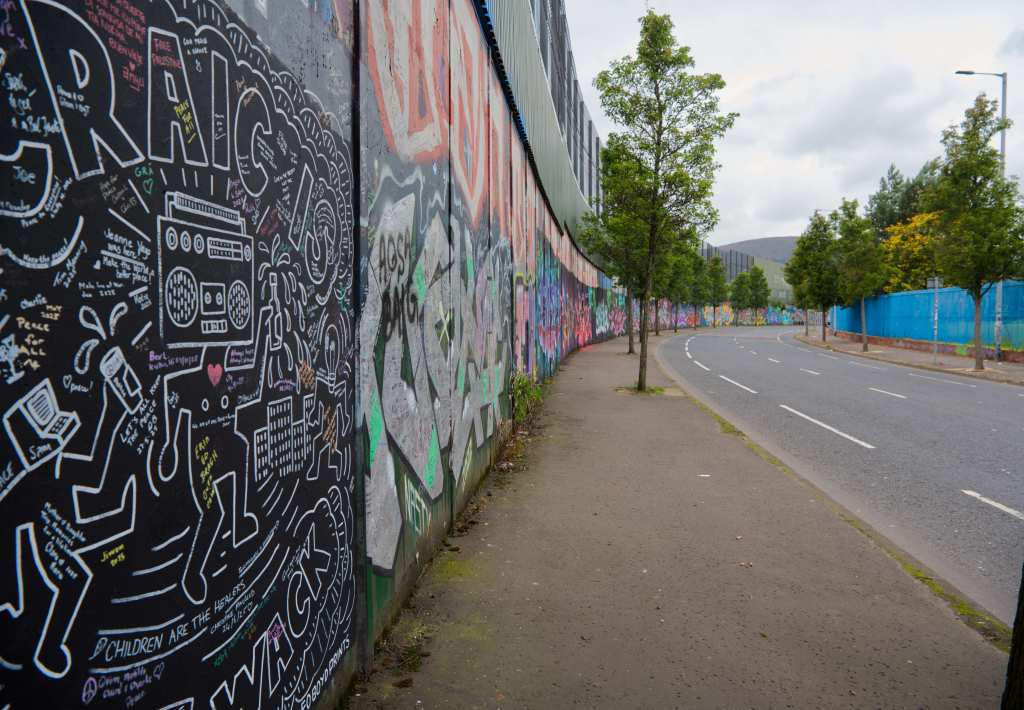
Few landmarks in Belfast are as instantly recognisable as the Peace Wall.
At first glance, it can seem surprising that a barrier built to separate communities has become one of the city’s most visited landmarks. Yet the Peace Walls occupy a unique place within Belfast’s story. They are physical reminders of a difficult chapter in Northern Ireland’s history, but they are also places where conversations continue to unfold through paint, artwork, signatures, and messages left by people from every corner of the world.
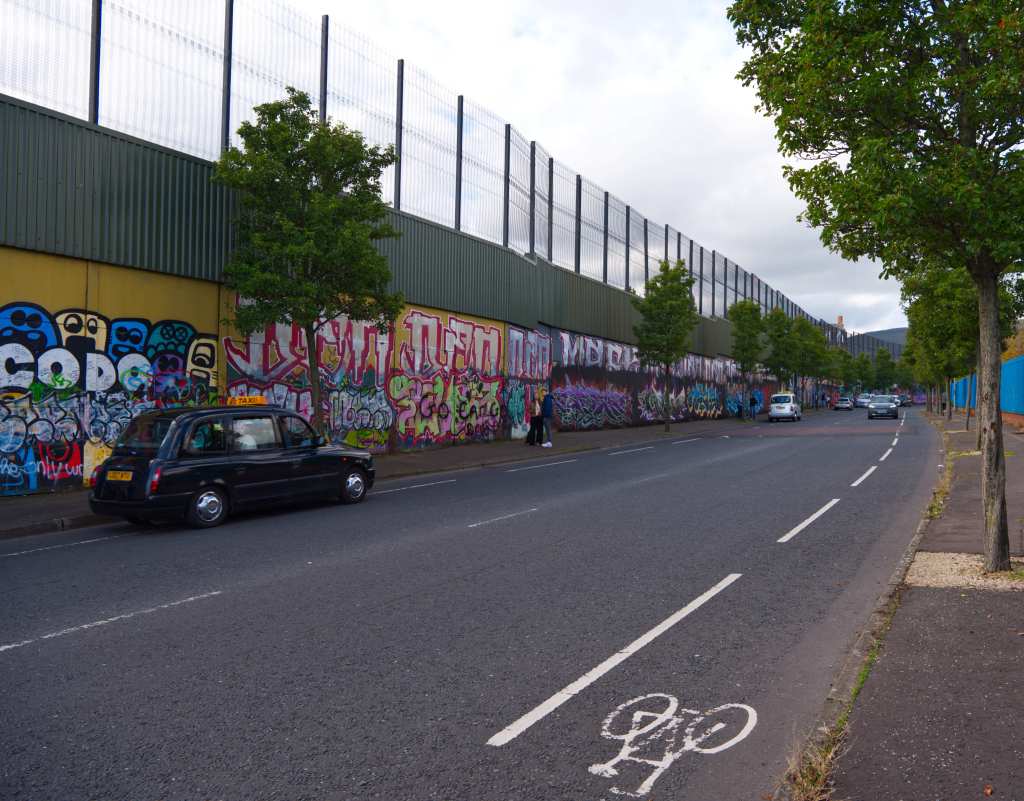
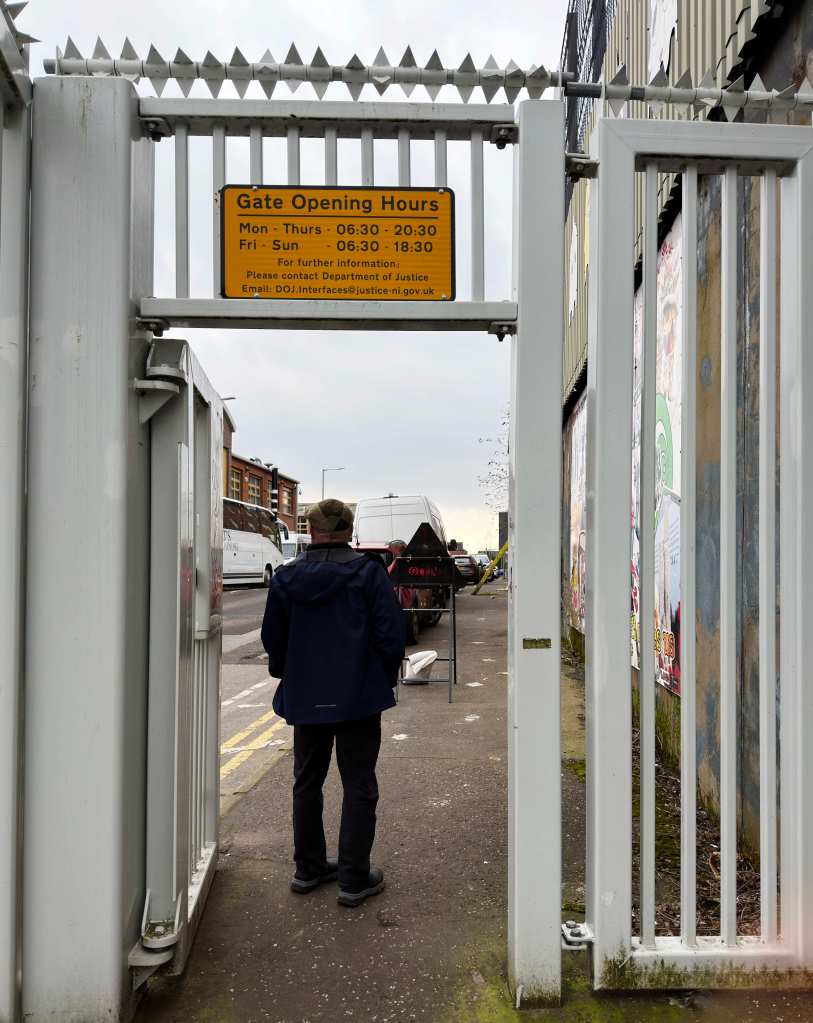
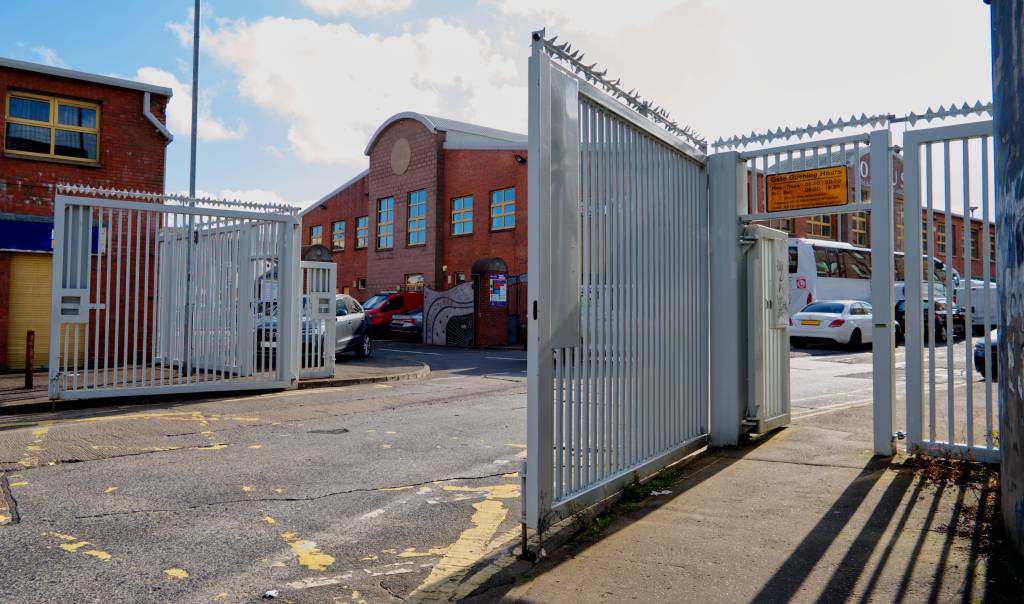
The first peace walls were erected in 1969 during the early stages of the Troubles. Intended as temporary structures designed to reduce violence between neighbouring communities, they were never expected to remain for decades. Yet more than half a century later, some still stand across Belfast and other parts of Northern Ireland. While some sections have changed significantly over time, others remain an active part of daily life. In several locations, gates built into the walls continue to open during the day and close at night, a reminder that while Belfast has changed dramatically, certain realities remain woven into the urban landscape.
For many visitors, the first impression is often the scale of the structure itself. Photographs rarely convey its true height or presence. Standing beside it, the wall feels substantial, imposing, and impossible to ignore. Yet what makes the most visited sections of the Peace Wall so fascinating today is not the barrier itself, but the artwork that covers it.
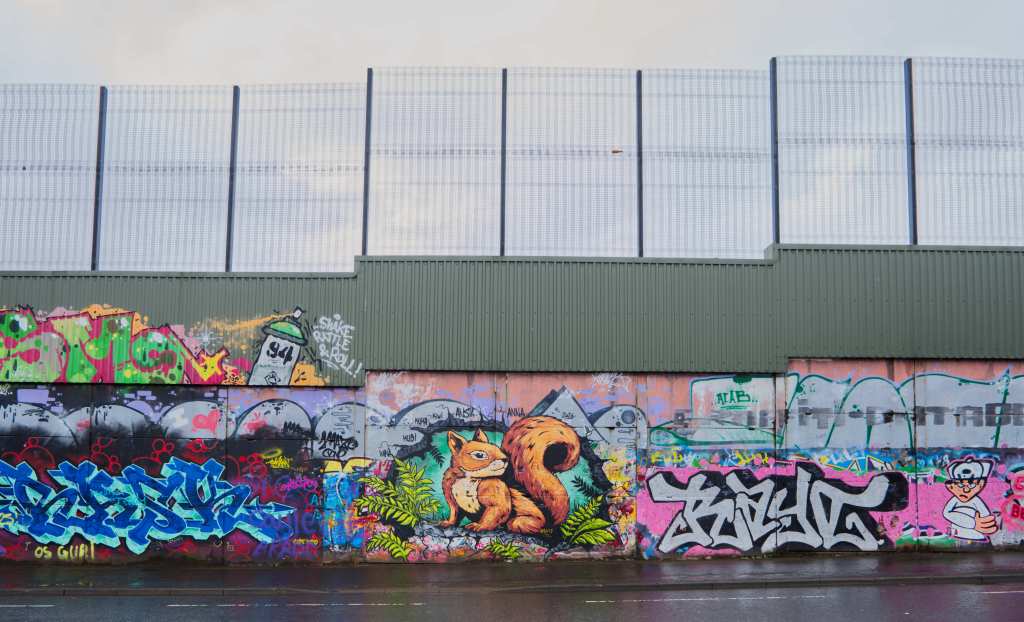
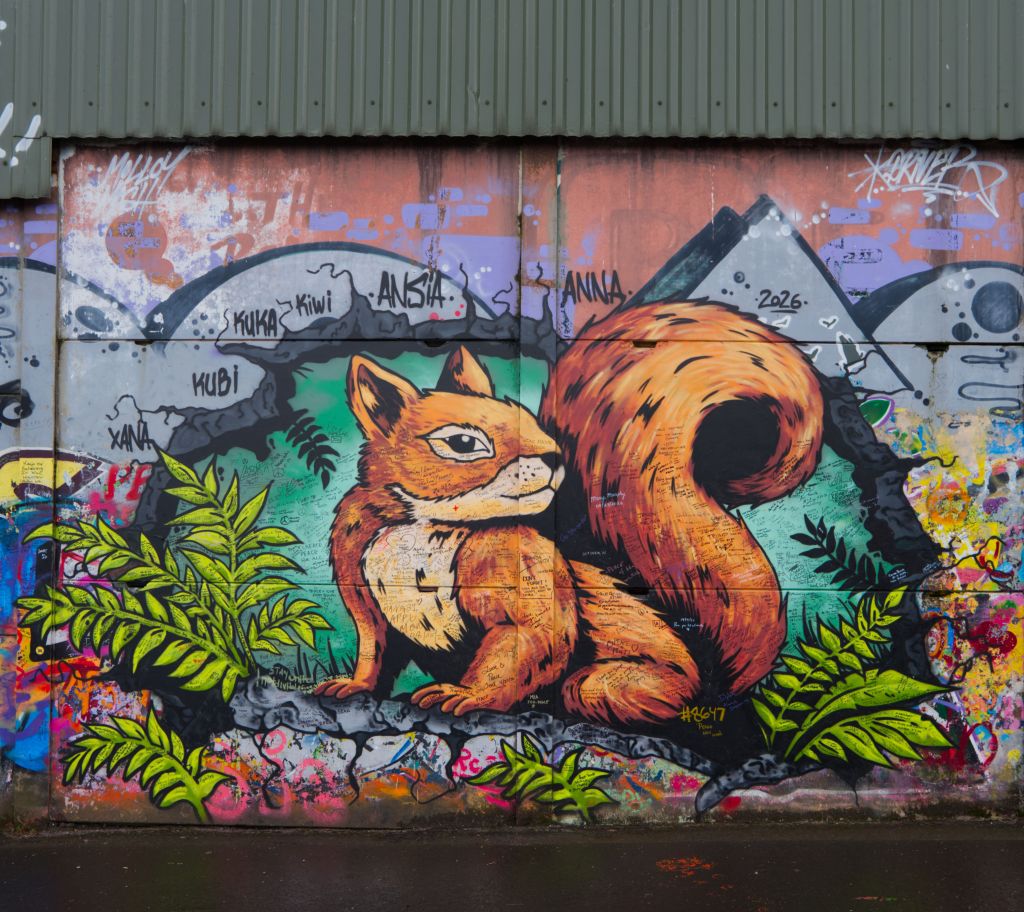
Over the years, the wall has evolved into one of Belfast’s most unusual public canvases. Layers of paint, murals, artistic interventions, and changing visual messages have transformed sections of the structure into an ever-evolving gallery. Unlike traditional monuments that remain fixed and unchanged, the surface of the wall continues to develop. New artwork appears, older work fades or is replaced, and fresh ideas are introduced by artists responding to both the city around them and the wider world beyond it. The result is a space that feels remarkably different from its original purpose.
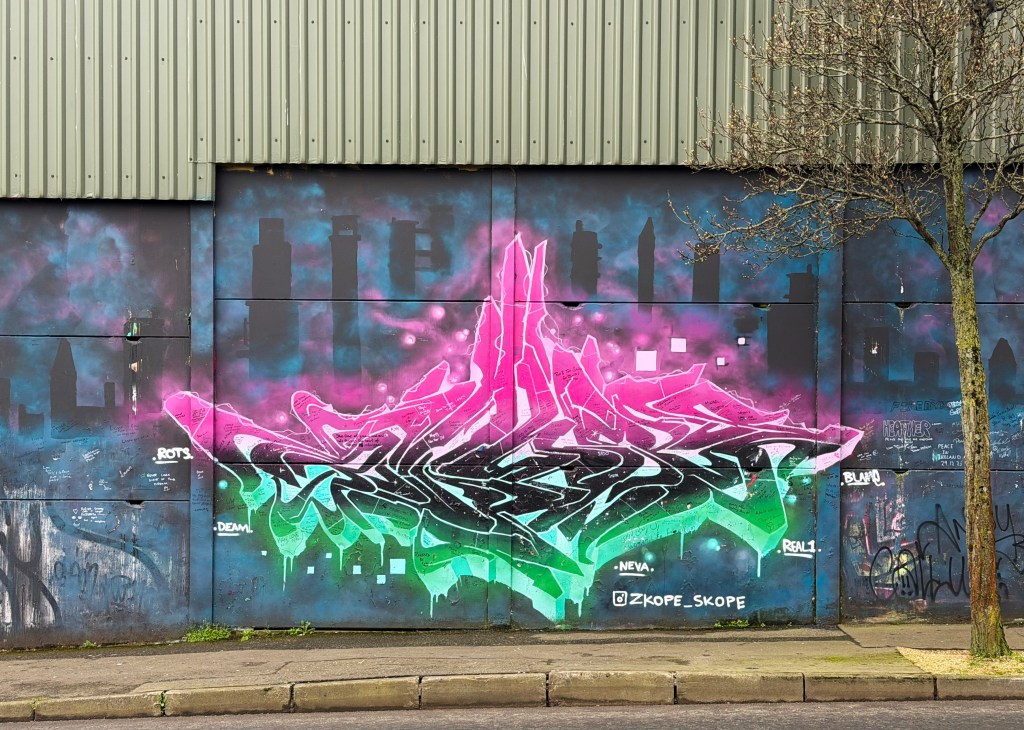
While the wall remains rooted in Belfast’s history, the artwork covering it increasingly reflects contemporary creativity rather than conflict. Large-scale murals, graphic installations, abstract compositions, and collaborative community projects now occupy spaces that visitors from around the world come specifically to see. The wall has become a place where art and history coexist, creating a visual record that continues to evolve from year to year.

What makes this transformation particularly compelling is that it never truly stops. A visitor returning after several years may find familiar sections completely reimagined. Murals that once dominated the surface may have disappeared beneath new layers of paint. Fresh artwork introduces different themes, colours, and artistic approaches. While the structure itself remains constant, the visual experience changes continually.
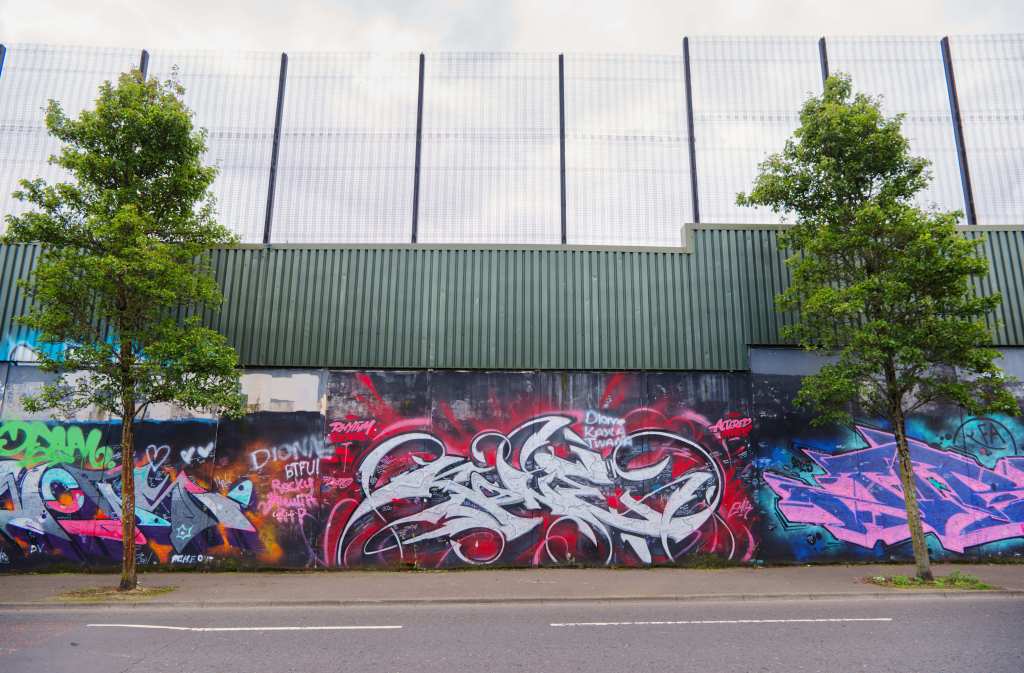
This sense of renewal has become one of the defining characteristics of the wall. Unlike gallery exhibitions that occupy a building for a set period before moving elsewhere, the Peace Wall exists as a permanent location hosting an ever-changing collection of public artwork. Artists add new ideas, community projects contribute fresh perspectives, and changing cultural conversations find expression across its surface.
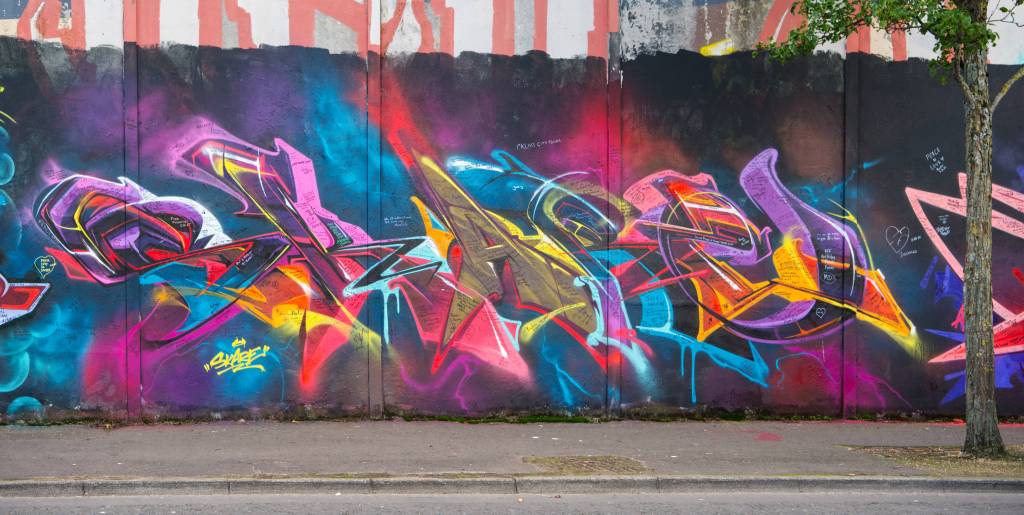
Walking alongside the wall today reveals a striking variety of artistic styles. Some murals embrace realism, using portraiture and detailed imagery to create works that command attention from a distance. Others favour contemporary graphic design, bold colour palettes, and abstract forms that transform the wall into something more experimental. Certain pieces draw upon local culture and identity, while others explore broader themes that resonate beyond Belfast itself.
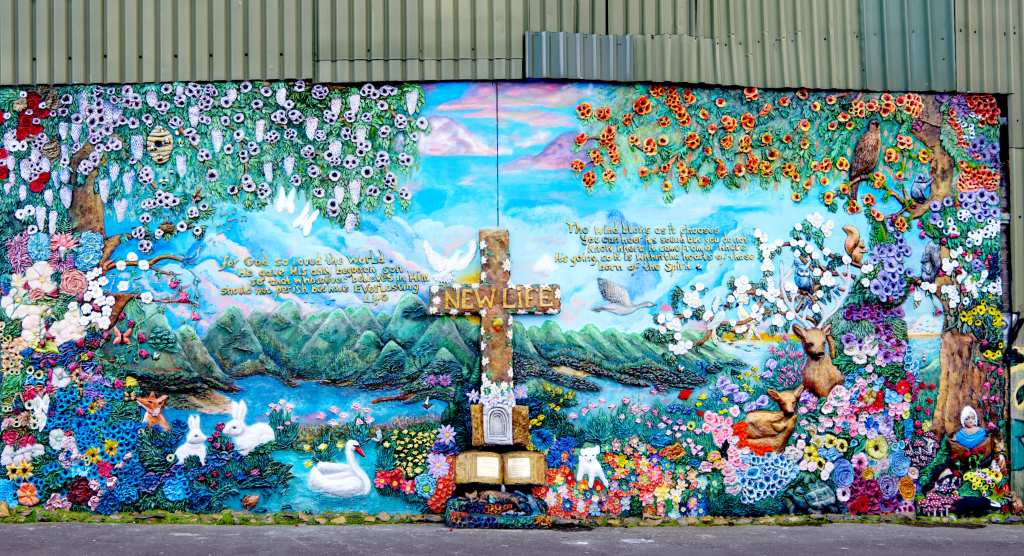
The scale of the wall allows artists to think differently. What might be impossible on a conventional canvas becomes achievable across large sections of concrete, steel, and brick. Entire compositions can unfold across significant distances, allowing artists to create large works with multiple layers to the story.
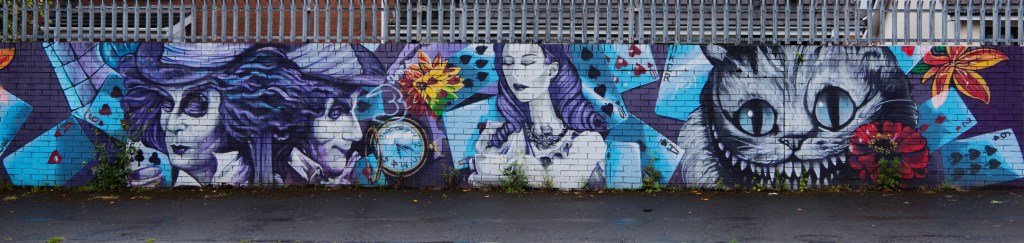
For photographers, this creates endless opportunities. The wall can appear entirely different depending on the season, weather, or time of day. Morning light reveals details hidden later in the afternoon. Rain deepens colours and alters reflections. Shadows cast by surrounding structures introduce another layer of visual complexity. Even without changes to the artwork itself, the wall rarely presents exactly the same appearance twice.
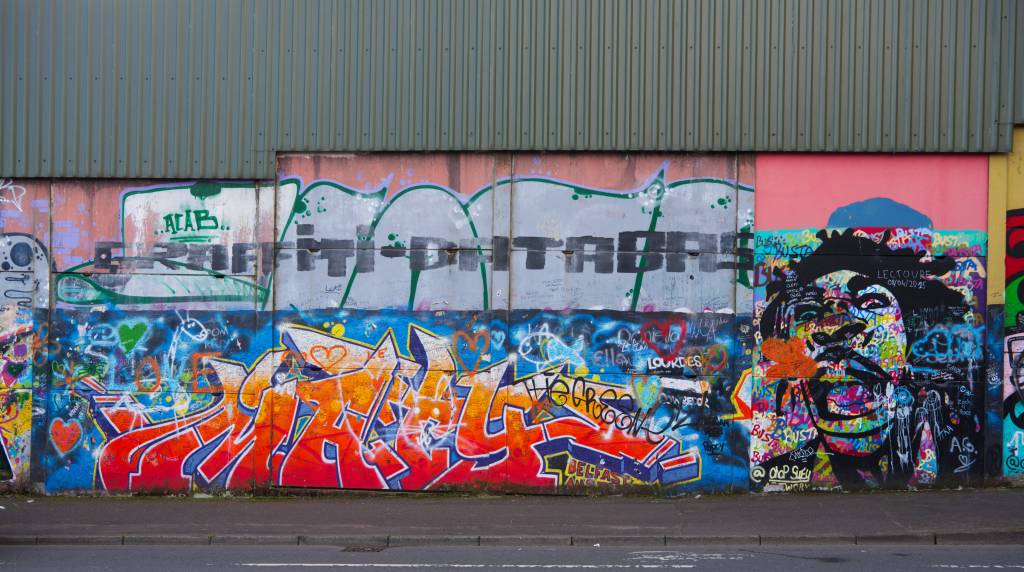
Perhaps the most interesting aspect of the Peace Wall’s artistic evolution is that it mirrors the wider transformation of Belfast. The city remains conscious of its history, yet increasingly focused on creativity, culture, and renewal. The artwork appearing on the wall reflects this shift. While historical themes remain present in some areas, many contemporary pieces explore ideas that reach beyond the events that originally led to the wall’s construction.
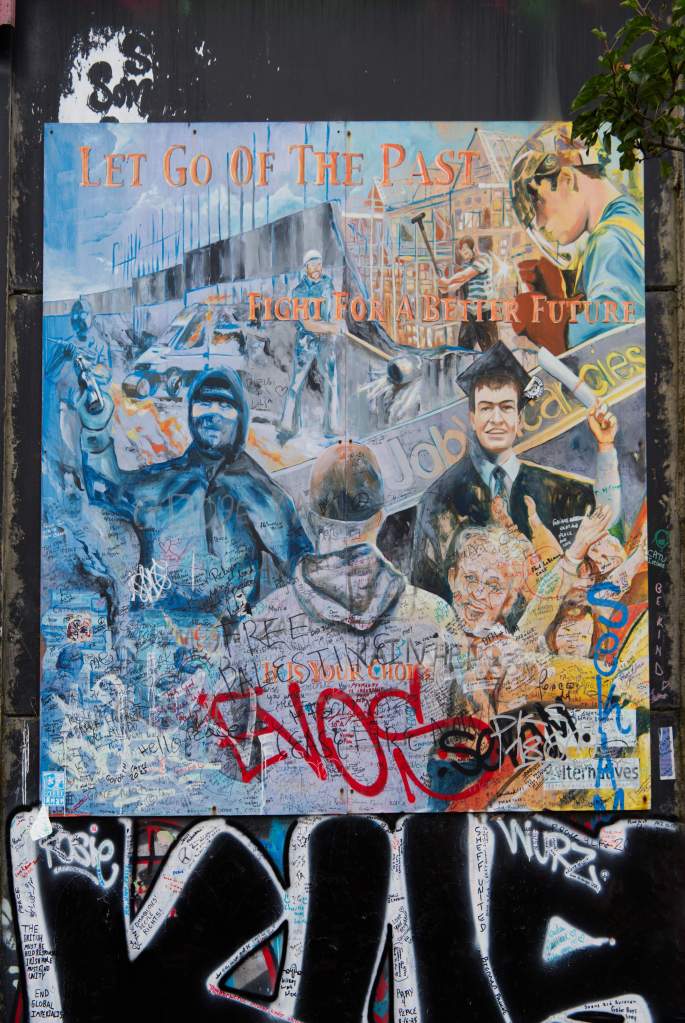
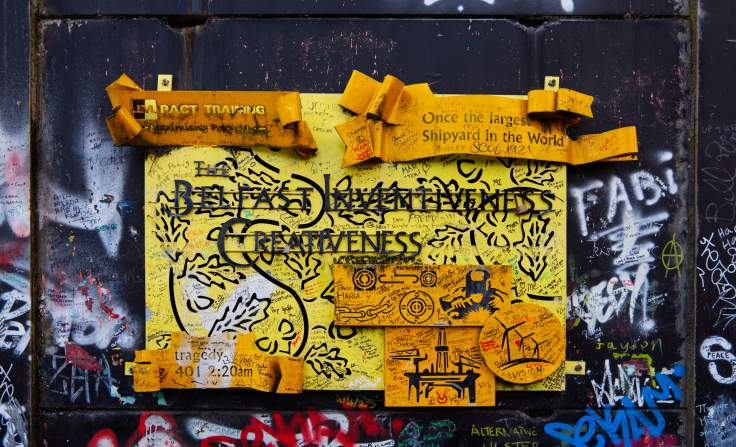
Community-led projects have played an important role in this process. Over the years, artists, local organisations, schools, and cultural groups have contributed work that encourages engagement, reflection, and discussion. These projects often bring together different perspectives, demonstrating how public art can create dialogue within a space once associated primarily with separation.
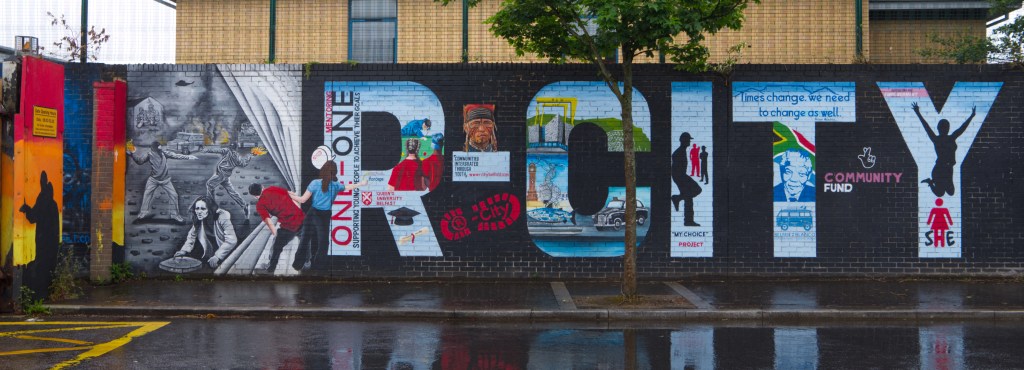
What emerges from all of this is something few could have imagined when the structure was first erected. A barrier built for security has gradually become one of Belfast’s most photographed artistic landmarks. Visitors arrive expecting to see a piece of history and often leave talking about the artwork instead. The wall’s significance remains tied to its past, but its appearance continues to be shaped by the present.
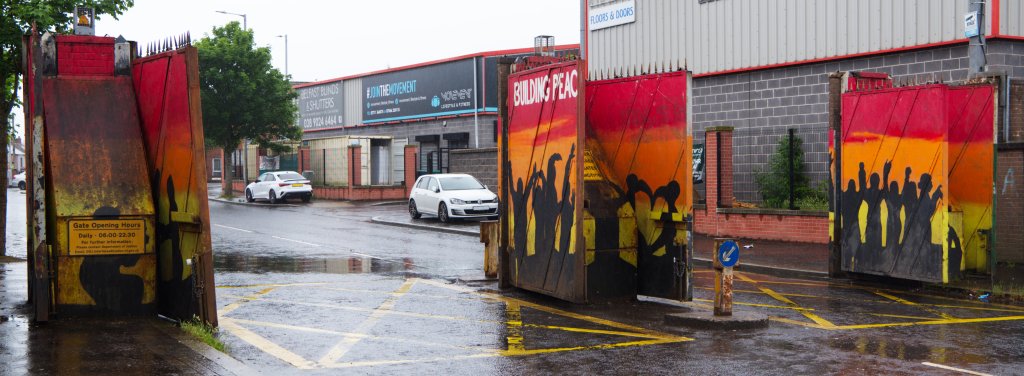
That ongoing evolution is perhaps what makes the Peace Wall so compelling. It is not preserved behind glass. It is not frozen in time. Instead, it remains active, visible, and constantly changing. Artists continue to reinterpret it. Communities continue to engage with it. New artwork continues to appear.
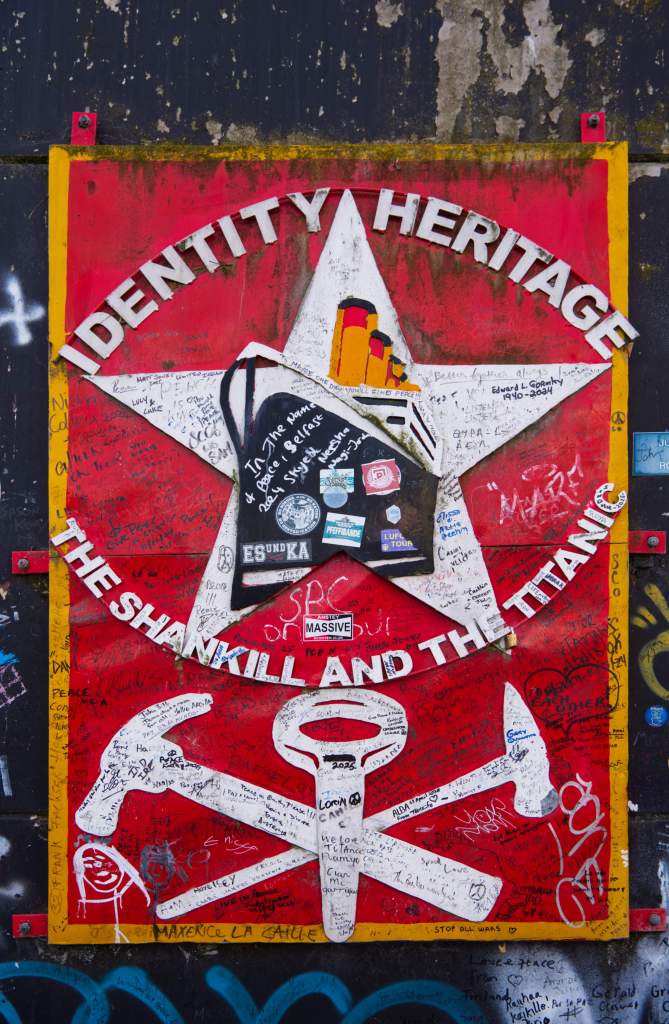
In a city where walls have long carried meaning, the Peace Wall has become something more than a historical structure. It has evolved into a living canvas, reflecting not only where Belfast has been, but also the creativity, imagination, and artistic energy that continue to shape where it is going.
 The Footstep Chronicles
Leave a comment